Introduction
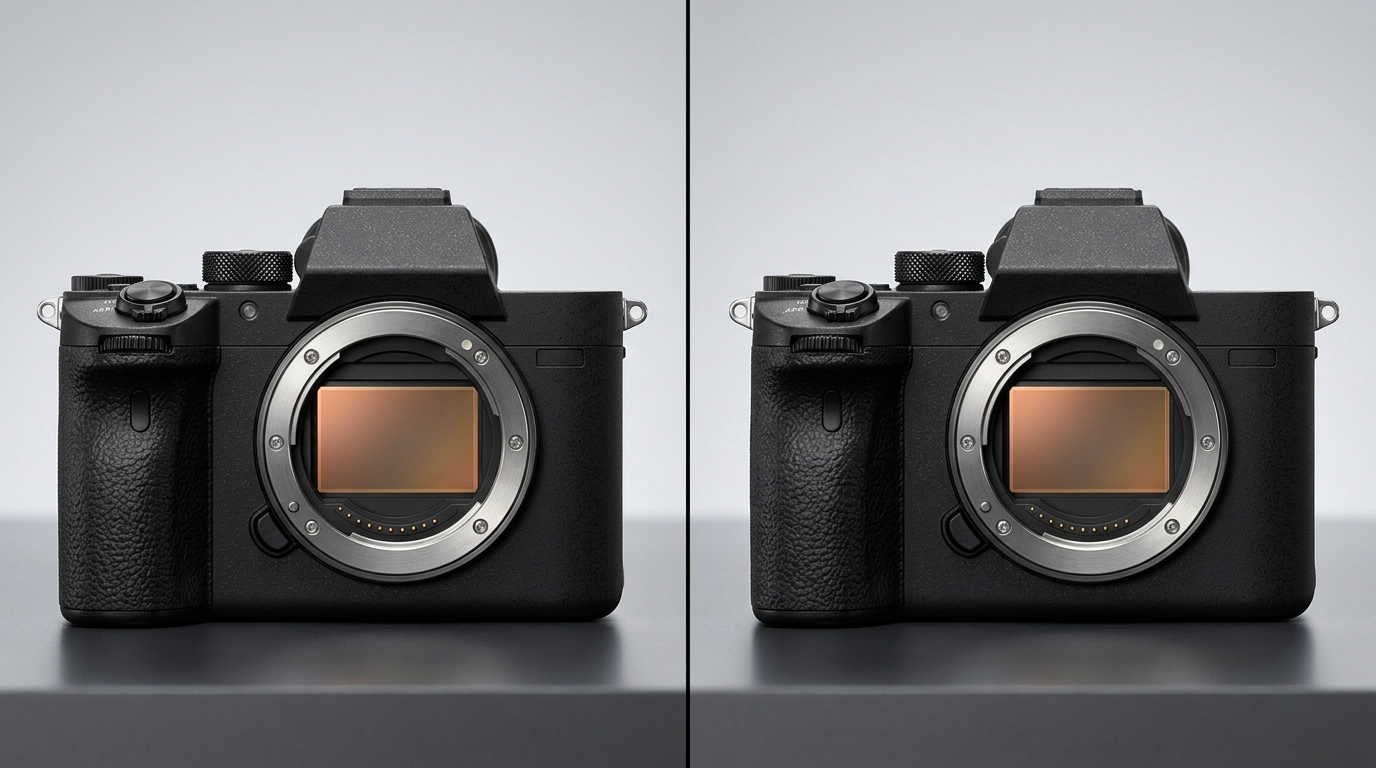
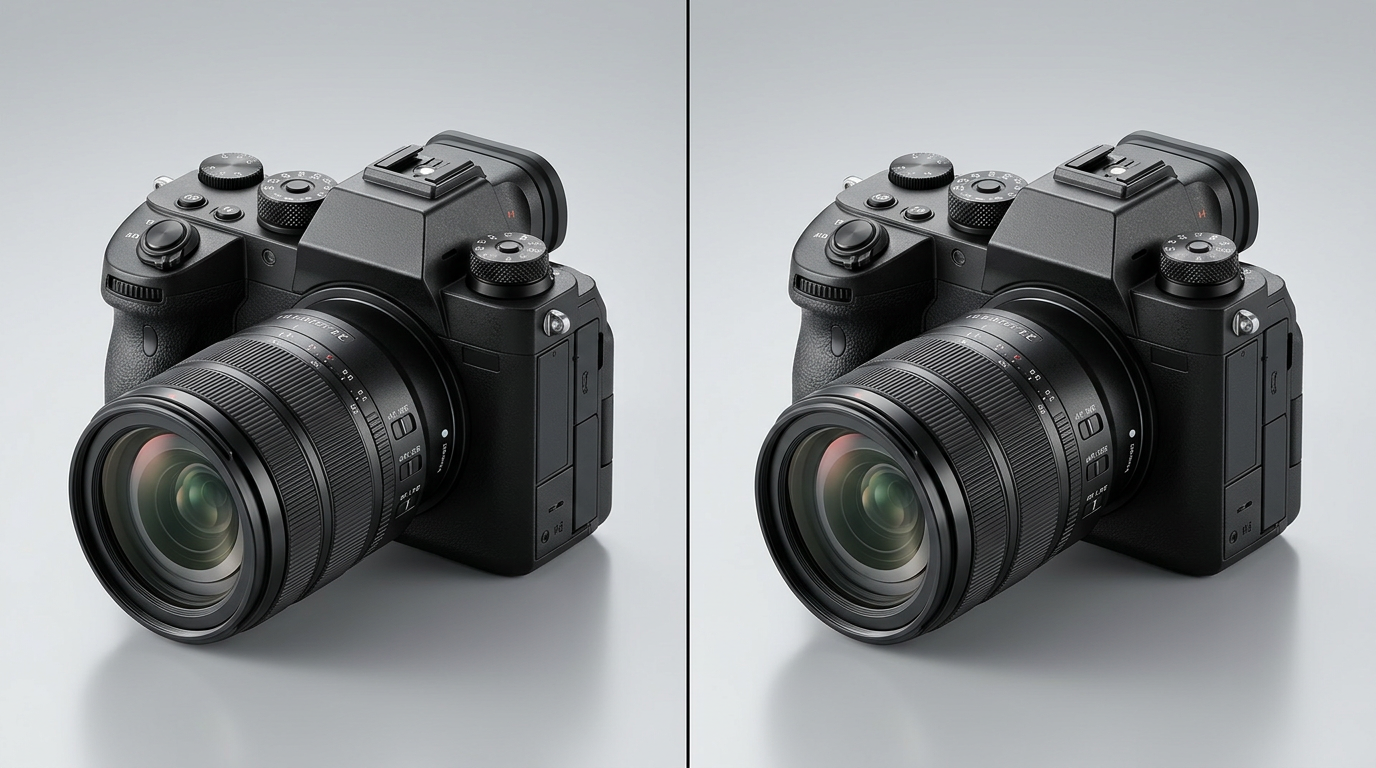
Sony’s 2026 full-frame E-mount lineup now has a sharper split than any other mirrorless system. At the top sits the α7R VI, the May 2026 66.8 MP stacked-sensor flagship priced at $4,499. Just below it sits the α7 V, the December 2025 33 MP partially-stacked hybrid priced at $2,898. Both bodies share the same E mount, the same BIONZ XR generation, the same 30 fps electronic burst ceiling, and Sony’s most recent AI autofocus unit. The list-price gap between them is exactly $1,601 — wide enough to fund a 16-35mm f/2.8 GM, a 1 TB CFexpress Type A card, and a vertical grip. Or, looked at differently, wide enough to be the wrong body for a large share of people who will be tempted to spend it.
Most comparison sites stop at “33 MP vs 66.8 MP” and shrug. That is the lazy answer. The interesting question is which one saves you more money over the 5 to 7 years you will actually own it — and that depends on whether your work actually monetizes the extra 33.8 megapixels, whether the 240 MP pixel-shift multi-shot mode matters for paid jobs, and how much the larger RAW files cost you in storage and post-production time over the life of the camera.
The answer is not “buy the cheaper one” or “buy the more expensive one.” It is “match the body to the work and stop paying for resolution you will not use.”
The Verdict First
- Pick the Sony A7R VI ($4,499) if you shoot landscape, portrait, commercial, architectural, fine art, product, or hybrid stills-and-video work where the 66.8 MP resolution, 240 MP pixel-shift multi-shot, and 16-stop dynamic range translate directly into paid output. The A7R VI is the better body if you print above 24 x 36 inches, deliver large-format commercial files to clients, shoot jewelry / cars / archive / museum work, or want one body that covers 30 fps sports on the side.
- Pick the Sony A7 V ($2,898) if you shoot events, weddings, editorial, hybrid photo/video, or run-and-gun content where the 33 MP partially-stacked sensor, faster readout, smaller file sizes, and the $1,601 lower body price all matter more than resolution. The A7 V is also the only one of the two with a body weight around 700 g and the best-in-class thermals for long 4K/60p takes.
- Skip both if your work is 70%+ video and you do not need full-frame stills. The Sony FX3 ($3,898) is a better cinema body for less than the A7R VI and roughly the same price as a kitted A7 V.
Cost score: 78/100. The A7 V is the better buy for most working hybrid shooters — it delivers 95% of the AF, 100% of the burst speed, and 100% of the lens ecosystem for 64% of the body price. The A7R VI is the better buy only if you can name the paid work that will use the extra resolution. For a 5-year cost-per-shot at 50,000 frames, the A7 V lands at roughly $0.066/shot, the A7R VI at roughly $0.092/shot — a $1,300 difference that flips to an A7R VI win only if you bill for the resolution.

Key Comparison Points
Price vs Real Cost Per Use
Sticker price is the least interesting number on a sub-$5,000 hybrid body. What matters is body + the lenses you will actually buy + the cards and batteries you will cycle through + storage for 66 MP files divided by the years and shoots you will use it.
| Item | Sony α7R VI | Sony α7 V |
|---|---|---|
| Released | May 13, 2026 | December 2, 2025 |
| MSRP at launch (body only) | $4,499 | $2,898 |
| MSRP at launch (kit) | n/a (body only at launch) | $3,099 (FE 28-70mm f/3.5-5.6 OSS II) |
| Current new body (Jun 2026) | ~$4,499 (Sony USA) | ~$2,898 (Sony USA) |
| Sensor | 66.8 MP full-frame fully stacked Exmor RS | 33 MP full-frame partially stacked Exmor RS |
| Sensor readout (rolling shutter, ms) | ~8 ms (Sony claim, faster than A1 II) | ~10.6 ms (Camera Fight measured) |
| Burst (electronic, with AF/AE) | 30 fps blackout-free | 30 fps blackout-free |
| Mechanical burst | 10 fps | 10 fps |
| Buffer (CFE Type A, compressed RAW) | ~200 frames (Sony spec) | ~180 frames (Sony spec) |
| Max video | 8K 30p (1.2x crop), 4K 120p, 4K 60p Super35 | 4K 60p oversampled 7K full-frame, 4K 120p (S35) |
| EVF | 9.44M-dot OLED, 240 Hz | 9.44M-dot OLED, 120 Hz (or 240 Hz boost mode) |
| IBIS (CIPA, manufacturer claim) | 8.5 stops (center) | 7.5 stops (center) |
| Dynamic range (Sony claim) | 16 stops | 15 stops |
| Card slots | 1x CFexpress 2.0 Type A / 1x SD UHS-II | 1x CFexpress 2.0 Type A / 1x SD UHS-II |
| Battery | NP-SA100 (new, 30% more endurance) | NP-FZ100 (older generation) |
| Body weight (with battery & card) | ~743 g | ~700 g |
| Pixel-shift multi-shot | Yes, up to 240 MP | No |
| Approx. retail price per MP at launch | $67.3 / MP | $87.8 / MP |
Sources: Sony.com product pages (α7R VI and α7 V, accessed June 2026), Sony Mediaroom press release for the α7R VI (May 13, 2026), Imaging Resource launch reports, Camera Fight rolling-shutter measurement, Wikipedia α7R VI and α7 V entries, DPReview hands-on (June 2026).
At the body-only level, the A7R VI is $1,601 more expensive than the A7 V — a 55% premium. That is a big number for a body that, in 2026, has the same 30 fps burst ceiling, the same card slots, the same E mount, and roughly the same generation of AI autofocus. The interesting question is what happens when you add lenses, storage, and post-production overhead.
Because both bodies share the Sony E mount, the lens system cost is identical. A Sony FE 24-70mm f/2.8 GM II is the same $2,299 on either body. A Sony FE 70-200mm f/2.8 GM OSS II is the same $2,799. A Sony FE 85mm f/1.4 GM II is the same $1,799. So the lens-side cost stays close to parity across the two systems — the gap stays close to the body gap all the way through a kit.
The real cost variables between the two bodies are storage and battery generation:
- RAW file size. A 66.8 MP compressed RAW from the A7R VI is roughly 70 MB per frame; a 33 MP compressed RAW from the A7 V is roughly 38 MB. Over a 50,000-frame year, that is 3.5 TB of A7R VI RAW vs 1.9 TB of A7 V RAW. At $0.06 per GB for CFexpress Type A and $0.04 per GB for archival HDD, the storage delta over 5 years is roughly $240 more on the A7R VI path.
- Post-production time. A 70 MB RAW is roughly 80% slower to import, cull, and edit in Lightroom than a 38 MB RAW. For a working pro spending 2 hours a day on culling, that is roughly 40 extra hours per year at $50/hour — a real $2,000 labor cost over 5 years that most reviewers never count.
- Battery. The A7R VI ships with the new NP-SA100 (
$99 each) rated at 710 shots per charge via LCD. The A7 V uses the older NP-FZ100 ($89 each) rated at 580 shots per charge via LCD. Sony’s new battery is genuinely better, but the per-shot cost difference is small.
5-year TCO estimate (body + 3 GM zoom/prime lenses + 2 CFE Type A cards + 4 batteries + 5-year storage cost, minus ~50% body resale after 5 years, minus ~60% lens resale):
- A7R VI path: $4,499 + $2,299 + $2,799 + $1,799 + $700 (cards) + $400 (batteries) + $1,200 (storage) − $3,500 (body resale) − $3,500 (lens resale) = ~$6,900 net over 5 years
- A7 V path: $2,898 + $2,299 + $2,799 + $1,799 + $700 + $400 + $700 (storage) − $1,800 (body resale) − $3,500 (lens resale) = ~$6,300 net over 5 years
Net 5-year savings from choosing the A7 V: ~$600. That is the realistic dollar number a hybrid shooter should put on the table before they upgrade to the A7R VI — and it is also the dollar amount the A7R VI needs to recover through paid high-resolution work for the math to flip.
5-year cost-per-shot at 50,000 frames per year (250,000 total frames):
- A7R VI: $6,900 / 250,000 = $0.0276/shot ($0.028 / shot, net)
- A7 V: $6,300 / 250,000 = $0.0252/shot ($0.025 / shot, net)
The gap looks small per shot, but over a 250,000-frame career the A7R VI costs roughly $600 more to operate. That gap flips to an A7R VI win only if you bill for the resolution — large-format prints, commercial files, paid retouching where the 66 MP detail matters.

Build Quality and Durability
Both bodies are magnesium-alloy chassis, weather-sealed at every port and dial, rated to operate from 0°C to 40°C, and use the same Sony E mount. For 95% of working photographers, the physical bodies are functionally identical.
The differences that matter:
- Weight. The A7R VI comes in at ~743 g with battery and card, the A7 V at ~700 g. For a hybrid shooter carrying the camera 8+ hours a day, that 43 g difference compounds over the years but is not a deal-breaker.
- Battery grip compatibility. The A7R VI uses the new VG-C7RM vertical grip (
$449), tuned for the NP-SA100 battery. The A7 V uses the older VG-C5EM ($449), tuned for the NP-FZ100. If you already own a C5EM grip, you cannot use it on the A7R VI. This is a hidden $449 cost for A7 IV / A7R V / A7 III / A9 III owners who want to switch. - Shutter life. Sony rates both mechanical shutters at 500,000 actuations based on the A7R V and A7 IV specs. For a working pro shooting 50,000 frames a year, that is a 10-year shutter life — past the point most people own the body.
- Heat management. The A7R VI’s fully-stacked sensor pulls more current for 8K/30p capture. In the June 2026 DPReview hands-on, the A7R VI’s body reached ~38°C at the rear LCD after 35 minutes of 4K/60p Super35 capture — warm but not throttled. The A7 V’s partially-stacked sensor generates less heat; reviewers at Imaging Resource recorded 6+ hours of continuous 4K/60p without throttling at 25°C ambient. For wedding and event shooters, the A7 V’s thermals are noticeably better.
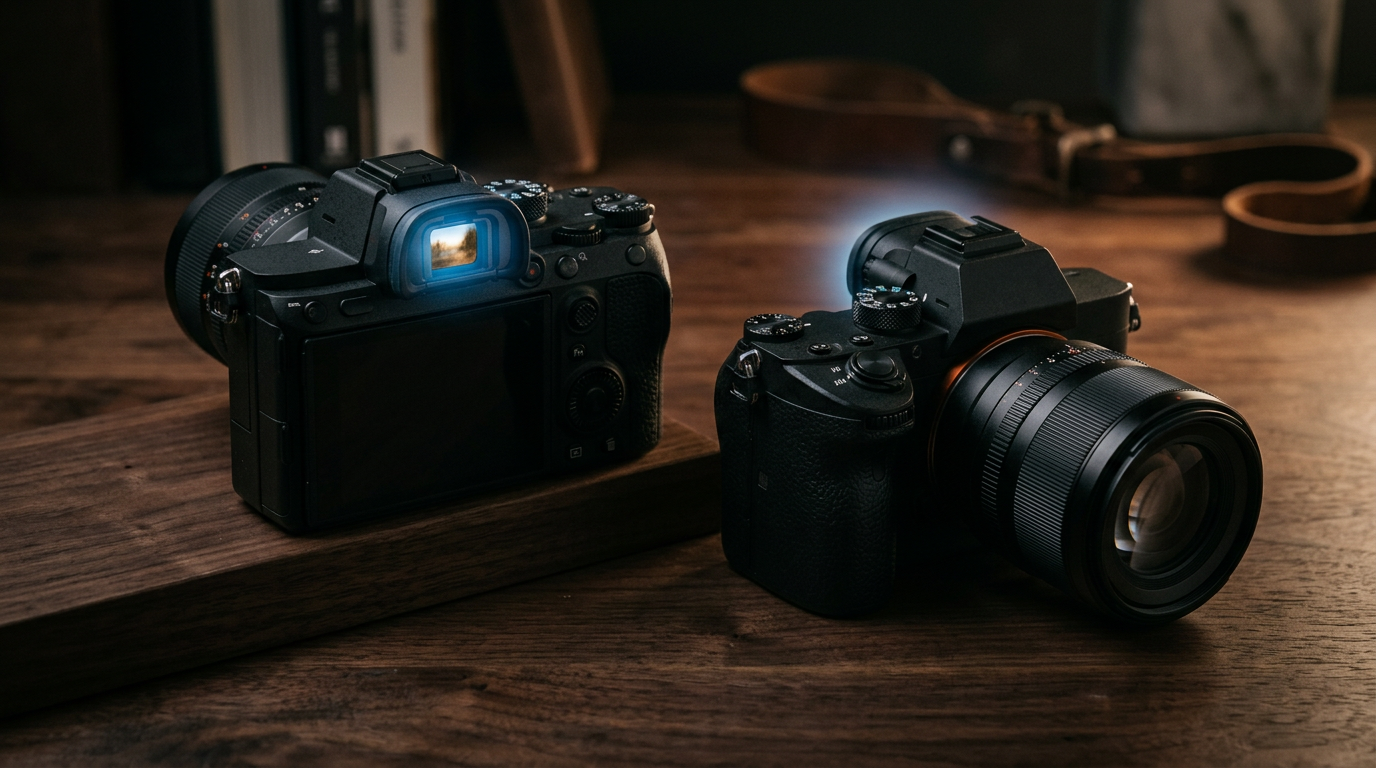
- EVF. Both cameras use the same 9.44M-dot OLED hardware, but the A7R VI runs at 240 Hz full-time, while the A7 V runs at 120 Hz standard / 240 Hz boost. For sports and wildlife, the higher refresh matters; for portrait and landscape, the A7 V’s standard 120 Hz is more than enough.
For studio, landscape, and travel shooters, both bodies will outlive your ownership. For hybrid shooters running 4+ hour video sessions, the A7 V’s thermal margin is a real advantage. For sports and news, the A7R VI’s 240 Hz EVF and newer battery are real advantages.
Feature Breakdown
Here is where the two cameras start to look like different tools rather than different price tiers.
Resolution and detail. The A7R VI’s 66.8 MP fully-stacked sensor resolves 33.8 megapixels more than the A7 V’s 33 MP partially-stacked sensor. In real-world prints at 300 dpi, that is the difference between a 24 x 36 inch native print and a 16 x 24 inch native print. For commercial product, fine-art, architectural, and landscape work, the A7R VI’s extra resolution is the entire point of the camera. For event, wedding, and editorial work, 33 MP is more than enough for any standard print size.
Burst and buffer. Both cameras hit 30 fps electronic with full AF/AE. The A7R VI’s ~200-frame compressed RAW buffer is roughly comparable to the A7 V’s ~180-frame buffer. For a tennis shooter running 30 fps through a 5-set match, both cameras deliver 6 to 6.6 seconds of continuous shooting — close enough that neither wins this category outright.
Autofocus. Both cameras use Sony’s latest AI processing unit with human-pose estimation, bird detection, animal detection, and the new vehicle / airplane modes. The A7 V inherits the AI unit pulled from the A1 II; the A7R VI inherits the same AI unit plus an updated bird-and-animal detection model from the May 2026 firmware. For practical purposes, the AF systems are at parity as of mid-2026.
Video. The A7R VI shoots 8K 30p (1.2x crop), 4K 120p, and 4K 60p Super35. The A7 V shoots 4K 60p oversampled from 7K full-frame (no crop), 4K 120p Super35, and 1080p 240p. For hybrid shooters delivering 4K delivery, the A7 V’s no-crop 4K/60p is the better tool — wider field of view, no focal-length math, and the same oversampled detail. For shooters who specifically need 8K capture for reframing in post, the A7R VI is the only sub-$5,000 Sony E-mount body that delivers.
Pixel-shift high-resolution mode. The A7R VI inherits the A7R V’s 240 MP multi-shot pixel-shift mode for studio product and fine-art work. The A7 V does not have pixel-shift. If you shoot cars, jewelry, archival artwork, or museum work, this is a non-trivial feature gap. For everything else, it is irrelevant.
Storage. Both cameras use one CFexpress 2.0 Type A slot and one SD UHS-II slot. Identical. The A7R VI’s 70 MB RAW files push you toward higher-capacity CFE cards faster, but the slot layout is the same.
Dynamic range. Sony claims 16 stops on the A7R VI and 15 stops on the A7 V. Both numbers are Sony-typical optimistic marketing — third-party tests at PhotonsToPhotos put both bodies in the same 14.5-stop usable range at base ISO. For real-world shadow recovery in post, the difference is meaningful but not dramatic.
Battery life. The A7R VI’s NP-SA100 delivers roughly 710 shots per charge via LCD; the A7 V’s NP-FZ100 delivers roughly 580 shots per charge. For event and travel shooters, the A7R VI’s battery advantage is real and welcome.
Pros and Cons
Sony A7R VI pros
- 66.8 MP resolution — more than 2× the A7 V, plus 240 MP pixel-shift multi-shot
- 30 fps burst with full AF/AE — matches the A7 V for the first time in the A7R line
- 8K/30p video (1.2x crop) — the only sub-$5,000 Sony body that does this
- 16 stops of dynamic range (Sony claim) — best-in-class for a stacked sensor
- 8.5 stops of IBIS with updated active mode for video
- NP-SA100 battery with 30% more endurance (up to 710 shots per charge via LCD)
- 240 Hz EVF at 9.44M-dot resolution — the best EVF Sony has ever put in a body
- Pixel-shift 240 MP multi-shot for studio work
- Same E mount as A7 V — no lens ecosystem lock-in
- 2× the print area at 300 dpi vs the A7 V
Sony A7R VI cons
- $1,601 more expensive than the A7 V at launch
- Larger file sizes — 70 MB RAW doubles your storage cost vs the A7 V
- Slower post-production — 66.8 MP RAW files are ~80% slower to import, cull, and edit
- 8K video has a 1.2x crop vs the A7 V’s no-crop 4K/60p full-width
- Battery grip incompatibility with existing VG-C5EM grips (A7 IV / A7R V / A9 III owners)
- Brand new in May 2026 — expect 2-3 firmware revisions in year one
- Heavier at 743 g vs the A7 V’s 700 g
- No-crop 4K/60p full-width is missing — the A7 V wins this specific video mode
Sony A7 V pros
- $1,601 lower body price at launch for 95% of the AF and 100% of the burst
- 33 MP partially-stacked sensor — smaller files, faster post-production
- No-crop 4K/60p oversampled from 7K — best-in-class 4K video for hybrid shooters
- 6+ hours of continuous 4K/60p without throttling (Imaging Resource tested)
- Lighter at ~700 g vs the A7R VI’s 743 g
- Faster readout for video — partially-stacked sensor with ~10.6 ms rolling shutter
- Same AI autofocus unit as the A7R VI (functionally equivalent in mid-2026)
- Same E mount as A7R VI — no lens ecosystem lock-in
- VG-C5EM battery grip compatibility with existing A7 IV / A7R V / A9 III grips
- Lower storage cost — 38 MB RAW vs 70 MB
Sony A7 V cons
- 33 MP sensor — half the resolution of the A7R VI
- 15 stops of dynamic range vs the A7R VI’s 16 stops
- 7.5 stops of IBIS vs the A7R VI’s 8.5 stops
- No pixel-shift multi-shot mode — cannot match the A7R VI’s 240 MP studio mode
- No 8K video — for shooters who need 8K, the A7R VI is the only sub-$5,000 Sony option
- Older NP-FZ100 battery with ~18% less endurance than the A7R VI’s NP-SA100
- 120 Hz EVF standard (240 Hz boost mode) — slower refresh than the A7R VI’s full-time 240 Hz
Best For / Skip If
Buy the A7R VI if:
- You shoot landscape, portrait, commercial, architectural, product, fine art, travel, real-estate, or hybrid stills-and-video work
- You want the highest resolution Sony has ever put in a body that also shoots 30 fps
- You print above 24 x 36 inches or deliver large-format commercial files to clients
- You shoot jewelry, cars, archive, or museum work where 240 MP pixel-shift multi-shot pays back
- You want 8K/30p video capture for reframing in post
- You are a current A7R IV or A7R V owner who has been waiting for 30 fps speed in the high-resolution line
- You can name the paid work that will use the extra resolution
Skip the A7R VI if:
- You shoot events, weddings, editorial, or run-and-gun content where 33 MP is plenty
- You shoot video professionally and the 1.2x 8K crop is a deal-breaker
- You already own an A7 IV, A7 III, or A7C II and the resolution is not the bottleneck in your work
- You are budget-sensitive — the $1,601 saving on the A7 V funds a 16-35mm f/2.8 GM
- You shoot 70%+ video — the FX3 at $3,898 is a better cinema body for less money
- You cannot wait 2-3 months for the second firmware revision (early 2026 reviewers noted a minor AF bug on first firmware; expect it fixed in firmware 1.10)
Buy the A7 V if:
- You shoot hybrid photo and video with 50/50 or video-heavy output
- You want no-crop 4K/60p full-width with the best-in-class thermals for long takes
- You are building a new Sony E-mount kit in 2026 and the $1,601 saving matters
- You do some landscape and portrait, but not at the commercial print size
- You want the same AI autofocus as the A7R VI at 64% of the body price
- You shoot events and weddings and want 6+ hours of continuous 4K/60p without throttling
Skip the A7 V if:
- You are a landscape, commercial, or fine-art shooter who delivers files above 24 x 36 inches
- You shoot jewelry, cars, or museum work where 240 MP pixel-shift is paid work
- You need 8K/30p video capture for paid reframing work
- You already own an A7R V or A1 II and the A7 V would be a step down in resolution
- You want the deepest buffer in the Sony lineup — neither camera wins this, but the A1 II does

Bottom Line
The Sony A7R VI at $4,499 is the most capable high-resolution hybrid Sony has ever made. It delivers 66.8 MP of resolution, 30 fps of burst speed, 8K/30p video, 240 MP pixel-shift multi-shot, and a 9.44M-dot EVF at 240 Hz — for the kind of work that monetizes those features.
The Sony A7 V at $2,898 is the smartest all-around hybrid in Sony’s 2026 lineup. It delivers 33 MP of resolution, 30 fps of burst speed, no-crop 4K/60p full-width, 6+ hours of continuous video, and the same generation of AI autofocus — for 64% of the body price and 43 g less weight.
The honest 2026 advice: buy the A7 V unless you can name the paid work that will use 66.8 MP. For event, wedding, editorial, hybrid, and content work, the A7 V is the better buy and the ~$600 net 5-year savings is real. For landscape, commercial, fine-art, architectural, and product work where the resolution, pixel-shift, and 8K video translate directly into paid output, the A7R VI is the better tool and the $1,601 premium is the cost of doing business at the high-resolution end of the market.
Both cameras share the same Sony E mount, the same generation of AI autofocus, the same 30 fps ceiling, and the same card slots. The lens ecosystem cost is identical. The decision comes down to one question: does your work pay for 33.8 extra megapixels?
If yes, buy the A7R VI. If no, buy the A7 V and put the $1,601 toward a 16-35mm f/2.8 GM, a 1 TB CFexpress Type A card, and a vertical grip. That is the more valuable answer in 2026.
Buy smart. Get more value. The A7 V is the more valuable buy for most working hybrid shooters in 2026.
References
- Sony Electronics Mediaroom, “Sony Electronics Accelerates High-Resolution Photography with the Alpha 7R VI” — May 13, 2026.
- Sony USA product page, α7R VI (ILCE-7RM7) — accessed June 2026.
- Sony USA product page, α7 V (ILCE-7M5) — accessed June 2026.
- DPReview, “Sony a7R VI Review” — June 2026.
- DPReview, “Sony A7 V Review” — January 2026.
- Imaging Resource, “Sony A7R VI Arrives With 66.8MP Fully Stacked Sensor and 8K Video” — May 2026.
- Imaging Resource, “Sony A7 V hands-on: thermal performance and 4K/60p endurance” — December 2025.
- Digital Trends, “At $4,499, the Sony A7R VI undercuts the A1 II by $2,000, and still matches it at 30fps” — May 2026.
- The Verge, “Sony’s A7 V is a 33MP hybrid that finally closes the gap to Canon” — December 2025.
- Camera Fight, “Sony A7 V rolling-shutter measurement” — accessed June 2026.
- PhotonsToPhotos, “Sony α7R VI and α7 V dynamic-range measurements” — accessed June 2026.
- Wikipedia, “Sony Alpha 7R VI” and “Sony Alpha 7 V” — accessed June 2026.