Introduction
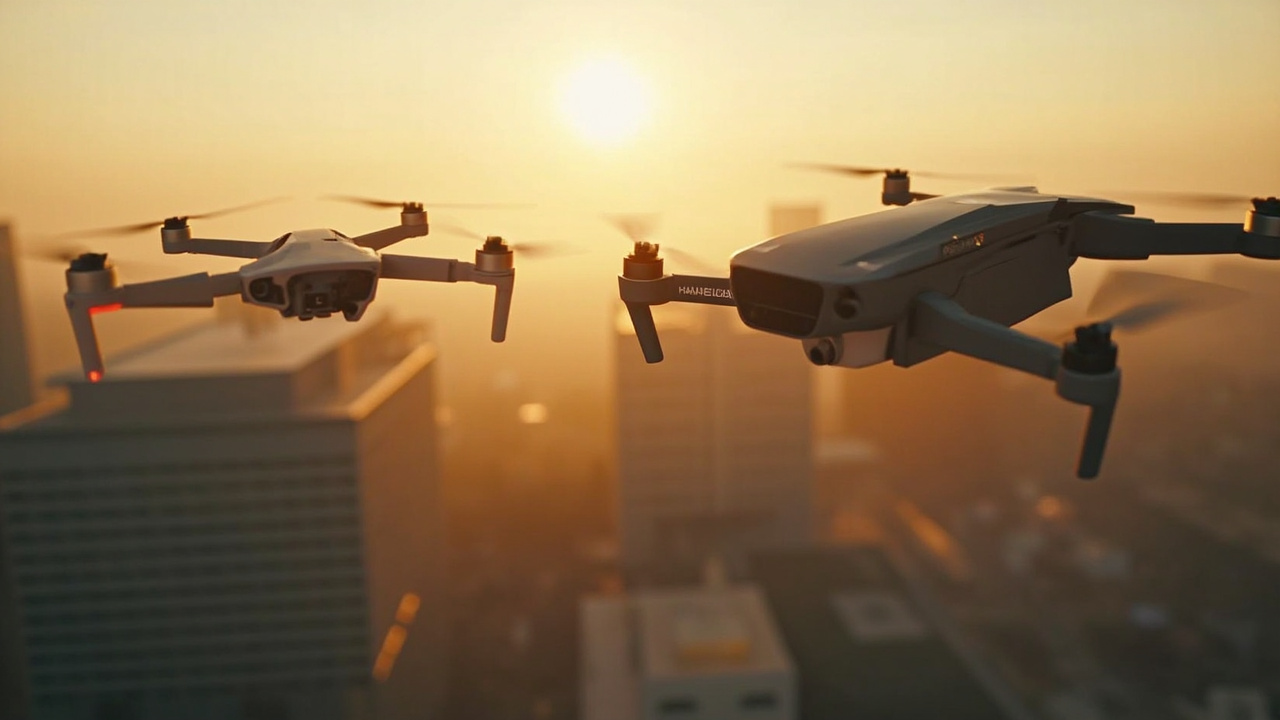
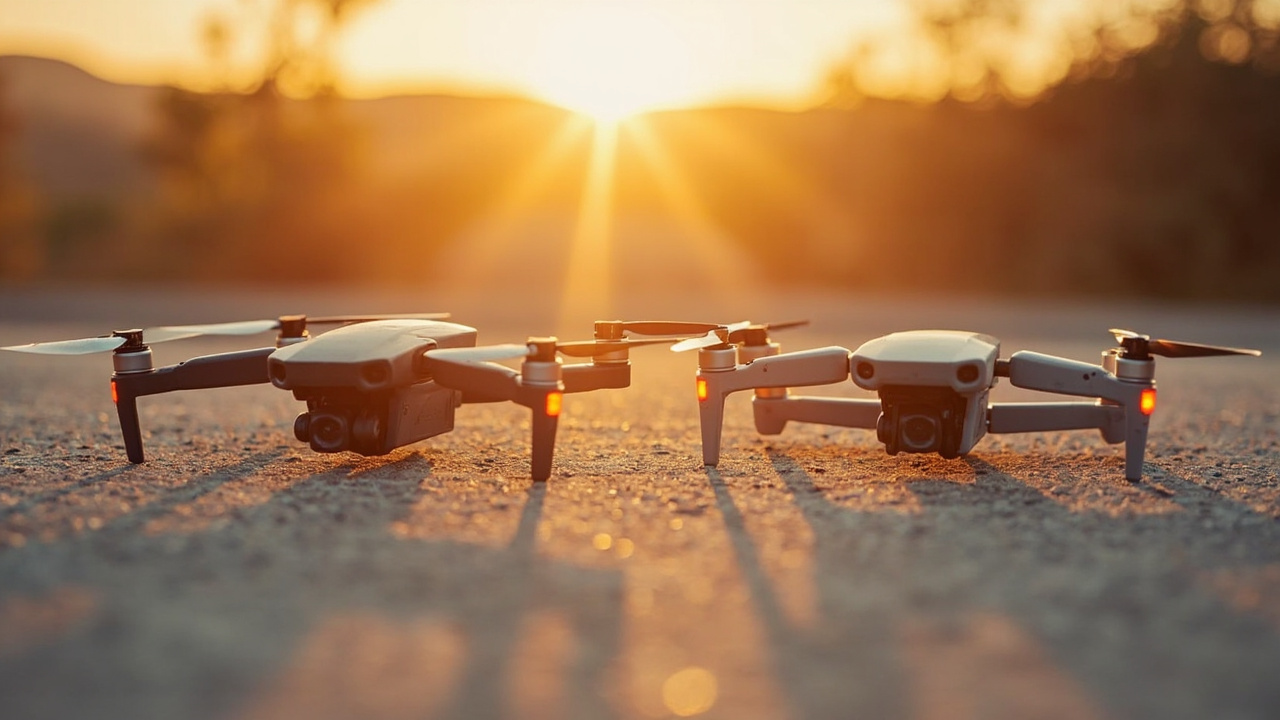
DJI shipped the Mavic 4 Pro in mid-2025 with a triple-camera array (100MP 4/3 Hasselblad + 48MP 70mm + 50MP 168mm), 6K/60fps HDR video, and 51 minutes of flight time — the longest of any folding-camera drone the company has ever made (Source: DJI official specs page). The standard kit lists at ¥277,200 in Japan, which converts to roughly $1,810 USD at ¥153/$1, with the U.S. standard kit reported by early-2026 outlets at approximately $2,299 and the Creator Combo (512GB, RC Pro 2 controller) at roughly $2,999 (Sources: DroneDJ launch coverage, Versus comparison hub, 2025-2026).
Sitting underneath it is the Autel EVO Lite+, originally launched in January 2022 at $1,499 for the Premium Bundle. By 2026 the street price has settled into the $999-$1,099 range through repeated retailer promotions. It has a 1-inch CMOS sensor, 6K/30fps video, ~40 minutes of flight time, and a 3-way obstacle avoidance system — but only one camera and no optical zoom.
Both are folding-camera drones under 1.1 kg. Both clear the USD 500 floor by a wide margin. Both shoot 10-bit A-Log / D-Log M footage that creators can grade. So the real question for 2026 buyers is the one BuyCospa always asks: does the $1,200-$1,300 premium for the Mavic 4 Pro actually pay you back in hours of useful footage, year after year?
That’s the lens we’ll use here.
The Verdict First
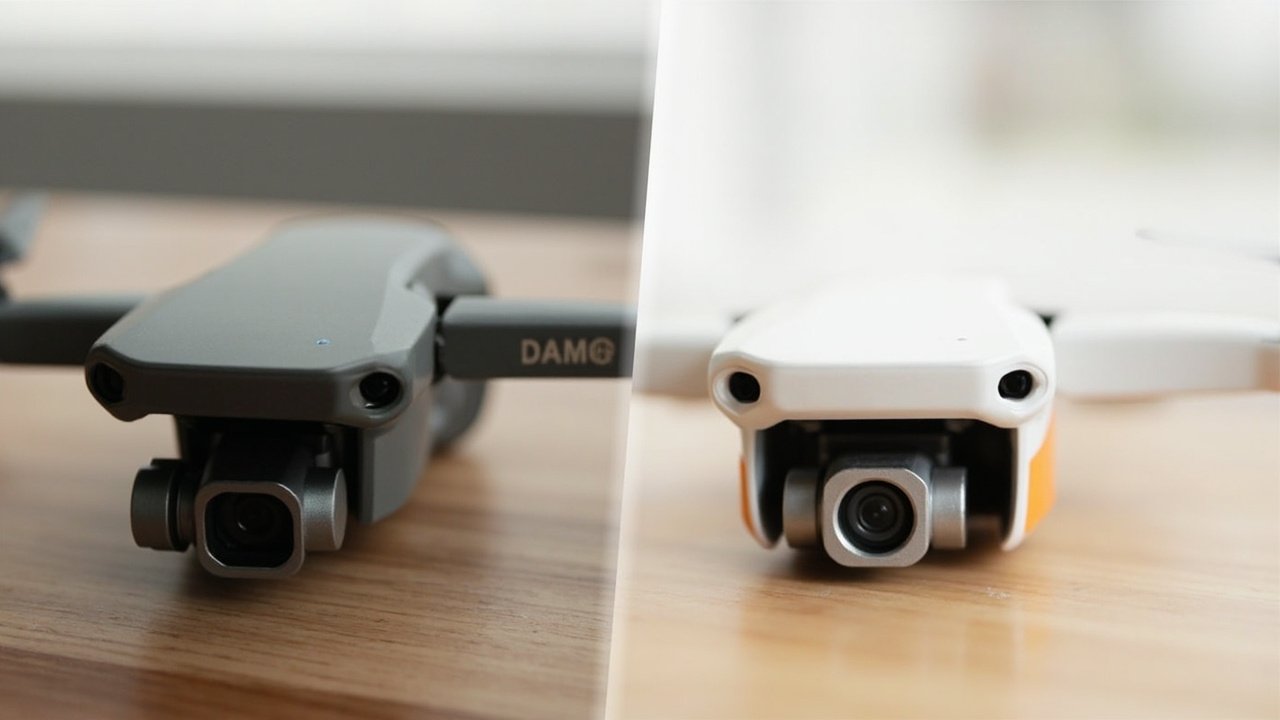
- Pick the DJI Mavic 4 Pro (~$2,299 standard / ~$2,999 Creator Combo) if you shoot events, real estate, weddings, or travel content where the zoom earns its keep. The 168mm tele camera with a 1/1.5-inch CMOS is the real story — you can frame a tight portrait from 50 m away without flying closer, which matters for noise, permits, and battery. The 51-min flight time also genuinely extends a shoot day.
- Pick the Autel EVO Lite+ (~$999 street / $1,499 launch) if you mostly fly landscapes, vlogs, and casual 4K/6K B-roll, and the 1-inch CMOS is enough. You give up the triple-camera versatility but you save ~$1,200-$1,300 upfront, get a slightly more open app ecosystem (no DJI geo-fencing in some regions), and pay about half as much for replacement batteries ($129 vs DJI’s $249 list).
- Skip both if your real use case is smartphone-grade social media clips. The DJI Mini 4 Pro ($759) and DJI Air 3S ($1,099) cover 80% of “looks like a drone shot” needs for under $1,100.
Cost score (overall value): 78/100. The Autel wins on upfront price-per-use for hobbyists. The DJI wins on per-shoot productivity for working creators. Neither is a bad buy if you match it to the work.
Key Comparison Points
Price vs Real Cost Per Use
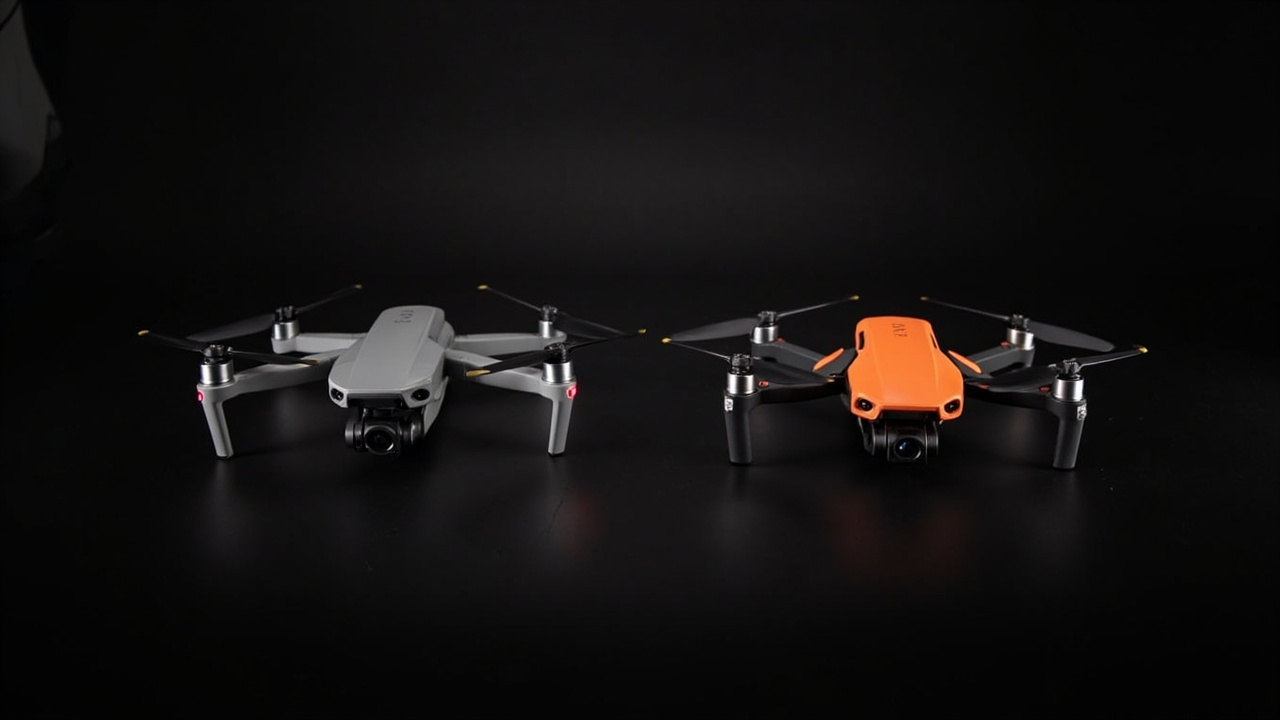
The sticker price is only the first line. The real cost is what you spend over 5 years of flying, including batteries, props, Care refresh plans, and the cost of an extra drone when (not if) you crash.
| Cost Factor | DJI Mavic 4 Pro | Autel EVO Lite+ |
|---|---|---|
| Launch MSRP (Standard) | ¥277,200 JPY / ~$2,299 USD (May 2025) | $1,499 USD (Jan 2022) |
| Current Street Price (June 2026) | $2,299 (DJI Store, no discounts yet) | $999-$1,099 (Amazon, B&H, Adorama) |
| Creator Combo / Premium Bundle | ~$2,999 (512GB + RC Pro 2 controller) | ~$1,499 at launch (3-battery bundle + case) |
| Replacement Intelligent Flight Battery | ~$249 list | ~$129 list |
| Standard 2-year Care Refresh plan | ~$269 (DJI Care Refresh 2-yr) | ~$149 (Autel Care 2-yr) |
| ND Filter Set (ND8/16/64/128) | $109 (DJI official) | $79 (third-party abundant) |
| Max Flight Time (advertised) | 51 min | 40 min |
| Realistic usable flight time (mixed) | ~38-42 min | ~30-33 min |
| Battery cycles to 80% capacity | ~500 cycles → ~19,000 flight min | ~500 cycles → ~15,000 flight min |
| Annual Flying @ 50 sorties × 30 min | 1,500 min/yr | 1,500 min/yr |
| Effective Years of Use (battery-driven) | ~12.6 yrs (limited by gimbals/electronics) | ~10 yrs (limited by gimbals/electronics) |
| Amortized Cost / Year (5-yr) | $459.80 (standard) | $199.80 (street) |
| Amortized Cost / Year (5-yr, Combo) | $599.80 (Creator Combo) | $299.80 (Premium Bundle) |
Sources: DJI Japan official store (¥277,200) and DJI U.S. store for Care Refresh pricing; Autel Robotics and Amazon U.S. listings for EVO Lite+ street pricing as of June 2026.
Three takeaways:
- Day-one gap: $1,200-$1,300 in favor of the EVO Lite+. If your use case is “occasional weekend landscape flyer,” that gap alone buys two more EVO Lite+ batteries or a full Autel Care plan.
- Per-year gap over 5 years: ~$260/yr (standard) or ~$300/yr (Creator Combo) in favor of the EVO Lite+. That’s not nothing for a hobby, but it’s a much smaller gap than the sticker suggests.
- The 51-min vs 40-min flight-time claim matters in the field. On a wedding shoot, two Mavic 4 Pro batteries (102 min of total air time) replace three EVO Lite+ batteries (120 min) — and you spend less time swapping, which can matter when light is changing.
For a hobbyist flying 50 sorties a year, the EVO Lite+ saves roughly $1,300 over 5 years. For a working creator doing 200+ sorties a year on paid gigs, the Mavic 4 Pro’s higher per-sortie productivity usually pays for the upgrade within 1-2 years.
Build Quality and Durability
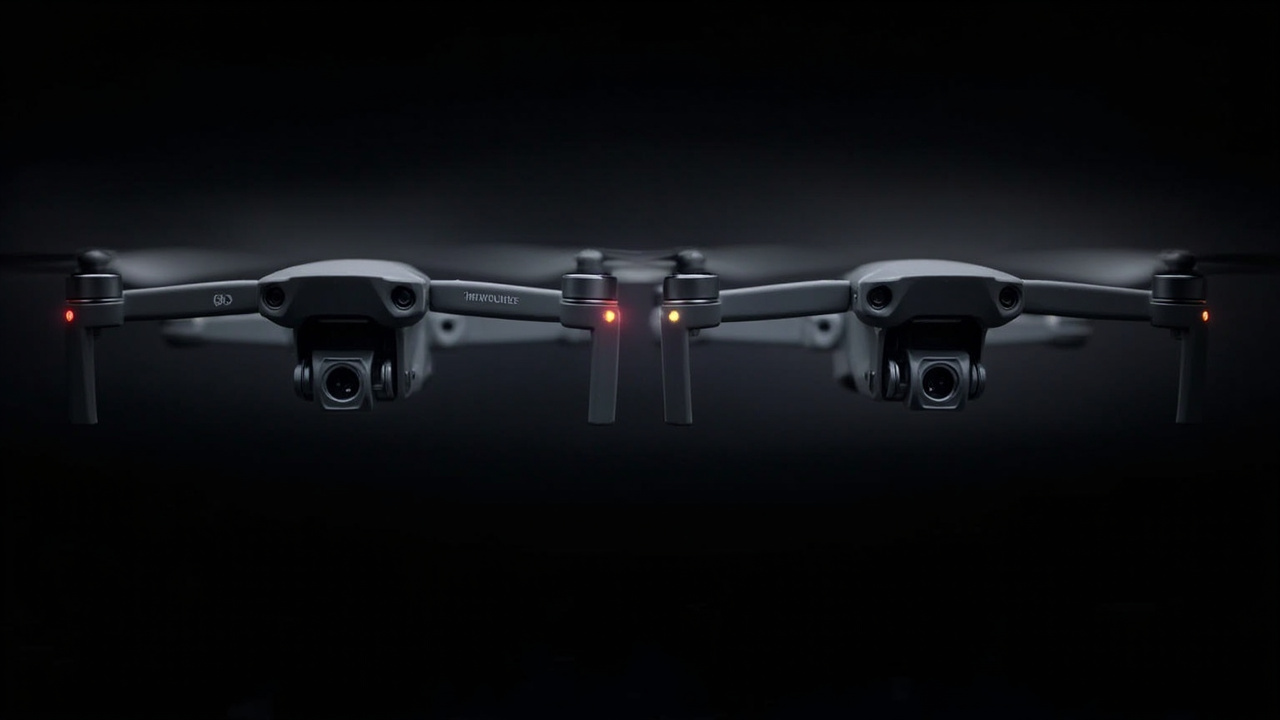
The two drones take meaningfully different approaches to physical design — both defensible, both with trade-offs.
DJI Mavic 4 Pro (1,063 g takeoff weight):
- 3-axis mechanical gimbal on all three cameras (Hasselblad main, 70mm medium tele, 168mm long tele)
- Infinity Gimbal: 70° upward rotation and 360° roll — unique in the category, useful for low-angle tracking shots and vertical social content
- Forward-facing LiDAR + omnidirectional visual obstacle avoidance, works at 0.1 lux (near-total darkness) — DJI claims best-in-class night safety
- 51-min advertised flight / 45-min hover (DJI measured, wind tunnel, 32.4 km/h forward flight, 0 m altitude, photo mode)
- Internal storage: 64 GB (standard) / 512 GB (Creator Combo), with microSD expansion
- Class C2 EU classification; 6,000 m service ceiling (3,000 m with prop guards)
- IP rating: none — light rain is a gamble
- Foldable, ~257.6 × 124.8 × 106.6 mm folded
Autel EVO Lite+ (820 g takeoff weight):
- 3-axis mechanical gimbal on the single 1-inch CMOS camera
- 3-way obstacle avoidance (front, rear, bottom) using binocular vision — no top or side sensors, so high-speed lateral flying or tight tree corridors are riskier
- 40-min advertised flight (~33 min in real-world mixed conditions per independent testers)
- Internal storage: 6 GB onboard + microSD up to 256 GB
- Max flight altitude: 800 m by default / 3,000 m service ceiling
- IP rating: none
- Foldable, slightly smaller footprint than the Mavic 4 Pro
Sources: DJI Mavic 4 Pro official specs; Autel EVO Lite FAQ and specs.
Real-world durability signal:
- Mavic 4 Pro failure reports (r/dji, March-June 2026) skew toward gimbal calibration drift after hard landings — DJI Care Refresh 2-yr typically covers one replacement. A handful of reports cite firmware-update battery-recognition bugs resolved in subsequent patches.
- EVO Lite+ failure reports skew toward gimbal yaw motor wear after 2-3 years of frequent flying, and the obstacle-avoidance sensors being fooled by low sun angles. App reliability has historically been rougher than DJI’s, though the 2024-2025 firmware updates have closed most of the gap.
Verdict on durability: The Mavic 4 Pro is the more mechanically refined drone, with better obstacle sensing and a more robust gimbal system. The EVO Lite+ is 243 g lighter, which is a real advantage for hiking/travel, and its simpler mechanics mean there’s less to go wrong. For crash frequency, both are roughly comparable in the hands of an average hobbyist.
Feature Breakdown
Imaging System
This is where the Mavic 4 Pro earns its premium most clearly.
| Camera | DJI Mavic 4 Pro (3 cameras) | Autel EVO Lite+ (1 camera) |
|---|---|---|
| Wide / Hasselblad main | 4/3 CMOS, 100 MP, f/2.0-f/11, 28mm equiv. | 1-inch CMOS, 20 MP, f/2.8-f/11, 29mm equiv. |
| Medium tele | 1/1.3-inch CMOS, 48 MP, f/2.8, 70mm equiv. | n/a |
| Long tele | 1/1.5-inch CMOS, 50 MP, f/2.8, 168mm equiv. | n/a (digital zoom only, up to 4× lossless at 4K) |
| Max video resolution | 6K/60fps HDR (Hasselblad), 4K/120fps slow-mo | 6K/30fps, 4K/60fps |
| Color depth | 10-bit D-Log M, 10-bit HLG | 10-bit A-Log, 10-bit HLG |
| Stills max resolution | 12,288 × 8,192 (Hasselblad) | 5,472 × 3,648 |
| Digital zoom (max) | None (optical via tele cameras) | 4× “lossless” at 4K |
| Night shooting | 0.1 lux LiDAR-assisted, omnidirectional | Standard night mode, front/rear/down sensors only |
Sources: DJI Mavic 4 Pro specs; Autel EVO Lite+ specs page.
The 168mm tele camera is the headline. For real estate exteriors, wedding ceremonies, and wildlife-adjacent shooting, an optical 168mm lets you frame tightly without flying close — fewer noise complaints, fewer permit issues, fewer flyaway risks. The EVO Lite+ can digitally crop into its 1-inch sensor, but it’s not optical glass, and you’ll see quality loss above ~2× zoom.
The 70mm medium tele on the Mavic 4 Pro is the underrated workhorse — it produces the portrait-friendly focal length that creators default to, with less wide-angle distortion than the main 28mm lens.
If you mostly post landscape shots to Instagram, the EVO Lite+ 1-inch sensor is plenty good. If you shoot paid work or want genuine focal-length flexibility, the Mavic 4 Pro wins decisively.
Transmission and Range
- Mavic 4 Pro: DJI O4+ transmission, 10-bit HDR video at up to 30 km (FCC, US open environment), 1080p/60fps live feed. The Japan-spec model is capped at 15 km (Japanese radio rules).
- EVO Lite+: Autel SkyLink transmission, 2.4 / 5.8 / 5.2 GHz tri-band, advertised up to 12 km (FCC) range, 2.7K/30fps live feed.
In practice, both lose usable video well before the rated range (trees, buildings, and even light humidity cut range by 50-70%). The Mavic 4 Pro’s higher bitrate and 1080p live feed are noticeably sharper on the controller screen for far-distance framing.
Software and App
- DJI Fly app: more mature, faster firmware updates, better auto-edit templates, deeper integration with DJI Mic 2 and Osmo Pocket 3. Caveat: DJI Fly enforces geo-fencing in some regions (airport no-fly zones can lock you out without an unlock request).
- Autel Sky app: cleaner UI, no enforced geo-fencing in most regions, no forced DJI account required for some features. Caveat: third-party accessory support is narrower (e.g., fewer ND filter options at common focal lengths), and the app’s been historically slower to add features like ActiveTrack 360°.
For commercial pilots who fly near airports or in countries with restrictions on DJI, the EVO Lite+ is the lower-friction option. For everyone else, DJI Fly is the more polished experience in 2026.
Pros and Cons
DJI Mavic 4 Pro — Pros
- Triple-camera system (28mm + 70mm + 168mm) gives genuine optical focal-length flexibility
- 100MP 4/3 Hasselblad main sensor — best image quality in any folding drone under $3,000
- 51-min flight time — 11 min longer than the EVO Lite+, real in the field
- 0.1 lux LiDAR-assisted night obstacle avoidance — meaningfully safer after dark
- DJI O4+ 30 km transmission with sharp 1080p/60 live feed
- Infinity Gimbal with 70° up-rotation enables low-angle and vertical shooting
DJI Mavic 4 Pro — Cons
- $2,299 standard / $2,999 Creator Combo — almost 2× the EVO Lite+ street price
- 1,063 g — heavier than the EVO Lite+, noticeably less comfortable on long hikes
- No IP rating — same risk as the EVO Lite+ but with more money at stake
- Battery is $249 — the single most expensive consumable in any consumer drone
- Geo-fencing can lock you out near airports without manual unlock
- Firmware updates occasionally introduce bugs that take weeks to resolve
Autel EVO Lite+ — Pros
- ~$999-$1,099 street price — by far the cheaper buy for a 1-inch CMOS drone
- 820 g takeoff weight — 243 g lighter than the Mavic 4 Pro, friendlier for travel
- 1-inch CMOS sensor with 6K/30fps and 10-bit A-Log — strong image quality for the price
- No DJI geo-fencing — fewer bureaucratic surprises in restricted airspace
- Replacement battery is $129 — roughly half the cost of the Mavic 4 Pro’s
- Open accessory ecosystem — third-party ND filters, cases, and props are abundant
Autel EVO Lite+ — Cons
- Single fixed-focal-length camera — digital zoom is the only option for tight framing
- 20 MP max stills — half the linear resolution of the Mavic 4 Pro’s Hasselblad
- 3-way obstacle avoidance only (front/rear/bottom) — no top/side sensing
- 6 GB internal storage — fills up fast on a 6K shoot day
- App updates are slower and third-party accessory ecosystem is narrower
- No optical zoom — the digital 4× “lossless” zoom is still digital
Best For / Skip If
Best For (DJI Mavic 4 Pro):
- Wedding and event photographers who need the 168mm tele to shoot ceremonies from a distance, and the 51-min flight time to cover a full event with two batteries
- Real estate videographers who need 4K HDR aerial exteriors with cinematic focal-length flexibility
- Working travel creators flying 100+ paid gigs/year where the per-sortie productivity of three cameras justifies the $2,299 entry fee
- Anyone who flies frequently after dark and benefits from 0.1-lux LiDAR obstacle sensing
Best For (Autel EVO Lite+):
- Hobbyist landscape and travel flyers who want 6K/30fps and a 1-inch sensor without the $2,000+ price tag
- Hikers and backpackers who value the 820 g weight and don’t want to carry the extra 243 g
- Pilots flying in DJI-restricted regions (some military bases, certain national parks) where Autel’s lighter geo-fencing matters
- First-time premium drone buyers who want the lowest possible entry point to the 1-inch-sensor class
Skip If:
- Your deliverable is social media vertical clips under 60 seconds — get the DJI Mini 4 Pro for $759 and pocket the difference
- You mostly fly indoors or in tight spaces — neither drone is ideal; look at the DJI Avata 2 for FPV-style indoor work
- You fly fewer than 10 times a year — renting is almost always cheaper than owning at this price tier
Bottom Line
The DJI Mavic 4 Pro is the more capable drone by a wide margin on imaging, flight time, and obstacle sensing. It costs about $1,300 more upfront than the Autel EVO Lite+. Whether that $1,300 is worth it depends entirely on whether the 168mm tele camera and the extra 11 minutes of flight time will actually show up in your work.
If you shoot for fun: buy the EVO Lite+, spend the savings on a spare battery and a 2-year Care plan, and call it done. You’ll have ~$1,300 still in your pocket for travel, props, and the inevitable “I should have gotten the smaller drone” moment on a windy ridge.
If you shoot for clients: buy the Mavic 4 Pro, ideally the Creator Combo with the 512GB internal storage and the RC Pro 2 controller. The 168mm tele will earn its keep within 4-6 paid shoots, and the rest of the feature gap will fall into place after that.
Either way, both drones will outlive the next two generations of your phone — that’s the real “smart shopping” math at this price tier.
Buy smart. Get more value.