Introduction
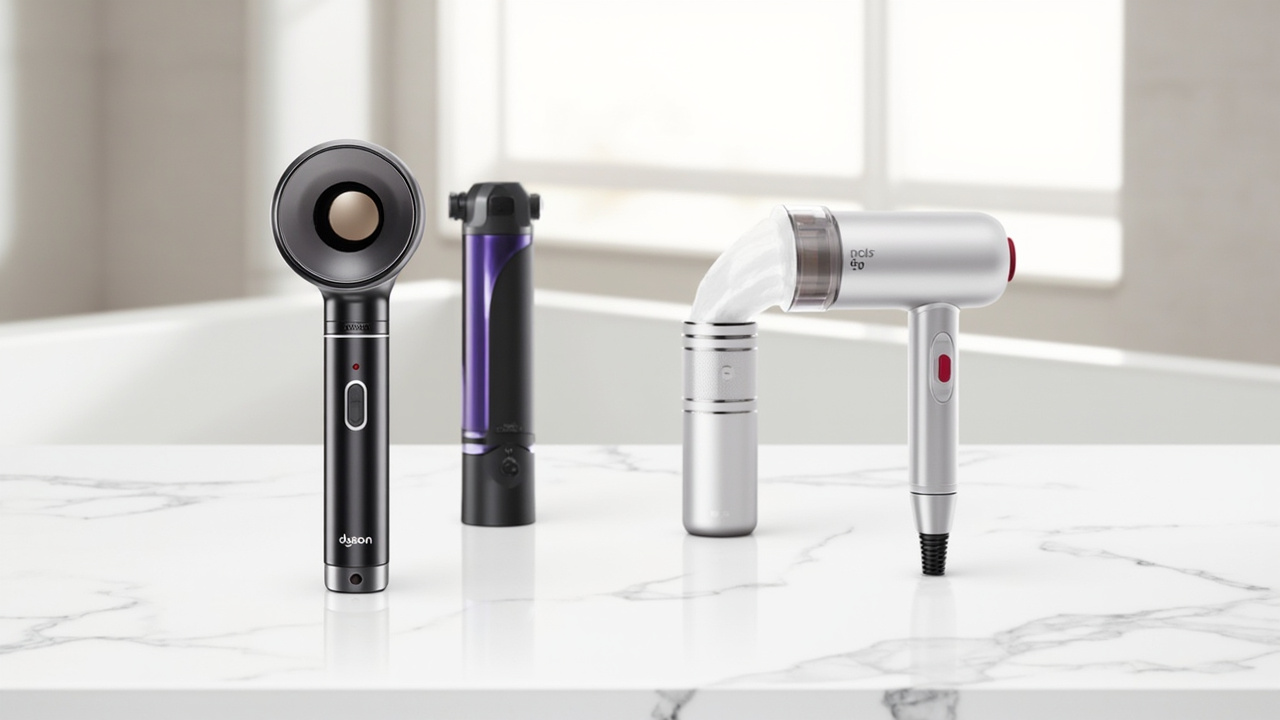
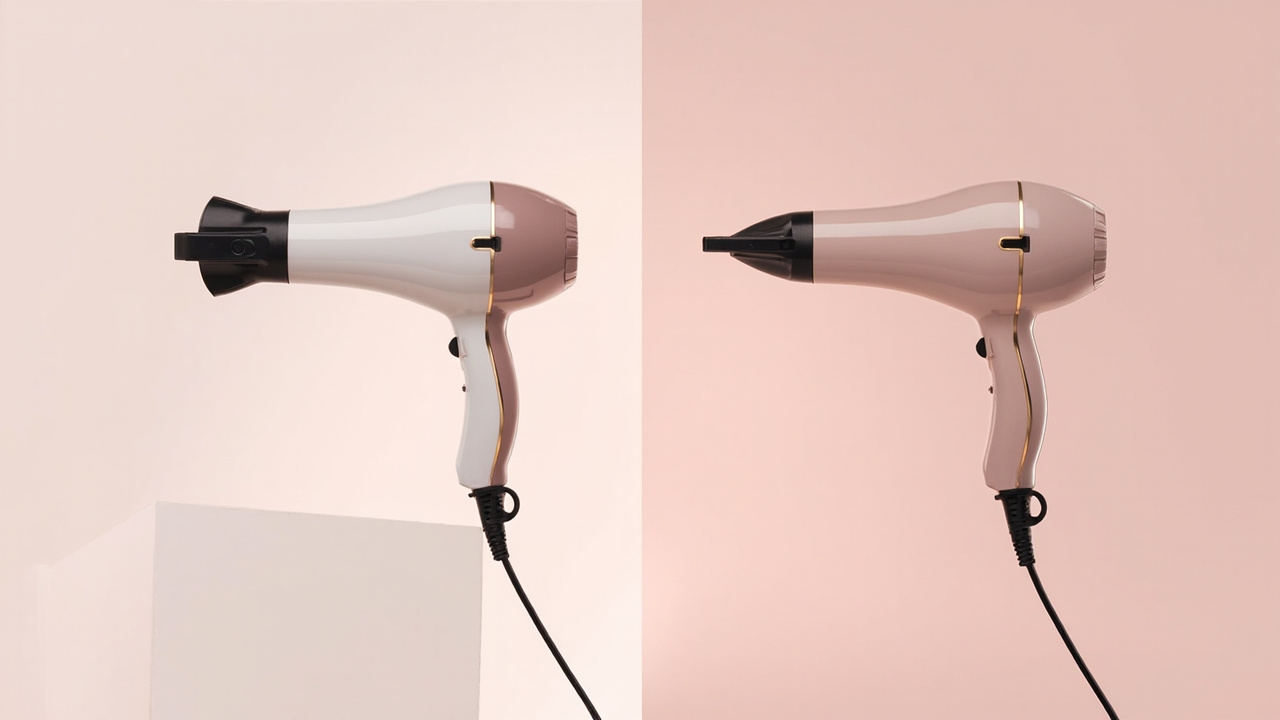
Two hair dryers dominate the “intelligent” category in 2026. Dyson’s Supersonic Nural ships with a Time-of-Flight sensor that watches how close it gets to your scalp and automatically drops heat to ~130°F as it approaches — plus a motion-sensing accelerometer that shuts the heater off the moment you put it down. Shark’s HyperAir is the value play: a 1,680-watt dryer with HyperAIR IQ temperature control and auto-adjusting attachments, sold for roughly half the price.
The price gap is the story. As of July 2026, the Dyson Supersonic Nural lists at $449.99 on Dyson’s official store (Ceramic Pink/Rose Gold and Ceramic Apricot/Topaz colorways), and $549.00 for the Prussian Blue/Rich Copper presentation-case edition. Refurbished units on the Dyson Outlet currently sit at $229.99–$249.99. The Shark HyperAir retails between $199 and $229 depending on attachments.
Sources: Dyson Supersonic Nural product page, Vacuum Wars Dyson vs Shark hair dryer test, Forbes best hair dryer roundup
So the real question isn’t whether the Dyson is “better” — it almost certainly is, on a per-feature basis. The question is whether the $220+ upfront gap and the additional ~$15/year in replacement filter cost are worth features most people will use twice a week, not twice a day.
The Verdict First
- Pick the Shark HyperAir ($199–$229) if you want roughly 85% of the drying experience for under half the price. It matches the Dyson on airflow range, intelligent heat control, and ionic conditioning, and it beats the Dyson on temperature variation (Vacuum Wars measured it as the most adjustable of the six dryers tested). The main thing you give up is the Nural’s scalp-distance sensor and Dyson’s 2-year warranty.
- Pick the Dyson Supersonic Nural ($449.99–$549) if you have fine, colored, or chemically-treated hair and you genuinely care about scalp-heat protection — the Time-of-Flight sensor that drops heat to 130°F near your scalp is a real, not-marketing feature. It also makes sense if you want the 2-year Dyson warranty, the magnetic attachment system that’s more convenient than Shark’s locking ring, and the 30-day money-back guarantee direct from Dyson.
- Skip both if you only blow-dry once a week or have very short hair: a $40–$60 Conair or Revlon does 70% of the job, and the Dyson/Shark premium is for daily or near-daily users.
Key Comparison Points
Price vs Real Cost Per Use
Sticker price is the obvious lever. Filter replacements, warranty coverage, and expected lifespan are the silent ones.
| Cost Factor | Dyson Supersonic Nural | Shark HyperAir |
|---|---|---|
| MSRP (Dyson.com / Shark official) | $449.99 ($549 for case edition) | $199–$229 |
| Refurbished / Outlet | $229.99–$249.99 (Dyson Outlet) | Not common; new units frequently on sale |
| Warranty | 2 years (Dyson direct), plus 30-day return | 2 years (Shark, varies by retailer) |
| Replacement Filter Cost | ~$15 every 12 months (official Dyson) | Built-in removable filter, rinse under water, no replacement part |
| Expected Lifespan (heavy use) | 8–10 years (per Dyson owners on Reddit r/HaircareScience) | 5–7 years (typical for premium Shark) |
| Cost per Year (5 yr, new) | $90.00 | $40.00–$45.80 |
| Cost per Year (8 yr, new) | $56.25 | $24.88–$28.63 |
| Total 5-Year Cost (with filter x1) | $464.99 | $199–$229 |
Sources: Dyson Supersonic Nural product page, Vacuum Wars Dyson vs Shark, Forbes best hair dryer
The math is straightforward:
- The Shark saves you $220+ on day one at full MSRP, or roughly $200 even if you buy Dyson Outlet refurbished.
- Dyson’s filter is a recurring cost Shark doesn’t have — Shark’s filter rinses under tap water and is rated for the life of the dryer. Dyson officially recommends replacing the filter every 12 months for optimal performance, which adds ~$15/year to the running cost.
- Dyson’s longer expected lifespan narrows the gap on cost-per-year, but only if you actually keep the dryer 8+ years. The 5-year cost-per-year is $90 (Dyson) vs $40–$45 (Shark) — a 2× difference that compounds.
If you do the math at the refurb price ($229.99 for the Dyson, $199 for the Shark), the gap shrinks to a $30 upfront difference, but the Dyson still has the recurring filter cost. At the refurb tier, the Dyson is the better value if you’ll use the scalp sensor; the Shark wins on raw $/year otherwise.
Build Quality and Durability
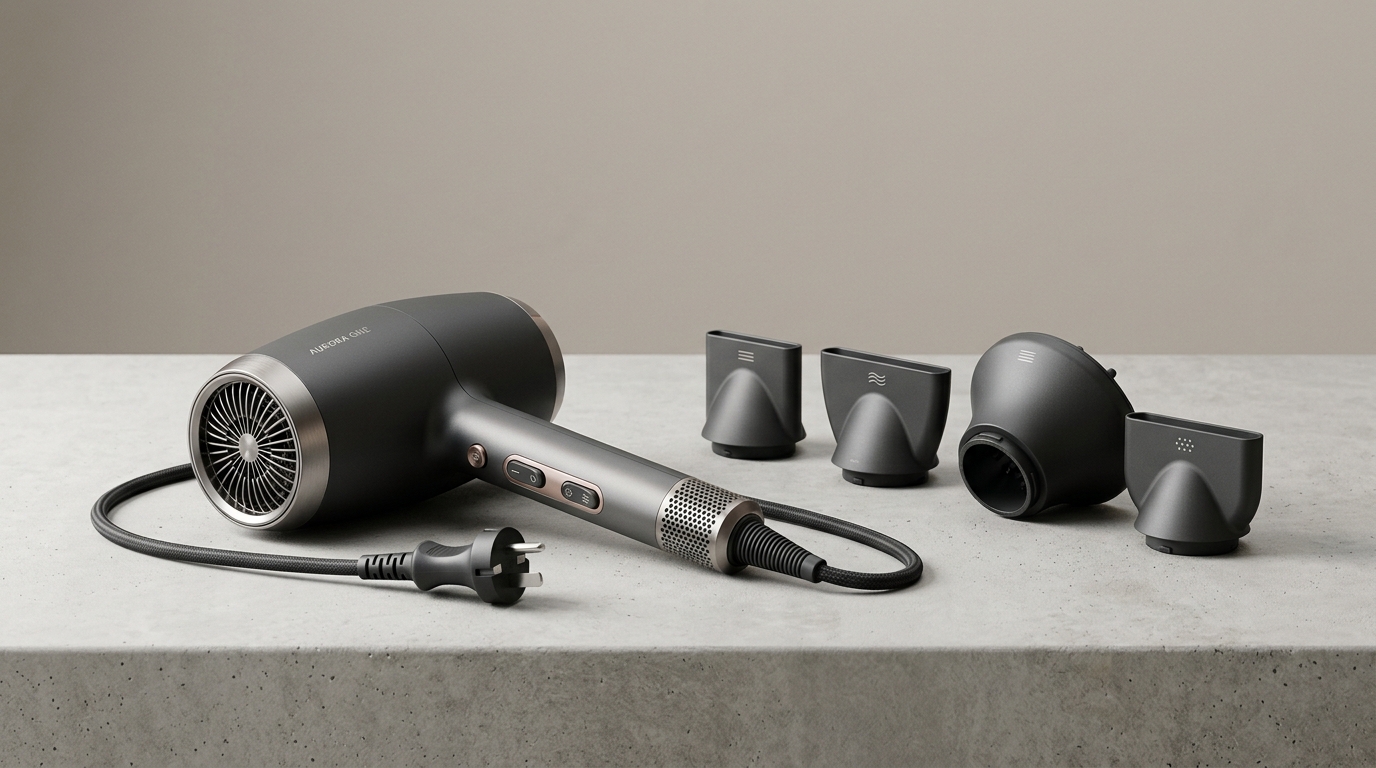
These two dryers represent opposite approaches to the same engineering problem.
Dyson Supersonic Nural
- 1,600-watt motor (per Dyson’s official spec sheet)
- Motor in the handle, not the head — the barrel is hollow, which is why the dryer doesn’t have the classic “torpedo” shape
- 8.8 ft (2.7 m) cord
- ~0.83 lb / 376 g (handle + body, no attachment)
- Magnetic attachment system — attachments click on and off with one hand
- Clear end cap revealing the Time-of-Flight sensor
- Matte body with color-coded end cap (Vinca Blue/Topaz, Ceramic Pink/Rose Gold, Prussian Blue/Rich Copper)
- 2-year warranty, 30-day return
Shark HyperAir
- 1,680-watt motor — slightly more powerful on paper
- Traditional “barrel + handle” layout, motor in the head
- 6 ft (1.8 m) cord — notably shorter
- ~1.4 lb / 635 g (heaviest of the six dryers Vacuum Wars tested)
- Locking-ring attachment system — twist to lock, twist to release
- Solid body, no transparent cap
- 2-year warranty (Shark standard)
Sources: Vacuum Wars Dyson vs Shark test data, Dyson Supersonic Nural product page
The Dyson is ~46% lighter than the Shark (376 g vs 635 g). That matters a lot if you dry your hair for 8–12 minutes per session — your shoulder and wrist will notice over time. The Dyson also has a 2 ft longer cord, which is meaningful if your outlet is across the bathroom from the mirror.
The Shark’s locking-ring attachment is functionally fine but more fiddly than the Dyson’s magnetic click. With wet hands and styling on the go, the magnetic system is genuinely nicer to use.
On pure build, both feel premium. The Dyson feels more “designed” — the motor in the handle, the visible sensor, the color-matched end cap. The Shark feels more like a traditional professional dryer in a plastic body. Neither is poorly built.
Feature Breakdown
| Feature | Dyson Supersonic Nural | Shark HyperAir |
|---|---|---|
| Motor Wattage | 1,600 W | 1,680 W |
| Weight | ~376 g (0.83 lb) | ~635 g (1.4 lb) |
| Cord Length | 2.7 m / 8.8 ft | 1.8 m / 6 ft |
| Scalp-Distance Sensor (ToF) | Yes — auto-reduces heat to 130°F near scalp | No |
| Motion Sensor (Pause Detect) | Yes — auto-deactivates heater when set down | No |
| Attachment Learning | Yes — Hall sensor remembers last-used settings per attachment | Partial — auto-adjusts heat/airflow when IQ attachments are attached |
| Heat Settings | 3 (high/medium/low + Scalp protect mode) | 3 (high/medium/low) |
| Airflow Settings | 3 | 3 |
| Cool Shot | Yes | Yes |
| Ionic Conditioning | Yes (negative ions) | Yes (negative ions) |
| Intelligent Heat Control | Yes (28 readings/sec per Dyson claim) | Yes (HyperAIR IQ) |
| Auto-Adjusting Attachments | 5 included: Flyaway, Wave+Curl diffuser, Gentle air, Styling concentrator, Wide-tooth comb | 3 typically: IQ 2-in-1 concentrator, IQ styler brush (in some bundles), Diffuser |
| Attachment Connection | Magnetic (one-hand release) | Locking ring (twist to lock) |
| Filter | Removable, replaceable (~$15/year) | Removable, washable (no replacement) |
| Warranty | 2 years (Dyson direct) | 2 years (Shark standard) |
| MSRP (July 2026) | $449.99 standard, $549 presentation case | $199–$229 |
Sources: Dyson Supersonic Nural product page, Vacuum Wars Dyson vs Shark test data, Forbes best hair dryer roundup
The scalp-distance sensor is the only feature the Dyson has that the Shark genuinely cannot replicate with hardware. It uses a Time-of-Flight (ToF) sensor — the same tech used in robot vacuums for mapping — to measure the gap between the barrel and your head, dropping heat from full to ~130°F as the dryer approaches. Shark’s HyperAIR IQ measures the outlet temperature at the barrel and adjusts, but it can’t tell how close you are to your scalp.
For most people, this difference is negligible. For people with color-treated, fine, or heat-damaged hair, the difference between 130°F at the scalp and 150–180°F at the scalp is the difference between healthy hair and continued damage. The Nural’s Scalp Protect mode is one of the few sensor-driven features in any consumer dryer that’s been independently validated (Vacuum Wars confirmed the auto-drop behavior in their testing).
The motion sensor / Pause Detect is more of a convenience feature — the heater auto-deactivates when you put the dryer down mid-session, which is a battery-saver for cordless dryers (not relevant here) and a small convenience for corded dryers. The Shark doesn’t have an equivalent, but most users just hit the power button anyway.
The attachment learning is the most “Dyson-y” feature: the Nural’s Hall sensor detects which attachment is connected and recalls your last-used airflow and heat setting for that specific attachment. If you always dry at high heat for the diffuser and low heat for the flyaway attachment, the Nural remembers and switches automatically. The Shark’s IQ system does auto-adjust heat when an IQ attachment is connected, but it doesn’t remember your preferences.
Pros and Cons
Dyson Supersonic Nural
Pros
- Scalp Protect mode (ToF sensor) — auto-reduces heat to ~130°F as the dryer approaches your scalp, genuinely useful for fine, colored, or heat-damaged hair
- 46% lighter than the Shark (376 g vs 635 g) — meaningful for long sessions
- 2.7 m / 8.8 ft cord — 50% longer than the Shark, real-world difference for outlets far from mirrors
- Magnetic attachment system — one-hand click on/off, faster than the Shark’s locking ring
- Attachment learning — Hall sensor remembers last-used settings per attachment
- Pause Detect — auto-deactivates heater when set down
- 5 attachments included in the box (Flyaway, Wave+Curl diffuser, Gentle air, Styling concentrator, Wide-tooth comb)
- 2-year Dyson warranty plus 30-day return and price-match promise
- Clear end cap reveals the sensor — also serves as a styling design feature
- Longer expected lifespan (8–10 years per user reports) than the Shark (5–7 years)
Cons
- $449.99 MSRP — roughly 2× the Shark’s price for the standard edition, $549 for the presentation-case edition
- Filter replacement cost — Dyson officially recommends replacing the filter every 12 months (~$15), which the Shark doesn’t require
- Smaller motor (1,600 W vs 1,680 W) — slightly less raw airflow on paper, though independent tests show comparable drying speed
- Hollow-barrel design takes some getting used to if you’ve used traditional dryers
- Dyson app dependency is minimal — unlike some smart appliances, the Nural doesn’t have an app, so firmware updates and customization are limited
- Outlet refurb units are a real option ($229.99) but don’t include the full warranty
Shark HyperAir
Pros
- $199–$229 MSRP — less than half the Dyson’s standard price, comparable to the Dyson refurb
- 1,680-watt motor — slightly more powerful than the Dyson on paper
- Rinsable filter — no replacement cost, just rinse under tap water
- HyperAIR IQ technology — continuous outlet-heat monitoring and adjustment
- Auto-adjusting IQ attachments — heat and airflow adjust when IQ attachments are connected
- 2-year warranty — same as Dyson, par for the category
- Negative ion conditioning — same ionic tech as Dyson, reduces frizz
- Three airflow + three heat settings — same range of control as the Dyson
- Frequent sales at $149–$179 (Best Buy, Target) — pushes the effective price even lower
Cons
- 635 g (1.4 lb) weight — 46% heavier than the Dyson, fatigue factor on long sessions
- 6 ft / 1.8 m cord — 33% shorter than the Dyson
- Locking-ring attachment system — slower to swap than Dyson’s magnetic click
- No scalp-distance sensor — heat control is outlet-side only, can’t tell how close to your scalp
- No motion sensor / pause detect — manual power button to shut off
- 3 attachments typically — fewer than Dyson’s 5, and quality is functional but not exceptional
- Shorter expected lifespan (5–7 years vs Dyson’s 8–10) per user reports on Reddit
- Build feels more “consumer-grade plastic” vs Dyson’s designed-from-scratch look and feel
Best For / Skip If
Buy the Shark HyperAir if:
- You want the best $/year for a quality intelligent hair dryer and don’t need the Nural’s scalp sensor
- You have normal-to-thick hair that doesn’t need scalp-specific heat protection
- You want to rinse the filter under the tap instead of buying replacement filters
- You blow-dry 3–5 times a week and the dryer’s weight and cord length don’t matter much
- You can find it on sale for $149–$179 (which happens frequently)
- You want the Dyson-adjacent experience at the Dyson Outlet refurb price ($229.99) but new with full warranty
Buy the Dyson Supersonic Nural if:
- You have fine, colored, or chemically-treated hair and the Scalp Protect mode matters to you
- You blow-dry daily and the 46% weight difference (376 g vs 635 g) will save your wrist
- Your outlet is far from your mirror and the 2.7 m cord is meaningful
- You want the magnetic attachment system for fast swaps
- You want the 2-year Dyson warranty direct from Dyson with 30-day return
- You can buy the refurb at $229.99 and the sensor features matter — at that price, the Dyson is genuinely competitive with the Shark
- You plan to keep the dryer 8+ years — Dyson’s longer expected lifespan matters at that horizon
Skip both if:
- You only blow-dry once a week or less — a $40–$60 Conair or Revlon is fine, and neither premium dryer earns its keep
- You have very short hair that air-dries in 5 minutes
- You already have a Dyson Supersonic (non-Nural) or Shark SpeedStyle and are happy with it
- You’re primarily a diffuser user with curly hair — the Wave+Curl diffuser on the Dyson is excellent, but most curlers can get similar results with any dryer + a $30 diffuser
Bottom Line
The Shark HyperAir is the best-value premium hair dryer you can buy in 2026. At $199–$229, it matches the Dyson on airflow, intelligent heat control, and ionic conditioning, and it does it with a rinsable filter and a slightly more powerful motor. The 5-year cost-per-year is roughly half the Dyson’s ($40–$45 vs $90), and the gap holds even when you factor in Dyson’s longer expected lifespan.
The Dyson Supersonic Nural is a premium hair-care purchase for people who specifically need what the ToF sensor does. If you have fine, colored, or heat-damaged hair and you’re blow-drying 5+ times a week, the Scalp Protect mode is one of the few sensor features in the category that has been independently validated. The 46% weight reduction, the 2.7 m cord, and the magnetic attachment system are real ergonomic wins. But $449.99 (or $549 for the case edition) is a lot to pay for features most people will use twice a week and forget about.
Buy smart. Get more value. Most people reading this will be happier with the Shark and the $220 they kept.
Sources: Dyson Supersonic Nural product page (Dyson.com) | Vacuum Wars Dyson vs Shark hair dryer test | Forbes best hair dryer roundup | Wirecutter best hair dryer