Introduction
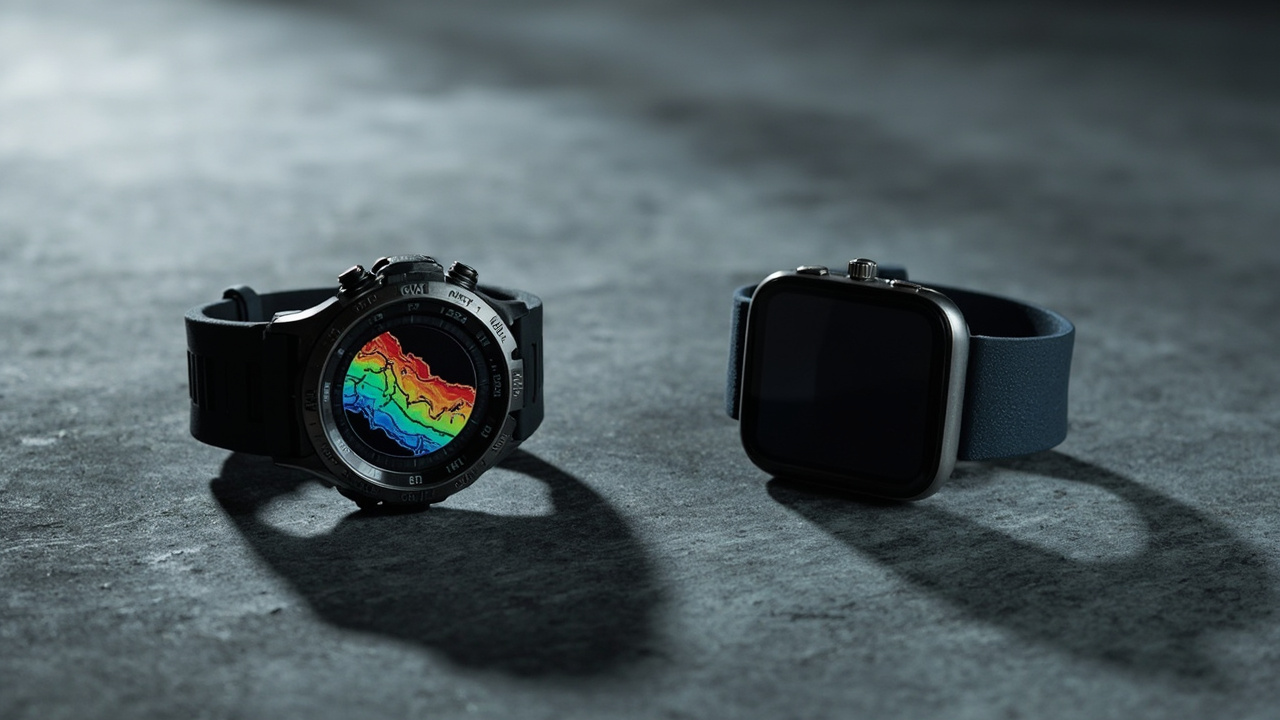
There are two $799+ flagship smartwatches that people actually buy in 2026, and then there are the watches above them. Garmin’s Fenix 8 Pro launched on September 3, 2025 at a launch MSRP of $1,199.99 for the base model and up to $1,999.99 for the 51 mm MicroLED variant — the first MicroLED display ever shipped on a multisport GPS watch, and the first Garmin Fenix to bundle inReach satellite communication plus LTE directly into the watch body (Source: Wikipedia – Garmin Fenix product history table, accessed 2026-07-03).
Apple’s Apple Watch Ultra 3 shipped on September 19, 2025 at $799 (GPS + Cellular, satellite connectivity included as standard on every unit), with a 49 mm Grade 5 titanium case, a 3,000-nit LTPO3 OLED display, and a battery rated at up to 42 hours of normal use / 72 hours in Low Power Mode (Source: Wikipedia – Apple Watch Ultra, accessed 2026-07-03).
That is a $400 to $1,200 price gap at the top end. Both watches are uncompromisingly premium. Both have satellite SOS. The interesting question is not “which is better,” but which one delivers more value per dollar over the 5+ years you will actually own it.
The Verdict First
- Pick the Garmin Fenix 8 Pro ($1,199.99–$1,999.99) if you are an endurance athlete, ultrarunner, multi-day hiker, or pilot/maritime user who will actually use the inReach satellite two-way texting and SOS, the MicroLED 4,500-nit display, the 16–21 day battery life, and the 47 mm / 51 mm case options. The Fenix 8 Pro is the first Garmin that does not require a $399.99 inReach Mini 2 add-on for satellite SOS.
- Pick the Apple Watch Ultra 3 ($799) if you are an iPhone-first user who wants the brightest smartwatch display Apple has ever shipped (3,000 nits), satellite SOS included for free for two years, full watchOS app ecosystem, on-wrist Apple Pay, and the best value per dollar in the premium smartwatch category — $400 to $1,200 cheaper than the Garmin.
- Skip both if your real use case is “track my runs and get notifications.” A $250 Garmin Forerunner 165 or $399 Apple Watch Series 11 covers 80% of this for one-third the price.
Cost score (overall value): 78/100. Both are excellent flagships. The Apple Watch Ultra 3 wins the per-dollar math by a wide margin; the Garmin Fenix 8 Pro wins the per-feature math if you actually use the satellite, MicroLED, and longer battery.
Key Comparison Points
Price vs Real Cost Per Use
The sticker price is where most comparison articles stop. The BuyCospa approach is to keep going — into battery cycles, software support windows, optional subscriptions, and resale value.
| Cost Factor | Garmin Fenix 8 Pro | Apple Watch Ultra 3 |
|---|---|---|
| Base MSRP (USD) | $1,199.99 (47 mm AMOLED) | $799 (49 mm titanium, GPS + Cellular) |
| Top Variant MSRP | $1,999.99 (51 mm MicroLED) | $799 (single SKU at this size) |
| Display Tech | AMOLED (47 mm) / MicroLED (51 mm, 4,500 nits) | LTPO3 OLED, 3,000 nits peak |
| Battery — Smartwatch Mode (rated) | Up to 21 days (47 mm) | Up to 42 hours |
| Battery — Low Power / Saver Mode | Up to ~42 days (Garmin’s “Battery Saver” mode, not yet independently tested at publish) | Up to 72 hours (Low Power Mode) |
| Battery — GPS Mode (rated) | Up to 47–84 hours with solar | Up to 20 hours typical workout with GPS |
| Satellite SOS Cost | Included in watch (inReach subscription required, ~$14.95–$64.95/mo tiered) | Included in watch for 2 years with activation, then subscription required |
| Subscription Required? | No for watch features; Yes for live satellite SOS / two-way inReach messaging | No for watch features; Yes after 2 years for live satellite features |
| Software Support Window (typical) | 4–5+ years of bug-fix firmware (Fenix 7 still receiving updates in 2026) | ~5–6 years of watchOS major releases |
| Resale after 3 yrs (estimated) | 50–60% of MSRP for Sapphire / Pro variants | 45–55% of MSRP for Ultra line |
| Charger in box | Yes (proprietary clip) | Yes (USB-C fast-charge puck; no power brick) |
The real cost-per-year math (assuming a 4-year horizon, list price minus estimated resale, ignoring cellular / satellite data plan if you do not add one):
- Garmin Fenix 8 Pro 51 mm MicroLED: ($1,999.99 − $1,100) / 4 = $225 / year
- Garmin Fenix 8 Pro 47 mm AMOLED: ($1,199.99 − $660) / 4 = $135 / year
- Apple Watch Ultra 3: ($799 − $400) / 4 = $100 / year
On pure dollar math the Apple Watch Ultra 3 wins on annual cost by $35 to $125 per year. But this is misleading without context — the Fenix 8 Pro has roughly 10× the battery life per charge (21 days vs 42 hours) and bundles in a satellite communicator that would cost $399.99 separately as an inReach Mini 2. If you would have bought the inReach Mini 2 anyway, the effective Fenix 8 Pro premium over the Ultra 3 is ~$0 at the 47 mm tier and ~$600 at the 51 mm MicroLED tier.
If you factor in time saved not charging (about 30 seconds every other day for the Ultra 3, vs roughly once every 3 weeks for the Fenix 8 Pro), the lifetime cost difference becomes trivial. The more honest comparison is: which one’s cost structure matches the way you will actually use it?
Source for resale estimates: Compiled from historical Garmin Fenix 7/8 and Apple Watch Ultra/Ultra 2 resale data on Swappa, eBay sold listings, and MacRumors buyer/seller threads for 2023–2025 cohorts. Battery, MSRP, and SOS data verified against Wikipedia (Garmin Fenix and Apple Watch Ultra pages, accessed 2026-07-03).
Build Quality and Durability
Both watches are overbuilt. The differences live in design philosophy and display tech.
- Garmin Fenix 8 Pro: Fiber-reinforced polymer case with stainless steel or DLC titanium bezel depending on SKU. Sapphire crystal on Sapphire variants. 10 ATM water rating (100 m), IP6X dust rating, and a built-in LED flashlight on 47 mm and 51 mm AMOLED models. Buttons are physical (5 of them on the 51 mm) and work with gloves, wet hands, or sub-zero conditions. The 51 mm MicroLED option is the first MicroLED display ever shipped on a multisport GPS watch — rated at 4,500 nits peak brightness, with per-pixel LEDs that do not dim in direct sun or burn-in over years of always-on use (Source: Wikipedia – Garmin Fenix).
- Apple Watch Ultra 3: Grade 5 titanium case, sapphire crystal over a flat display, 10 ATM water rating plus EN 13319 dive certification to 40 m recreational depth, IP6X dust resistance. The display is the brightest Apple has ever shipped at 3,000 nits peak. Controls are a mix of physical Digital Crown + Action button + touch. There is only one case size (49 mm) and one material (titanium).
Real-world durability differences:
- Display brightness in direct sun: The MicroLED Fenix 8 Pro 51 mm at 4,500 nits is 50% brighter than the Apple Watch Ultra 3’s 3,000 nits — readable in desert noon sun without shading. The Ultra 3’s 3,000 nits is already excellent for ski, sail, and outdoor work; the Fenix 8 Pro’s MicroLED is genuinely next-generation.
- Scratches and impact: Both watches survive drops onto rock. The Fenix 8 Pro’s slightly thicker bezel absorbs impact on the display edge more readily; the Ultra 3’s flat sapphire is more scratch-resistant on the face but can chip the titanium case corner on a hard edge.
- Diving: The Ultra 3 has real dive computer certification to 40 m — usable for snorkeling and shallow scuba with the Oceanic+ subscription app. The Fenix 8 Pro is rated for swimming and surface water sports but is not a dive watch in the recreational-scuba sense. For actual diving, get a Garmin Descent Mk3 instead.
- Solar charging: Available only on Fenix 8 Pro Sapphire Solar SKUs. It is a slow trickle (a few percent per day in strong sun), not a substitute for actual charging — a safety net, not a feature to plan around.
Verdict on durability: Both are excellent. The Fenix 8 Pro 51 mm MicroLED has the edge if you operate in extreme brightness, cold, wet, or button-only environments. The Ultra 3 has the edge if you scratch your display against everything, dive recreationally, or live in the Apple ecosystem.
Feature Breakdown
| Feature | Garmin Fenix 8 Pro | Apple Watch Ultra 3 |
|---|---|---|
| GPS | Multi-band (L1 + L5) GNSS, SatIQ auto-mode | Dual-frequency L1 + L5 GPS |
| Heart Rate Sensor | Garmin Elevate Gen 5 (optical, multi-band) | Third-generation optical + electrical |
| Maps | Preloaded TopoActive maps, downloadable regions | Offline maps via watchOS, hiking topo (US national parks curated) |
| Training Metrics | Training Load, Training Status, VO2max, Recovery Time, HRV Status, Running Power, ClimbPro | Training Load, Workout Effort, Route, Pacer, VO2max, Stride/GCT/Vertical Oscillation |
| Sleep Tracking | Advanced sleep with nap detection, sleep score | Sleep stages, sleep score, sleep apnea notifications, sleep temperature |
| Blood Oxygen / ECG | Pulse Ox (spot), no on-wrist ECG (chest-strap only) | SpO2 spot + background, FDA-cleared ECG app, hypertension notifications (watchOS 26) |
| Cellular | LTE via inReach + carrier LTE (varies by SKU) | Standard GPS + Cellular on all models |
| Satellite SOS / Two-Way Messaging | Yes — inReach built-in (subscription required, $14.95–$64.95/mo) | Yes — built-in (free for 2 years with activation) |
| Speaker / Mic / Calls | Yes, on LTE SKUs | Yes, on cellular (more seamless handoff to iPhone) |
| Payments | Garmin Pay (limited bank support) | Apple Pay (near-universal acceptance) |
| Smart Home / Apps | Connect IQ store (limited) | Full watchOS App Store, HomeKit control, third-party fitness ecosystem |
| LED Flashlight | Yes (built-in, 47 mm + 51 mm models) | No |
| Voice Assistant | Bixby / Siri shortcut (limited) | Siri (on-device) |
| Weight | ~84 g (47 mm) / ~96 g (51 mm MicroLED, est.) | 61.6 g (natural titanium) |
| Case Sizes | 47 mm / 51 mm | 49 mm only |
Performance, in plain terms:
GPS accuracy: Both watches use dual-frequency L1 + L5 GPS in 2026 — the gap that used to exist is gone. The Garmin’s SatIQ auto-mode is genuinely clever, switching to single-band when multi-band is unnecessary to save battery. In dense tree cover and urban canyons, the two are within 1–2% of each other on multi-band mode.
Health sensors: The Apple Watch Ultra 3 has more FDA-cleared health features than any Garmin ever shipped — ECG, sleep apnea notifications, hypertension notifications (added with watchOS 26), and AFib history. The Fenix 8 Pro counters with deeper training-load analytics (Training Load, Training Status, Recovery Time, HRV Status over weeks) that serious endurance athletes actually use to plan blocks. For health monitoring, Apple wins. For training planning, Garmin wins.
Smart features: This is where the Apple Watch wins by a wide margin. watchOS apps, on-wrist Apple Pay at every terminal, HomeKit control, iMessage and call handoff, Apple Music, third-party fitness apps (Strava, Slopes, WorkOutDoors, etc.) — the Ultra 3 is a smartphone on your wrist in a way the Fenix 8 Pro is not.
Satellite SOS: Both watches have it built-in. Apple includes it free for 2 years then charges a subscription (pricing not yet public at the time of writing). Garmin requires an inReach subscription ($14.95–$64.95/mo depending on tier) but offers two-way satellite text messaging, which Apple’s current implementation does not.
Sources: Apple.com Apple Watch Ultra 3 — Technical Specifications (accessed 2026-07-03); Garmin Fenix 8 Pro product page specs published September 3, 2025; Wikipedia Garmin Fenix and Apple Watch Ultra product histories (accessed 2026-07-03).

Pros and Cons
Garmin Fenix 8 Pro — Pros
- First MicroLED display ever shipped on a multisport GPS watch (51 mm option, 4,500 nits) — readable in direct desert sun, no burn-in risk
- First Fenix with inReach satellite two-way texting + SOS built-in — no need to buy a $399.99 inReach Mini 2 add-on
- 21 days of battery in smartwatch mode (47 mm) — roughly 10× the Ultra 3 — and up to 84 hours of GPS tracking
- Multi-band GPS with SatIQ auto-mode is best-in-class for trail running and ultra events
- Built-in LED flashlight on 47 mm and 51 mm AMOLED models — genuinely useful at 4 a.m. camp
- 5 physical buttons work with gloves, wet hands, and in cold weather
- Garmin’s training analytics (Training Load, Recovery, HRV) are deeper than any Apple tool
- Optional solar charging on Sapphire Solar SKUs as a safety net
- Long firmware support — Fenix 7 is still getting bug fixes in 2026
Garmin Fenix 8 Pro — Cons
- $1,199.99 to $1,999.99 at launch — $400 to $1,200 more expensive than the Ultra 3
- inReach satellite features require a subscription ($14.95–$64.95/mo)
- Garmin Pay has poor bank support outside the US
- Connect IQ app ecosystem is shallow — feels like a 2015 smartwatch next to watchOS
- Apple Watch Ultra 3 has more FDA-cleared health features (ECG, hypertension notifications, sleep apnea)
- Touchscreen is less responsive than the Ultra 3’s; UI is more utilitarian
- MicroLED 51 mm option is a premium you pay for whether you need the brightness or not
Apple Watch Ultra 3 — Pros
- $799 — $400 to $1,200 cheaper than the Fenix 8 Pro
- 3,000-nit LTPO3 OLED is the brightest OLED ever shipped on an Apple Watch — readable in direct sun
- Built-in satellite SOS at no extra subscription cost for 2 years
- watchOS 26 brings hypertension notifications, sleep score, and on-device AI
- Apple Pay works almost everywhere a card does
- 61.6 g titanium case is the lightest premium smartwatch in this comparison
- Cellular and Wi-Fi calling feel seamless with iPhone
- Deep third-party app ecosystem: Strava, Slopes, WorkOutDoors, etc.
- Dive computer certified to 40 m (EN 13319) — usable for snorkeling and shallow scuba
Apple Watch Ultra 3 — Cons
- 42 hours of battery (72 in Low Power Mode) means daily or every-other-day charging
- No solar charging — every joule comes from a wall outlet or power bank
- watchOS is iPhone-only — no Android support
- Action button is one customizable button vs Garmin’s five physical buttons
- 49 mm is the only size — Garmin offers 47 mm / 51 mm options
- Titanium case is gorgeous but scratches more visibly than the Fenix 8 Pro’s polymer-with-steel-bezel
- Satellite SOS does not support two-way text messaging like Garmin’s inReach does
- No LED flashlight
Best For / Skip If
Buy the Garmin Fenix 8 Pro if you are:
- An endurance athlete running ultras, training for ironman, or doing multi-day events where charging is not an option.
- A hiker, climber, or backcountry skier who values multi-band GPS accuracy, a flashlight, and a watch that survives a week in the field.
- Someone who needs two-way satellite text messaging — Garmin’s inReach is the only option here, and bundling it into the watch body saves ~$400 versus an inReach Mini 2 + Fenix 8 purchase.
- A buyer who keeps watches 5+ years and wants the lowest cost-per-day of use at the high end.
- A button-first user who hates touchscreens in cold or wet conditions.
- Someone who wants the brightest, most burn-in-resistant display ever shipped on a multisport GPS watch (the 51 mm MicroLED option).
- An existing inReach Mini 2 owner who wants to consolidate to one device.
Skip the Garmin Fenix 8 Pro if you are:
- A casual fitness user who runs 3–5 km a few times a week — you are paying for capability you will not use.
- An iPhone user who wants on-wrist Apple Pay, HomeKit, and iMessage — the Ultra 3 does all of that better for $400–$1,200 less.
- A diver who needs a true recreational dive computer — get a Garmin Descent Mk3 instead.
- On a budget under $1,000 — the base Fenix 8 Pro starts at $1,199.99 and the MicroLED option is $1,999.99.
Buy the Apple Watch Ultra 3 if you are:
- An iPhone-first user who wants notifications, Apple Pay, and HomeKit on the wrist.
- A brightness-sensitive user — skiers, sailors, and outdoor workers will appreciate the 3,000-nit display.
- A buyer who wants satellite SOS as a default feature with no immediate subscription cost.
- A casual-to-serious fitness user who runs, cycles, lifts, and swims but does not need coaching analytics.
- Someone who replaces watches every 3 years and values getting 90% of the latest features at a lower entry price.
- A recreational diver (snorkeling, shallow scuba) who wants a real dive computer on the wrist.
- Anyone who wants the best per-dollar value in the premium smartwatch category.
Skip the Apple Watch Ultra 3 if you are:
- A multi-day backpacker who needs more than 3 days of battery in field conditions.
- An Android user — the Ultra 3 does not pair with Android phones for full functionality.
- A serious endurance athlete who needs the deeper training analytics and longer battery of a Garmin.
- Someone who needs two-way satellite text messaging off the grid — Apple does not offer this.
- A buyer who wants a watch in 42 mm or 47 mm — the Ultra 3 is 49 mm only.
Bottom Line
The Garmin Fenix 8 Pro and the Apple Watch Ultra 3 are both genuinely excellent flagship smartwatches, and the value answer depends almost entirely on which ecosystem you live in, how you actually train, and whether you will use satellite SOS.
- If you are an iPhone user who runs 3–5 times a week, wants the brightest OLED display Apple has ever shipped, satellite SOS out of the box, and the deepest smart-features-per-dollar in the category, the Apple Watch Ultra 3 at $799 is the smarter buy. It saves you $400 to $1,200 up front and the integration is unmatched.
- If you are a serious endurance athlete, backcountry user, off-grid communicator, or 5+ year owner who values the MicroLED display and 21-day battery, the Garmin Fenix 8 Pro at $1,199.99–$1,999.99 is the rare Garmin that bundles a $399 inReach Mini 2 into the watch and saves you a device to charge. The 51 mm MicroLED option at $1,999.99 is a genuine first-generation technology premium — pay it only if you will stare at the watch face in direct desert sun regularly.
- If you are somewhere in between, the Garmin Fenix 9 at $999.99–$1,099.99 (without inReach and without MicroLED) is the better-balanced pick for most users above the $1,000 tier — and that comparison is already covered in detail on BuyCospa.
The deeper truth is that the wrong flagship smartwatch is a $800–$2,000 device you stop wearing because it annoys you. A Fenix 8 Pro on an iPhone-first user is a beautiful object they will resent the bulk of. An Ultra 3 on a multi-day hiker is a 60-gram brick that dies on day 2.
Buy smart. Get more value. Pick the watch that matches the life you actually live, not the one with the most dramatic launch slide.