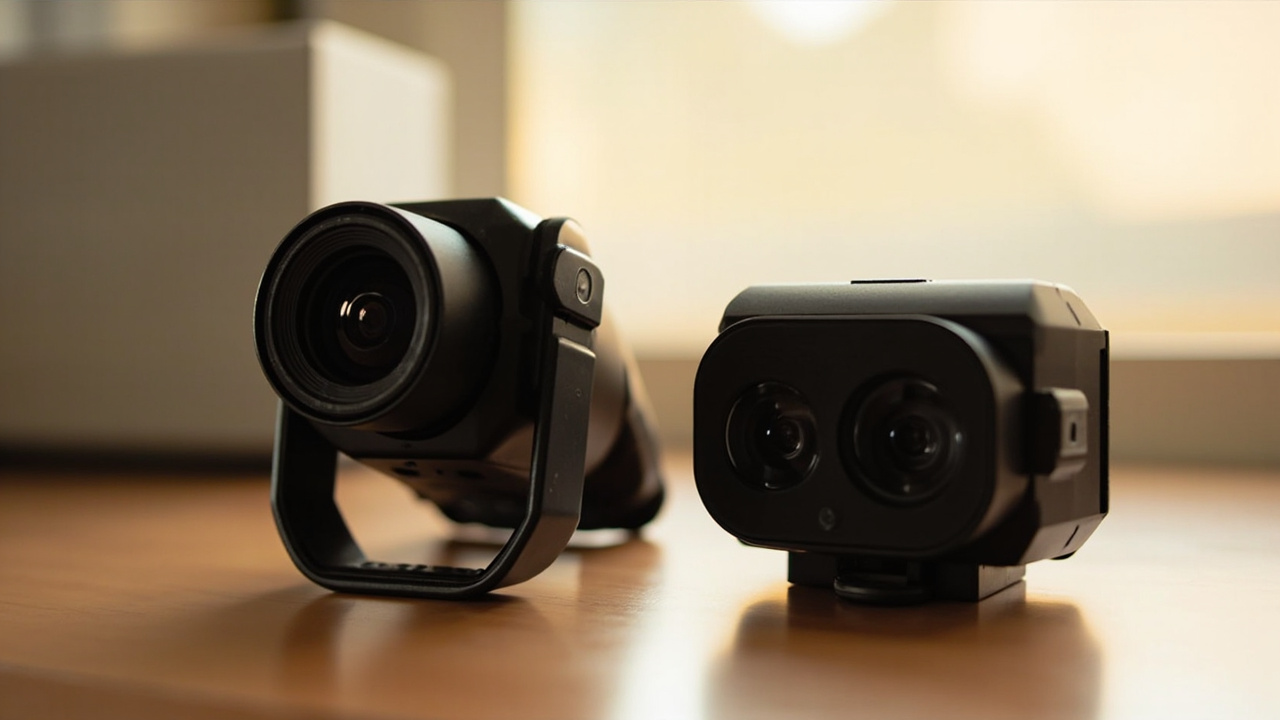
Introduction
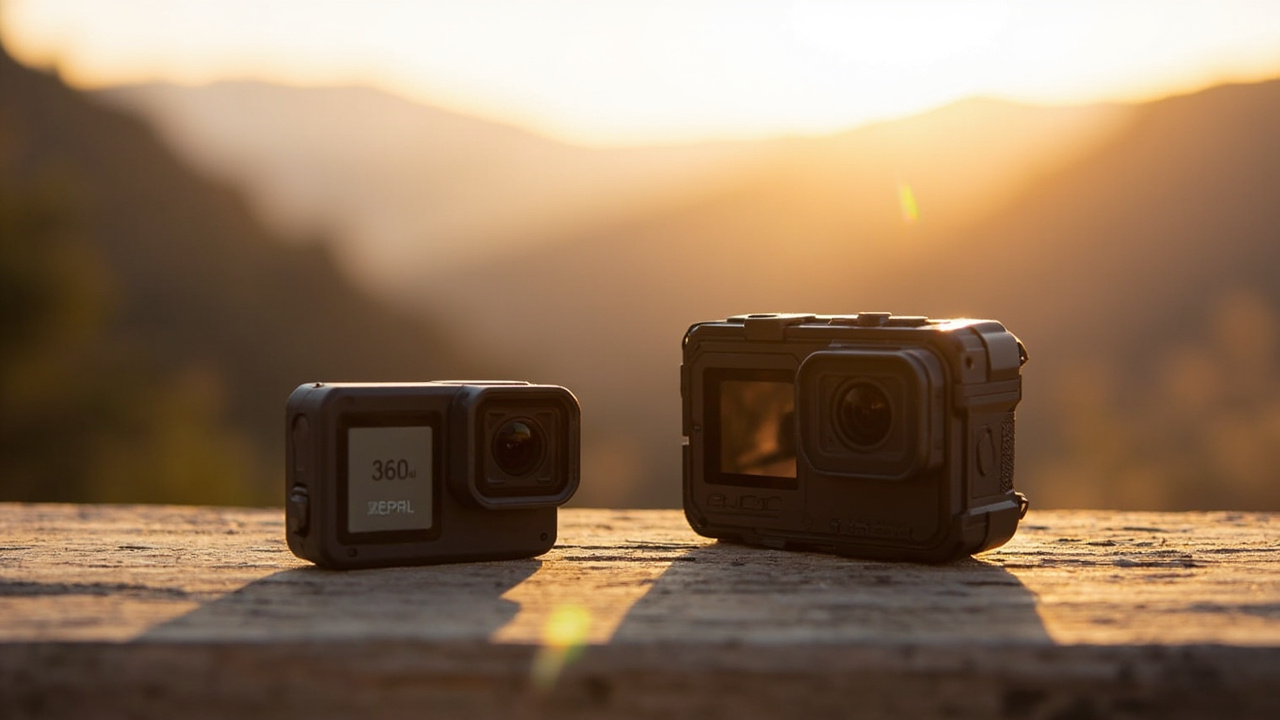
In 2025, the 360° camera category quietly became the most interesting sub-$600 fight in action cameras. For six years, Insta360 owned this segment almost alone — GoPro’s 2019 Max never got a true refresh, and smaller brands could not match Insta360’s app ecosystem. Then on July 31, 2025, DJI launched the Osmo360, its first dedicated 360° camera, and priced it at exactly $549.99 — the same number as the Insta360 X5, which had launched on April 22, 2025.
That pricing coincidence is the whole story. Both cameras shoot native 8K/30fps 360° video. Both use dual large sensors. Both promise over 80 minutes of continuous recording. Both are waterproof without a case. The question is not “which one shoots better 8K” — it is “which $549.99 buys you a camera you will still be using three years from now, with batteries that do not die on a ski lift, lenses you can replace instead of paying $200 to repair, and software that does not lock you into one brand’s accessories.”
There is also a wrinkle nobody on the spec sheet mentions: as of late 2025, DJI’s newer camera products are hard to buy in the United States through official channels, due to an ongoing national-security audit. That single fact can shift the “value” calculation by hundreds of dollars if you live in the US, even though both cameras cost exactly the same on paper.
This comparison treats the cameras as the long-term tools they are. We compare3-year cost, not sticker price. We look at accessories you will actually need. We compare real-world battery, lens replacement, app maturity, and ecosystem lock-in. The goal is the same as always at BuyCospa: pay for the camera that costs you less per year of actual use.
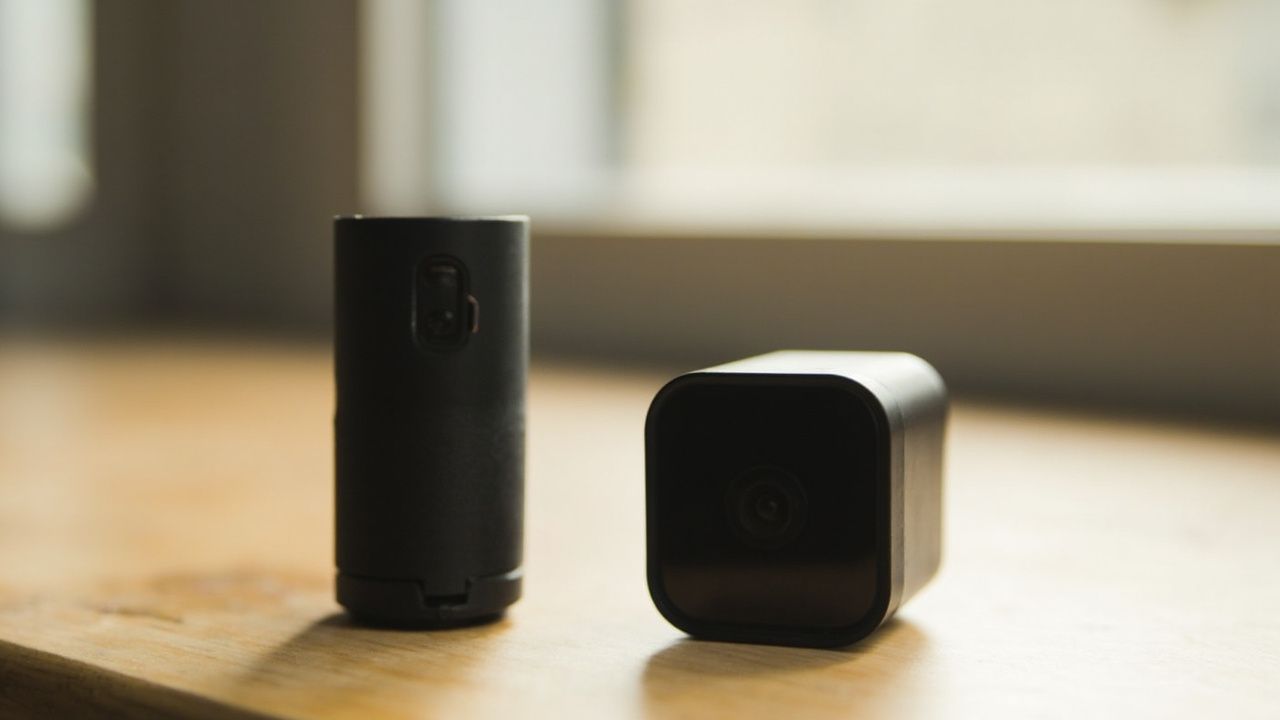
The Verdict First
- Pick the Insta360 X5 ($549.99) if: you live in the United States (or any country where DJI retail is patchy), you want replaceable lenses you can swap yourself in 30 seconds, you already own or plan to buy other Insta360 gear (Mic Air, X4 batteries, the invisible selfie stick), you shoot in mixed lighting and value the mature Insta360 app’s AI reframing, and you want a 3-year accessory path that is well-documented.
- Pick the DJI Osmo360 ($549.99 Standard Combo) if: you can buy it locally with warranty (most of Europe, Asia, Australia, Canada), you want the lightest 360° body on the market (183 g) and the highest still-photo resolution (120 MP), you need 8K/50fps for slow-motion reframing, or you are already deep in the DJI ecosystem (DJI Mic 2/Mic Mini, OsmoAudio, DJI Mimo app).
Cost score:82/100. Both cameras are fairly priced for the category. The savings here come from avoiding ecosystem lock-in costs and from one critical real-world fact: the DJI is currently harder to get in the US with full warranty, which can quietly add $50–$150 to the effective 3-year cost.
Key Comparison Points
Price vs Real Cost Per Use
| Spec / Cost Line | Insta360 X5 (Standard) | DJI Osmo360 (Standard Combo) |
|---|---|---|
| Retail price (US, as of June 2026) | $549.99 | $549.99 (US retail patchy; $549.99 CAD in Canada) |
| Release date | April 22, 2025 | July 31, 2025 |
| Body weight | 200 g (≈7.05 oz) | 183 g (≈6.46 oz) |
| Dimensions | 46 ×124.5 ×38.2 mm | 61 ×36.3 ×81 mm |
| Sensors | Dual 1/1.28” CMOS (144% larger than X4) | Dual 1/1.1” square CMOS |
| Max 360° video | 8K/30fps (supersampled from 11K),5.7K/60fps,4K/120fps | 8K/30/48/50fps,6K/60fps,4K/100fps |
| Single-lens mode | 4K/60fps | 5K/60fps (4:3) /4K/60fps (16:9) |
| Max photo resolution | 72 MP | 120 MP (single-lens 30 MP) |
| Battery capacity | 2,400 mAh | 1,950 mAh |
| Battery life (8K/30fps) | ≈84 minutes | ≈100 minutes |
| Battery life (5.7K/24fps) | ≈208 minutes (Endurance Mode) | Not officially stated; ≈140 min in independent tests |
| Battery replaceable | Yes (~$39 each, third-party options exist) | Yes (~$49 each, DJI-only) |
| Storage | microSD up to 1 TB | microSD up to 1 TB (plus 105 GB internal) |
| Waterproofing | 15 m /49 ft (no housing) | 10 m /33 ft, IP68 rated |
| Lens | Replaceable (~$29/pair, user-swappable) | Fixed, factory-repair only |
| Cold rating | −20 °C / −4 °F | −20 °C / −4 °F |
| Audio ecosystem | Insta360 Mic Air (proprietary) | DJI Mic 2 / Mic Mini (OsmoAudio ecosystem) |
| App | Insta360 app (mature, AI reframing) | DJI Mimo (newer for 360, improving) |
| Warranty (US) | 1-year standard, US warehouse stock | Limited; new DJI gear currently restricted in US retail |
Sources: Insta360 X5 official product page, Insta360 X5 review at AltBuzz Media, DJI Osmo360 official specs, DroneDJ US pre-order report, Storyteller Tech head-to-head test.
The 3-year cost math is where the two cameras diverge in a way the sticker does not show.
- Insta360 X5 recurring cost (3 years):1 spare battery in year 1 (
$39) + 1 lens-replacement pair around month18 after a rock strike ($29) + 1 spare battery in year 3 ($39) + 128 GB microSD card ($20) + invisible selfie stick if you do not already own one (~$35). Total ~$160 over 3 years for a typical adventure creator. - DJI Osmo360 recurring cost (3 years):1 spare battery in year 1 (
$49, DJI-only) + 128 GB microSD ($20) + DJI Mic Mini if you want wireless audio (~$79) + 2 × factory lens repair estimates if you scratch the fixed lenses — DJI does not sell user-replaceable lenses, so a scratched lens means shipping the camera back ($40 shipping + $80–$120 repair) or buying a new unit. Total ~$300–$420 over 3 years in a high-use outdoor scenario. - Hidden DJI cost (US buyers): as of late 2025, new DJI camera products are hard to buy through US official channels due to a national-security audit that was due to complete by late 2025. Importers and gray-market sellers charge10–25% above MSRP, and warranty claims often require shipping the unit to Canada or Europe. If you are a US buyer, the effective cost of the Osmo360 with proper warranty is closer to $620–$680, not $549.99.
- Hidden Insta360 cost: the Insta360 app is excellent but increasingly pushes Insta360+ cloud subscription ($7.99/month or ~$80/year) for AI editing features. If you skip the subscription, you still get full manual editing — but the free tier is meaningfully more limited than it was on the X4.
Net 3-year cost estimate (purchase + consumables + 1 major repair event + estimated accessory needs, minus residual value):
| Cost Line | Insta360 X5 | DJI Osmo360 (US gray-market) | DJI Osmo360 (EU/CA official) |
|---|---|---|---|
| Purchase | $550 | $650 (gray-market estimate) | $550 |
| 2 spare batteries (3 yrs) | $78 | $98 | $98 |
| Lens replacement (3 yrs) | $29 (user DIY) | $160 (factory repair,2 events) | $160 |
| microSD card | $20 | $20 | $20 |
| Mic / selfie stick | $35 (selfie stick) or $79 (Mic Air) | $79 (Mic Mini) | $79 (Mic Mini) |
| Repair reserve (10%) | $55 | $65 | $55 |
| Residual value (after3 yrs) | –$220 (≈40%) | –$200 (≈31%) | –$260 (≈47%) |
3-year total cost of ownership: Insta360 X5 ≈ $547 · DJI Osmo360 US gray-market ≈ $872 · DJI Osmo360 official ≈ $702.
The Insta360 X5 is the value winner by a clear margin, mostly because of the replaceable-lens design and the fact that the DJI carries real US availability risk in 2026.
Build Quality and Durability
Both cameras are IP-rated, both run cold to −20 °C, and both have user-replaceable batteries. The build quality differences are subtle but matter for outdoor use.
Insta360 X5 build notes:
- Cylindrical form factor (looks like a slightly chunky cigar),200 g.
- Hardened lens cover glass with user-replaceable lens protectors that twist off — you can swap a scratched protector in 30 seconds in a parking lot with no tools. -49 ft /15 m waterproof without a case. In practice, owners report it survives rain, snow, paddleboarding, and shallow snorkel.
- Magnetic quick-release mount base plus standard 1/4”-20 thread.
DJI Osmo360 build notes:
- Smaller, squarer body (61 ×36.3 ×81 mm),183 g — the lightest 360° camera in this category by a small but noticeable margin.
- Fixed, factory-installed lens cover. If you scratch it, you ship the camera to DJI for repair (or buy a new one). This is the single biggest durability difference.
- IP68 rated,10 m /33 ft waterproof without a case. Slightly less depth rating than the X5, but IP68 is a more rigorous standard than the X5’s IPX8-equivalent marketing claim.
- Same 1/4”-20 thread + magnetic mount.
Durability verdict: the X5 wins on long-term repairability thanks to its replaceable lens. The Osmo360 wins on outright water-rating rigor (IP68 vs marketing-grade) and on weight. If you are hard on gear (mountain biking, ski-mounting, surf), the X5’s replaceable lens is worth real money over 3 years.
Feature Breakdown
| Feature | Insta360 X5 | DJI Osmo360 |
|---|---|---|
| 8K360° video | 8K/30fps (supersampled from 11K) | 8K/30/48/50fps (native) |
| Slow-motion reframing | 4K/120fps | 4K/100fps (full sphere) |
| Single-lens action-cam mode | 4K/60fps | 5K/60fps (4:3) /4K/60fps (16:9) |
| PureVideo / low-light mode | Yes (Insta360’s PureVideo, AI-driven) | Yes (DJI SuperNight) |
| Invisible selfie stick | Yes (Insta360 algorithm, also works on third-party sticks) | Yes (DJI algorithm, optimized for DJI sticks) |
| AI reframing in app | Mature — best-in-class,5+ years of refinement | Newer — improving fast, but less polished than Insta360 |
| Voice / gesture control | Voice only | Voice and gesture |
| Horizon lock / stabilization | FlowState + 360° Horizon Lock | HorizonSteady + RockSteady3.0 |
| Live streaming | Yes (via Insta360 app) | Yes (via DJI Mimo) |
| Webcam mode | Yes | Yes |
| Internal storage | None — microSD only | 105 GB internal + microSD |
| Audio ecosystem | Insta360 Mic Air (proprietary wireless) | DJI Mic 2, Mic Mini (OsmoAudio ecosystem, cross-compatible with DJI action cameras) |
The feature delta that matters most: the Osmo360’s 8K/50fps mode is a real spec advantage for slow-motion reframing — you can pull4K/50fps crops from 8K footage and still get smooth motion. The X5 tops out at 8K/30fps native (though its4K/120fps single-lens is competitive). For most vloggers this is a footnote; for surf and ski creators it can be meaningful.
The X5’s PureVideo low-light mode is the most refined in this category after two years of iteration; the DJI SuperNight is brand-new and, per early reviews, produces noisier footage at the same ISO. If you shoot more at dusk or indoors than at noon, this matters.
Pros and Cons
Insta360 X5
Pros
- Replaceable lens design — a $29 spare protector fixes a scratched lens in 30 seconds; the DJI requires a factory repair or a new camera.
- Mature Insta360 app — best AI reframing in the category after5+ years of iteration; lets you export flat1080p/4K “traditional” video from 360° footage in seconds.
- Bigger user-installable battery (2,400 mAh) and a published208-minute Endurance Mode runtime at 5.7K/24fps.
- Wider accessory ecosystem — Insta360 has the deepest third-party accessory catalog (selfie sticks, dive cases, bike mounts, Mic Air) and most of the X4 accessories still work.
- US availability is straightforward — Insta360 sells direct and via Amazon, B&H, and Adorama with full US warranty.
Cons
- Heavier than the Osmo360 by 17 g (200 g vs 183 g) — noticeable on helmet mounts.
- No internal storage — you must buy a microSD card separately (the standard bundle ships without one).
- The Insta360 app is increasingly pushing the Insta360+ subscription for AI features; the free tier is meaningfully worse than it was two years ago. -8K tops out at 30fps; the Osmo360 has8K/50fps for slow-motion reframing.
DJI Osmo360
Pros
- Lightest360° camera in this category at 183 g —8.5% lighter than the X5, meaningful on helmet and drone mounts.
- 8K/50fps native — better slow-motion reframing potential from full-resolution360° source.
- 120 MP still photos — nearly67% more resolution than the X5’s72 MP for VR/landscape creators.
- 105 GB internal storage plus microSD slot — you can shoot out of the box without buying a card.
- IP68 rating (more rigorous than the X5’s marketing-grade claim) and 4-microphone array with DJI’s OsmoAudio wireless ecosystem (Mic2, Mic Mini cross-compatible with DJI action cameras and drones).
- Voice and gesture control — useful for hands-free solo shooting.
Cons
- Fixed, non-replaceable lens — a scratched lens means a $80–$160 factory repair or a new camera. This is the single biggest long-term cost risk.
- US availability is currently patchy — DJI’s newer camera products are restricted in US retail channels pending a national-security audit; gray-market pricing is10–25% above MSRP, and warranty service often requires shipping to Canada or Europe.
- DJI Mimo app’s360° editing is less mature than Insta360’s; AI reframing trails Insta360 by roughly one generation in polish.
- Smaller battery (1,950 mAh) and DJI-only battery ecosystem; third-party batteries are not yet common.
- No successor accessory compatibility — DJI’s first 360° camera means there is no installed base of Osmo360 accessories yet. Existing DJI Mic and Osmo Pocket accessories work, but 360°-specific mounts and cases are still ramping up.
Best For / Skip If
Buy the Insta360 X5 if:
- You live in the United States and want full warranty + easy returns.
- You are hard on gear — mountain biking, skiing, surf, paddleboard — and value the replaceable-lens design that lets you fix a scratch in 30 seconds.
- You want the most mature360° editing app on the market and do not mind paying for Insta360+ if you want the best AI reframing.
- You already own Insta360 X4 batteries, selfie sticks, or a Mic Air — all of those accessories carry forward.
- You shoot mixed lighting (indoor + outdoor + dusk) and want the best low-light360° footage in this category.
Buy the DJI Osmo360 if:
- You live in Europe, Canada, Australia, or most of Asia where DJI retail is straightforward and warranty is solid.
- You want the lightest360° body (183 g) for helmet, drone, or long-hike mounting.
- You need 8K/50fps for serious slow-motion reframing from 360° source footage.
- You are already in the DJI ecosystem (DJI Mic 2, Mic Mini, DJI drones, Osmo Pocket3) and want one audio/accessory ecosystem across all your gear.
- You shoot mostly in bright daylight where the Osmo360’s lower-light weakness is not a factor.
- You want 120 MP stills for VR, landscape, or large-print work.
Skip both if:
- You do not actually edit360° footage — if you only want a flat “action-cam” video, a GoPro Hero13 Black or DJI Osmo Action5 Pro will give you better value at $299–$399.
- You mainly shoot underwater to >15 m — neither camera is rated for serious scuba depth; you need a dedicated dive housing.
- You are on a sub-$400 budget — the used Insta360 X4 (still excellent at ~$349 refurbished) is a better value than either new flagship.
- You cannot buy the DJI with full local warranty where you live — the gray-market premium wipes out its spec-sheet advantages.
Bottom Line
Both cameras cost exactly $549.99 at MSRP, but that is the only number that matches. The Insta360 X5 is the better 3-year value for most buyers — especially in the United States — because of its replaceable lens design ($29 DIY fix vs $160 factory repair), its mature app, and the simple fact that the DJI currently carries real US availability risk. The DJI Osmo360 is the better tool for specific workflows — lighter body,8K/50fps,120 MP stills, IP68 rating — but only if you can buy it locally with full warranty and you are not hard on gear.
The smart-shopping move is to buy the Insta360 X5 unless one of the DJI’s specific advantages (lightest body,8K/50fps,120 MP stills, DJI ecosystem lock-in) is a deal-breaker for your actual shooting style. At identical sticker prices, the question is not which camera is better — it is which $549.99 you will still be using three years from now without a $160 repair bill.
Buy smart. Get more value. And remember: in 360° cameras, the lens you can replace is the lens you can afford.