Introduction
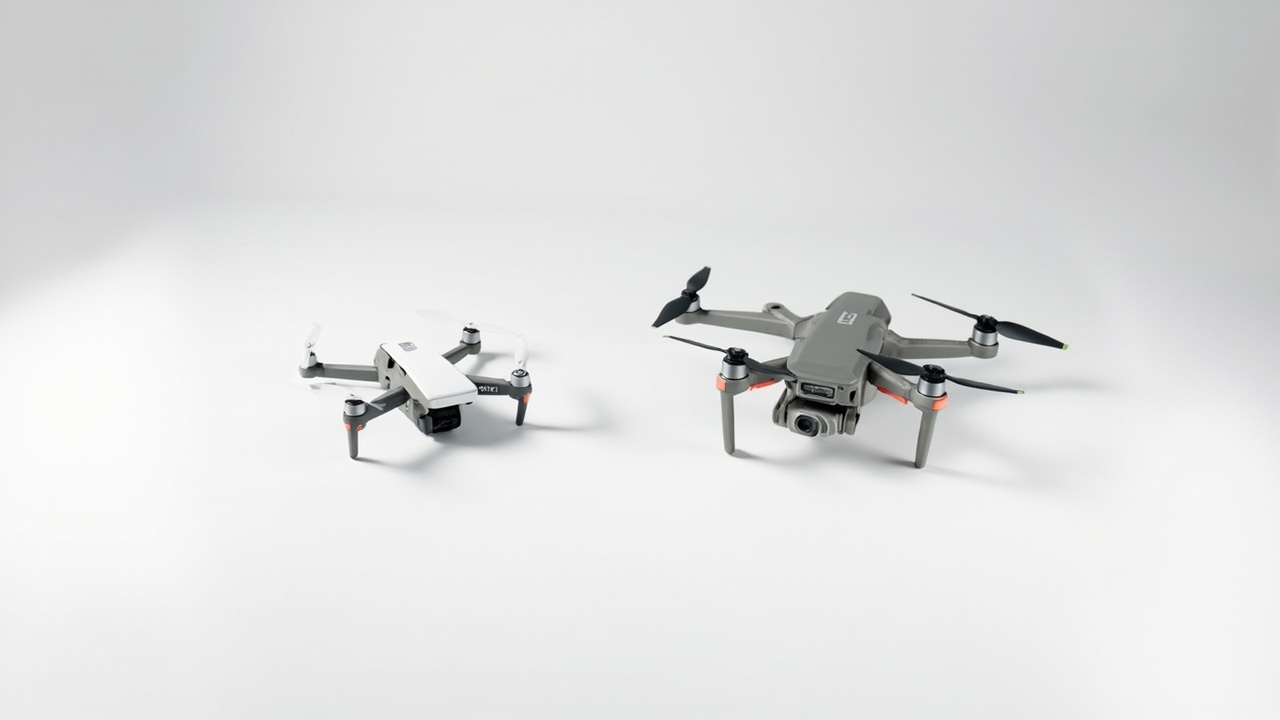
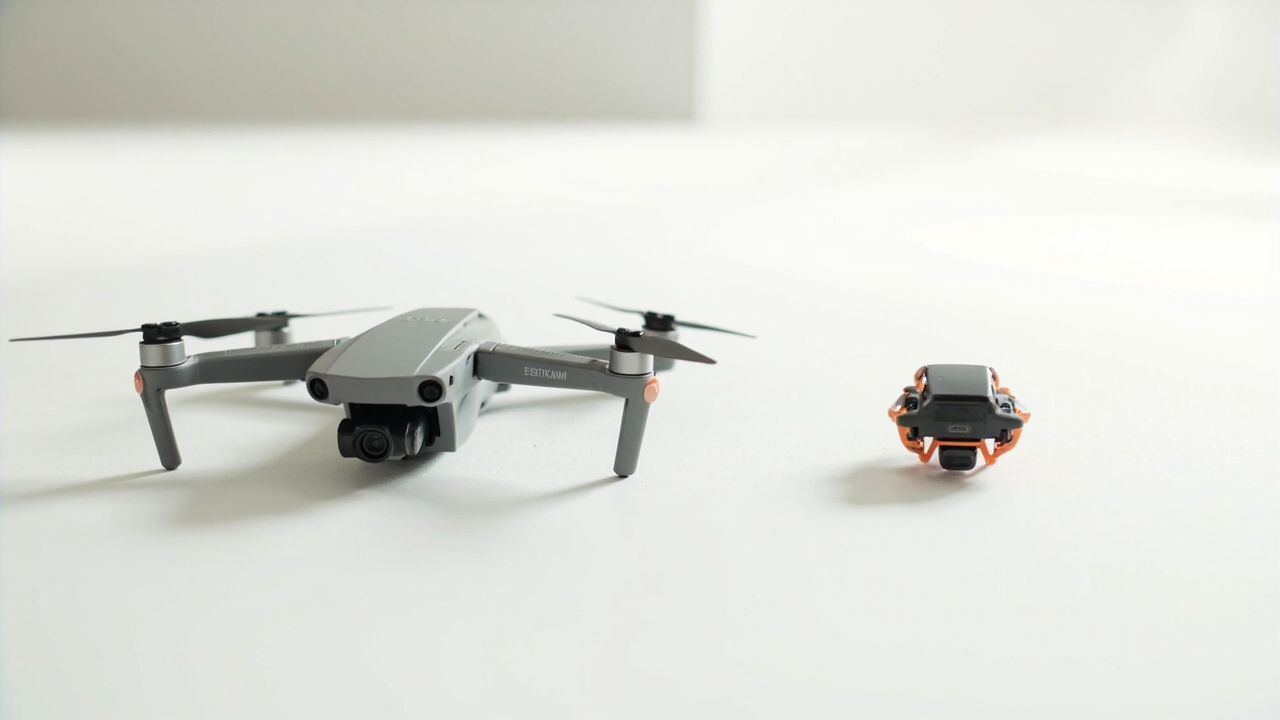
If you are shopping for a sub-250g drone in 2026 that can fly without FAA registration, two very different machines keep showing up in searches: the DJI Mini 5 Pro and the HoverAir X1 Pro Max.
They cost roughly the same when fully kitted, weigh about the same (or close enough), and both promise “pocketable aerial video.” But they are built for completely different jobs.
The DJI Mini 5 Pro is a traditional camera drone that DJI shrunk down to 249.9 g. It uses a 1-inch CMOS sensor, forward-facing LiDAR for night obstacle avoidance, and a 3-axis mechanical gimbal. It is the spiritual successor to the Mini 4 Pro and competes directly with larger, heavier flagship drones on image quality (per DJI’s September 2025 launch, cited by Dronesgator).
The HoverAir X1 Pro Max is a fully autonomous flying camera. You launch it from your palm, pick a flight mode (Cycling, Ski, SideTrack, etc.), and it tracks you with AI at up to 42 km/h. It shoots 8K/30 fps from a 1/1.3-inch sensor and folds to roughly phone size (192.5 g, 105 x 149 mm per HoverAir’s product page).
This is a head-to-head between a real camera drone that happens to be small and a flying action camera that happens to be a drone. The price, the image quality, the flight time, and the long-term cost of ownership split very differently. We will look at the numbers that actually matter before you spend $700+ on either one.
The Verdict First
The DJI Mini 5 Pro is the better buy for pilots who want a real drone. The 1-inch sensor, LiDAR-assisted night obstacle avoidance, omnidirectional sensing, GPS with return-to-home, 3-axis gimbal, and 28+ minutes of real-world flight time give you a tool the HoverAir simply cannot match on the spec sheet. For travel videography, real estate, and any kind of deliberate framing, the Mini 5 Pro is the smarter long-term investment.
The HoverAir X1 Pro Max is the better buy for self-tracking action footage. If you cycle, ski, run, or do anything where you want hands-free third-person footage of yourself, the HoverAir’s palm launch, AI tracking, propeller cage, and pocketable 192.5 g form factor solve a problem the Mini 5 Pro was never designed for.
| Spec | DJI Mini 5 Pro | HoverAir X1 Pro Max |
|---|---|---|
| Base price (USD) | $899 (official, non-US) | $699 |
| Real-world US price | ~$729-$899 (grey market) | $699 (official) |
| Fully-equipped price | ~$899 (controller included) | ~$879 (with $180 Beacon remote) |
| Weight | 249.9 g (sub-250g) | 192.5 g |
| Sensor size | 1-inch CMOS | 1/1.3-inch CMOS |
| Max video | 4K/120 fps | 8K/30 fps |
| Color profile | D-Log M 10-bit | HLG only |
| Gimbal | 3-axis mechanical | 2-axis mechanical + EIS |
| Real-world flight time | 28+ minutes | 11-13 minutes |
| Max range | 20 km (O4+) | ~1 km (Wi-Fi) |
| Max speed | 16 m/s | 11.7 m/s |
| Obstacle avoidance | Omnidirectional + forward LiDAR (works in 1 lux) | Rear + sides only |
| GPS + return-to-home | Yes | No |
| Internal storage | 42 GB | 64 GB + microSD up to 1 TB |
| US availability | Not officially sold (FCC Covered List) | Official retail |
| Source | DJI + Dronesgator 2026 | HoverAir + The Drone Girl Aug 2024 |
Key Comparison Points
Price vs Real Cost Per Use
On paper, the HoverAir X1 Pro Max at $699 is $200 cheaper than the DJI Mini 5 Pro at $899 (DJI’s official non-US launch price). But “cheaper” evaporates the moment you compare what is in the box.
The Mini 5 Pro ships with a controller (DJI RC 2 in most bundles). The HoverAir ships without a remote — it relies on autonomous flight modes. To get full manual control, you need the $180 Beacon remote, which brings the HoverAir’s effective cost to roughly $879, almost identical to the Mini 5 Pro.
Then come batteries, where the gap widens.
The Mini 5 Pro’s standard battery delivers 28+ minutes of real flight time (Dronesgator measured this in 2026). The HoverAir’s battery delivers 11-13 minutes in the real world (rated 16 min). To match the Mini 5 Pro’s single-battery airtime, you need three HoverAir batteries, which adds roughly $150 to the bill.
| Cost item | DJI Mini 5 Pro | HoverAir X1 Pro Max |
|---|---|---|
| Base kit | $899 | $699 |
| Manual controller | Included | $180 (Beacon) |
| Real-world airtime per battery | 28+ min | 11-13 min |
| Batteries needed for ~28 min flight | 1 | 3 (~+$150) |
| Equipped 3-year cost (drone + 3 batteries + remote) | ~$1,200-$1,400 | ~$1,150-$1,300 |
So the fully-equipped cost of ownership is surprisingly close. The “HoverAir is $200 cheaper” narrative does not survive once you equip both drones for serious use.
The real cost-per-minute is where the Mini 5 Pro pulls ahead. If you fly 100 hours total (a conservative estimate for a hobbyist over 3 years), the Mini 5 Pro delivers 28+ min per battery at a much lower per-cycle battery cost, while the HoverAir needs roughly 3x the battery spend to deliver the same airtime.
Cost-per-use verdict: The Mini 5 Pro wins on long-term cost if you fly regularly. The HoverAir wins if you mostly fly short autonomous clips and rarely use the controller.
Build Quality and Durability
Both drones use lightweight plastic and carbon-fiber blends, but they handle stress differently.
The DJI Mini 5 Pro uses a folding-arm design with exposed props. Its Level 5/6 wind resistance (per DJI’s spec sheet) is solid for a sub-250g drone, but Dronesgator’s 2026 review noted gimbal shake in gusts above 30 mph despite the rating. The 1-inch sensor also generates significant heat, and the drone can overheat and shut down if left idling on the ground in direct sun.
The HoverAir X1 Pro Max uses a polycarbonate propeller cage that protects the props and makes it safe to launch near people, cyclists, and pets. It is built for action-sports abuse, not cinematic smoothness. There is no exposed gimbal to break in a crash, and the enclosed props mean most “incidents” leave the drone undamaged. The trade-off is no GPS position hold, so wind drift is a real issue — the drone cannot hover in place the way a GPS-equipped drone can.
Durability verdict: The HoverAir wins for action-sports abuse and crash survivability. The Mini 5 Pro wins for stable flight and repeatable framing in changing conditions.
Feature Breakdown
Camera and image quality. The Mini 5 Pro’s 1-inch CMOS sensor is the largest you can get in a sub-250g drone. It produces noticeably cleaner low-light footage, holds highlights better in high-contrast scenes, and supports D-Log M 10-bit for serious color grading. The HoverAir’s 1/1.3-inch sensor is excellent for its size (rivals the Mini 4 Pro per Dronesgator) and shoots 8K/30 fps on paper, but the HLG-only color profile limits post-production flexibility. In good daylight, the footage is close. In low light, golden hour, or high-contrast scenes, the Mini 5 Pro pulls more detail from shadows and holds highlights better.
Obstacle avoidance and safety. The Mini 5 Pro has omnidirectional visual sensors plus forward-facing LiDAR that works in near-complete darkness down to 1 lux (per DJI’s 2025 launch specs). The HoverAir has rear and side sensors only — nothing protecting the front, which is the direction it is usually flying. The Mini 5 Pro also has full GPS with return-to-home, geo-tagging, and waypoints. The HoverAir has no GPS at all — no return-to-home, no waypoints, and unreliable position hold in wind. The safety gap between these two drones is the largest of any comparison on the market.
Autonomy vs control. These drones take opposite philosophical approaches. The Mini 5 Pro gives you full manual control with optional autonomy (waypoints, orbit, ActiveTrack 360°). The HoverAir gives you full autonomy with optional manual control (via the $180 Beacon). If you are a pilot who wants to compose every shot, the Mini 5 Pro. If you are a subject who wants footage of yourself without a pilot, the HoverAir.
Tracking and follow modes. The HoverAir’s AI tracking follows subjects at up to 42 km/h with face and body recognition, and includes dedicated Cycling, Ski, and SideTrack modes you will not find on DJI drones. The Mini 5 Pro’s ActiveTrack 360° is more sophisticated in terms of subject framing, but you still need a pilot to keep the camera pointed at you.
Flight time and range. The Mini 5 Pro’s 28+ minutes per battery gives you time to fly to a location, set up a shot, try multiple angles, and fly back. The HoverAir’s 11-13 minutes per battery gives you quick bursts of tracking footage. The Mini 5 Pro’s 20 km O4+ transmission range is in a different league from the HoverAir’s ~1 km Wi-Fi range (without the Beacon). For real aerial work beyond a few hundred meters, only the Mini 5 Pro is a viable tool.
| Feature | DJI Mini 5 Pro | HoverAir X1 Pro Max |
|---|---|---|
| Sensor size | 1-inch CMOS | 1/1.3-inch CMOS |
| Max video | 4K/120 fps | 8K/30 fps |
| Color profile | D-Log M 10-bit | HLG only |
| Gimbal | 3-axis mechanical | 2-axis + EIS |
| Obstacle avoidance | Omni + forward LiDAR (1 lux) | Rear + sides only |
| GPS + RTH | Yes | No |
| Follow speed | ~32 km/h (ActiveTrack) | 42 km/h |
| Range | 20 km | ~1 km (Wi-Fi) |
| Flight time | 28+ min | 11-13 min |
| Wind resistance | Level 5/6 | Level 5 |
| Source | DJI + Dronesgator 2026 | HoverAir + Dronesgator 2026 |
Pros and Cons
DJI Mini 5 Pro
Pros
- 1-inch CMOS sensor delivers the cleanest low-light footage in any sub-250g drone
- Forward-facing LiDAR enables night obstacle avoidance down to 1 lux
- 4K/120 fps slow motion and 1080p/240 fps for B-roll
- D-Log M 10-bit color profile for serious grading
- 42 GB internal storage plus microSD
- 3-axis mechanical gimbal with 225° rotation (shoot upward 55°)
- O4+ transmission with improved anti-interference algorithms
- 28+ minute real-world flight time per battery
- Omnidirectional obstacle sensing + GPS return-to-home
- Controller included in the box
Cons
- Not officially sold in the US (FCC Covered List) — only available via grey-market imports with no warranty
- Many units arrive at 251-253 g instead of 249.9 g, which technically disqualifies them from the sub-250g FAA exemption
- Grey-market US price ($729-$899) is close to the Mini 4 Pro which has full warranty
- 1-inch sensor generates significant heat — can overheat and shut down if left idling
- LiDAR only forward — sideways tracking and backward flight still have blind spots
- Plus battery (297 g) not available in EU/UK due to weight regulations
- Gimbal shake in gusts above 30 mph despite Level 5/6 wind rating
HoverAir X1 Pro Max
Pros
- Palm launch with one-button autonomous flight — zero piloting skill needed
- 8K/30 fps and 4K/120 fps slow-mo from a 1/1.3-inch sensor
- 192.5 g — folds to phone size (105 x 149 mm), fits in a pocket
- AI tracking at up to 42 km/h with face and body recognition
- Polycarbonate propeller cage — safe to fly near people
- Under 250 g so no FAA registration required (US)
- 10+ autonomous flight modes including Cycling, Ski, SideTrack
- 64 GB internal storage plus microSD up to 1 TB
- Officially sold in the US with normal warranty and support
Cons
- 11-13 minutes real-world battery life — well below the 16-minute rating
- No GPS — no return-to-home, no waypoints, unreliable position hold in wind
- Obstacle avoidance covers rear and sides only — nothing protects the front
- Tracking loses the subject in dense trees, tight switchbacks, crowded scenes
- HLG-only color profile — no D-Log or RAW for serious color grading
- $699 buys a DJI Mini 4 Pro with triple the flight time, GPS, and omnidirectional sensing
- Wi-Fi range caps at a few hundred meters without the $180 Beacon accessory
- Prop noise is noticeable at close range — not a quiet drone for wildlife
Best For / Skip If
Buy the DJI Mini 5 Pro if:
- Image quality is your top priority and you want the best camera under 250 g
- You shoot landscape, travel, real estate, or cinematic footage where deliberate framing matters
- You need LiDAR obstacle avoidance and GPS safety features for night or urban flying
- You regularly fly sessions longer than 15 minutes per battery
- D-Log M and professional color grading are part of your workflow
- You are outside the US or comfortable with grey-market import risk and no warranty
- You want a real drone that you can also use in autonomous modes (ActiveTrack 360°, waypoints, orbit)
Buy the HoverAir X1 Pro Max if:
- You want autonomous footage of yourself during sports or activities
- Cycling, skiing, running, or action sports are your primary filming scenarios
- 8K resolution and 4K/120 fps for social media matter more than Log profiles
- You need a pocket-sized drone that launches from your palm with zero setup
- You want official US warranty and support without grey-market imports
- You fly in crowded or tight spaces where propeller cages matter more than max range
- You mostly post short clips to Instagram or TikTok and do not need 20 km range
Skip both if:
- You mainly fly indoors or in light wind — a cheaper Mini 4K or Neo will do
- You need a drone for professional mapping or surveying — these are not surveying tools
- You fly in the US and refuse to import — the Mini 5 Pro’s grey-market status makes it a hassle to repair or replace
Bottom Line
The DJI Mini 5 Pro and the HoverAir X1 Pro Max are not really competitors — they are two different tools trying to win the same sub-250g conversation.
If you want a real camera drone that happens to be small, the Mini 5 Pro’s 1-inch sensor, LiDAR, 3-axis gimbal, and 28-minute flight time give you tools the HoverAir simply does not have. The $200 sticker price gap mostly disappears once you equip the HoverAir with the Beacon remote and enough batteries to match the Mini 5 Pro’s airtime.
If you want a flying action camera that happens to be a drone, the HoverAir’s palm launch, AI tracking, propeller cage, and pocketable 192.5 g form factor solve a problem the Mini 5 Pro was never designed for. Nothing in DJI’s lineup shoots autonomous 8K follow footage of you cycling at 42 km/h.
Buy smart. Get more value. The smart buy is whichever drone matches your real flight profile — not the one with the bigger sensor on paper. If you frame cinematic shots, the Mini 5 Pro. If you want hands-free footage of yourself in motion, the HoverAir.
Sources
- DJI Mini 5 Pro launch coverage — Dronesgator 2026: https://dronesgator.com/compare/dji-mini-5-pro-vs-hoverair-x1-pro-max
- DJI Mini 5 Pro US availability + FCC Covered List — Dronesgator 2026
- HoverAir X1 Pro Max official specs — https://hoverair.com/pages/x1-pro-and-promax
- HoverAir X1 PRO/PROMAX launch — The Drone Girl, Aug 2024: https://www.thedronegirl.com/2024/08/26/hoverair-x1-promax/
- HoverAir X1 Pro Max sensor + video specs — Notebookcheck, Aug 2024
- DJI Mini 5 Pro LiDAR + 1-inch sensor — DJI official launch (Sept 2025), cited by Dronesgator