Introduction
If you are shopping for a serious professional drone in 2026 and your search has even brushed against “NDAA compliant” or “autonomous inspection,” you have probably run into both of these names:
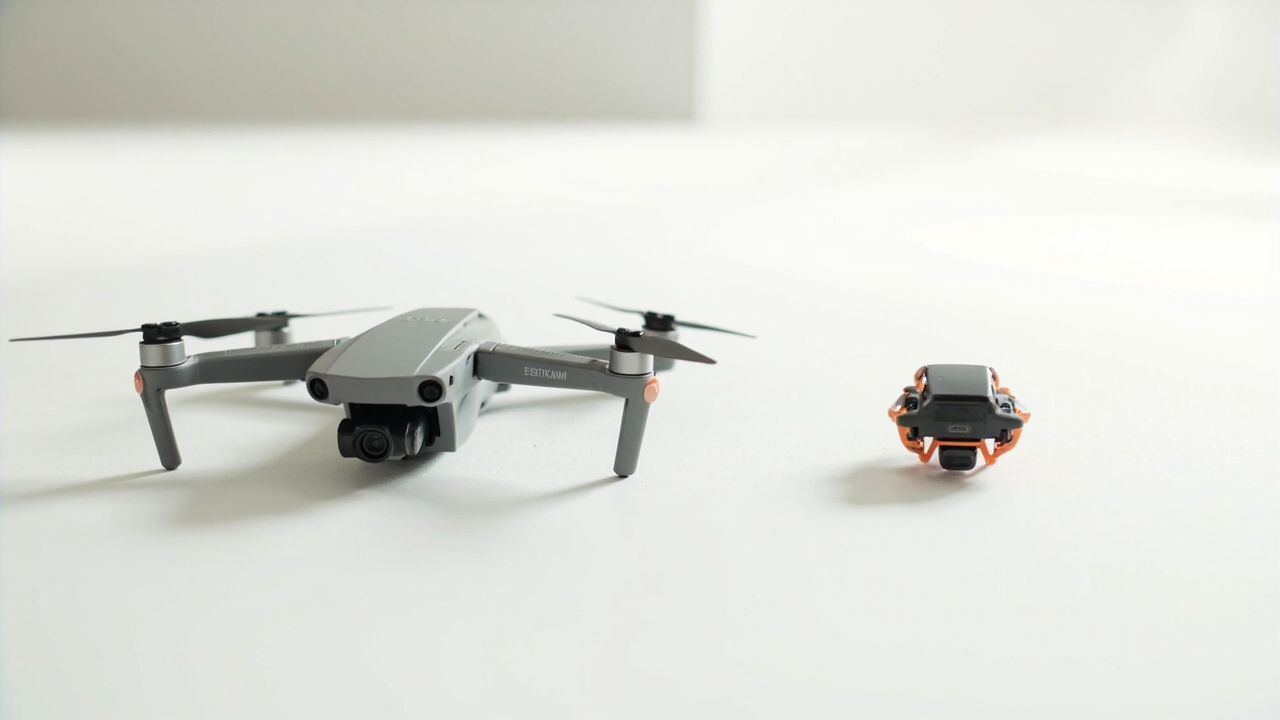
- DJI Mavic 4 Pro — released May 2025, base kit $2,199 with DJI RC-N3 (DJI USA store, MyDearDrone, June 2026). DJI’s flagship consumer/prosumer camera drone, with a 100 MP 4/3 Hasselblad main sensor, dual tele cameras, 360-degree rotating gimbal, and 51-minute flight time.
- Skydio X10 — released 2023, enterprise channel pricing $15,000-$25,000 depending on sensor bundle and software tier (Origin of Bots, DronesBee, June 2026; Robotomated cites $15,000-$20,000 for the standard airframe). A US-built, NDAA-compliant autonomous platform designed for inspection, public safety, utilities, and defense.
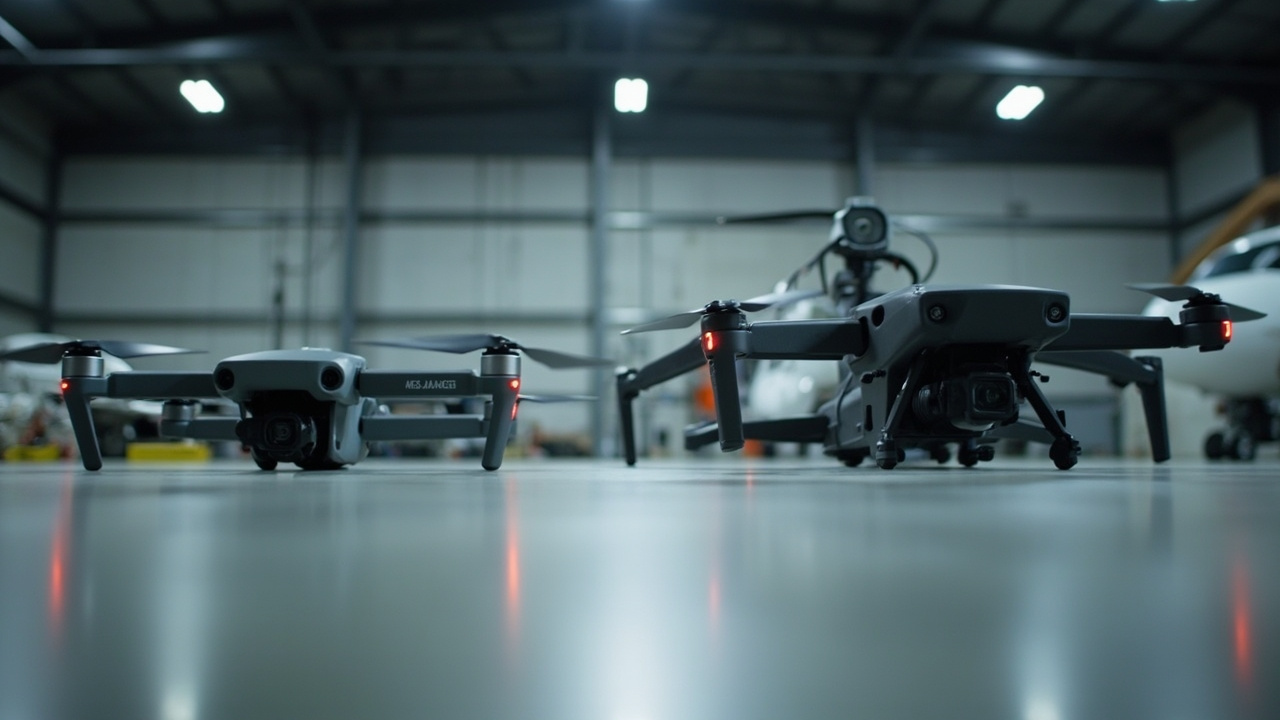
The price gap is brutal — about 7x to 11x between the two. But the real story is not “which drone is better.” It is “which drone is actually right for the work you do, the airspace you fly in, the procurement rules you operate under, and the replacement cycle you can justify.”
This comparison is written for the buyer who is genuinely torn between these two — typically a working professional, a small commercial operator, or a procurement lead who needs to put a real number behind the choice. We work through sticker price, camera quality, autonomy, regulatory status, durability, and 5-year total cost. Then we tell you which drone each side is actually for.
The Verdict First
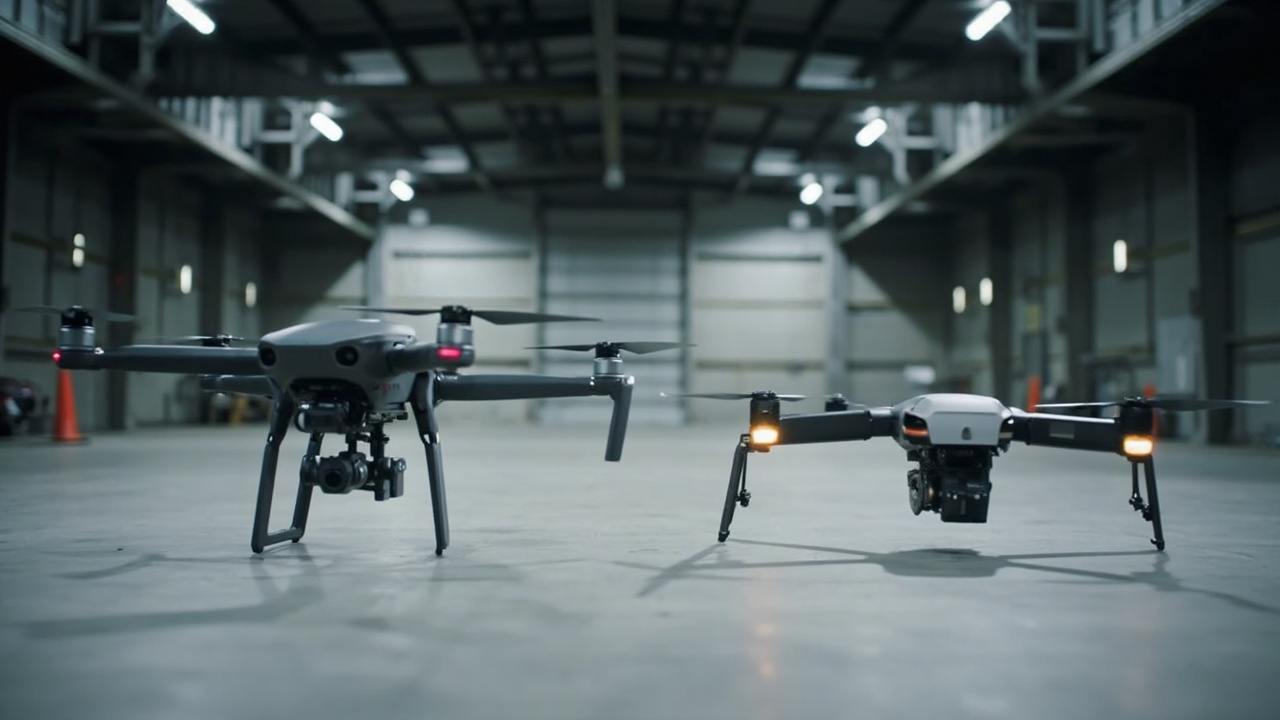
- Pick the DJI Mavic 4 Pro if: you are a working photographer, cinematographer, real-estate shooter, or small commercial operator without strict procurement constraints; you need the absolute best image quality (100 MP 4/3 Hasselblad, 6K/60p, 4K/120p, 10-bit D-Log); you fly mostly in open airspace with line of sight; and you want a portable sub-1.1 kg airframe that deploys in under a minute from a backpack. The Mavic 4 Pro delivers roughly 85-90% of the cinematic image quality of high-end enterprise platforms at about 15% of the X10’s price.
- Pick the Skydio X10 if: you operate under NDAA Section 1709 restrictions (US federal agencies, defense contractors, many state and municipal agencies), you fly in GPS-denied environments (indoor inspections, under bridges, around active structures), you need autonomous flight that does not require a pilot to manage every input, you run repeatable inspection missions that benefit from 3D mapping and dock-based deployment, or you need US data residency for sensitive deliverables.
- Skip both if: you only fly for personal travel or social-media content. The DJI Mini 5 Pro (sub-249 g, ~$759) covers 70% of the Mavic 4 Pro’s imaging for one-third the cost. The Skydio X10 is not a hobbyist drone by any reasonable interpretation.
Cost score (overall value): 72/100. Both drones are excellent at what they are designed for. Neither is a budget pick. The Mavic 4 Pro wins on raw imaging-per-dollar and total cost for the prosumer. The X10 wins on autonomy, NDAA compliance, and per-mission labor savings in enterprise workflows. Picking the wrong one for your use case wastes $10,000-$40,000 over five years — that’s the real cost this article is here to help you avoid.
Key Comparison Points
Price vs Real Cost Per Use
The sticker price is misleading on both sides. The Mavic 4 Pro looks cheap next to the X10, but you also need batteries, ND filters, a controller upgrade, and DJI Care Refresh. The X10 looks expensive next to anything consumer, but enterprise buyers rarely pay full retail — they lease, get volume discounts, or amortize across multi-year service contracts.
| Cost Factor | DJI Mavic 4 Pro (2025) | Skydio X10 (2023/2024) |
|---|---|---|
| Base price (drone + standard controller) | $2,199 (RC-N3) / $2,499 (RC 2) | $15,000-$20,000 (Standard bundle, enterprise channel) |
| Top-tier configuration | $3,299 Fly More Combo (DJI RC Pro 2) | $20,000-$25,000 (with thermal + RTK + extended warranty) |
| Extra battery (per piece) | ~$199 | ~$650 (Skydio X10 spare battery) |
| ND filter set (official) | ~$159 | Included in some bundles; PolarPro ND kit ~$350 |
| Controller / Dock add-on | RC 2 upgrade ~$300; RC Pro 2 ~$799 | Skydio Dock ~$7,000-$9,000 (sold separately for autonomous ops) |
| Care / Refresh / Service plan | DJI Care Refresh 2-yr ~$259 | Skydio Care 2-yr ~$1,800-$2,500 (typical enterprise tier) |
| Takeoff weight | 1,063 g (C2 class in EU) | ~2,110 g (2.1 kg / 4.7 lbs, with thermal sensor) |
| Real-world flight time per battery | 38-46 min (DJI claims 51) | 28-35 min (Skydio claims 40, with normal payload) |
| Battery cycle life (to 80% capacity) | ~200 cycles typical | ~300 cycles typical (enterprise-grade LFP) |
| 5-year resale value (typical, working drone) | 30-40% of MSRP | 25-35% of MSRP (small enterprise resale market) |
| Software subscription | None (DJI Fly app is free) | Skydio Cloud / Skydio Remote Ops ~$1,200-$3,600/year |
Now plug in a typical “well-equipped” setup for a working professional on each side:
| Setup (Year 1) | DJI Mavic 4 Pro | Skydio X10 |
|---|---|---|
| Drone + top controller | $2,499 (RC 2) or $3,299 (RC Pro 2 Combo) | $18,000 (mid-tier enterprise bundle) |
| 2 extra batteries | $398 | $1,300 |
| ND filter set | $159 | $350 |
| Care plan (2-yr) | $259 | $2,200 |
| Software subscription (1 yr) | $0 | $2,400 |
| Total Year-1 cost | ~$3,315 (RC 2) / ~$4,115 (RC Pro 2 Combo) | ~$24,250 |
| Cost per battery in the kit | ~$200 / 3 ≈ $67 | ~$650 / 3 ≈ $217 |
Now amortize that total cost over a realistic 5-year ownership window, assuming the drone is used for paid work — not just a few flights per year. Both drones will be obsolete in some spec by year 5, but they will still fly.
| 5-Year Cost Line | DJI Mavic 4 Pro (RC 2) | Skydio X10 (mid-tier) |
|---|---|---|
| Purchase + accessories + Year-1 care | $3,315 | $24,250 |
| Year 2-3 care / service plan renewal | $259 (DJI Care Refresh) | $4,400 (Skydio Care, 2 yr) |
| Software subscription × 5 yr | $0 | $12,000 ($2,400/yr × 5) |
| 1 out-of-warranty battery replacement (year 4) | $199 | $650 |
| Total 5-year cost | ~$3,773 | ~$41,300 |
| 5-year depreciation | ~$1,500 (40% residual) | ~$13,500 (30% residual on enterprise market) |
| Net 5-year cost of ownership | ~$2,273 | ~$27,800 |
| Average annual cost | ~$455 / year | ~$5,560 / year |
The annual cost gap is ~12x for the same 5-year ownership window. That gap is the entire reason this comparison exists. The Skydio X10 has to earn back its premium through labor savings, mission capability, or compliance access that the Mavic 4 Pro cannot deliver.
For most working photographers and small commercial operators, the math says the Mavic 4 Pro wins on cost-per-mission by a wide margin — provided you do not need NDAA compliance, autonomous indoor flight, or dock deployment. For federal and defense contractors, the X10’s NDAA status is not a feature, it is a procurement requirement; the math is irrelevant because the Mavic 4 Pro is not eligible to bid.
Build Quality and Durability
These two drones are built for very different operating environments, and the build shows it.
| Build Factor | DJI Mavic 4 Pro | Skydio X10 |
|---|---|---|
| Frame material | Magnesium alloy core, plastic arm covers | Carbon-fiber-reinforced airframe |
| Weight (with standard payload) | 1,063 g | ~2,110 g (4.7 lbs) |
| IP rating | None (consumer drone — light rain only) | IP55 (dust-protected + low-pressure water jets) |
| Operating temperature | -10°C to 40°C | -10°C to 43°C (broader in cold-start tests) |
| Foldable for transport | Yes (folds to 234 × 110 × 95 mm) | No (rigid airframe for dock deployment) |
| Repair philosophy | Replace damaged arm / gimbal module ($80-$300 each) | Modular component swap; Skydio enterprise repair ~$400-$2,500 depending on damage |
| Real-world failure modes (from r/dji, r/Skydio, B&H reviews) | Gimbal calibration drift after hard landings; arm cracking on rough grass; LiDAR sensor scratching | Battery latch wear on dock cycles; thermal sensor window scratching in abrasive environments; gimbal motor replacement after ~1,500 hours |
| Mean time between failures (MTBF) — reported | ~400-600 flight hours (consumer fleet data) | ~1,200-2,000 flight hours (Skydio enterprise fleet data) |
| Reported service life | 3-5 years (prosumers), 2-3 years (daily commercial) | 5-7 years (with service contracts), 7-10 years (federal fleets) |
The Mavic 4 Pro is a finely engineered consumer airframe that can survive a typical pro photographer’s backpack for 3-5 years. It is not IP-rated, not weather-sealed, and not designed to live in a work truck. The Skydio X10 is built to live in a work truck, on a dock, in the rain, in the dust, and to be flown 8-10 hours per workday by a public-safety or inspection team. The price difference reflects this design philosophy, not just the camera.
Verdict on durability: The X10 wins for daily commercial and field-deployed use. The Mavic 4 Pro is adequate for the prosumer / small commercial segment that handles it gently.
Feature Breakdown
| Feature | DJI Mavic 4 Pro | Skydio X10 |
|---|---|---|
| Main camera | 4/3 CMOS Hasselblad, 100 MP, f/2.0-f/11 variable aperture, 28mm equiv. | 50 MP wide-angle CMOS, f/1.8 fixed, ~24mm equiv. |
| Medium camera | 1/1.3-inch CMOS, 48 MP, f/2.8, 70mm equiv. | 64 MP narrow-angle CMOS, f/2.0, ~70mm equiv. |
| Tele camera | 1/1.5-inch CMOS, 50 MP, f/2.8, 168mm equiv. | None (digital zoom on narrow camera) |
| Thermal sensor | No (third-party Zenmuse H30T needed, ~$5,000 extra) | Teledyne FLIR Boson+ 640 × 512 radiometric, integrated |
| Video max | 6K / 60 fps, 4K / 120 fps, 1080p / 240 fps, 10-bit D-Log / D-Log M / HLG | 4K / 60 fps, 1080p / 240 fps, 8-bit H.264/H.265 |
| Gimbal | 3-axis with infinite 360° pan, 70° upward tilt | 3-axis stabilized |
| Obstacle avoidance | Omnidirectional with LiDAR + visual sensors | 360° AI vision (six 32MP navigation cameras) — predictive path planning through complex geometry |
| Autonomous flight modes | ActiveTrack 360, Waypoint, MasterShots, QuickShots | Full 3D autonomous navigation, visual SLAM in GPS-denied environments, autonomous inspection workflows, Skydio Autonomy Enterprise |
| GPS-denied flight | Degraded (visual positioning only, manual piloting) | Yes — primary operational mode for indoor / under-bridge / GPS-jammed environments |
| NightSense / zero-light operation | No (LiDAR helps in low light, but not zero-light) | Yes — flies in complete darkness using thermal + visual fusion |
| NDAA compliance (US federal procurement) | No (DJI is on US government restricted lists under Section 1709) | Yes (US-designed, US-built, Section 1709 compliant) |
| Data residency | DJI Fly app, data may transit Chinese servers depending on settings | US-only data pipeline; AES-256 encryption, on-device processing |
| Range | 30 km (FCC, O4+ transmission) | ~5 km typical (autonomous, no need for long range) |
| Speed | ~27 m/s (sport mode) | ~20 m/s (15 m/s typical autonomous) |
| Dock / autonomous deployment | No | Yes — Skydio Dock for unattended operations |
| 5G connectivity | No (RC controller only) | Yes (5G unlimited range option) |
| Payload modularity | Fixed triple-camera (third-party accessories limited) | Modular payload system — RTK, spotlight, speaker, parachute |
| Operating processors | DJI proprietary (A-series flight controller) | NVIDIA Jetson Orin + Qualcomm QRB5165 for onboard AI |
Verdict on features: The Mavic 4 Pro wins decisively on raw imaging (100MP, 6K/60p, dual tele cameras, infinite gimbal). The X10 wins decisively on autonomy, NDAA compliance, thermal integration, GPS-denied flight, and dock-based unattended operation. They are built to solve different problems.
Pros and Cons
DJI Mavic 4 Pro — Pros
- Best-in-class image quality at the price. 100 MP 4/3 Hasselblad is a real leap, and the variable aperture (f/2.0 to f/11) plus dual tele cameras (70mm + 168mm) make it a serious tool for real estate, cinematography, and editorial work.
- Exceptional value-per-dollar. At $2,199-$3,299, it delivers roughly 85-90% of the cinematic image quality of $15,000+ enterprise platforms, for 15% of the price.
- Long battery life. 51 minutes claimed, 38-46 minutes real-world — among the longest in any consumer / prosumer class in 2026.
- Compact and portable. 1,063 g folded airframe fits in a backpack alongside a camera body and lenses.
- No subscription fees. DJI Fly app is free; DJI Care Refresh is optional insurance, not a recurring software lock-in.
- Mature ecosystem. ND filters, third-party cases, batteries, and accessories are widely available at competitive prices.
- 30 km O4+ transmission. Best-in-class long-range control and live feed for inspection of large properties.
DJI Mavic 4 Pro — Cons
- Not NDAA compliant. Cannot be used for US federal contracts, most state-level public-safety bids, or defense-adjacent work. As of June 2026, DJI remains on the US Treasury / DOD restricted entity list under Section 1709 of the NDAA.
- Not IP-rated. Cannot fly in rain, snow, or dusty environments without risk of damage. This rules it out for utility inspection, search-and-rescue, and emergency response.
- Limited autonomous capability. ActiveTrack 360 is excellent for tracking subjects, but the Mavic 4 Pro is not designed for full 3D autonomous navigation in complex geometry — no indoor inspection, no autonomous inspection of cell towers without a skilled pilot.
- No thermal sensor. Adding the DJI Zenmuse H30T thermal payload costs ~$5,000 extra and weighs 920 g, which the Mavic 4 Pro cannot safely carry.
- Consumer-grade repair network. Cracked arm or gimbal motor after warranty costs $200-$600; DJI does not offer enterprise-style on-site service.
- Regulatory pressure. Multiple US states have introduced or passed restrictions on DJI drones for government use; commercial operators in those states may face venue-level restrictions even if not formally banned.
Skydio X10 — Pros
- Best-in-class autonomous flight. Skydio’s six-camera visual SLAM system with NVIDIA Jetson Orin onboard AI is years ahead of any consumer drone in obstacle-aware path planning. The X10 can fly inside a building, under a bridge, around a cell tower, or through a dense forest without a skilled pilot managing every input.
- NDAA compliant. Built and assembled in the US; eligible for federal, state, and municipal procurement; not subject to Section 1709 restrictions.
- IP55 weather sealing. Can fly in light rain, dust, and cold-start environments where consumer drones must stand down.
- Integrated thermal sensor. Teledyne FLIR Boson+ 640 × 512 radiometric for public safety, search-and-rescue, building envelope inspection, and solar-panel thermal scans. No third-party payload needed.
- GPS-denied operation. Flies indoors, in parking garages, in warehouses — anywhere GNSS is jammed or unavailable.
- Dock-based unattended operations. Skydio Dock enables fully remote, scheduled missions with no on-site pilot — meaningful labor savings for routine inspection routes.
- Modular payload ecosystem. RTK module, spotlight, speaker, parachute — supports public safety, security, and inspection use cases without airframe changes.
- 5-year service life (with Skydio Care). Documented in federal fleet deployments to 1,500-2,000 flight hours.
Skydio X10 — Cons
- 7x to 11x the price of the Mavic 4 Pro. $15,000-$25,000 base, $20,000+ with thermal + RTK + dock + software subscription. Out of reach for most prosumer and small commercial buyers.
- Image quality is not flagship-grade. 50 MP wide + 64 MP narrow is good enough for inspection documentation, but cannot match the Mavic 4 Pro’s 100 MP 4/3 Hasselblad or 6K/60p for cinematic or editorial work.
- Recurring software subscription. Skydio Cloud / Remote Ops is $1,200-$3,600 per year — a meaningful operating expense beyond the upfront hardware cost.
- Shorter flight time. 35-40 minutes claimed, 28-35 real-world — meaningfully less than the Mavic 4 Pro’s 51 minutes.
- Heavier, non-foldable airframe. 2.1 kg / 4.7 lbs rigid frame is designed for dock deployment, not backpack portability.
- Smaller third-party ecosystem. ND filters, cases, and accessories are available but cost more and have fewer choices than the DJI universe.
- Smaller used market. Enterprise resale is limited to a niche of public-safety and inspection buyers, which depresses residual values relative to DJI’s broad consumer market.
Best For / Skip If
Pick the DJI Mavic 4 Pro if:
- You are a working real-estate photographer, cinematographer, travel creator, or wedding videographer who needs flagship image quality and is willing to fly mostly in good weather.
- You operate a small commercial drone business (real estate, marketing, light inspection) without strict procurement constraints.
- You want one drone that can shoot 6K/60p for a documentary in the morning and 168mm telephoto for a real-estate shoot in the afternoon.
- You fly for personal creative work and want the best image quality per dollar, with no subscription lock-in.
- You are comfortable managing GPS, weather, and pilot skill yourself rather than relying on full autonomous navigation.
Pick the Skydio X10 if:
- You work for a federal agency, defense contractor, or US municipal / state agency that requires NDAA compliance — the Mavic 4 Pro is not an option for you.
- You run routine inspection missions (cell towers, bridges, solar farms, transmission lines) where dock-based unattended operations save labor.
- You fly in GPS-denied or weather-exposed environments — indoor inspections, under bridges, in rain or dust, in the cold.
- You need thermal imaging, RTK precision, or modular payloads integrated into one airframe.
- You can quantify labor savings of $20,000+ per year per pilot through autonomous flight and dock deployment — that is the breakeven math for the X10’s premium.
Skip both if:
- You fly for fun a few times a year. Get a DJI Mini 5 Pro (sub-249 g, ~$759) for casual travel and social media.
- You only need basic real-estate photos. A DJI Air 3S ($1,099) covers 70% of the Mavic 4 Pro’s imaging for half the cost — already covered in our DJI Mavic 4 Pro vs Air 3S breakdown.
- You are starting out in commercial drone work. A DJI Mavic 3 Classic or Air 3S is a smarter way to learn the airspace and mission economics before committing $20,000+ to a platform.
Bottom Line
The DJI Mavic 4 Pro is the smartest spend for prosumer photographers, cinematographers, and small commercial operators who want the best possible image quality without subscribing to a software platform or paying enterprise prices. At $2,199-$3,299 it delivers roughly 85-90% of the imaging performance of platforms that cost 5-10x as much.
The Skydio X10 is the smartest spend for federal, state, and municipal buyers, public-safety agencies, utilities, and enterprise inspection teams who need NDAA compliance, GPS-denied flight, weather sealing, and dock-based autonomous operations. At $15,000-$25,000, it is not a hobbyist purchase — it is a procurement decision that has to pencil out on labor savings, mission capability, or regulatory access.
The wrong choice wastes between $10,000 and $40,000 over five years. A wedding photographer buying the Skydio X10 because they read it was “more autonomous” will have spent $20,000 on a tool that shoots worse video and is overkill for their work. A federal inspection team buying the Mavic 4 Pro because it was cheaper will find themselves locked out of the bid entirely under Section 1709. Buy smart. Get more value. Match the platform to the mission.