Introduction
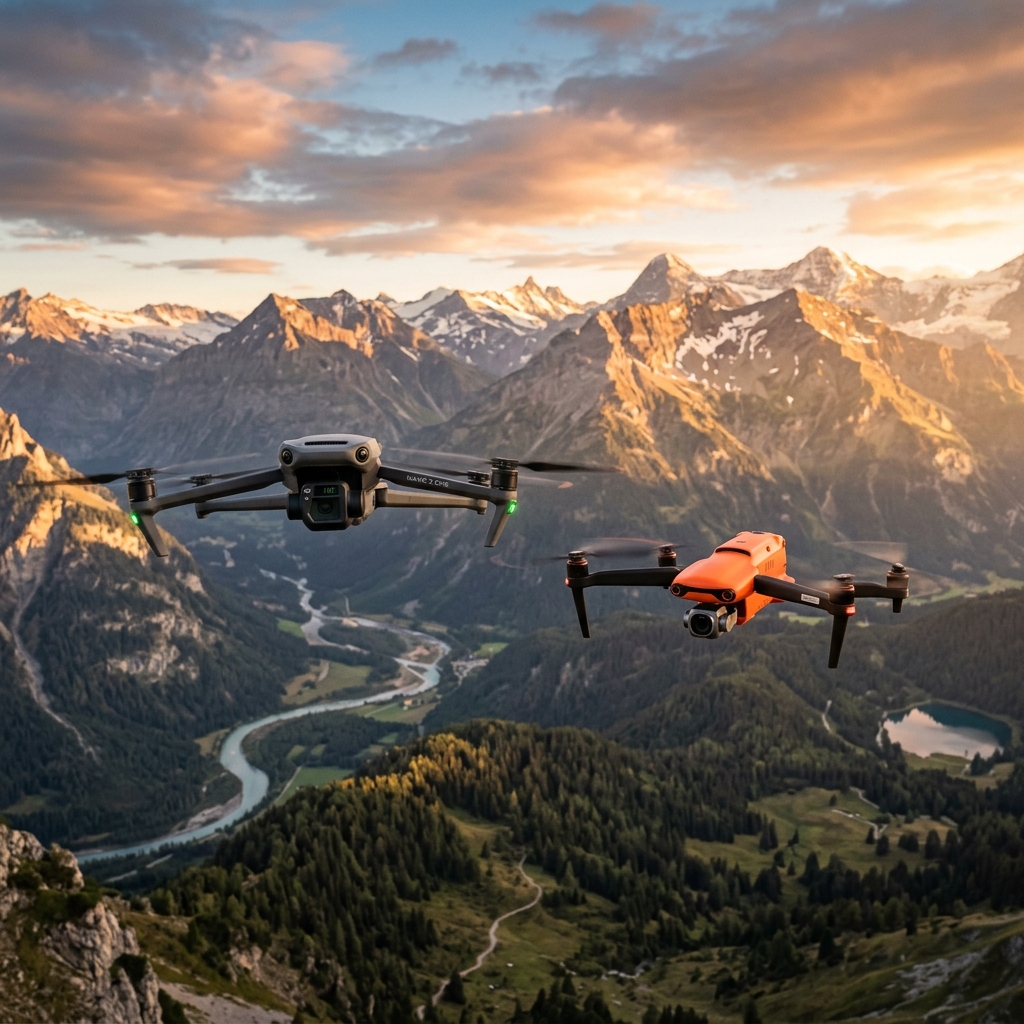
If you are shopping for a serious DJI camera drone in 2026, the two names that keep coming up are the DJI Mavic 4 Pro (released May 2025, base kit $2,099 with DJI RC 2 controller) and the DJI Air 3S (released October 2024, base kit $1,099 with DJI RC-N3 controller). Both ship under the DJI consumer umbrella. Both are foldable, sub-2 kg, and shoot 4K HDR. Both are well reviewed. Both are real tools, not toys.
The catch is that the price gap is roughly 1.9x at the base kit, and the feature gap is even wider than the price implies: triple-camera versus dual-camera, 100 MP 4/3 Hasselblad versus 50 MP 1-inch, 51-minute versus 45-minute flight time, C2-class 1,063 g versus C1-class 724 g body. On paper, the Mavic 4 Pro is the obvious “better” drone. In practice, the better drone is the one that matches the kind of flying you actually do, how often you fly, and how long you plan to keep the airframe.
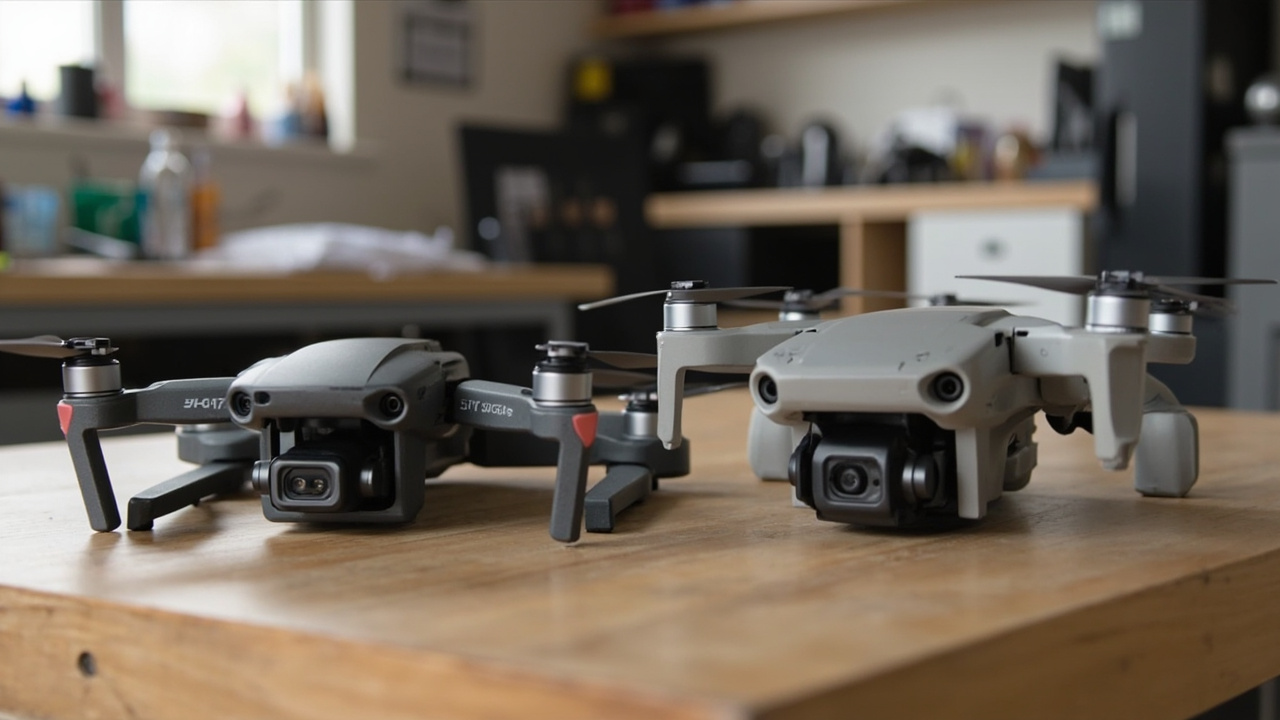
This comparison is written for the buyer who is genuinely torn between these two. We work through sticker price, real-world image quality, flight economics, repair risk, and 5-year cost of ownership — then we tell you who each drone is actually for.
The Verdict First
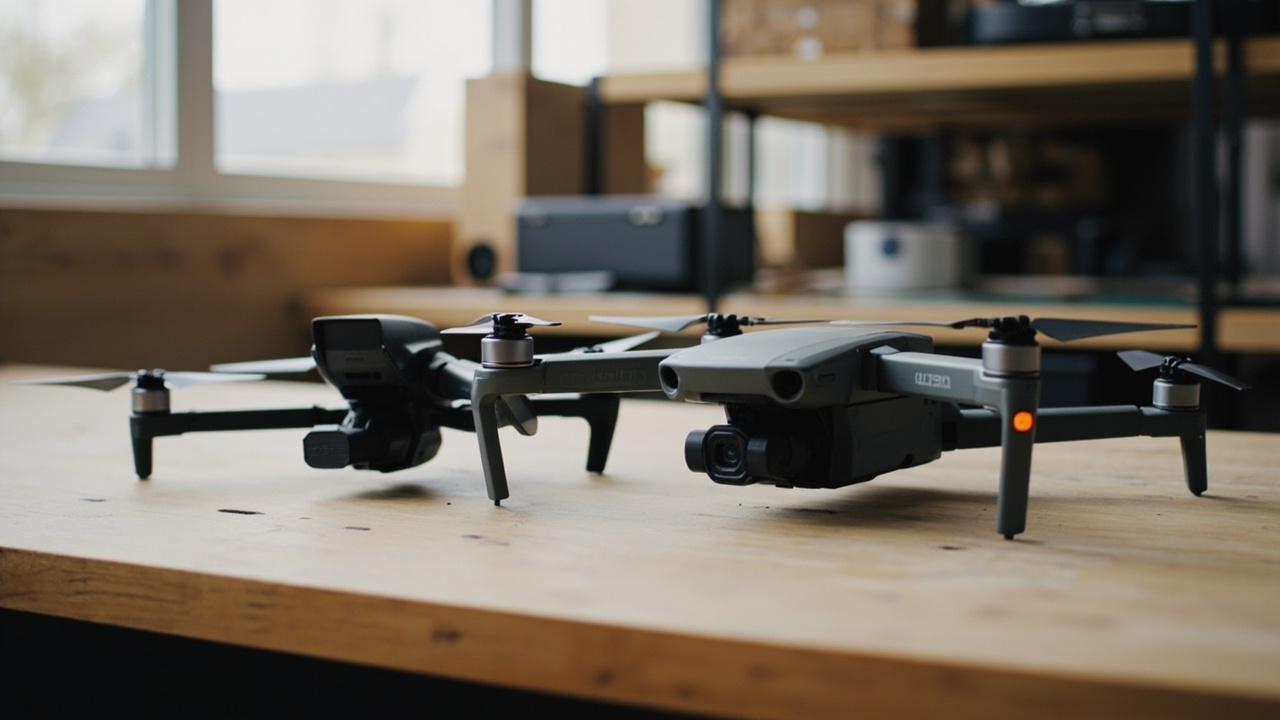
- Pick the DJI Air 3S if: you fly mostly for personal travel, social media, real estate listing photos, and YouTube/B-roll work; you want a lighter drone (724 g vs 1,063 g) that falls under the C1 regulatory class in Europe (a real cost and paperwork win); and you are happy with a 1-inch primary camera and a 70 mm medium-tele. The Air 3S covers roughly 85% of what the Mavic 4 Pro delivers on image quality, for about 52% of the price.
- Pick the DJI Mavic 4 Pro if: you shoot paid client work, weddings, commercial real estate, cinematic video, or large-format stills; you need the 100 MP 4/3 Hasselblad main sensor, dual tele cameras (medium and long), the Infinity Gimbal that rotates 360° and shoots 70° upward; you fly far from a charger and value the extra 6 minutes of flight time; or you want a longer replacement cycle (5-7 years) backed by the absolute latest transmission and obstacle-avoidance stack.
- Skip both if: you only fly a few times a year for fun. The DJI Mini 4 Pro (sub-249 g, ~$759) is the smarter spend for casual pilots.
Cost score (overall value): 78/100. The Air 3S is the better value-per-dollar. The Mavic 4 Pro is the better tool for high-end work. The “right” answer is the one that matches your workload, not the spec sheet.
Key Comparison Points
Price vs Real Cost Per Use
The sticker price is the easy part. The total cost over 4-5 years is where the math diverges.
| Cost Factor | DJI Air 3S (2024) | DJI Mavic 4 Pro (2025) |
|---|---|---|
| Base kit (with controller) | $1,099 (RC-N3) | $2,099 (DJI RC 2) |
| Fly More Combo (3 batteries, hub, bag) | $1,399 (RC-N3) / $1,599 (RC 2) | $2,549 (RC 2) — DJI Store; ~$2,899 at DJI USA |
| Extra battery (per piece) | ~$119 | ~$199 |
| ND filter set (official) | ~$109 | ~$159 |
| DJI Care Refresh (2-year) | ~$149 | ~$259 |
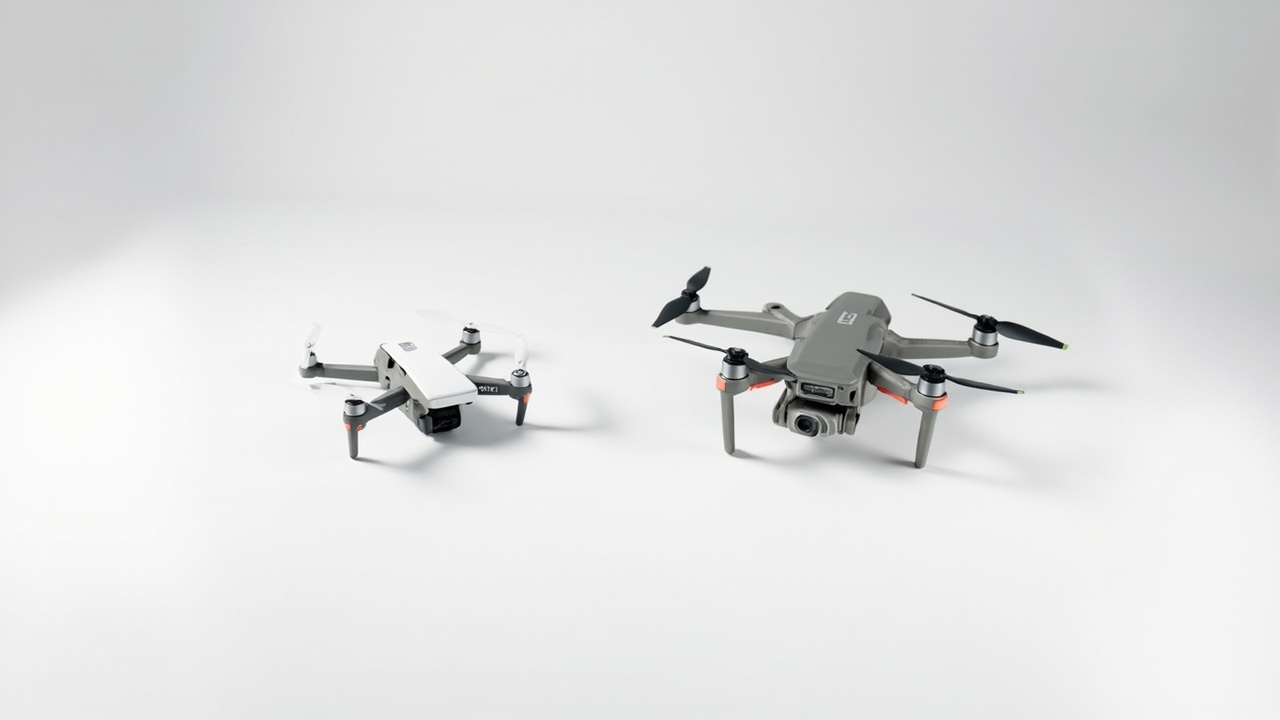
| Takeoff weight | 724 g (C1 class in EU) | 1,063 g (C2 class in EU) |
| Real-world flight time per battery | 30-38 min (DJI claims 45 min) | 35-45 min (DJI claims 51 min) |
| Battery cycle life (to 80% capacity) | ~200 cycles typical | ~200 cycles typical |
| 4-year resale value (typical) | 35-45% of MSRP | 45-55% of MSRP |
Now plug in a typical “well-equipped” setup: base drone + Fly More Combo (so you can fly a real session of 60-90 minutes) + one extra battery beyond the combo + a 2-year Care Refresh plan.
| Setup (Year 1) | DJI Air 3S | DJI Mavic 4 Pro |
|---|---|---|
| Drone + Fly More Combo (RC 2) | $1,599 | $2,549 |
| 1 extra battery | $119 | $199 |
| ND filter set | $109 | $159 |
| DJI Care Refresh (2 yr) | $149 | $259 |
| Total Year-1 cost | ~$1,976 | ~$3,166 |
| Cost per battery in the kit | $119 / 4 ≈ $30 | $199 / 4 ≈ $50 |
Now amortize that total cost over a realistic 5-year ownership window, assuming the drone gets used for paid work or serious hobby (not just a few flights per year):
| 5-Year Cost Line | DJI Air 3S | DJI Mavic 4 Pro |
|---|---|---|
| Purchase + accessories | $1,976 | $3,166 |
| 1 out-of-warranty battery replacement (year 4) | $119 | $199 |
| 1 set of propellers (replacement) | $40 | $60 |
| 1 Care Refresh renewal / replacement drone (year 3) | $149 (Refresh) | $259 (Refresh) |
| Resale value at year 5 | -$700 (35% of $1,976) | -$1,500 (47% of $3,166) |
| Net 5-year cost | ~$1,584 | ~$2,184 |
The Mavic 4 Pro costs about $600 more over 5 years at this configuration. The gap closes a bit because the Mavic holds resale value better, but the Air 3S is still meaningfully cheaper to own.
Where the math flips is cost per paid hour of work. If the Mavic 4 Pro lets you shoot a $5,000 wedding job the Air 3S would have lost you (or priced you out of), the Mavic earns its premium back in a single booking. If you are flying for personal use, the Air 3S is the better dollar-per-gram, dollar-per-hour value.
The biggest hidden cost on both drones is battery wear. DJI rates its intelligent flight batteries around 200 cycles to 80% capacity. A drone that flies 3 batteries per session, 50 sessions a year, eats through its first set of batteries in roughly 18 months. Plan on a battery replacement every 18-30 months if you fly often. The Air 3S battery is about $119; the Mavic 4 Pro battery is about $199. Over 5 years that is a ~$400 difference in battery cost alone.
The other hidden cost is regulatory. In the EU, the Air 3S at 724 g is a C1-class drone, which is the friendliest category for sub-A2 operations with no extra pilot certification. The Mavic 4 Pro at 1,063 g is C2-class, which requires the A2 sub-category certificate and additional operational limits (keep 50 m from uninvolved people, etc.). For European commercial pilots, that is a paperwork cost the US-dollar-only table above does not capture. In the US and most of Asia, the regulatory gap is smaller but real for commercial use.
Build Quality and Durability
| Build Factor | DJI Air 3S | DJI Mavic 4 Pro |
|---|---|---|
| Takeoff weight | 724 g | 1,063 g |
| Folded dimensions (L×W×H) | 214.19 × 100.63 × 89.17 mm | 257.6 × 124.8 × 106.6 mm |
| Chassis material | Magnesium-aluminum frame, plastic shell | Magnesium-aluminum frame, plastic shell |
| Gimbal | 3-axis mechanical, 1-inch main + 70 mm tele | Infinity Gimbal — 3-axis, full 360° rotation, 70° upward tilt |
| Wind resistance | Level 5 (up to ~12 m/s) | Level 6 (up to ~14 m/s) |
| Obstacle avoidance | Omnidirectional (front, back, sides, top, bottom) | Omnidirectional, 0.1-Lux Nightscape, front-facing LiDAR |
| IP rating | None (consumer, no official IP) | None (consumer, no official IP) |
| Operating temperature | -10°C to 40°C | -10°C to 40°C |
| Operating noise | ~74 dB at 1 m | ~76 dB at 1 m |
| Internal storage | 42 GB | none advertised on all SKUs; relies on microSD |
| microSD slot | Yes (UHS-I / V30+ recommended) | Yes (UHS-I / V30+ recommended) |
| Battery hot-swap | No (powered-off swap) | No (powered-off swap) |
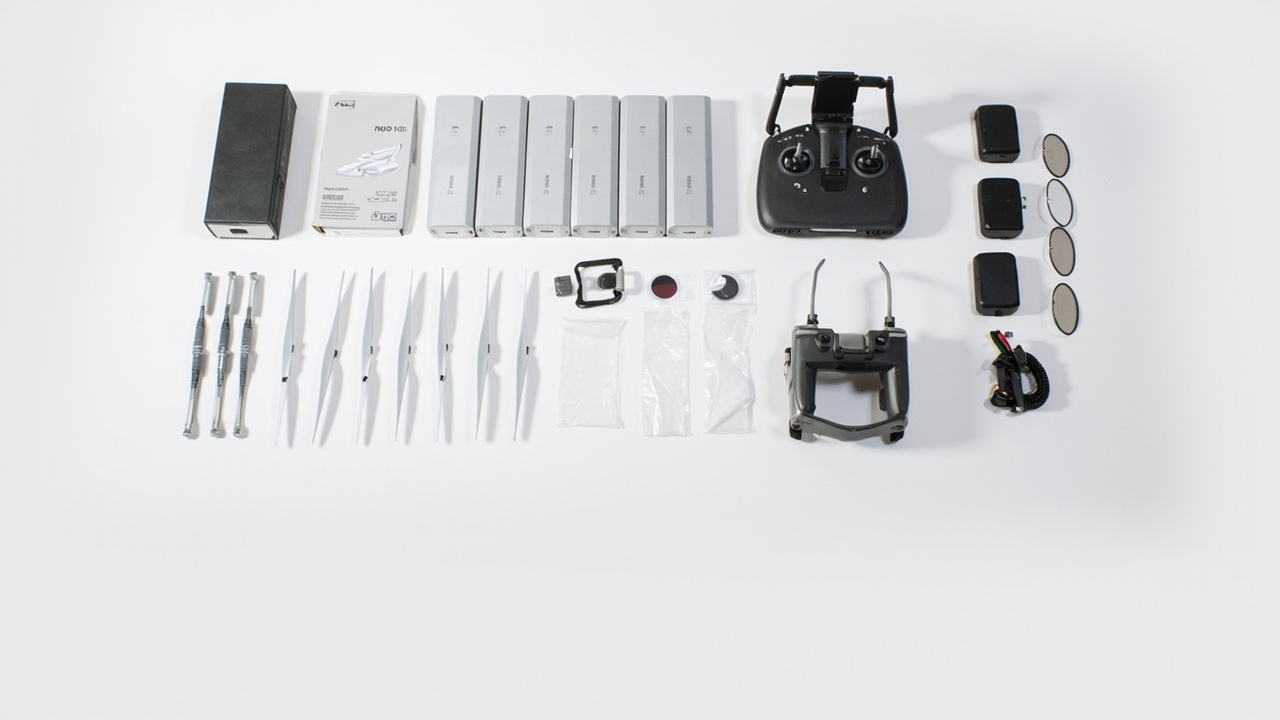
The Air 3S is more portable. 724 g and a footprint that fits in a coat pocket with a small bag means you actually take it with you on hikes, bike rides, and city walks. The Mavic 4 Pro at 1,063 g is heavier and bulkier — it is a “plan a flight” drone more than a “I have it in my backpack just in case” drone.
The Mavic 4 Pro is tougher in wind and has a meaningfully better obstacle-avoidance system. The 0.1-Lux Nightscape sensing and front-facing LiDAR mean it can fly safely back to home in low light where the Air 3S would hesitate. For coastal, mountain, or winter flying, that is a real safety upgrade.
The Infinity Gimbal on the Mavic 4 Pro is the single biggest hardware differentiator. It can rotate a full 360° on the yaw axis and tilt up to 70°, which lets you shoot Dutch-angle cinema, overhead “tiny planet” verticals, and straight-up tower inspections that are physically impossible on the Air 3S’s limited-tilt gimbal. For real estate, inspection, and creative work, this is the line where the Mavic 4 Pro starts to feel like a different category of tool, not just a better-spec version of the same thing.
For long-term reliability, both drones are well-regarded. The Air 3S’s main wear items are the gimbal damper balls (replaceable, ~$15) and the rear arm hinges (less of an issue post-Air-3 design fixes). The Mavic 4 Pro’s Infinity Gimbal is more complex mechanically and will cost more if it ever needs service out of warranty — DJI’s flat-rate gimbal repair is roughly $200-$300 for the Air 3S and $400-$550 for the Mavic 4 Pro, based on DJI’s published service pricing.
Feature Breakdown
| Feature | DJI Air 3S | DJI Mavic 4 Pro |
|---|---|---|
| Main camera sensor | 1-inch CMOS, 50 MP, f/1.8 | 4/3 CMOS Hasselblad, 100 MP, adjustable f/2.0-f/11 |
| Medium tele camera | 1/1.3-inch CMOS, 48 MP, 70 mm equiv, f/2.8 | 1/1.3-inch CMOS, 48 MP, 70 mm equiv, f/2.8 |
| Long tele camera | None (uses digital zoom on the 70 mm) | 1/1.5-inch CMOS, 50 MP, 168 mm equiv, f/2.8 |
| Max video resolution | 4K/120 fps HDR, 1080p/240 fps | 6K/60 fps HDR, 4K/120 fps HDR, 1080p/240 fps |
| Color profiles | D-Log M, HLG, Normal | D-Log M, D-Log, HLG, Normal, Hasselblad Natural Color Solution (HNCS) |
| Dynamic range (claimed) | Up to 14 stops | Up to 15+ stops |
| Raw stills (DNG) | Yes (50 MP main) | Yes (100 MP main; 48 MP + 50 MP tele) |
| Video transmission | O4 (up to 20 km FCC) | O4+ (up to 30 km FCC) |
| Live feed quality | 1080p/60 fps | 1080p/60 fps, HDR |
| Active tracking | ActiveTrack 360 | ActiveTrack 360, vehicle-aware subject tracking |
| QuickShots / cinematic modes | Yes (Rocket, Dronie, Circle, Helix, Boomerang, Asteroid) | Yes (same + Free Panorama improvements) |
| Waypoint mission planning | Yes (basic) | Yes (advanced — per-waypoint camera angle, height, speed) |
| Cruise control | Yes | Yes |
| Night mode (video) | Yes (with caveats) | Yes (0.1-Lux Nightscape sensing) |
| Internal fans | Yes (passive + small fan on main board) | Yes (improved thermal design for 6K capture) |
| Software / app | DJI Fly | DJI Fly (same app, full feature parity) |
What this means in real-world use:
- Image quality headroom: The Mavic 4 Pro’s 100 MP 4/3 sensor pulls about 1.5-2 stops of extra dynamic range over the Air 3S’s 1-inch sensor, and the adjustable aperture (f/2.0 to f/11) gives you real control over shutter speed in bright light. For golden-hour landscapes, real estate exteriors at noon, or any high-contrast scene, the Mavic files have noticeably more room to recover shadows and highlights. For YouTube b-roll and Instagram, the Air 3S is already excellent and the gap is barely visible at typical viewing sizes.
- Tele reach: The Mavic 4 Pro’s 168 mm tele is a real optical lens, not digital zoom. For wildlife, ski-slope action, and architectural detail shots, that is a tool the Air 3S simply does not have. You can simulate it on the Air 3S with digital zoom up to 9x, but you lose image quality and the footage is visibly softer.
- 6K video: The Mavic 4 Pro can shoot 6K/60 fps HDR. For most online deliverables (4K YouTube, 1080p social), this is overkill. For cinema clients, stock footage, and projects that may be re-edited in 4K vertical years from now, 6K is genuine future-proofing.
- Waypoints and mission planning: Both drones support waypoint missions through DJI Fly, but the Mavic 4 Pro’s planner is more granular (per-waypoint camera angle, height, speed, gimbal tilt). For survey, mapping, and repeatable inspection flights, the Mavic is the more capable tool.
- O4+ vs O4 transmission: Both are excellent, and in a typical urban flight the 20 km ceiling on the Air 3S is irrelevant — you will fly under 1 km from the controller 99% of the time. The Mavic 4 Pro’s O4+ has better penetration in dense urban environments, which is a real edge in cities.
Pros and Cons
DJI Mavic 4 Pro (2025)
Pros
- 100 MP 4/3 Hasselblad main camera with adjustable aperture (f/2.0-f/11) — best-in-class image quality for a sub-2 kg drone
- Triple-camera system with real optical tele lenses (70 mm and 168 mm) — no quality loss at long focal lengths
- Infinity Gimbal with 360° rotation and 70° upward tilt — unique creative and inspection angles
- 51-minute claimed flight time, 35-45 minutes real-world — best endurance in this class
- 6K/60 fps HDR video and 15+ stops of dynamic range for professional post-production
- 30 km O4+ video transmission with better urban penetration
- Front-facing LiDAR and 0.1-Lux Nightscape sensing for low-light safety
- Better wind resistance (Level 6) and stronger gimbal for stable video in coastal/mountain flying
- 45-55% resale value after 4 years — better long-term value retention
Cons
- $2,099 base kit is roughly 1.9x the Air 3S, and the Fly More Combo at $2,549+ is a serious upfront spend
- 1,063 g takeoff weight puts it in C2 regulatory class in Europe (extra certification needed)
- Larger and heavier than the Air 3S — not a “thrown in a backpack” drone
- Higher battery replacement cost (~$199 per battery) and 200-cycle lifespan
- Infinity Gimbal is mechanically more complex — out-of-warranty repair can be $400-$550
- 6K/60 fps files are massive (huge storage and editing requirements)
- The Air 3S at half the price covers 85% of typical creator use cases
DJI Air 3S (2024)
Pros
- $1,099 base kit — best value-per-dollar in DJI’s consumer line in 2026
- 1-inch primary camera with 50 MP stills and 4K/120 fps HDR — already excellent for YouTube, social, real estate
- 70 mm medium tele is a real optical lens (not digital zoom) and very useful for portraits and product shots
- 724 g takeoff weight is C1-class in Europe (easier regulatory path) and a friendlier carry weight
- 45-minute claimed flight time, 30-38 minutes real-world — competitive with the Mavic 3 generation
- 42 GB of internal storage means you can fly without a microSD card in a pinch
- 20 km O4 transmission is more than enough for any legal flight
- Mature firmware, 18+ months of bug fixes — known stable platform
- 35-45% resale value after 4 years
- ActiveTrack 360 and the same DJI Fly app experience as the flagship
Cons
- 1-inch sensor cannot match the Mavic 4 Pro’s 4/3 Hasselblad for dynamic range or low light
- No 6K video — top resolution is 4K/120 fps
- Only two cameras (1-inch wide + 70 mm tele) — no long tele, no real zoom past 3x digital
- Fixed aperture on the main camera (f/1.8) — you reach for ND filters in bright sun more often
- Gimbal tilt range is limited — no overhead “tiny planet” or straight-up inspection shots
- No front-facing LiDAR, so low-light return-to-home is more cautious
- Wind resistance is Level 5 (vs Mavic 4 Pro’s Level 6) — coastal pilots will notice
- $119 per battery still adds up at 200 cycles
Best For / Skip If
Best for the DJI Air 3S:
- Travel and social media creators who need a sub-800 g drone that fits in a daypack and is “always with you”
- Real estate agents shooting listing photos and 60-second property videos — the 1-inch sensor is more than enough
- YouTube and documentary shooters delivering in 4K HDR — 4K/120 fps covers 95% of online deliverables
- Hobbyist aerial photographers who want a serious camera drone without crossing $1,500
- European commercial pilots who need the C1 regulatory class for simpler A1/A3 operations
- First-time drone buyers graduating from a Mini — the Air 3S is the right size of “real” drone
Best for the DJI Mavic 4 Pro:
- Wedding and event videographers who need the dynamic range and color science for paid work
- Cinematographers shooting commercial, narrative, or stock footage that will be re-edited over years
- Real estate and architecture pros shooting commercial-grade exterior content where 100 MP stills are a real deliverable
- Inspection, mapping, and survey pilots who need the Infinity Gimbal’s overhead angles, waypoint mission planning, and long optical tele
- Wildlife and outdoor content where the 168 mm tele is the difference between a usable frame and a cropped mess
- Long-term owners planning to keep the drone 5-7 years and amortize it across hundreds of hours of flying
Skip both if:
- You fly only a few times a year — the DJI Mini 4 Pro (sub-249 g, ~$759) is the right tool
- You are buying a first drone for a teenager — the DJI Neo (~$199) covers learning without a $1,000+ blast radius
- You need a commercial mapping drone — look at the DJI Mavic 3 Enterprise line instead, which is designed for that workload
Bottom Line
The DJI Mavic 4 Pro and the DJI Air 3S are both excellent drones. The Mavic 4 Pro is the better tool for high-end image quality, professional work, and long-term ownership. The Air 3S is the better value for 85% of creators who fly for travel, social media, real estate, or serious hobby work.
If you make money with the drone — weddings, commercial real estate, cinematic video, paid client work — the Mavic 4 Pro earns its premium back in image quality, tele reach, and the Infinity Gimbal’s unique angles. The 100 MP 4/3 Hasselblad is the best sensor you can put under 2 kg in 2026, and the extra $600-$1,200 over the Air 3S is justified by the deliverable.
If you fly mostly for personal use, travel, or non-paid creative work, the Air 3S is the smarter buy. You get 85% of the Mavic 4 Pro’s image quality for 52% of the price, in a lighter, more portable, more regulation-friendly airframe. Over 5 years of ownership, the Air 3S costs roughly $600 less to own, and the battery and accessory savings are real.
The only wrong answer is paying for the Mavic 4 Pro because a YouTube review told you to, and then leaving it in the box because it is too heavy to carry on a hike. “Buy smart. Get more value” means matching the tool to the workload — not chasing the spec sheet.