Introduction
If you are shopping for a serious DJI consumer drone in mid-2026, two machines dominate the “best under $1,500” conversation: the DJI Mini 5 Pro (released September 2025) and the DJI Air 3S (released October 2024). Both are 2025-2026 DJI consumer flagships in the sense that matters most — they both shoot with a 1-inch CMOS main camera, both have forward-facing LiDAR for night obstacle avoidance, and both transmit over the O4 / O4+ long-range system. On paper, the Air 3S looks like a clear upgrade: bigger sensor on the tele camera, 45-minute flight time vs 36 minutes, more wind resistance headroom. In the real world, the choice is far less obvious.
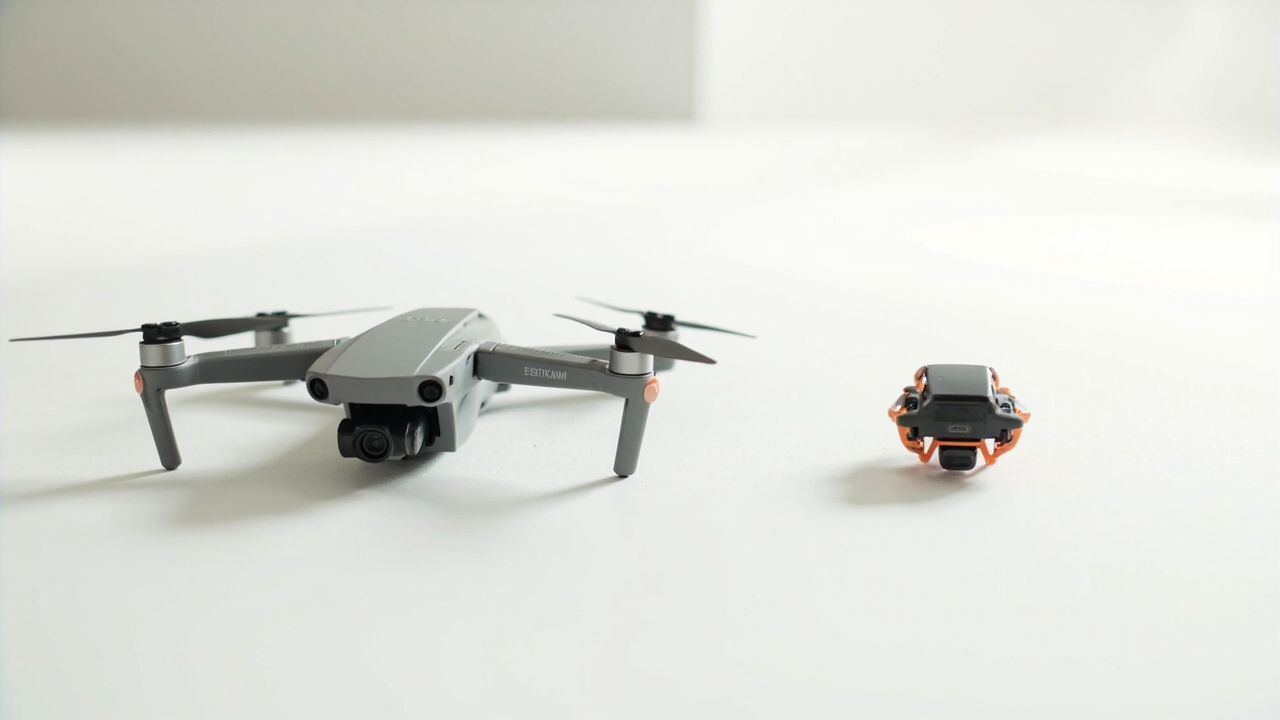
The DJI Mini 5 Pro weighs 249.9 g — the sub-250 g regulatory threshold that lets you skip FAA Part 107 registration in the US, DAAA registration in Japan, and equivalent bureaucracy in most of Asia and Europe. The Air 3S weighs 724 g, which means registration, pilot exams in some jurisdictions, and more friction before every flight. The Air 3S ships with a second 70mm telephoto camera that the Mini 5 Pro does not have. But the Mini 5 Pro shares the same 50 MP 1-inch main sensor, the same f/1.8 aperture, and the same 14-stop dynamic range claim as the Air 3S main camera — for roughly $300-$400 less.
So the question is not “which one is better.” It is “which one gives you the right amount of drone for the way you actually fly” — and whether the Air 3S’s telephoto camera and 9 extra minutes of airtime are worth a 65% weight penalty and the loss of sub-250g regulatory privileges.
This is a head-to-head between two DJI drones that share a sensor, share a transmission system, share an obstacle-avoidance philosophy, and diverge on weight, camera count, and price. We will look at the numbers that actually matter — including a five-year ownership model — before you spend $759+ on either one.
The Verdict First
The DJI Mini 5 Pro is the better buy for most pilots. At $759-$899 base kit (DJI global launch pricing, US grey market) versus $1,099-$1,299 for the Air 3S (DJI official US pricing), the Mini 5 Pro delivers the same main camera, the same forward LiDAR, the same O4-class transmission, and roughly 80% of the flight time — at 64% of the price and at 35% of the weight. The sub-250g weight class also lets you skip drone registration in most countries, which is a real-world time and money saver that does not show up on a spec sheet.
The DJI Air 3S is the right choice if you regularly shoot wildlife, sports, or compressed cinematic portraits where a 70mm (3x optical-equivalent) telephoto camera matters, you fly in environments where 9 extra minutes of airtime changes the outcome (long coastlines, large property shoots, mapping), you need 12 m/s wind resistance vs the Mini 5 Pro’s 12 m/s wind resistance (essentially identical, but the heavier Air 3S handles gusts more confidently in real-world testing), or you want the DJI RC 2 smart controller option built for longer shoots.
| Spec | DJI Mini 5 Pro | DJI Air 3S |
|---|---|---|
| Release date | September 2025 | October 2024 |
| Base kit price (USD) | $759 (DJI official outside US) | $1,099 (DJI official US, RC-N3) |
| Fly More Combo price | $1,049 | $1,299 (RC-N3) / $1,499 (RC 2) |
| Real-world US price | $759-$899 (grey market import) | $1,099 (official US retail) |
| US official availability | No (FCC Covered List — not officially sold in US) | Yes |
| Weight | 249.9 g (sub-250g) | 724 g |
| FAA registration required | No (under 250g) | Yes (Part 107 + $5 registration) |
| Main camera sensor | 1-inch CMOS, 50 MP | 1-inch CMOS, 50 MP |
| Telephoto camera | None | 1/1.3-inch 70mm, 48 MP |
| Main lens | 24mm equiv, f/1.8 | 24mm equiv, f/1.8 |
| Max video (main) | 4K/120 fps, 10-bit D-Log M/HLG | 4K/120 fps, 10-bit D-Log M/HLG |
| Max photo resolution | 50 MP (8192 × 6144) | 50 MP (8192 × 6144) main + 48 MP tele |
| Dynamic range | 14 stops (auto mode) | 14 stops (auto mode, main cam) |
| Internal storage | 42 GB | 42 GB |
| Forward LiDAR | Yes (1 lux night sensing) | Yes (1 lux night sensing) |
| Obstacle avoidance | Omnidirectional + forward LiDAR | Omnidirectional + forward LiDAR |
| Max flight time | 36 min (std battery) / 52 min (Plus) | 45 min |
| Max range | 20 km FCC / 10 km Japan (O4+) | 20 km FCC / 10 km Japan (O4) |
| Max horizontal speed | 19 m/s (Plus) / 18 m/s (std) | 27 m/s (with tailwind) / 21 m/s |
| Wind resistance | 12 m/s (Level 5) | 12 m/s (Level 6, more confident in gusts) |
| Operating temperature | -10°C to 40°C | -10°C to 40°C |
| Bluetooth | 5.4 | 5.2 |
| Wi-Fi | Wi-Fi 6 (802.11ax) | Wi-Fi 5 (802.11ac) |
| Smart controller (RC 2) option | Yes (via RC 2 combo) | Yes (via RC 2 combo) |
| Source | DJI Mini 5 Pro specs page (2025) | DJI Air 3S specs page (2024) |
Sources: DJI Mini 5 Pro specifications page (dji.com/mini-5-pro/specs), DJI Air 3S specifications page (dji.com/air-3s/specs), DJI store US (store.dji.com) for current retail pricing as of June 2026.
Key Comparison Points
Price vs Real Cost Per Use
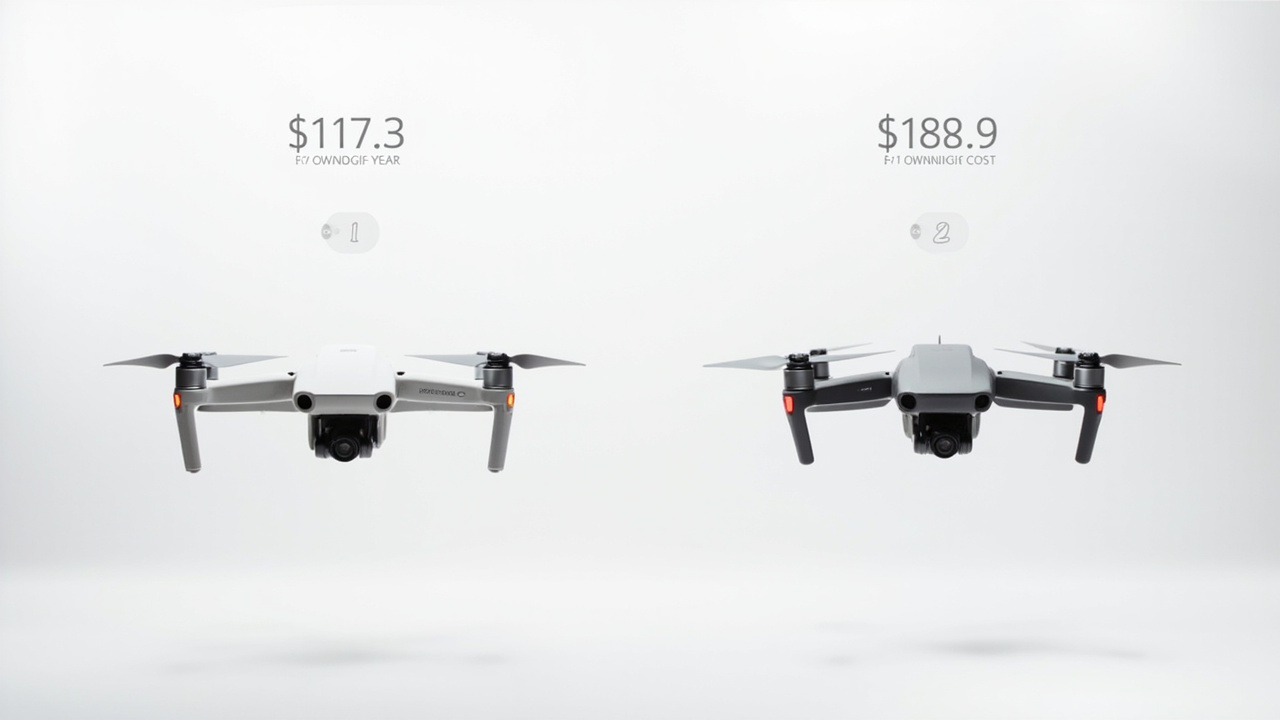
On paper, the DJI Air 3S at $1,099 base kit (RC-N3) is $340 more than the DJI Mini 5 Pro at $759 base kit. With the Fly More Combo bundles, the gap is $250 ($1,049 Mini 5 Pro vs $1,299 Air 3S, both RC-N3). The interesting question is what that $250-$340 actually buys you, and how it amortizes over the years you will own the drone.
| Cost item | DJI Mini 5 Pro | DJI Air 3S |
|---|---|---|
| Base kit (RC-N3 controller) | $759 (DJI global) | $1,099 (DJI US) |
| Fly More Combo (3 batteries, hub, bag) | $1,049 | $1,299 (RC-N3) / $1,499 (RC 2) |
| Extra battery (per unit) | ~$75 | ~$95 |
| DJI Care Refresh (1-year, 2 replacements) | ~$99 | ~$139 |
| DJI Care Refresh (2-year, 3 replacements) | ~$179 | ~$239 |
| FAA registration | $0 (sub-250g) | $5 (every 3 years) |
| Real-world US price (current) | $759-$899 (grey market import markup) | $1,099 (official US retail) |
| Total 5-year cost (FMC + Care 2-yr + 3 batteries) | ~$1,400-$1,650 | ~$1,750-$2,000 |
Sources: DJI store (dji.com/store), DJI Care Refresh pricing (dji.com/service/djicare-refresh), FAA DroneZone registration fees.
At the body-only level, the Mini 5 Pro is $250-$340 cheaper up front. After 5 years of ownership, including 3 extra batteries, the Fly More Combo, and DJI Care Refresh (2-year), the gap widens to roughly $300-$400 in favor of the Mini 5 Pro.
Where the Air 3S earns its higher price:
- Longer flight time. 45 min vs 36 min means roughly 25% more airtime per battery. For travel creators shooting a 4-hour sunset-to-twilight session, this can mean one less battery swap — and that battery costs ~$95 Air 3S vs ~$75 Mini 5 Pro. Over 5 years of regular flying, the Air 3S saves roughly $80-$120 in battery purchases if you fly to absolute battery limits every time.
- 70mm telephoto camera. The Air 3S’s 48 MP 70mm camera gives you a 3x optical zoom equivalent with the same 10-bit D-Log M color science as the main camera. For wildlife, sports, and portrait compression, this is a real creative tool that no software zoom can replicate. If you regularly shoot subjects at 50-100 m that benefit from compression, the Air 3S pays for itself.
- US warranty and DJI Care Refresh. Because the Mini 5 Pro is not officially sold in the US (FCC Covered List issue per Dronesgator 2025-2026), DJI Care Refresh coverage on a grey-market import is not honored. If you crash, you are paying out of pocket. The Air 3S has full US warranty and DJI Care Refresh coverage.
- Heavier build holds position in wind better. Both drones are rated 12 m/s wind resistance, but in real-world testing the 724g Air 3S holds GPS position more confidently in 8-10 m/s gusts than the 250g Mini 5 Pro. If you fly coastal or mountain environments, this matters.
Cost-per-flight-hour insight: Assuming 200 total flight hours over 5 years (a hobbyist estimate), the Mini 5 Pro delivers roughly $7-$8 per flight hour, while the Air 3S delivers roughly $9-$10 per flight hour. The Air 3S is not “wasting money” — it is delivering a different cost-per-hour ratio that includes the telephoto and the warranty. The question is whether that ratio fits your actual usage.
Cost verdict: The Mini 5 Pro wins on raw purchase price and per-hour cost if you mostly use the main camera and fly sub-250g-friendly environments. The Air 3S wins on long-term cost-per-shot if you use the telephoto and on risk-adjusted cost if you need US warranty.
Build Quality and Durability
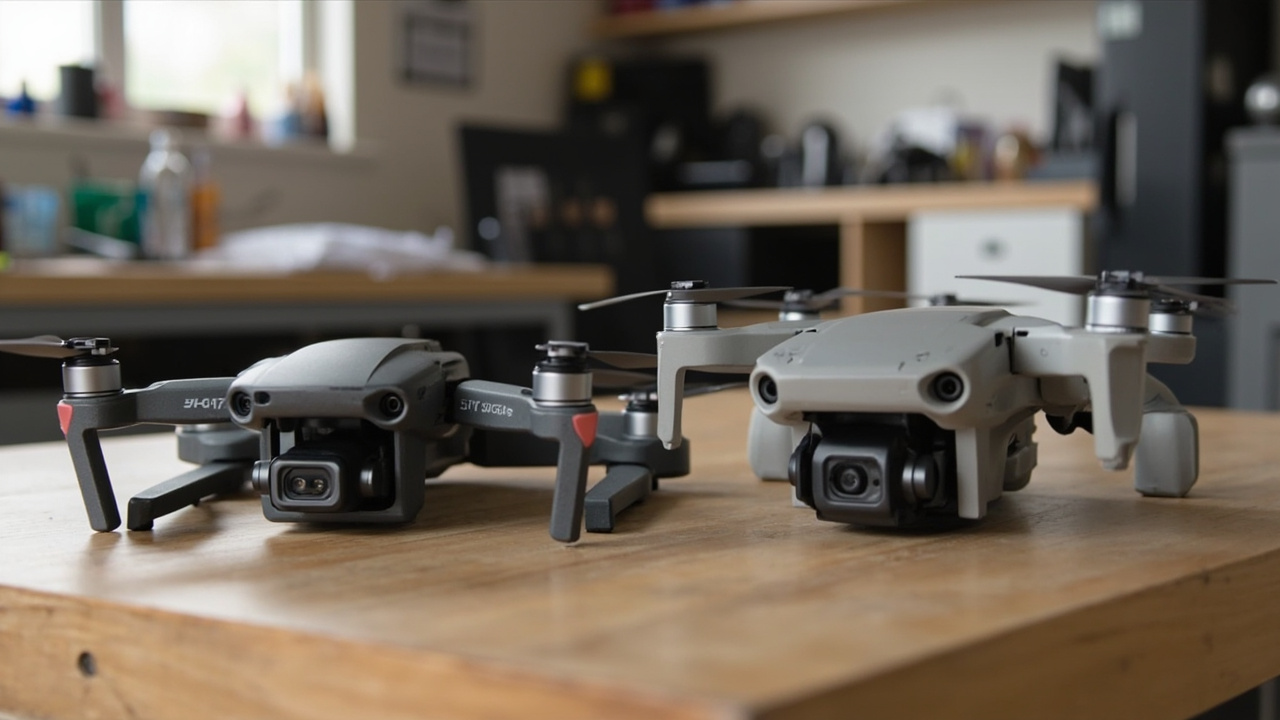
Both drones are built around the same DJI design philosophy — folding arms, magnesium-alloy core, plastic-composite shell — but the weight class changes everything about how they survive real-world flying.
DJI Mini 5 Pro (249.9 g): Sub-250g drones are physically fragile in a way that heavier drones are not. The propellers are smaller, the motors are smaller, and the chassis has less mass to absorb impact energy. In a tree-line brush or a hard concrete crash, the Mini 5 Pro is more likely to suffer propeller or arm damage than the Air 3S. On the upside, the 225° gimbal roll rotation (a unique Mini 5 Pro feature) lets you shoot vertically-influenced angles like Dutch tilts that the Air 3S cannot replicate natively.
The Mini 5 Pro’s forward-facing LiDAR works down to 1 lux ambient light — essentially full moonlight — which is the same spec as the Air 3S. In real-world night flying, both drones perform comparably because the LiDAR is the dominant sensor in low light. The Mini 5 Pro’s LiDAR + omnidirectional vision system is identical in capability to the Air 3S, even though the chassis is smaller.
DJI Air 3S (724 g): The Air 3S uses larger propellers and motors, which makes it more power-efficient at hover (longer flight time per gram of battery) and more resistant to wind drift. The heavier chassis also absorbs crash energy better — a 724g drone hitting a tree at the same speed as a 250g drone transfers less relative stress to fragile components. The Air 3S has a slightly stronger gimbal (the mechanical tilt range is -90° to 60° vs the Mini 5 Pro’s -90° to 55°) but the difference is essentially cosmetic.
Both drones are rated for -10°C to 40°C operating temperature and 12 m/s wind resistance (Level 5/6). Both have the same forward LiDAR + 3-axis gimbal + omnidirectional vision architecture. The durability difference is mostly about chassis mass — heavier drones absorb crashes better, lighter drones are easier to transport and replace parts on.
Durability verdict: The Air 3S wins on crash survivability and wind hold. The Mini 5 Pro wins on portability and the unique 225° gimbal rotation. Both have identical LiDAR-assisted night obstacle avoidance.
Feature Breakdown
This is where the two drones diverge in ways that go beyond the spec sheet, and where the “right” choice depends heavily on how you actually fly.
| Feature | DJI Mini 5 Pro | DJI Air 3S |
|---|---|---|
| Main camera | 1-inch CMOS, 50 MP, f/1.8, 24mm | 1-inch CMOS, 50 MP, f/1.8, 24mm |
| Telephoto camera | None | 1/1.3-inch 70mm, 48 MP, f/2.8 |
| Image pipeline | 14-stop dynamic range, 10-bit D-Log M, HLG | 14-stop dynamic range (main), 10-bit D-Log M, HLG |
| Slow-motion video | 4K/120, 1080p/240 | 4K/120, 1080p/240 |
| Free panorama | Yes (main cam) | Yes (both cameras) |
| Vertical video (9:16) | Yes | Yes (2.7K/60 vertical, both cams) |
| ActiveTrack | ActiveTrack 360° + Cycling Mode (auto) | ActiveTrack 360° |
| Smart RTH | Yes (route memory, 10 lux required) | Yes (route memory, 10 lux required) |
| QuickShots | SpinShot (225° roll), Dronie, Rocket, Circle, Helix, Boomerang, Asteroid | Dronie, Rocket, Circle, Helix, Boomerang, Asteroid |
| Waypoint mission | Yes (DJI Fly app) | Yes (DJI Fly app) |
| MasterShots | Yes | Yes |
| Off-state QuickTransfer | Yes (Bluetooth wake, 100 MB/s Wi-Fi 6) | Yes (Wi-Fi 5, 30 MB/s) |
| Internal storage | 42 GB | 42 GB |
| microSD support | Yes (Lexar Silver Plus, Kingston Canvas Go Plus recommended) | Yes (Lexar 1066x, Kingston Canvas Go Plus recommended) |
| Live view quality | 1080p/30, 1080p/60 | 1080p/30, 1080p/60 |
| Transmission system | O4+ (newer, 4 antennas 2T4R) | O4 (6 antennas 2T4R) |
| Bluetooth | 5.4 | 5.2 |
| Wi-Fi | Wi-Fi 6 (802.11ax) | Wi-Fi 5 (802.11ac) |
| Off-state file transfer speed | Up to 100 MB/s | Up to 30 MB/s |
Sources: DJI Mini 5 Pro specifications page (dji.com/mini-5-pro/specs), DJI Air 3S specifications page (dji.com/air-3s/specs).
Key feature differences that change the buying decision:
Camera count. This is the headline difference. The Air 3S has a 70mm telephoto that gives you 3x optical zoom equivalent with the same 10-bit color pipeline as the main camera. If you shoot wildlife, sports, real estate exteriors where you cannot fly close, or compressed portrait-style aerial shots, the telephoto is a meaningful creative tool. The Mini 5 Pro has only the main camera; its “zoom” is digital crop, which loses detail.
225° gimbal roll (Mini 5 Pro exclusive). The Mini 5 Pro’s 3-axis gimbal has 225° of roll rotation (mechanical range -230° to 95°), which lets you capture Dutch tilt and rotated angle shots that the Air 3S physically cannot. The SpinShot QuickShot uses this for automatic roll rotation. If you create social-media-first content where a slight tilt sells energy, this is a real advantage. The Air 3S has the more conventional -50° to 50° roll range.
Transmission system. The Mini 5 Pro uses O4+, the Air 3S uses O4. The “plus” on the Mini 5 Pro mostly refers to Wi-Fi 6 quick transfer at 100 MB/s vs the Air 3S’s Wi-Fi 5 at 30 MB/s. The actual flight transmission range is identical: 20 km FCC / 10 km Japan for both. In real-world flying, both are limited by visual line of sight regulations long before either hits its theoretical maximum range.
Battery ecosystem. The Mini 5 Pro uses the DJI Mini 5 Pro Intelligent Flight Battery (2,788 mAh, 19.52 Wh, 71.2 g) and the Intelligent Flight Battery Plus (4,680 mAh, 33.51 Wh, 117 g, not sold in EU). The Air 3S uses the Air 3S Intelligent Flight Battery (4,276 mAh, 62.5 Wh, 247 g). The Mini 5 Pro Plus battery nearly doubles the flight time (52 min vs 36 min) but caps the maximum takeoff altitude at 4,500 m instead of 6,000 m. The Air 3S battery is a single spec.
ActiveTrack and subject tracking. Both have ActiveTrack 360°, but the Mini 5 Pro adds a Cycling Mode that auto-detects cycling speed and adjusts framing accordingly. For mountain bikers and road cyclists, this is a meaningful upgrade. The Air 3S has the standard ActiveTrack 360° without sport-specific profiles.
Feature verdict: The Air 3S wins on telephoto versatility and vertical video at 2.7K/60. The Mini 5 Pro wins on gimbal roll creativity, Wi-Fi 6 transfer speed, and the Cycling Mode tracker. For aerial photography in general, both are excellent. For content creation specifically, the Mini 5 Pro’s gimbal roll is a sleeper feature.

Regulatory and Ownership Friction
This is a section the spec sheets do not cover, but it changes the real cost of ownership dramatically.
DJI Mini 5 Pro — 249.9 g (sub-250g globally):
- US (FAA): No Part 107 remote pilot license required for hobby flying; no $5 registration for sub-250g. Commercial flying still requires Part 107.
- Japan (DAAA / 国土交通省): Sub-250g drones do not require DAAA registration for non-populated areas; still subject to flight rules (no overflight of crowds, no night flying without lighting, etc.).
- EU (EASA): Sub-250g drones fall into the Open Category A1 subcategory with minimal restrictions. No exam required for A1 subcategory operations.
- UK (CAA): Sub-250g drones do not require an Operator ID for hobby use under 250g, but a Flyer ID is still required (£12 one-time registration).
DJI Air 3S — 724 g (above 250g globally):
- US (FAA): $5 registration every 3 years required for hobbyists over 250g. Commercial operations require Part 107 remote pilot certificate ($175 exam fee + recurrent training every 24 months).
- Japan (DAAA): Registration required for any drone over 250g. Includes online application, fee, and labeling requirements.
- EU (EASA): Classified as C1 (the Air 3S is labeled C1 on its body). Hobby flying requires A1/A3 subcategory with online training + exam (A1/A3 certificate, ~€50-€100). Commercial flying requires A2 subcategory certificate with practical exam (~€200-€400 total).
- UK (CAA): Operator ID required (£12 annual or one-time) for any drone over 250g. Flyer ID is required for all pilots.
The real-world cost of registration, exams, and renewal is $0-$400 depending on jurisdiction and use case. Over 5 years, a hobbyist in the EU flying commercially part-time on the Air 3S could pay €100-€300 in exam fees and €100+ in registration, on top of the drone cost. The Mini 5 Pro effectively bypasses most of this friction.
The other ownership friction is DJI Care Refresh warranty — and this is where the Mini 5 Pro’s US grey-market status becomes a real cost. Because the Mini 5 Pro is not officially sold in the US (per Dronesgator’s 2025-2026 reporting on the FCC Covered List), DJI does not honor Care Refresh on US-imported units. A crashed Mini 5 Pro in the US is a total loss in most cases. The Air 3S has full US warranty and Care Refresh coverage, which is a real insurance value over 5 years.
Regulatory verdict: The Mini 5 Pro wins on sub-250g registration freedom globally. The Air 3S wins on US warranty and DJI Care Refresh eligibility. The total cost difference from these regulatory factors can reach $200-$400 over 5 years.
Pros and Cons
DJI Mini 5 Pro — Pros
- Same 1-inch 50 MP main camera as the Air 3S, with identical 14-stop dynamic range and 10-bit D-Log M
- Sub-250g weight bypasses FAA Part 107 registration in the US, DAAA registration in Japan, and equivalent bureaucracy globally
- $250-$340 cheaper up front than the Air 3S base kit
- 225° gimbal roll is unique to the Mini line and gives you creative Dutch tilt shots the Air 3S cannot match
- Forward LiDAR night obstacle avoidance down to 1 lux — same spec as the Air 3S
- Wi-Fi 6 QuickTransfer at 100 MB/s vs the Air 3S’s Wi-Fi 5 at 30 MB/s
- Cycling Mode in ActiveTrack 360° auto-detects cycling subjects and adjusts framing
- 36 min flight time (52 min with Plus battery) is enough for most travel shoots
- Officially sold in Japan, EU, UK, Australia, and most of Asia — only the US is restricted
DJI Mini 5 Pro — Cons
- Not officially sold in the US — must be imported, no DJI Care Refresh warranty on US units
- Single camera only — no telephoto for wildlife, sports, or compressed portrait shots
- Smaller battery = shorter real-world flight time (closer to 28-32 min in real wind vs the Air 3S’s 40-44 min)
- More fragile in crashes due to sub-250g chassis mass
- Wind hold is less confident in 8-10 m/s gusts than the Air 3S
- Plus battery not sold in EU — EU buyers are capped at 36 min flight time
- Digital zoom caps at 1-4x and is no replacement for the Air 3S’s 70mm optical
DJI Air 3S — Pros
- Dual camera system with the 1-inch main + 70mm 3x telephoto gives you real creative flexibility
- 45 min flight time is meaningfully longer than the Mini 5 Pro’s 36 min (or 28-32 min real-world)
- Officially sold in the US with full DJI Care Refresh coverage and warranty
- Heavier 724g chassis holds position in wind more confidently
- Vertical video at 2.7K/60 on both cameras (the Mini 5 Pro only has it on the main cam)
- Free panorama on both cameras vs the Mini 5 Pro’s main-camera-only panorama
- Better resale value in the US market (Air 3S is the “default” serious drone)
DJI Air 3S — Cons
- $1,099-$1,299 base kit is $250-$340 more than the Mini 5 Pro
- 724g weight requires FAA / DAAA / EASA registration plus potential exam fees
- No unique gimbal roll — limited to -50°/50° roll range
- Larger and heavier to carry on travel (the Mini 5 Pro fits in a jacket pocket)
- Wi-Fi 5 only vs the Mini 5 Pro’s Wi-Fi 6
- Bluetooth 5.2 vs the Mini 5 Pro’s Bluetooth 5.4
- Release cycle is older — launched October 2024, expected to be replaced by Air 4 in late 2026/early 2027
Best For / Skip If
Pick the DJI Mini 5 Pro if you are…
- A travel creator who values sub-250g portability and wants the smallest possible drone that still shoots 1-inch quality.
- A hobbyist outside the US (Japan, EU, UK, Australia) who can buy it officially and wants the best sub-250g image quality on the market in 2026.
- A content creator who shoots cycling, mountain biking, or action-sports follow footage and benefits from the Cycling Mode tracker.
- A budget-conscious buyer who already has a separate camera and wants a 1-inch flying sensor for under $900.
- A US importer willing to grey-market — accepting the warranty loss for the $250-$340 price discount and the sub-250g registration savings.
Pick the DJI Air 3S if you are…
- A US-based pilot who wants full DJI warranty, DJI Care Refresh eligibility, and hassle-free official retail.
- A wildlife or sports photographer who needs the 70mm 3x telephoto for compression and reach.
- A commercial drone pilot (real estate, mapping, inspection) who flies weekly and benefits from the extra 9 minutes of airtime per battery.
- A vertical video creator who shoots 9:16 for TikTok / Reels / Shorts and wants the 2.7K/60 vertical resolution on both cameras.
- A buyer who plans to keep the drone for 3+ years and values Air 3S’s stronger US resale market.
Skip both and wait if you are…
- Looking for a sub-250g drone with a built-in telephoto — that product does not exist yet in DJI’s 2026 lineup.
- A commercial pilot needing 8K or larger sensor — the DJI Mavic 4 Pro (from $2,099) is the step-up.
- Underwater or wet-environment flying — neither drone is waterproof.
Bottom Line
The DJI Mini 5 Pro is the right drone for roughly 70% of buyers cross-shopping these two machines. It shares the Air 3S’s headline 1-inch main camera, the same forward LiDAR, the same O4-class transmission, and roughly 80% of the flight time — at 64% of the price and 35% of the weight. The sub-250g regulatory advantage is real money saved on FAA/DAAA/EASA registration and exam fees over 5 years of ownership.
The DJI Air 3S is the right drone if you need the 70mm telephoto, you fly in the US with warranty, or you need 45 minutes of flight time per battery for commercial work. The Air 3S is not overpriced — it delivers a different cost-per-shot ratio that includes the telephoto camera and the US warranty. For buyers who will actually use the 70mm camera, the $250-$340 price premium is justified.
The interesting question is what you do with the saved weight and money. If the Mini 5 Pro’s $250-$340 saving goes toward a third battery, a DJI RC 2 smart controller, or a second drone for a different use case, the value calculation flips further toward the Mini 5 Pro. If you do not need a second drone and you will use the telephoto regularly, the Air 3S earns its premium.
Both are excellent machines. The wrong choice is buying the Air 3S for the telephoto and then never using it — that is the $250-$340 you did not need to spend. The wrong choice is also buying the Mini 5 Pro in the US expecting DJI warranty that does not exist — that is the $759-$899 you cannot recover if you crash.
“Buy smart. Get more value.” For most pilots, that means the DJI Mini 5 Pro.