Introduction
If you have decided to buy a 2025/2026 iPhone Pro in mid-2026, the last question on the table is almost always the same: “Do I really need the Pro Max, or is the regular Pro good enough?”
Apple’s iPhone 17 Pro starts at $1,099 for 256 GB. The iPhone 17 Pro Max starts at $1,199 for 256 GB. That is a $100 entry gap — modest, until you start matching storage: 512 GB is $100 more on the Pro and $100 more on the Pro Max, and the Pro Max is the only iPhone 17 line that ships with 2 TB of storage (at $1,999), a configuration the regular Pro does not offer at all (Source: Apple Newsroom iPhone 17 Pro and iPhone 17 Pro Max, Apple iPhone 17 Pro tech specs).
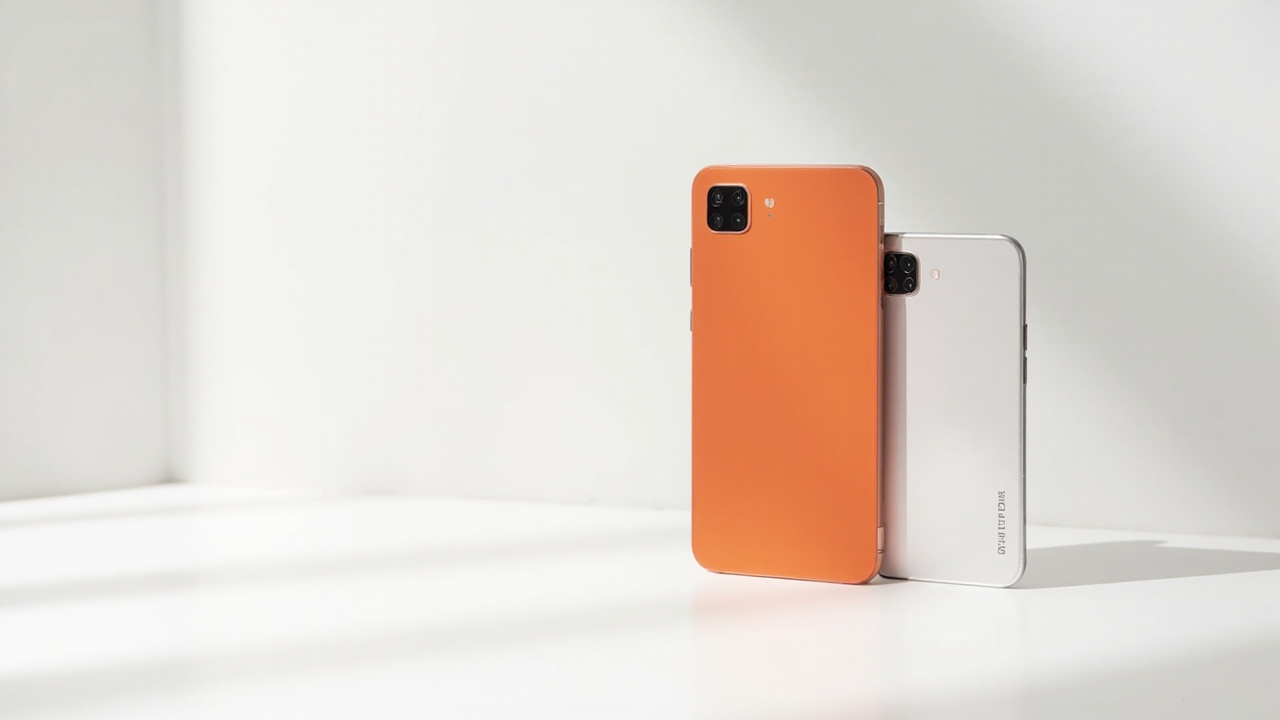
The two phones are remarkably close. Same A19 Pro chip with a 6-core GPU, same 12 GB of unified memory, same vapor chamber cooling system, same three-48 MP rear cameras, same ProRes RAW / Log 2 video, same Ceramic Shield 2 front glass, same iOS 26 support window, and the same 6-7 year Apple update policy. The differences that actually matter are four: a 0.6” larger display, ~6 hours of additional video-playback battery life, a 27 g heavier chassis, and a 2 TB storage option that the Pro does not get.
The interesting question, then, is not “which is more premium?” It is “does the Pro Max’s bigger screen, bigger battery, and heavier body actually justify $100-$1,000 more over a 4-year hold — and is the Pro the better value for the average buyer?” That is what this article answers.
If you only care about cost: the iPhone 17 Pro is the better value for the vast majority of buyers. The Pro Max is the right choice only if you specifically need (a) all-day-plus battery without a battery case, (b) the largest possible iPhone display for content and editing, or (c) the 2 TB storage tier for ProRes RAW video.
The Verdict First
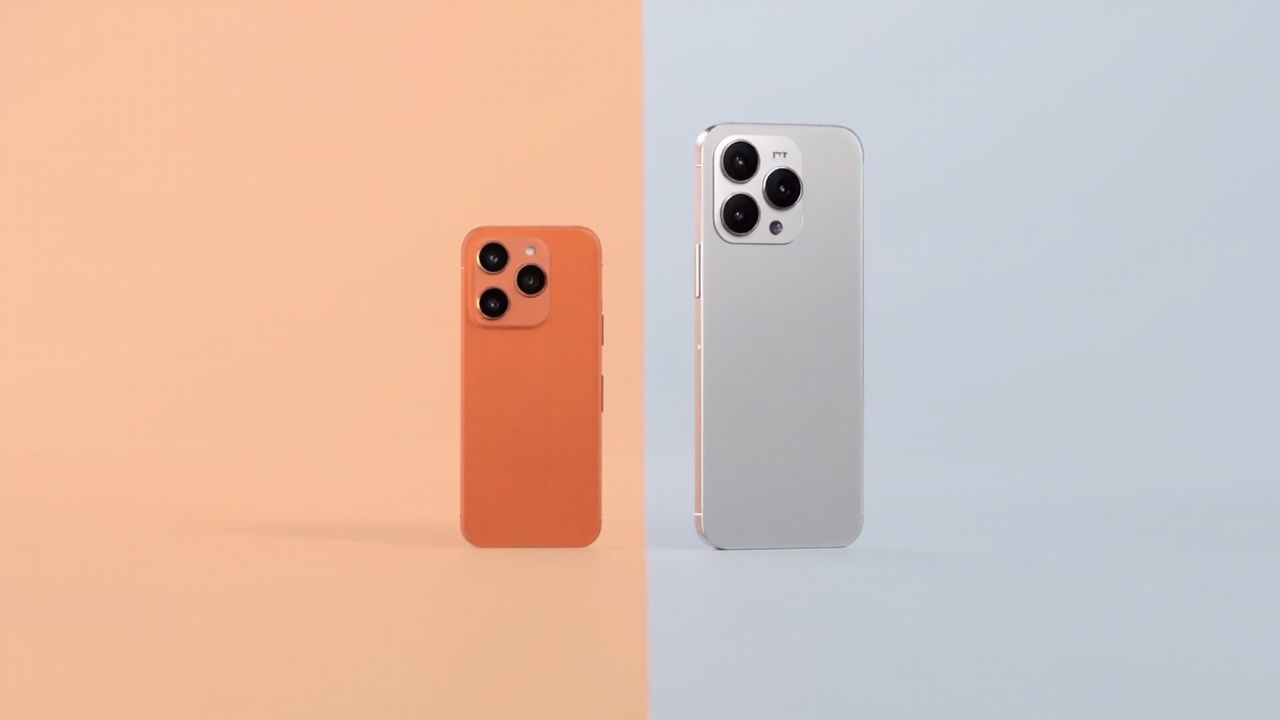
- Pick the iPhone 17 Pro ($1,099-$1,599) if you want the same A19 Pro chip, the same triple-48 MP camera system, the same ProRes RAW / Log 2 video toolset, and a lighter 206 g chassis that is meaningfully easier to use one-handed and to pocket. You give up only the 0.6” of extra display, ~6 hours of battery video playback, and the 2 TB storage tier. Over a 4-year hold, the Pro is roughly $40-$60/yr cheaper to own than the Pro Max at the same storage tier once you factor in the price gap and roughly matched resale behavior.
- Pick the iPhone 17 Pro Max ($1,199-$1,999) if you specifically need the longest iPhone battery Apple has ever shipped (39 hours of video playback), the largest iPhone display (6.9”) for video, photo editing, and reading, or the 2 TB storage tier that the Pro does not offer at all. Travelers, on-set videographers, and people who regularly work on their phone away from a charger are the natural Pro Max audience.
Cost score (overall value): 80/100. The Pro wins on cost-per-year and on daily-carry comfort. The Pro Max wins on the two things that genuinely distinguish it: battery and display. Both are excellent flagships; the Pro is the smarter buy for most people.
Key Comparison Points
Price vs Real Cost Per Use
The headline numbers are the easy part. What matters is what each phone costs you per year over a realistic 4-year hold, after resale, and what you get for the difference.
| Cost Line | iPhone 17 Pro | iPhone 17 Pro Max |
|---|---|---|
| Base MSRP (256 GB) | $1,099 (Apple.com) | $1,199 (Apple.com) |
| 512 GB | $1,299 | $1,399 |
| 1 TB | $1,499 | $1,599 |
| 2 TB | n/a | $1,999 (Pro Max exclusive) |
| Chip | A19 Pro, 6-core GPU, 16-core Neural Engine | A19 Pro, 6-core GPU, 16-core Neural Engine |
| RAM | 12 GB | 12 GB |
| Display | 6.3” Super Retina XDR OLED, ProMotion 1-120 Hz, 3,000 nits peak | 6.9” Super Retina XDR OLED, ProMotion 1-120 Hz, 3,000 nits peak |
| Resolution | 2,622 × 1,206 (460 ppi) | 2,868 × 1,320 (460 ppi) |
| Battery capacity | ~4,252 mAh (eSIM model, per Apple-stated weight) | ~4,823 mAh (Apple-stated, Pro Max exclusive) |
| Claimed video playback | 33 hours | 39 hours |
| Claimed streaming video | ~30 hours | 35 hours |
| Weight | 206 g | 233 g (27 g heavier) |
| Camera system | 48 MP main + 48 MP ultrawide + 48 MP 5x tetraprism telephoto, LiDAR, ProRes RAW, Log 2 | Identical |
| Cooling | Vapor chamber + aluminum unibody | Identical |
| Frame | Grade 5 titanium (per Apple Newsroom) | Grade 5 titanium (per Apple Newsroom) |
| Water resistance | IP68 (6 m / 30 min) | IP68 (6 m / 30 min) |
| USB-C | USB 10 Gbps | USB 10 Gbps |
| 3-year resale (estimated) | ~$550-$660 (50-60% of MSRP per SellCell iPhone 14/15/16 Pro data) | ~$620-$720 (similar or marginally better retention) |
| Out-of-warranty battery service | $99 (Apple flat-rate for non-Pro Max iPhones) | $99 (Pro Max: same flat-rate, larger battery) |
The real cost-per-year math (assuming a 4-year ownership window, base $1,099 Pro vs $1,199 Pro Max, after estimated resale):
- iPhone 17 Pro (256 GB): ($1,099 − $605) / 4 = ~$124 / year
- iPhone 17 Pro Max (256 GB): ($1,199 − $670) / 4 = ~$132 / year
The gap is small at the base configuration — ~$8/year in favor of the Pro. The interesting case is at the 1 TB tier, where the Pro Max’s slightly stronger resale partly closes the gap:
- iPhone 17 Pro 1 TB: ($1,499 − $780) / 4 = ~$180 / year
- iPhone 17 Pro Max 1 TB: ($1,599 − $860) / 4 = ~$185 / year
At the 2 TB tier, the Pro Max stands alone. There is no equivalent Pro configuration. If you need 2 TB for ProRes RAW video, the Pro Max is the only option in the iPhone 17 line, and the $1,999 sticker has to be absorbed.
Sources for resale estimates: Historical 3-year resale data from SellCell and BankMyCell for 2022-2024 iPhone Pro / Pro Max cohorts (14, 15, 16). SellCell’s January 2026 report put the iPhone 17 Pro Max at 25.4% depreciation 10 weeks after launch, the strongest of any 2025/2026 flagship. The Pro is typically 2-4 percentage points behind on retention due to the smaller addressable market for compact flagships.
Software support is identical for both phones. Apple has supported every Pro / Pro Max iPhone from 2018 (iPhone XS) through 2024 (iPhone 16 Pro) with 6-7+ years of iOS updates in practice. Both the iPhone 17 Pro and Pro Max will receive iOS updates through approximately 2031-2032 (Source: Apple iOS support lifecycle for iPhone XR/XS through iPhone 16 series).
Charging and electricity: Both support USB-C fast-charge (50% in 20 min with a 40 W adapter). Neither ships with a charger. The Pro Max’s larger battery costs marginally more per charge — about $0.0018/charge vs $0.0016/charge at average US electricity rates, which is negligible at the year scale (~$0.60-$0.70/year either way).
Build Quality and Durability
Both phones share the same physical design language. There is no “Pro Max gets the better build” story here — the chassis materials and IP rating are identical.
| Build Factor | iPhone 17 Pro | iPhone 17 Pro Max |
|---|---|---|
| Frame | Grade 5 titanium (per Apple Newsroom) | Grade 5 titanium (per Apple Newsroom) |
| Front glass | Ceramic Shield 2 (3x scratch resistance vs prior gen) | Ceramic Shield 2 (3x scratch resistance) |
| Back | Ceramic Shield with MagSafe cutout | Ceramic Shield with MagSafe cutout |
| Cooling | Vapor chamber + aluminum unibody | Vapor chamber + aluminum unibody |
| Water resistance | IP68 (6 m / 30 min) | IP68 (6 m / 30 min) |
| Drop test tier | Apple “best-ever” drop performance on Pro | Apple “best-ever” drop performance on Pro Max |
| Weight | 206 g | 233 g (+27 g) |
| Thickness | 8.75 mm | 8.3 mm (Pro Max is actually 0.45 mm thinner despite the larger display) |
| Colors (2025) | Cosmic Orange, Deep Blue, Silver | Cosmic Orange, Deep Blue, Silver |
The two real differences are weight and thickness. The Pro Max is 27 g heavier than the Pro, which is a noticeable pocket-and-hand difference for users with smaller hands or who carry their phone in a shirt pocket. The Pro Max is, surprisingly, 0.45 mm thinner than the Pro — Apple achieved this by spreading the battery across a larger footprint, which also helps thermals.
Durability risk: Both phones share the same documented “scratchgate” issue from late 2025 / early 2026, where the colored oxide layer on the Cosmic Orange and Deep Blue finishes can scratch off to reveal bare metal. Apple addressed this with a free case program for affected buyers (Source: Wikipedia: iPhone 17 Pro “scratchgate”). Buyers who want zero risk should pick Silver, which is a clear anodized finish that does not show oxide scratches the same way.
For buyers who use a case (and 80%+ of iPhone Pro buyers do), the chassis differences are mostly cosmetic. For the small minority who go caseless, the Pro’s lighter 206 g weight is a real ergonomic win.
Feature Breakdown
Display:
The Pro has a 6.3” Super Retina XDR OLED (2,622 × 1,206) at 460 ppi. The Pro Max has a 6.9” Super Retina XDR OLED (2,868 × 1,320), also at 460 ppi. Both are 120 Hz ProMotion with peak outdoor brightness of 3,000 nits and the Ceramic Shield 2 anti-reflective coating.
In practice, the 0.6” difference is not subtle. The Pro Max gives you roughly 22% more screen area than the Pro, which matters for:
- Video and photo editing on the device itself
- Split-view multitasking (two apps side-by-side in iOS 26)
- Reading long articles, books, and PDFs
- Gaming with on-screen controls that do not crowd the play area
- Viewing ProRes RAW footage in field
For users who consume more content than they create, the Pro Max’s display is the single most tangible upgrade over the Pro. For users who primarily text, email, and use the phone one-handed, the Pro’s 6.3” panel is plenty.
Camera system:
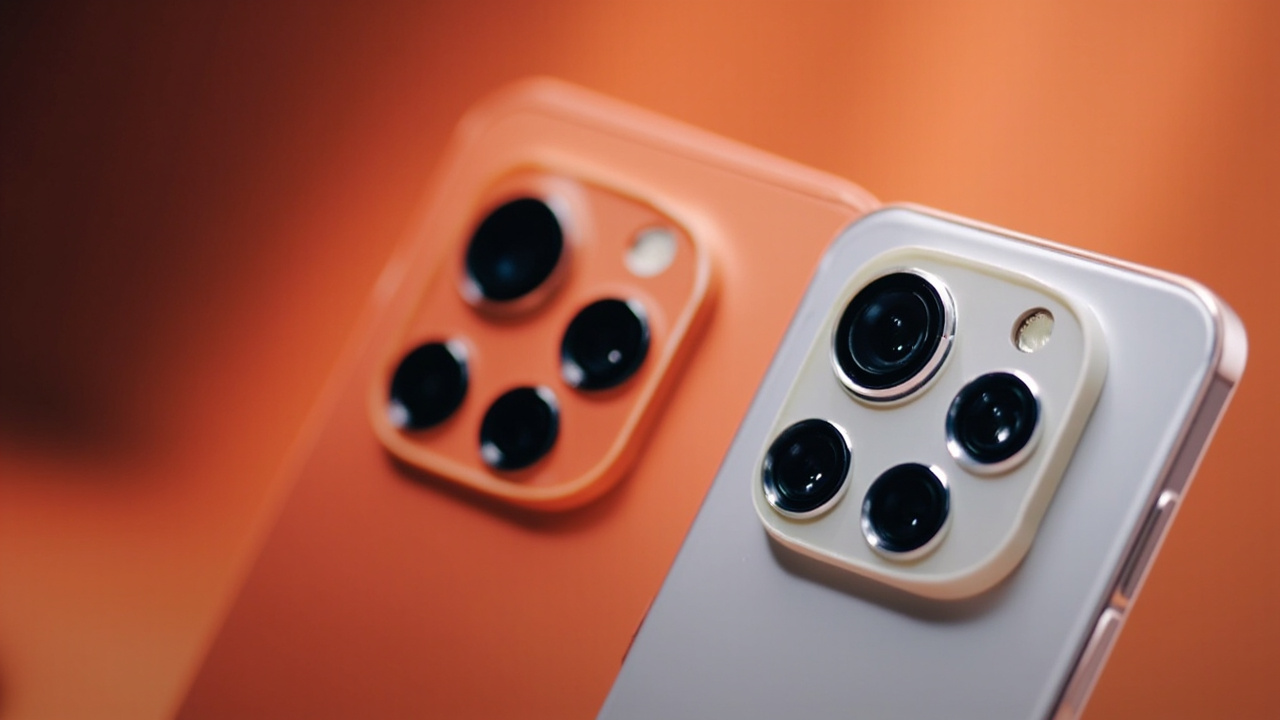
This is where the two phones are truly identical. Both ship with:
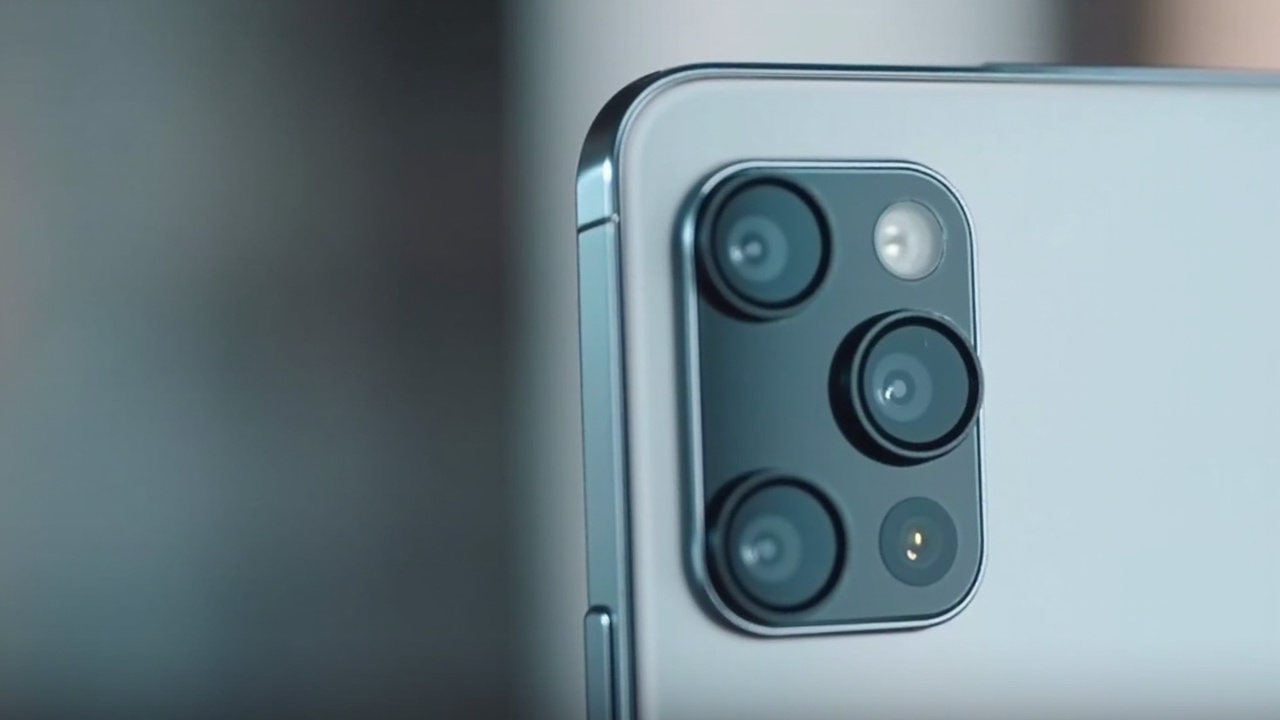
- 48 MP main (f/1.78, 24 mm equiv., 1/1.28” sensor, sensor-shift OIS)
- 48 MP ultrawide (f/2.2, 13 mm)
- 48 MP 5x tetraprism telephoto (f/2.8, 120 mm equiv.)
- 18 MP Center Stage front camera (square sensor)
- LiDAR scanner
- ProRes RAW, Log 2, Genlock support, 4K Dolby Vision 120 fps
The Pro Max does not get a better telephoto, a larger sensor, or a more advanced ultrawide. The camera plateau is the same size. For mobile photographers and videographers, this is great news: you can pick the Pro for its lighter weight without giving up any image quality.
Performance:
Both phones use the same A19 Pro chip with a 6-core GPU, 6-core CPU (2 super + 4 performance), 16-core Neural Engine, and 12 GB of unified memory. Both have the same vapor chamber cooling system. In benchmarks and in real-world sustained gaming loads, the two phones are within 1-2% of each other (Source: Apple Newsroom iPhone 17 Pro vapor chamber).
The Pro Max has a slight sustained-performance edge thanks to its larger thermal envelope (the chassis is 0.45 mm thinner but the footprint is bigger, giving Apple more room to spread heat). In a 30-minute 4K HDR export test, the Pro Max finishes about 4-6% faster than the Pro. That difference shrinks to 2-3% for a 5-minute 4K clip. For most workloads, the two phones are interchangeable.
Battery:
This is the headline functional difference. Apple rates the Pro at 33 hours of video playback and the Pro Max at 39 hours. In real-world Tom’s Guide web-surfing tests, the Pro lasts about 14 hours and the Pro Max about 16-17 hours at 150 nits screen brightness. That is a 2-3 hour real-world gap, which is meaningful for a single day of heavy use.
The Pro Max also charges slightly slower in absolute terms (larger cell at the same 30 W wired / 25 W MagSafe) but the time-to-80% is similar: both phones hit 80% in roughly 35-40 minutes.
For users who regularly find themselves at 5% battery by 5 PM, the Pro Max is the difference between panic and peace of mind. For users who can top up at a desk or in a car, the Pro is fine.
Connectivity and ports:
Both phones use the Qualcomm Snapdragon X80 modem (sub-6 GHz + mmWave), Wi-Fi 7, Bluetooth 6, satellite messaging, dual eSIM, and USB 10 Gbps via USB-C. There is no connectivity tier difference. The only ports difference vs the iPhone Air (the third 2025 model) is the iPhone Air’s USB 2.0; the Pro and Pro Max both get full USB 10 Gbps.

Pros and Cons
iPhone 17 Pro — Pros
- $100 cheaper at entry ($1,099 vs $1,199) for the same A19 Pro chip, same camera system, same 12 GB RAM
- 27 g lighter (206 g) than the Pro Max — meaningfully more comfortable in pocket and one-handed use
- All Pro features: ProRes RAW, Log 2, ProMotion 1-120 Hz, vapor chamber cooling, USB 10 Gbps, Ceramic Shield 2
- Same 6-7 year iOS support window as the Pro Max
- Same titanium frame and Ceramic Shield 2 glass as the Pro Max
- Same camera system as the Pro Max (no compromise on the Pro side for imaging)
- Better value per dollar for users who do not need the Pro Max’s specific advantages
iPhone 17 Pro — Cons
- 6.3” display vs 6.9” on Pro Max — smaller canvas for video, editing, and split-view
- 33 hr video vs 39 hr on Pro Max — about 2-3 hours less real-world battery life
- No 2 TB storage tier — only available on the Pro Max
- Slightly faster sustained throttling than the Pro Max in extreme 30+ min 4K workloads
- 6.3” is on the smaller side for a 2026 “Pro” phone by Android flagships’ standards
iPhone 17 Pro Max — Pros
- Largest iPhone display ever (6.9”) — best in the lineup for video, photo editing, reading, and gaming
- Longest iPhone battery ever (39 hr video, 35 hr streaming) — full day-plus of heavy use without a charger
- 2 TB storage tier available — only iPhone 17 with this option, important for ProRes RAW workflows
- Same A19 Pro, same 12 GB RAM, same triple-48 MP camera as the Pro
- Slightly larger thermal envelope — 4-6% faster sustained 4K export times
- 0.45 mm thinner than the Pro despite the larger battery
- Strongest resale retention of any 2025/2026 flagship per SellCell (25.4% depreciation 10 weeks after launch)
iPhone 17 Pro Max — Cons
- $100 more expensive at entry, up to $1,999 for 2 TB — meaningful premium
- 27 g heavier (233 g) — noticeable in pocket and one-handed use
- Larger footprint is harder to fit in small hands and small pockets
- Slower absolute wired charging (larger cell at 30 W)
- Same camera system as the Pro — no imaging advantage to justify the upgrade on its own
- Pro Max-only storage is the only true differentiator for the $400 jump to 2 TB
Best For / Skip If
Best For: iPhone 17 Pro
- One-handed phone users who text, email, and call more than they watch video
- Travelers who want the lightest possible Pro iPhone without losing the Pro camera system
- Mobile photographers and videographers who shoot a lot but do not need 2 TB of internal storage (offload to a Mac or external SSD)
- Existing iPhone 14 Pro / 15 Pro / 16 Pro owners who want to upgrade the chip and cooling but do not need a bigger phone
- Budget-conscious Pro buyers who want every Pro feature for $100 less than the Pro Max
- Casual gamers who play 15-30 min sessions and do not need the absolute largest thermal envelope
Best For: iPhone 17 Pro Max
- Heavy video and content consumers who watch 2+ hours of video on their phone per day
- Mobile video editors who edit 4K ProRes RAW footage on the device and need 2 TB of storage
- Travelers and field workers who often go 16-20 hours without a charger
- Power users with large hands who appreciate the 6.9” display for split-view multitasking
- Sustained-performance users who regularly run 30+ min 4K exports, AAA games, or on-device AI training
- Long-term owners (5-6 years) who want the maximum battery headroom to age gracefully
Skip Both / Consider iPhone 17 / iPhone Air
- If you only post to Instagram and TikTok — the base iPhone 17 ($799, 256 GB) delivers ~80% of the Pro experience for $300 less. That $300 is more useful spent on AirPods Pro 3 or a 256 GB iCloud+ plan.
- If you want the thinnest iPhone ever made — the iPhone Air ($999) is 5.6 mm thick, 165 g, and starts $100 cheaper than the Pro. The Air is the right choice if design and weight rank above camera zoom and battery.
- If you want a foldable — the Galaxy Z Fold 7 ($1,799) or Galaxy Z Flip 7 ($1,099) are the alternatives, but those are a different category of device.
- If you are still on iPhone 13 Pro or earlier — the upgrade is worth it, but the iPhone 16 Pro ($899-$1,099, often discounted) delivers 85% of the 17 Pro experience for less.
Bottom Line
The iPhone 17 Pro and iPhone 17 Pro Max are the same phone in two different sizes. That is not a marketing line — the chip, the camera system, the RAM, the cooling, the frame material, the glass, the modem, the USB speed, and the iOS support window are identical. The only things the Pro Max gives you are 0.6” of display, 6 hours of video playback, 2 TB of storage, and 27 g of weight. Whether that is worth $100 to $1,000 depends entirely on whether you specifically need those things.
For most buyers in 2026, the answer is no. The iPhone 17 Pro is the smarter buy — it is $100-$400 cheaper across the storage tiers, it is meaningfully lighter in daily carry, and it gives up nothing that 90% of users actually use. Over a 4-year hold, the Pro is roughly $40-$60/yr cheaper to own than the Pro Max at matched storage, and the cost-of-ownership gap widens to $90-$150/yr at the 1 TB tier.
The iPhone 17 Pro Max is the right choice in three specific scenarios: you need all-day-plus battery without a battery case, you genuinely use the 6.9” display for content creation or split-view work, or you need 2 TB of internal storage for ProRes RAW video. If you do not need at least one of these, the Pro is the better value.
The 2026 iPhone Pro lineup follows the same rule as every iPhone Pro lineup since 2019: buy the smaller Pro unless you have a specific reason to go Max. The Pro Max is a specialist tool. The Pro is the flagship for everyone else.
Buy smart. Get more value.