Introduction
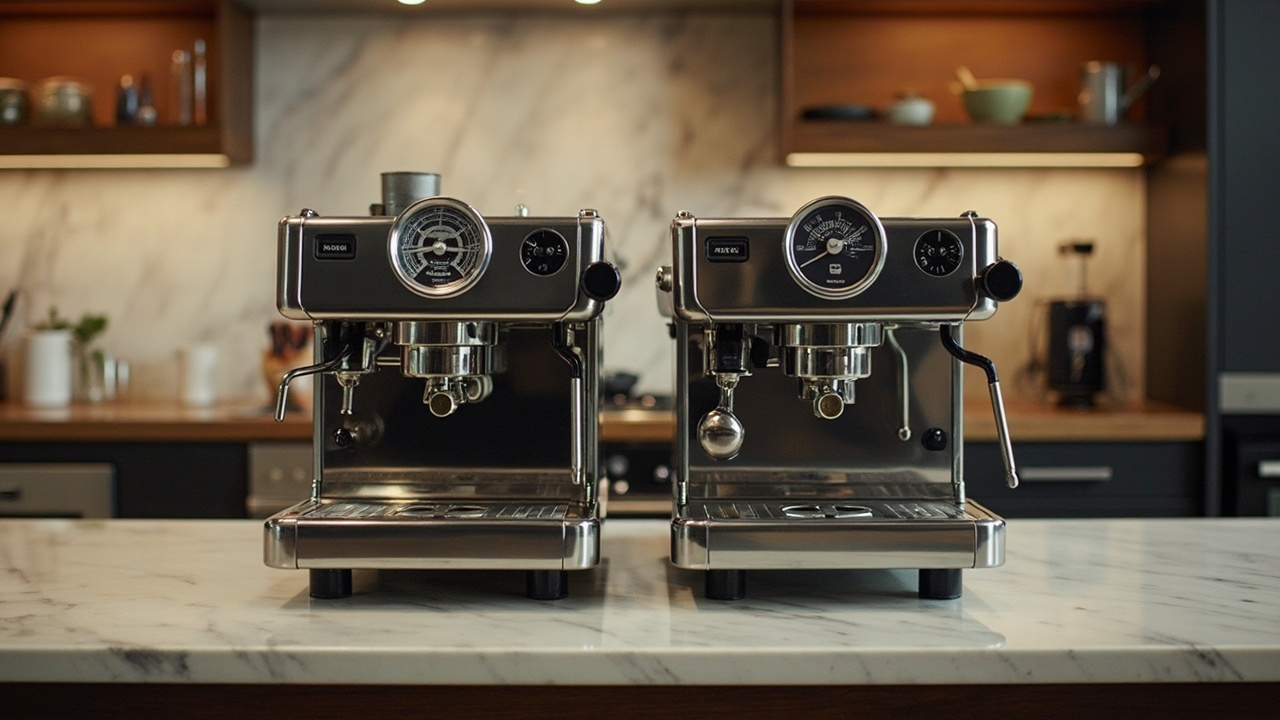
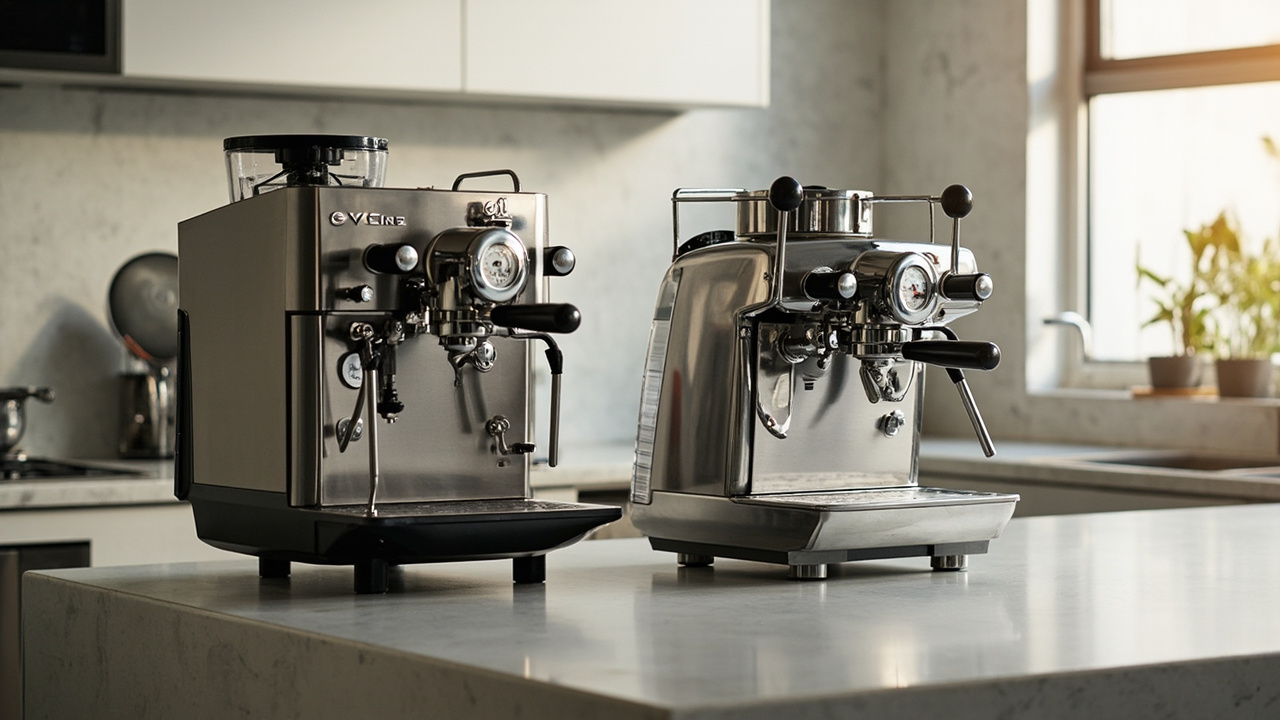
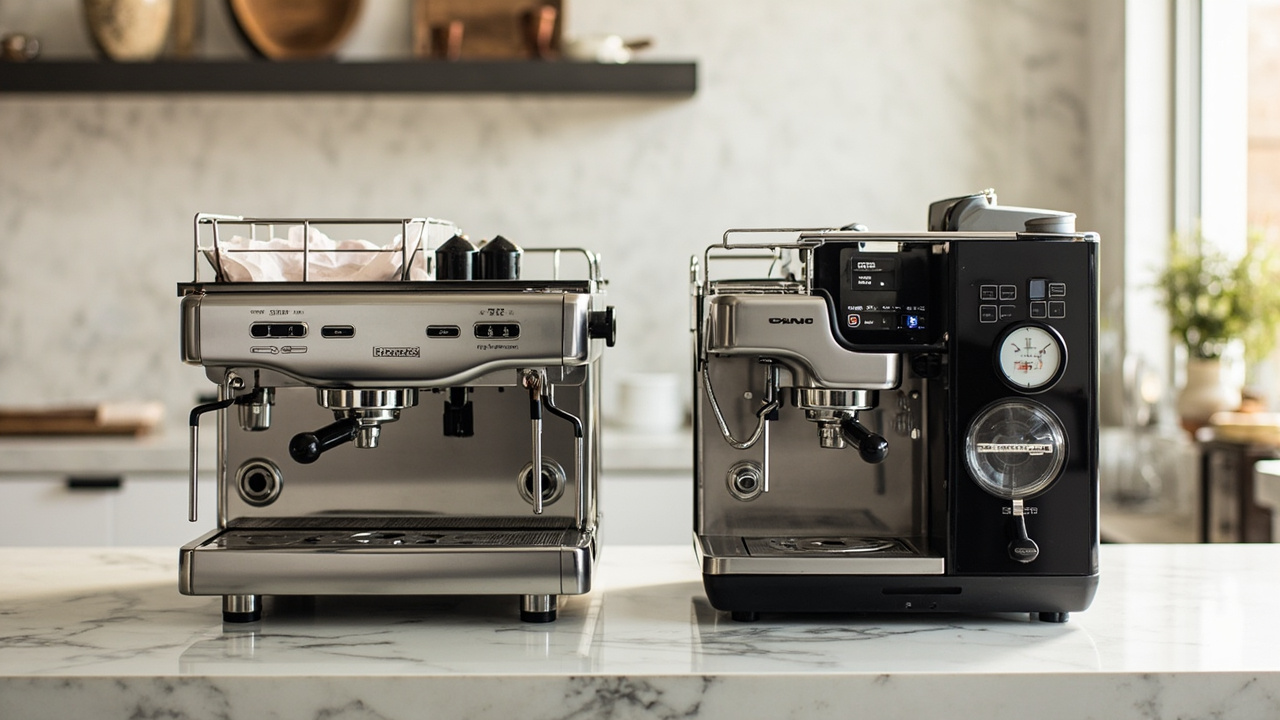
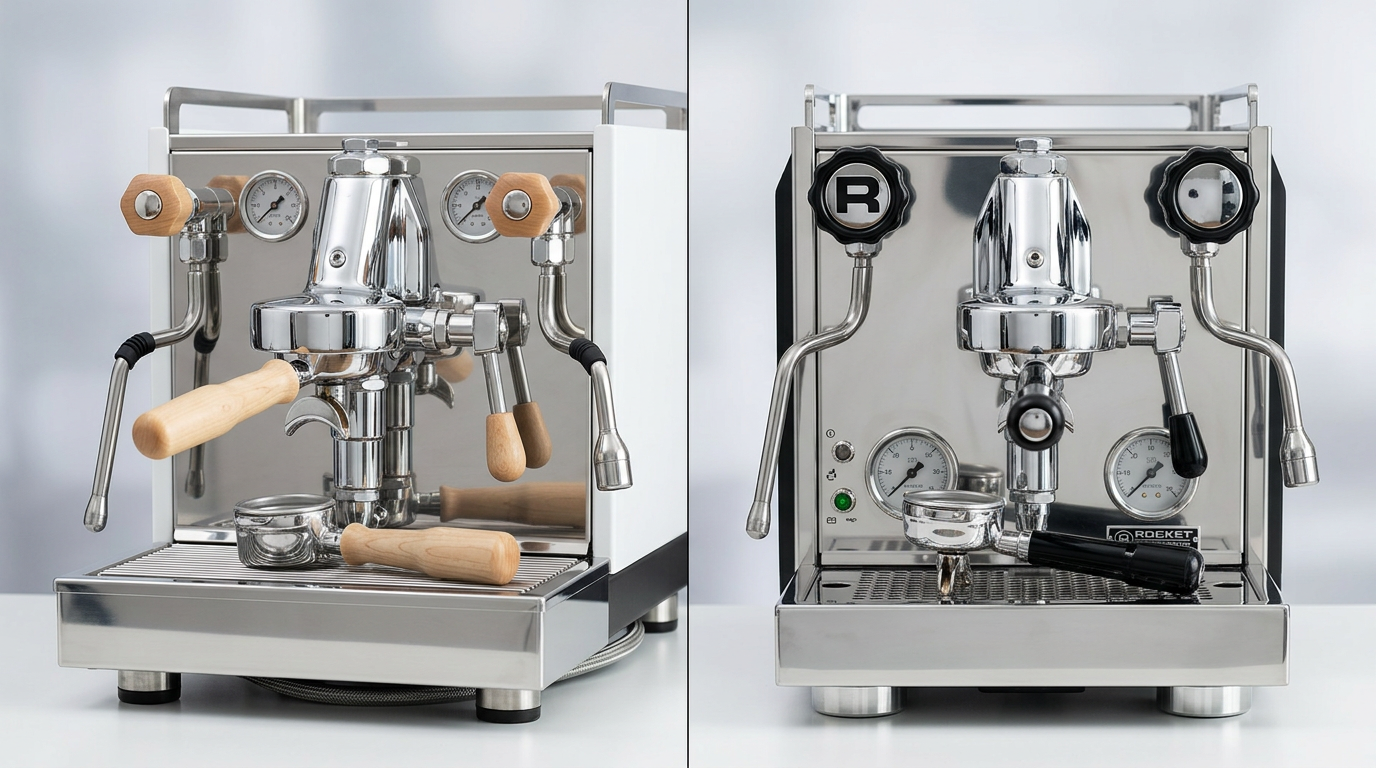
If you have outgrown a single-boiler prosumer machine and you are ready to spend real money on a home espresso setup, two names dominate the conversation in 2026: La Marzocco Linea Mini and Profitec Pro 700.
They look similar on the spec sheet — both are E61-group dual-boiler machines, both preheat a steam wand to café grade, both are aimed at the buyer who actually weighs shots and times milk. The price gap is real: the Linea Mini lists at roughly $4,800-$5,500 (depending on customization, color, and region) while the Profitec Pro 700 sits at around $3,600-$3,900.
That $1,000-$1,900 is the question. Is the La Marzocco name, the made-in-Italy build, and the slightly more powerful steam boiler actually worth the premium for a home user? Or is the Pro 700 the smarter five-year buy because it puts the same brew group and steam performance into a less expensive chassis?
This is not “buy the brand with the Italian flag on the box.” This is price ÷ (5-year life × number of drinks per day × serviceability × resale value), with build quality, steam power, and repairability baked in.
The Verdict First
- Pick the Profitec Pro 700 if you want the best brew-per-dollar, you pull 3-8 drinks most days, and you like machines that can be opened with a screwdriver and serviced at home. The Pro 700 is the better smart-buy value for the majority of home baristas in 2026.
- Pick the La Marzocco Linea Mini if you regularly pull back-to-back milk drinks for guests (4+ in a row), you want the café lineage in the build, dual PID and pre-infusion come standard, and resale value over 5-10 years matters to you. The Mini is the right call when throughput and pride-of-ownership matter more than the upfront savings.
Cost score (overall value): 74/100. Both are strong machines, but the Pro 700 wins the cost-per-drink math. The Linea Mini wins on café throughput, factory dual PID/dual pre-infusion controls, build feel, and resale. The Profitec Pro 700 saves you roughly $400-$900 over 5 years at typical home use; the Linea Mini earns its premium only if you genuinely host espresso regularly.
Key Comparison Points
Price vs Real Cost Per Use
The sticker shock is the start, not the end, of the price story.
| Cost Line | La Marzocco Linea Mini | Profitec Pro 700 |
|---|---|---|
| US MSRP (2026) | ~$4,800 (white); $5,000-$5,500 (custom color, walnut kits) | $3,600-$3,900 |
| Typical street price (Jun 2026, US/EU) | $4,700-$5,300 | $3,500-$3,800 |
| Steam boiler size | 3 L (0.8 gal) | 2 L (0.53 gal) |
| Steam time to froth 6 oz milk | ~7-9 s (Chriscoff 2026 shoot-out) | ~10-13 s (Chriscoff 2026 shoot-out) |
| Brew boiler | Saturated brew group (0.17 L head integrated) | 0.75 L dedicated brew boiler |
| PID control | Standard dual PID (brew + steam), plus pre-infusion IO | Optional PID add-on ($250-$450); stock version is pressurestat-controlled |
| Pre-infusion | Programmable via paddle (standard) | Manual paddle (standard) but no programmable timing without PID |
| Plumbing | Plumbable kit (~$150-200 add-on, often dealer-installed) | Plumbable kit (~$120-180) |
| Warranty | 2 years parts (US/EU, via Clandestine / Espresso Parts dealers) | 2 years parts (US, via Profitec-direct and Whole Latte Love) |
| Weight | 31 kg (68 lb) | 31 kg (68 lb) |
| Power draw at idle | ~1,400 W while heating; eco mode optional | ~1,200 W; eco mode available |
| 5-year service interval | Descale annually, group gasket every 2-3 years, pump rebuild every 5-7 years | Same intervals; Profitec parts are widely available |
Sources: La Marzocco USA MSRP (Clive Coffee, Espresso Parts, June 2026 listings); Profitec Pro 700 retailer price (Whole Latte Love, Seattle Coffee Gear, Chris’ Coffee Service, June 2026); Chriscoff 2026 dual-boiler comparison; home-barista.com forum threads (Jun 2026).
Real cost math over 5 years at 4 drinks per day (about 1,460 drinks/year):
- Profitec Pro 700 ($3,700 avg): $0.51 per day across 5 years for the machine itself. Maintenance about $80-$150/year (group gaskets, descaler, occasional pump service). Total 5-year cost ≈ $4,300.
- La Marzocco Linea Mini ($5,000 avg): $0.68 per day. Same maintenance ($80-$150/year). Total 5-year cost ≈ $5,700.
If your usage is closer to 1-2 drinks per day, both machines still last a decade, and the price-per-drink gap essentially disappears into something like 8-12 cents per drink.
If you serve guests and pull 8-15 drinks on a Sunday morning, the steam recovery of the Linea Mini matters more than the upfront savings of the Pro 700. That is when the 3 L steam boiler earns its premium.
Build Quality and Durability
Both machines are basically built to outlive their warranty. The failure modes are different.
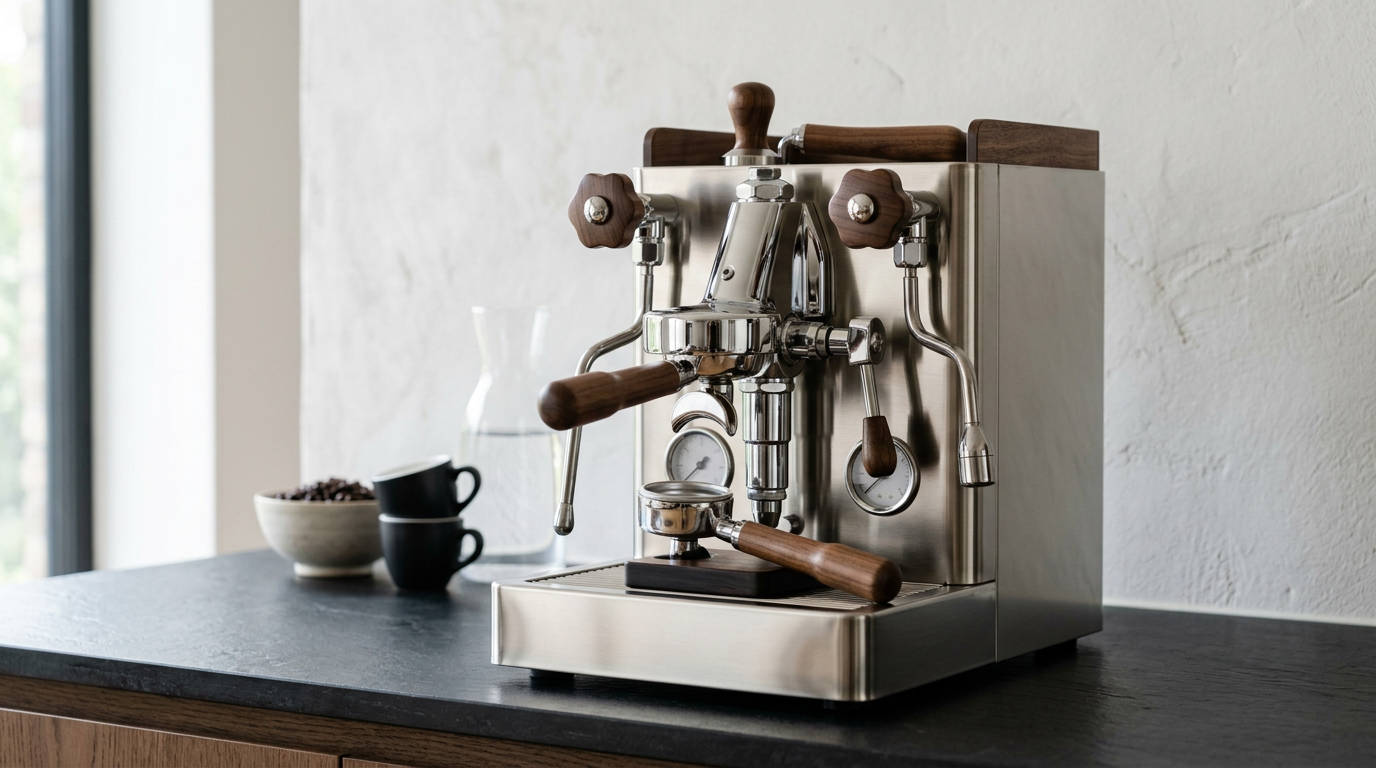
- La Marzocco Linea Mini: Made in Florence, Italy. Stainless steel body, dual-wall panels (reduced panel rattle vs older Linea Classic). The famous La Marzocco saturated brew group is essentially a small dedicated boiler wrapping the E61 head, which gives near-zero temperature drift at the puck. Known weak points: the wooden portafilter handles can split if soaked; the drip tray sensor (when equipped) trips falsely if you backflush and splash. Heavy, dense, no flex in the panels.
- Profitec Pro 700: Made in Germany by ECM (parent company). Similar stainless body, brushed finish, dual-boiler architecture with rotary vane pump (same Ulka EP5 as the Linea Mini). Known weak points: stock machine ships with a pressurestat (not PID) unless you pay the add-on, so shot-to-shot brew temperature has more drift until you calibrate. Group gasket and pump rebuild are user-serviceable with standard tools. Profitec parts are widely stocked in North America and the EU.
Practical durability gap: Both machines have a similar 8-15 year realistic life span. The Linea Mini has a slight edge on temperature stability thanks to the saturated group, and a strong edge on resale. The Pro 700 has a slight edge on right-to-repair and DIY serviceability — group gasket swap, pump rebuild, and steam valve rebuild are all standard forum-documented jobs on the Pro 700.
Feature Breakdown
| Feature | La Marzocco Linea Mini | Profitec Pro 700 |
|---|---|---|
| Dual boiler | Yes (steam 3 L + saturated brew group) | Yes (steam 2 L + brew 0.75 L) |
| E61 brew group | Yes (La Marzocco modified saturated) | Yes (standard E61 with thermosiphon) |
| Dual PID | Standard (brew + steam temperature) | Optional ($250-$450 add-on) |
| Programmable pre-infusion | Yes (paddle + IO control) | Manual paddle; PID add-on enables programmable timing |
| Eco / standby mode | Standard | Standard |
| Plumbable | Yes (kit ~$150-200) | Yes (kit ~$120-180) |
| Hot water tap | Dedicated side tap (steam + hot water manifold) | Dedicated hot water tap |
| Drip tray sensor | Optional on later units | Not standard |
| App / IoT | None (no Wi-Fi) | None (no Wi-Fi) |
| Colors / finish | White, black, stainless, custom color program (~+$500-1000) | Brushed stainless only |
The headline takeaway: the Linea Mini ships dual PID and pre-infusion tuning as standard; the Pro 700 expects you to add that later for an extra $250-$450. If you want those features without hassle, the Linea Mini is the cleaner buy. If you don’t mind a $300 PID add-on, the Pro 700 still nets out cheaper and is more hackable.
The Steam and Milk Test
For milk drinks, the Linea Mini’s larger 3 L steam boiler gives you:
- Faster milk volume: roughly 6-8 oz of milk to silky microfoam in 7-9 seconds (Chriscoff 2026 head-to-head).
- More steam back-to-back: pulling 4 cappuccinos in 8 minutes is comfortable; the steam boiler does not sag.
- Quieter steam wand: the La Marzocco saturated-group design runs the steam loop slightly cooler, so the wand whoosh is milder.
The Pro 700 still pulls excellent microfoam — its 2 L steam boiler is the same Ulka-driven steam circuit the ECM Synchronika uses — but 5 cappuccinos in a row is the realistic limit before the steam pressure starts to drop by ~5-8%.
If you are a single-daily-drinker household, the Pro 700 steam boiler is fine. If you regularly serve 3+ people at once, the Linea Mini is the rational pick, even with the $1,000+ premium.
Service, Warranty, and Resale
- La Marzocco Linea Mini: 2-year parts warranty via authorized US dealers (Clandestine, Espresso Parts, Clive Coffee, Seattle Coffee Gear). Resale value holds well: a 5-year-old Mini in good condition still lists at
60-70% of MSRP on the used market. Repairs beyond warranty are pricier ($120-180/hr at US service centers), and you will likely need an authorized tech. - Profitec Pro 700: 2-year parts warranty via Profitec-direct and US retailers. Resale is fair, not strong: 5-year-old Pro 700s list at ~45-55% of original MSRP. But parts are openly available, and the community service manual is excellent, so DIY service is realistic for anyone comfortable with a portafilter and a Torx driver.
If you plan to keep the machine 10+ years and treat it as heirloom gear, the Linea Mini wins. If you plan to keep it 5-7 years and want low-cost service in between, the Pro 700 wins.
Pros and Cons
La Marzocco Linea Mini
Pros:
- Café-grade steam performance, even back-to-back (3 L steam boiler)
- Saturated brew group holds temperature exceptionally well
- Dual PID and programmable pre-infusion are stock features
- Strong resale value, often listed at 60-70% of MSRP after 5 years
- “Italian-made” build feel is genuinely premium — no panel flex, dense chassis
Cons:
- $4,800-$5,500 is a real premium for a home machine
- Custom color adds $500-1000 over the white/stainless option
- Authorized service is more expensive than the Pro 700 ecosystem
- Wooden portafilter handles need care (avoid soaking)
- No smart features, no app — this is a pure analog machine with PID brains
Profitec Pro 700
Pros:
- About $1,000-$1,900 cheaper at MSRP
- Real café-grade espresso at the brew group (E61 + 0.75 L brew boiler)
- Wide parts availability and strong DIY repair ecosystem
- Strong daily-driver value at typical 3-8 drinks per day usage
- Compatible with the ECM family of accessories (group heads, portafilters, steam tips)
Cons:
- Dual PID and pre-infusion tuning require an extra $250-$450 add-on
- Steam recovery drops after 5 cappuccinos in a row
- Stock pressurestat has more brew-temp drift than a tuned PID setup
- Resale softer than La Marzocco (45-55% of MSRP after 5 years vs 60-70%)
- Single stainless finish, no color options
Best For / Skip If
Pick the Profitec Pro 700 if you:
- Pull 2-6 espresso drinks most days, with occasional guest entertaining
- Care about DIY serviceability and don’t want to pay dealer labor rates
- Already own PID-compatible accessories (e.g., a smart puck screen, Acaia scales) and are comfortable with pressurestat-to-PID upgrade paths
- Plan to keep the machine 5-7 years, not 10+
- Want the best cost-per-drink math and a sub-$4,000 entry into the prosumer dual-boiler tier
Pick the La Marzocco Linea Mini if you:
- Pull 4+ milk drinks back-to-back regularly (Saturday-morning café for 3-4 guests, etc.)
- Care about resale value and the La Marzocco name holding value for 8-10 years
- Want dual PID and programmable pre-infusion out of the box, no add-on
- Treat the espresso machine as a piece of kitchen furniture you will keep 10+ years
- Are willing to pay ~$1,500 more for café-grade steam recovery and made-in-Italy build
Skip the La Marzocco Linea Mini if you:
- Use it 1-2 times per day — the steam boiler advantage is wasted
- You are still dialing in grinder and puck prep — a $400 grinder buys you more flavor improvement than the Mini’s saturated group
- You will not plumb it in; the steam boiler’s advantage shrinks on a pour-over water tank setup
Skip the Profitec Pro 700 if you:
- Host regular Saturday morning crowds of 4+ and want effortless 6-cappuccino runs
- You don’t want to spend an extra $300-$400 on a PID kit to match the Linea Mini’s out-of-box controls
- You are committed to “buy once, cry once” and want the longer-term resale of a La Marzocco
Bottom Line
Both machines sit at the top of the prosumer espresso tier in 2026, and both will pull genuinely excellent shots. The difference is not whether you can make a great cappuccino — you absolutely can with either machine. The difference is whether you regularly pull enough drinks, in close succession, to justify the La Marzocco premium.
For most home baristas pulling 2-5 drinks a day and willing to DIY the occasional service, the Profitec Pro 700 is the smart buy — it returns roughly $400-$900 of value over 5 years at typical home use, and the parts ecosystem is friendly to anyone who likes opening things up.
For the home that treats espresso as a weekend ritual with guests, the La Marzocco Linea Mini earns its $1,000-$1,500 premium with café-grade steam recovery, dual PID and pre-infusion standard, saturated-group temperature stability, and resale value that holds for a decade.
There is no wrong answer here, only the wrong answer for your brew volume and your tolerance for service costs. Buy the machine that matches your kitchen routine, not the one with the more recognizable badge.
Smart shopping means matching the spec sheet to the actual use case, not buying the most expensive thing in the showroom. Espresso equipment is no exception.