Introduction
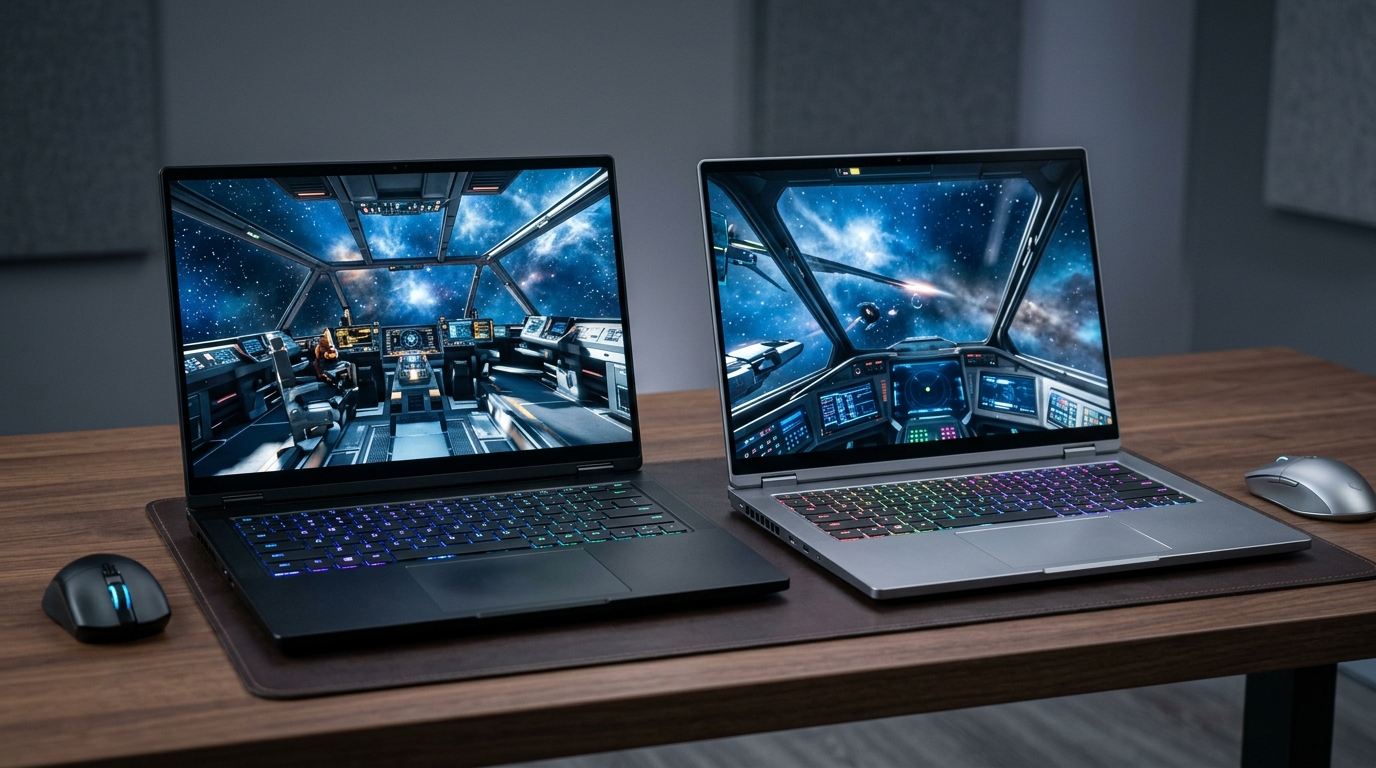
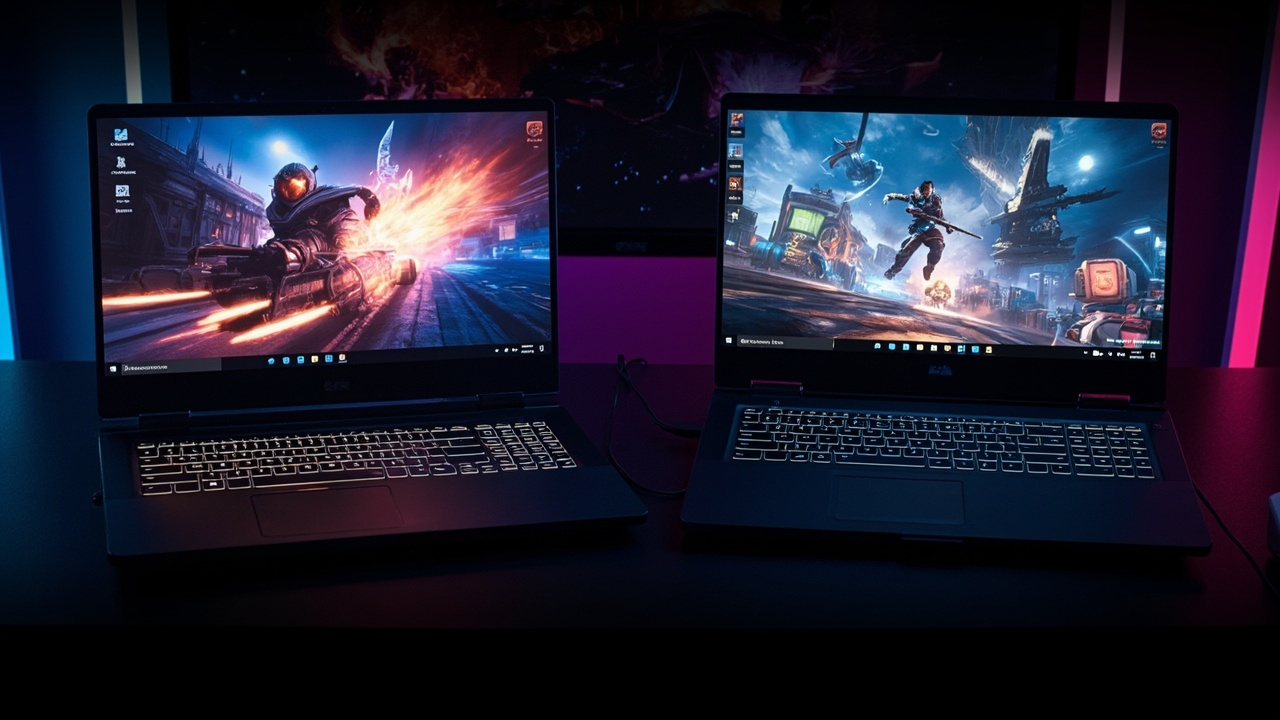
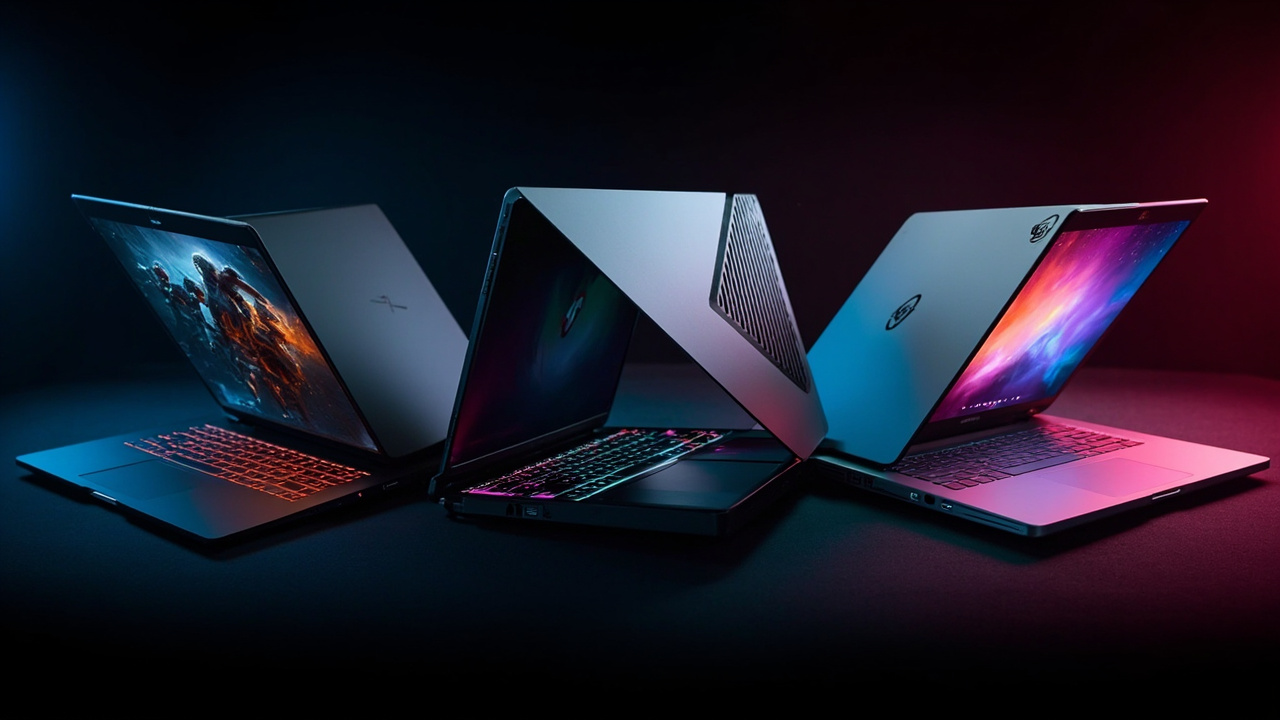
If you want a real desktop-replacement gaming laptop in 2026, the 18-inch class is the only one worth your money — and the only one worth four-plus grand. Inside the same RTX 5090 envelope you now have three machines that genuinely compete: the MSI Titan 18 HX AI (the raw-spec monster), the Asus ROG Strix Scar 18 G835LX (the value-flagship with a 240Hz mini-LED panel), and the Razer Blade 18 (2026) (the slim, expensive, beautiful machine that quietly costs the most).
They all hit 175W on the GPU, all carry Intel’s Arrow Lake HX silicon, and all weigh more than a healthy cat. But the gap between them is huge once you start pricing them out, plugging them in, and measuring what actually matters: cost per frame, cost per year, and how badly each chassis cooks itself in year three.
This comparison is for people who already know they want an 18-inch RTX 5090 laptop. The question isn’t if — it’s which, and whether paying more actually buys you anything.
The Verdict First
If you want the cheapest path to a real RTX 5090 18-inch machine, buy the Asus ROG Strix Scar 18 G835LX (~$4,499 at Best Buy for the 32GB model, ~$4,799 for 64GB). It gives up very little versus the Titan in real games, has the brightest 240Hz mini-LED panel of the three, and weighs about the same.
If you want the cleanest design, the lowest weight, and you treat your laptop like a piece of furniture as much as a tool, buy the Razer Blade 18 (2026) — but only if you can stomach paying up to $6,999 for a fully maxed-out config. The base RTX 5090 model starts at $5,399, which is the closest thing this category has to a “value” Razer.
If you want the absolute spec monster — 6TB of SSD, 128GB RAM ceiling, mechanical Cherry MX keys, and the loudest cooling of the three — buy the MSI Titan 18 HX AI. Just know you’re paying for the privilege, and you’ll carry a 4.5kg rig plus a 400W brick that doubles as a foot warmer.
| Quick pick | Model | Why |
|---|---|---|
| Best value | Asus ROG Strix Scar 18 G835LX | ~$4,499, 99% of the Titan’s gaming performance |
| Best design & portability | Razer Blade 18 (2026) | 3.2 kg CNC chassis, dual-mode display |
| Best raw spec / no-compromise | MSI Titan 18 HX AI | 6TB SSD, 128GB RAM, Cherry MX keys, 4K mini-LED |
| Skip if you want a quiet laptop | Any of the three | None of these are quiet under load |
Key Comparison Points
Price vs Real Cost Per Use
List prices are misleading here. The Titan looks expensive until you spec one the way reviewers do, then the gap to Razer narrows fast.
| Model (2025/2026 spec) | As-tested price | Configuration |
|---|---|---|
| MSI Titan 18 HX AI A2XWJG | ~$5,499–$5,999 | Ultra 9 285HX, RTX 5090, 64GB, 6TB |
| Asus ROG Strix Scar 18 G835LX (XS97) | $4,499 (Best Buy / Target) | Ultra 9 275HX, RTX 5090, 32GB, 2TB |
| Asus ROG Strix Scar 18 G835LX (XS98) | $4,799 (Micro Center) | Ultra 9 275HX, RTX 5090, 64GB, 2TB |
| Razer Blade 18 (2026) RTX 5090 base | $5,399 (Amazon pre-order) | Ultra 9 290HX Plus, RTX 5090, 32GB |
| Razer Blade 18 (2026) maxed | $6,999 (Videocardz) | Ultra 9 290HX Plus, RTX 5090, 128GB |
Sources: Best Buy listing for the Strix Scar 18 G835LX, Micro Center product page for the XS98 64GB variant, Amazon US pre-order listing for the Blade 18 RZ09-05829ER4-R3U1, and Videocardz’s coverage of the 128GB configuration at $6,999.
If we assume a 4-year ownership window (the realistic life of an RTX 5090 laptop before next-gen mobile GPUs make it feel slow), the cost-per-day math looks like this:
- Strix Scar 18 (32GB): $4,499 ÷ 1,460 days ≈ $3.08/day
- Strix Scar 18 (64GB): $4,799 ÷ 1,460 days ≈ $3.29/day
- Titan 18 HX AI (64GB/6TB): $5,499 ÷ 1,460 days ≈ $3.77/day
- Blade 18 RTX 5090 base (32GB): $5,399 ÷ 1,460 days ≈ $3.70/day
- Blade 18 maxed (128GB): $6,999 ÷ 1,460 days ≈ $4.79/day
The fully maxed Blade 18 costs ~$1.71/day more than the Scar 18, which adds up to about $2,500 over four years. None of that extra money buys you more frames in Cyberpunk — just lower volume fans and a thinner chassis.
Build Quality and Durability
All three are well-built. They just disagree on what “well-built” means.
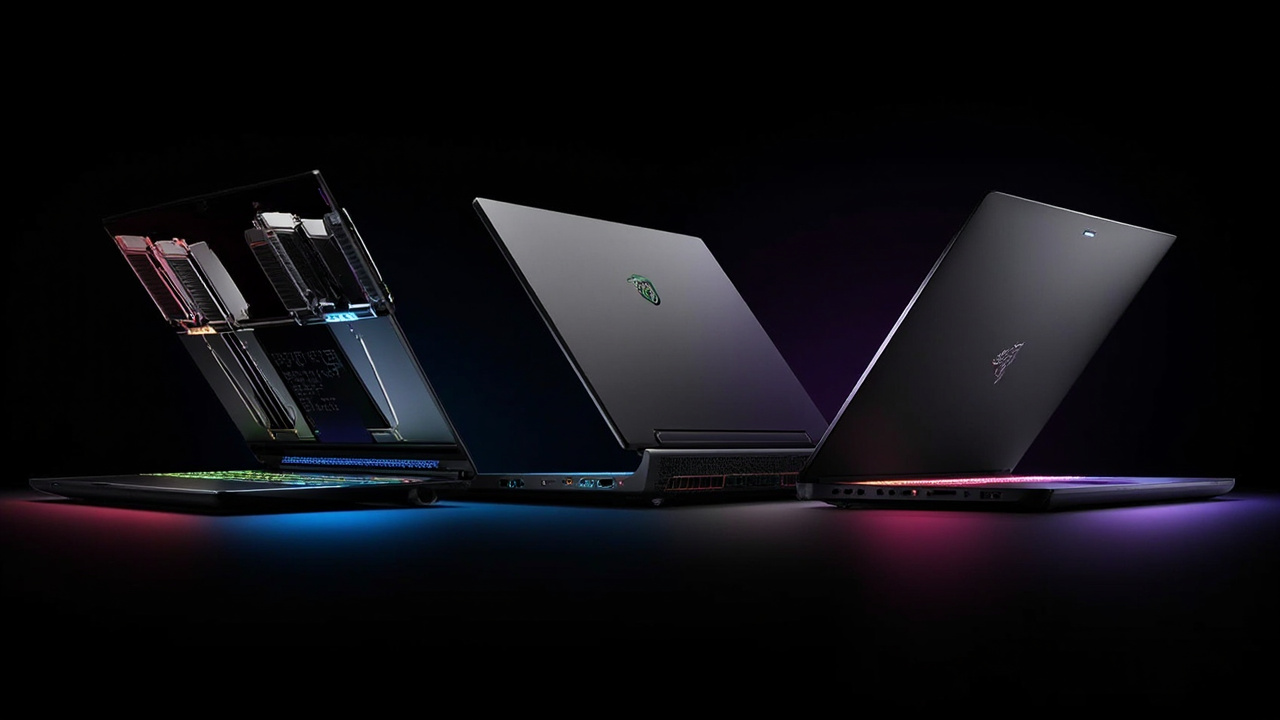
MSI Titan 18 HX AI — 3.63 kg (8 lbs) chassis with metal exterior surfaces and a matte-glass armrest. Built like a small server. The mechanical Cherry MX low-profile switches on the main keys are a real-world typing upgrade; the rubber-dome numpad next to them is jarring and feels like an afterthought. Power brick is 400W and weighs about 0.9 kg on its own, so total carry weight is closer to 4.5 kg. The MSI 2-year warranty is the longest of the three out of the box.
Asus ROG Strix Scar 18 G835LX — ~3.5 kg, plastic-heavy chassis with the ROG “light bar” anime-style RGB that lights up the front edge. Sturdier than it looks, but the lid is more flexible than the Blade’s. The keyboard uses Asus’s standard rubber-dome with per-key RGB, which is good but unremarkable. 1-year warranty. Service network in the US is broader than Razer’s and roughly comparable to MSI’s.
Razer Blade 18 (2026) — 3.2 kg, CNC-milled aluminum unibody. The thinnest and lightest of the three at the cost of thermal headroom (more on that below). Dual-mode display that switches between UHD+ 240Hz and FHD+ 440Hz is genuinely useful for both editing and competitive shooters. 1-year warranty, and RazerCare extended warranty is famously expensive if you want to push it past year two.
In a Tom’s Hardware review of the 2026 Blade 18, the unit ran hot — sustained CPU package power around 90W with the GPU at 175W is the practical ceiling, and the chassis surface temperature peaks around the WASD region in synthetic stress tests. By contrast, the Titan’s much larger cooling solution sustains closer to its rated 175W GPU / 175W combined without throttling, at the cost of roughly 7 dB more fan noise.
Feature Breakdown
| Spec | MSI Titan 18 HX AI | Asus ROG Strix Scar 18 G835LX | Razer Blade 18 (2026) |
|---|---|---|---|
| CPU | Intel Core Ultra 9 285HX (24T, 5.5 GHz) | Intel Core Ultra 9 275HX (24T) | Intel Core Ultra 9 290HX Plus (24T) |
| GPU (Laptop) | RTX 5090 175W | RTX 5090 175W | RTX 5090 175W |
| Display | 18” UHD+ mini-LED, 120Hz, 1100+ nits HDR, 1008 zones | 18” 2.5K mini-LED Nebula HDR, 240Hz | 18” Dual-Mode UHD+/FHD+, 240Hz/440Hz |
| RAM | 64GB DDR5-6400 (up to 128GB) | 32GB / 64GB DDR5-5600 | 32GB / 64GB / 128GB DDR5 |
| Storage | 6TB SSD (2x Gen5 in Raid0) | 2TB Gen4 SSD | 1TB / 2TB SSD |
| Ports | 2xTB4, 3xUSB-A, HDMI 2.1, SD, 2.5GbE | 2xTB4, 3xUSB-A, HDMI 2.1, 2.5GbE | 2xTB4, 3xUSB-A, HDMI 2.1, SD |
| WiFi | WiFi 7 (Killer BE1750x) | WiFi 7 | WiFi 7 |
| Battery | 99.9Wh + 400W adapter | 90Wh + 330W adapter | 91.7Wh + 280W adapter |
| Weight (laptop only) | 3.63 kg | ~3.5 kg | ~3.2 kg |
| Webcam | FHD + IR + privacy cover | FHD + IR | FHD + Windows Hello |
| Notable | Mechanical Cherry MX keys, 6-speaker audio, glass haptic touchpad | Anime-matrix light bar, AniMe Vision rear display | CNC aluminum, dual-mode display, Razer Synapse ecosystem |
A few real-world implications of this table:
- The 285HX vs 275HX vs 290HX Plus difference is small. All three are 24-thread Arrow Lake HX parts with similar boost clocks. You’re not losing meaningful gaming performance by picking the Strix Scar.
- The Titan’s 6TB Raid0 SSD is faster on paper but loses capacity on failure. A single 2TB Gen4 drive is safer and easier to clone. For most gamers, 2TB is fine; for video editors, the Titan’s option matters.
- The Strix Scar’s 240Hz Nebula HDR display is brighter than Razer’s dual-mode panel in HDR content but can’t drop to FHD+/440Hz for esports. The Blade wins for shooters; the Strix wins for HDR movies and single-player.
- The Titan’s 99.9Wh battery is the legal maximum for laptops you can carry onto a plane. That extra ~10Wh vs Razer and Asus is real but irrelevant if you’re gaming on the road.
Pros and Cons
MSI Titan 18 HX AI
Pros
- Highest-spec configuration available in a portable form factor
- Mechanical Cherry MX switches on main keys feel meaningfully better than rubber dome
- 99.9Wh battery + 6TB storage out of the box
- 1100+ nit peak HDR with 1008 mini-LED zones — best HDR picture quality here
- 2-year standard warranty (vs 1 year for Asus/Razer)
Cons
- Heaviest at 3.63 kg plus a 0.9 kg 400W brick — total carry weight close to 4.5 kg
- Loud under sustained load (7+ dB louder than Blade 18)
- Most expensive in the $5,499–$5,999 range once spec’d to the review unit
- RAID0 SSD means a single drive failure takes both volumes with it
- Backlit Dragon logo and gray plastic back edge look dated next to Razer’s industrial design
Asus ROG Strix Scar 18 G835LX
Pros
- Lowest price for an RTX 5090 18-inch machine at $4,499 (32GB) / $4,799 (64GB)
- Brightest 240Hz Nebula HDR mini-LED display of the three in pure HDR
- AniMe Vision rear display and anime-matrix light bar are polarizing but fun
- WiFi 7, 2.5GbE, full I/O including SD and 2x Thunderbolt 4
- Wide service network in the US
Cons
- 32GB base config is tight for AI / video workloads in 2026 (the 64GB model is the smarter buy at $4,799)
- Lid is more flexible than the Blade’s CNC aluminum
- Standard rubber-dome keyboard (no Cherry option)
- Light bar and RGB are impossible to fully disable — annoying in a shared space
- 1-year warranty is industry standard but feels short for a $4,500 machine
Razer Blade 18 (2026)
Pros
- Thinnest, lightest (3.2 kg), and cleanest-looking of the three — CNC aluminum unibody
- Dual-mode display (UHD+ 240Hz / FHD+ 440Hz) is genuinely useful for both editing and competitive shooters
- Quietest of the three under partial load; thermals tuned for comfort over peak power
- Razer Synapse ecosystem and Chroma RGB is best-in-class if you’re already in that world
- Available up to 128GB RAM configuration for serious creators
Cons
- Most expensive: $5,399 base RTX 5090, up to $6,999 fully maxed
- Sustained CPU power is around 90W in stress tests — throttles earlier than the Titan or Strix under sustained all-core load
- Battery and charger unchanged from previous generation despite new silicon
- RazerCare extended warranty is expensive (~$300+ for 3 years)
- Smaller service network than MSI or Asus in the US
Best For / Skip If
Buy the MSI Titan 18 HX AI if:
- You need 6TB of fast storage and 128GB RAM out of the box for AI training, video editing, or massive Steam libraries.
- Mechanical keyboard feel matters more than a thin chassis.
- You treat your laptop as a semi-permanent desk fixture and don’t carry it daily.
- The 2-year warranty matters to you.
Buy the Asus ROG Strix Scar 18 G835LX if:
- You want the most gaming laptop per dollar. The 64GB model at $4,799 is the smartest configuration for almost everyone.
- HDR brightness and 240Hz are priorities and you don’t need FHD+/440Hz esports modes.
- You live in a region with good Asus service coverage.
- You actually like the AniMe Vision light bar (or you’re willing to turn it off in Synapse-like software).
Buy the Razer Blade 18 (2026) if:
- You carry the laptop between rooms or to meetings and the industrial design matters.
- You split time between editing at 4K and competitive shooters at 1080p — the dual-mode display is the unique sell.
- You’re already in the Razer ecosystem (mouse, keyboard, dock).
- Money is not the primary constraint.
Skip all three if:
- You actually want something portable. None of these are. Get a 16-inch RTX 5070 Ti machine and save $2,000+.
- You only play indie games or esports titles at 1080p — a 14-inch laptop with an RTX 5070 will do 90% of what these machines do at half the weight.
- You need quiet under load. All three spin up under gaming. The Blade is the quietest and still isn’t quiet.
Bottom Line
All three of these laptops will game at the limits of an RTX 5090 in 2026. The frame-rate gap between them is small enough that it should not drive your decision.
What should drive your decision is how long you plan to keep it, where you’ll use it, and how much you weight industrial design against raw specs.
If you just want the cheapest path to a real RTX 5090 18-inch gaming laptop, the Asus ROG Strix Scar 18 G835LX at $4,499 (32GB) or $4,799 (64GB) is the obvious answer. You’d need a specific reason — 6TB storage, mechanical keys, or 4K HDR — to pay more.
If you want something that looks like it belongs on a desk next to a MacBook Pro, the Razer Blade 18 (2026) is in a class of its own, but you’ll pay $1,500–$2,500 more for that over four years of ownership.
If you want the absolute best of this category and don’t care about weight or cost, the MSI Titan 18 HX AI is it. Just know that “the absolute best” comes with a 4.5 kg carry weight and a louder fan profile than the other two.
Buy smart. Get more value. Don’t pay for specs you’ll never notice in real games.
Sources: Tom’s Hardware reviews of the MSI Titan 18 HX AI and Razer Blade 18 (2026); UltrabookReview detailed review of the MSI Titan 18 HX AI A2XWJG; Best Buy and Micro Center product listings for the Asus ROG Strix Scar 18 G835LX; TechStoriesIndia and Videocardz pricing coverage for the Razer Blade 18 (2026) RTX 5090 variants.