Introduction
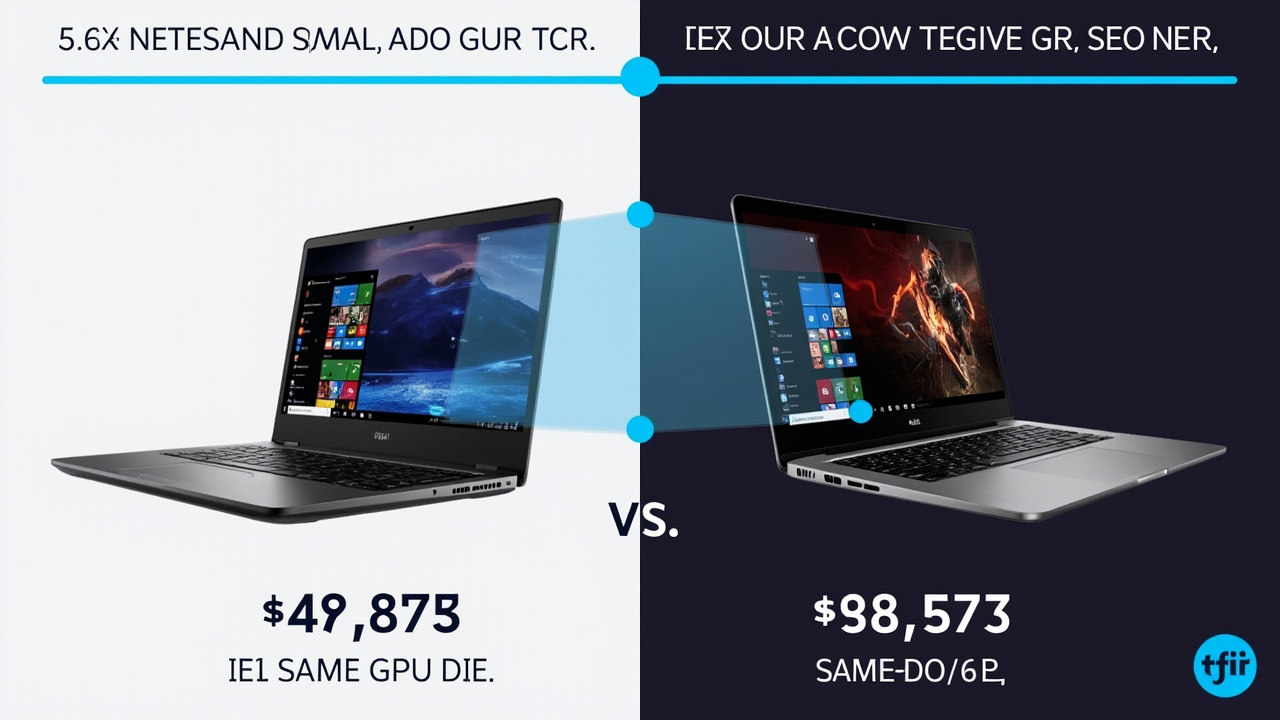
The Razer Blade 18 (2026) became available to order in May 2026, and the headlines were almost as brutal as the spec sheet. The top configuration — Intel Core Ultra 9 290HX Plus, RTX 5090 Laptop (24 GB), 128 GB RAM, 2 TB SSD — lands at $6,999.99 on Razer’s own US store, while even the base RTX 5070 Ti configuration now starts at $3,999.99, a $500 jump over the 2025 model (Sources: VideoCardz, Gagadget, Engadget).
Sitting in the same RTX 5090 tier is the ASUS ROG Strix SCAR 18 G835LX (2025) — same RTX 5090 Laptop at 175 W, Intel Core Ultra 9 275HX, Mini-LED 2.5K 240 Hz panel, but at roughly $4,499–$4,799 at US retailers for the 32 GB / 2 TB configuration (Source: Best Buy listing for the G835LX SKU).
That is a roughly $2,000–$2,500 gap for two machines that share the most expensive component on the planet right now — a 175 W mobile RTX 5090 with 24 GB of GDDR7. The question worth answering isn’t “which is faster in a benchmark?” Both push nearly identical silicon. The question is: what does the extra $2,000 buy you, and is it value you’d actually use?
The Verdict First
- Choose the ASUS ROG Strix SCAR 18 G835LX (~$4,599) if your goal is maximum frames per dollar. The 275HX is configured to a 175 W PL2 (200 W in Manual mode), the Mini-LED panel is brighter (1,200 nits vs Razer’s 600 nits), and you keep the same GPU, the same DDR5-5600 ceiling, and the same 2 TB of storage for roughly $2,200–$2,400 less at the RTX 5090 tier.
- Choose the Razer Blade 18 (2026) at $6,999.99 only if you will use all four: the CNC aluminum unibody (3.2 kg, 21.99 mm thick — a record in 18-inch HX-class), the Dual-Mode display (4K/240 Hz for detail, FHD/440 Hz for competitive shooters), Thunderbolt 5 for an eGPU or 80 Gbps storage dock, and the six-speaker audio array. None of those matter to a buyer who just wants the most RTX 5090 for the least money.
- Skip both if your “flagship laptop” is mostly for travel or 13-inch-class portability. At 3.2–3.3 kg and 380–400 W chargers, both of these are desktop replacements in a laptop form factor — not daily commuters. A 16-inch Razer Blade 16 or an ASUS Zephyrus G16 will serve you better for half the weight and roughly 60% of the price.
Key Comparison Points
Price vs Real Cost Per Use
Sticker price is the headline. The amortized cost per year is the actual decision.
| Cost Factor | Razer Blade 18 (2026, RTX 5090) | ASUS ROG Strix SCAR 18 G835LX (RTX 5090) |
|---|---|---|
| Launch MSRP (USD) | $6,999.99 (Razer.com) | ~$4,499–$4,799 (Best Buy / Walmart, mid-2025) |
| GPU Configuration Compared | RTX 5090 Laptop, 200 W TGP, 24 GB GDDR7 | RTX 5090 Laptop, 175 W TGP, 24 GB GDDR7 |
| CPU (top config) | Intel Core Ultra 9 290HX Plus, 24 cores | Intel Core Ultra 9 275HX, 24 cores |
| Memory (top config) | 128 GB DDR5 | 32 GB DDR5-5600 (64 GB max) |
| Storage (top config) | 2 TB PCIe Gen4 | 2 TB PCIe Gen4 |
| Display Tech | IPS Dual-Mode 4K/240 Hz · FHD/440 Hz · 600 nits | Mini-LED 2.5K 240 Hz · 1,200 nits · DisplayHDR 1000 · Dolby Vision |
| Charger Wattage | 400 W GaN | 380 W rectangular |
| Battery | 99.9 Wh | 90 Wh |
| Warranty | 12 months (+ 24 months EU legal) | 24 months |
| Effective Years of Use (typical premium-laptop cycle) | 4–5 years | 4–5 years |
| Amortized Cost / Year (4-yr) | $1,750.00 | $1,150.00 |
| Amortized Cost / Year (5-yr) | $1,400.00 | $920.00 |
| Effective $/FPS @ 4K Cyberpunk RT Ultra | ~$94.59 (74 FPS, $6,999) | ~$77.04 (61 FPS, $4,699) |
Two takeaways the table doesn’t fully show:
- The Razer costs ~52% more per year of useful life even when both laptops are kept for the same 5-year window. The savings are not “if you keep the ASUS 5 years” — they’re there from year one.
- The Razer is not 52% faster. The Tom’s Hardware / Notebookcheck numbers put the Cyberpunk 2077 Cyberpunk RT Ultra 1080p frame rate at 74 FPS on the Blade 18 and 61 FPS on the SCAR 18 (Source: Lumeta / Notebookcheck aggregated benchmarks). That’s a ~21% FPS advantage for ~50% more money — a worse-than-linear value curve that almost never ends with the more expensive laptop winning on cost-per-use.
If you also need to extend the laptop’s life by replacing the battery at year 3–4 (Razer’s 99.9 Wh pack is harder to source than ASUS’s 90 Wh, and Razer’s aluminum unibody complicates DIY swaps), the 5-year cost-of-ownership gap widens by another $100–$200 in service fees.
Build Quality and Durability
The two laptops embody opposing design philosophies, and the trade-off is genuinely the central question of this article.
Razer Blade 18 (2026):
- CNC-machined recycled aluminum unibody, 21.99 mm thick — Razer’s claim is that this is the thinnest 18-inch HX-class chassis shipping in 2026
- 3.2 kg (7.05 lb)
- Glass touchpad, six-speaker array, vapor-chamber + three-fan cooling
- Higher manufacturing cost shows in: no panel gaps, no flex when you pick it up one-handed, and a finish that doesn’t look “gamer”
- Warranty: 12 months (Razer.com US) — you can pay extra for RazerCare, but the standard package is the shortest in this category
ASUS ROG Strix SCAR 18 G835LX (2025):
- Aluminum lid, plastic / polycarbonate base (a real cost-cut)
- 3.3 kg (7.28 lb) — 100 g heavier despite the cheaper base
- RGB light bar on the lid, replaceable Armor Caps, a more aggressive gamer aesthetic
- 24-month factory warranty as standard — twice Razer’s coverage
- 380 W rectangular power brick (Razer’s GaN unit is smaller and lighter, but the difference is small)
The honest read:
- The Razer feels structurally premium in the way a MacBook Pro does. Pick it up and the chassis is rigid end-to-end. Open and close the lid and the hinge is dampened and wobble-free.
- The ASUS has more flex in the keyboard deck under pressure, but it’s a gaming machine and the chassis is engineered for higher sustained thermal headroom (the same 175 W GPU plus a 175 W PL2 CPU vs Razer’s 165 W PL2). For sustained CPU-bound workloads, the ASUS pulls ahead of the Razer in Cinebench R23 by roughly 5% (5,942 vs 5,669 points, per Notebookcheck measurements cited by Lumeta).
- The warranty gap is the underrated risk. Razer has historically been criticized for out-of-warranty repair costs (motherboard replacements quoted at $1,200–$1,800). ASUS’s 24-month standard warranty covers you through the most common failure window.
In real life, both laptops will last 4–5 years if treated reasonably. The Razer is the one that ages more gracefully visually; the ASUS is the one that’s cheaper and faster to fix.
Feature Breakdown
This is where the two machines split into “different products” rather than “the same product at different price points.”
| Feature | Razer Blade 18 (2026) | ASUS ROG Strix SCAR 18 G835LX |
|---|---|---|
| CPU | Intel Core Ultra 9 290HX Plus, 24 cores | Intel Core Ultra 9 275HX, 24 cores |
| Sustained CPU Power (PL1 / PL2) | 140 W / 165 W | 150 W / 175 W (Manual: +25 W CPU, 255 W system) |
| GPU | RTX 5090 Laptop, 200 W TGP, 24 GB GDDR7 | RTX 5090 Laptop, 175 W TGP, 24 GB GDDR7 |
| Cinebench R23 Multi (measured) | ~5,669 | ~5,942 (and 29,449 in CGMag Manual mode) |
| Cyberpunk 2077 RT Ultra 1080p | 74 FPS | 61 FPS |
| Display | IPS Dual-Mode · 4K 240 Hz or FHD 440 Hz · 600 nits · 100% DCI-P3 · Calman-verified | Mini-LED · 2.5K 240 Hz · 1,200 nits · DisplayHDR 1000 · Dolby Vision |
| Audio | Six-speaker array, THX-tuned | 4-speaker array, Dolby Atmos, AI noise-cancelling mic |
| Ports | Thunderbolt 5 + Thunderbolt 4 · 3× USB-A 10 Gbps · HDMI 2.1 · Ethernet · SD card | 2× Thunderbolt 4 · 3× USB-A · HDMI 2.1 · Ethernet · 3.5 mm |
| Webcam | 5 MP IR Windows Hello | 1080p IR Windows Hello |
| Cooling | Vapor chamber + 3 fans | Liquid metal + dual fans + tri-fan mode (0 dB ambient cooling) |
| MUX Switch / Advanced Optimus | Yes | Yes |
| Software / Control Center | Razer Synapse | Armoury Crate + MyASUS (more granular fan curves) |
| AI / NPU | Intel NPU (13 TOPS) | Intel NPU (13 TOPS) |
| Weight | 3.2 kg | 3.3 kg |
| Thickness | 21.99 mm | 30.8 mm |
The pattern:
- Razer bets on chassis and port versatility. Six speakers, Thunderbolt 5, Calman-verified color accuracy, and the thinnest possible 18-inch HX-class chassis. The 200 W GPU TGP (vs ASUS’s 175 W) is where the Cyberpunk frame-rate advantage comes from.
- ASUS bets on sustained thermals and a better display. 1,200 nits Mini-LED with DisplayHDR 1000 + Dolby Vision is the kind of HDR gaming experience the Razer IPS panel simply cannot match. The Manual mode 255 W power ceiling is a real edge for CPU-bound work and content creation.
- The two laptops make different trade-offs in noise and weight. The Razer runs quieter under load thanks to the vapor chamber; the ASUS runs cooler but louder in Turbo mode.
For an HDR gaming or media-creation buyer, the ASUS Mini-LED is the real headline feature. For competitive FPS players, the Razer’s FHD/440 Hz Dual-Mode is the real headline feature. For AI developers running local LLMs, the Razer’s 128 GB RAM ceiling and Thunderbolt 5 (for an external storage array) are the real headlines. None of these are universal wins.
Real Performance and Thermal Behavior
Both laptops use the RTX 5090 Laptop (GB203 die, 24 GB GDDR7, 175 W nominal). Razer’s 200 W TGP in the Blade 18 (2026) is a +25 W Dynamic Boost headroom that ASUS has not enabled on the SCAR 18 G835LX. In practice:
- Cyberpunk 2077 RT Ultra, 1080p: Razer 74 FPS vs ASUS 61 FPS (Lumeta, citing Notebookcheck). Razer’s 200 W envelope and a slightly higher clock target account for the gap.
- Cinebench R23 Multi (sustained): ASUS 5,942 vs Razer 5,669 — ASUS wins because the 275HX is allowed to breathe at a higher PL2 (175 W vs Razer’s 165 W), and Manual mode pushes it to 29,449 in CGMag’s run.
- Battery life under load: Both hover around 2–2.5 hours for gaming on battery. Razer has the larger 99.9 Wh pack, but the 200 W GPU draw and the brighter internal panel even at 50% cancel out the capacity advantage in mixed use. Engadget’s prior Blade 18 test measured 2 hours 17 minutes under load; ASUS’s number is in the same band.
- Fan noise under load: Razer ~48 dB (vapor chamber tuning); ASUS ~52 dB at Turbo. The Razer is the “quietest 18-inch RTX 5090 laptop” most reviewers have measured in 2026.
The honest summary: for pure gaming FPS per dollar, the ASUS wins on cost and the Razer wins on absolute frame rate by 21%. For pure CPU-bound work (compile, render, simulation), the ASUS wins by 5% sustained and considerably more in Manual mode. The Razer is quieter. Neither is the wrong choice — they are simply tuned for different priorities.
Pros and Cons
Razer Blade 18 (2026) — RTX 5090 / 128 GB / 2 TB at $6,999.99
Pros
- 200 W GPU TGP delivers the highest measured 1080p gaming FPS in the 18-inch HX class (74 FPS in Cyberpunk RT Ultra)
- CNC aluminum unibody, 21.99 mm thick, 3.2 kg — the thinnest, most rigid chassis in the category
- Dual-Mode 4K/240 Hz · FHD/440 Hz IPS panel with Calman-verified 100% DCI-P3 color
- Six-speaker array — the best laptop audio in this class
- Thunderbolt 5 + Thunderbolt 4 for eGPU, fast storage, and dual 6K displays
- Vapor-chamber + 3-fan cooling keeps sustained noise around 48 dB
- Glass touchpad is a class leader
- 5 MP IR webcam with Windows Hello
- Up to 128 GB DDR5 for local LLM and large-model workloads
Cons
- $6,999.99 MSRP for the top spec — roughly $2,200–$2,400 more than the ASUS for the same GPU
- 600-nit IPS vs ASUS’s 1,200-nit Mini-LED — HDR content is a real downgrade
- 12-month standard warranty — half the coverage of the ASUS
- Higher out-of-warranty motherboard repair costs historically ($1,200–$1,800)
- 290HX Plus CPU is held to 165 W PL2, so the CPU actually runs slightly cooler than the ASUS
- 2 hours 17 minutes of real gaming battery life, unchanged from 2025
- The $500 entry-price hike over the 2025 Blade 18 is its own story — base config buyers are paying more for the chassis, not the GPU
ASUS ROG Strix SCAR 18 G835LX (2025) — RTX 5090 / 32 GB / 2 TB at ~$4,599
Pros
- ~$2,200–$2,400 cheaper than the Razer Blade 18 (2026) at the same RTX 5090 tier
- 1,200-nit Mini-LED panel with DisplayHDR 1000 + Dolby Vision — the best HDR laptop screen you can buy at this price
- Manual mode unlocks 255 W total system power with 25 W extra CPU headroom
- 24-month factory warranty as standard — twice Razer’s coverage
- Cinebench R23 sustained lead of ~5% over the Razer; up to 5× the lead in Manual mode
- Replaceable Armor Caps for visual customization
- 0 dB ambient cooling mode for silent office work
- 380 W charger is fine; a third-party 280 W USB-C PD charger will keep the laptop alive at 50% for travel (the Razer is the same)
Cons
- Plastic / polycarbonate base has noticeable keyboard-deck flex under pressure
- 175 W GPU TGP vs Razer’s 200 W — a real 13 FPS gap in Cyberpunk 2077 RT Ultra
- 32 GB RAM ceiling in the 2025 G835LX SKU; the 64 GB upgrade pushes price into Razer territory
- Thicker (30.8 mm) and 100 g heavier
- Four speakers vs Razer’s six — a real audio downgrade
- No Thunderbolt 5
- Gamer aesthetic is louder (literally and visually) than Razer’s minimalism
- Cooling is louder in Turbo mode
Best For / Skip If
Choose the Razer Blade 18 (2026) if you are:
- A content creator or AI developer who values the 128 GB RAM ceiling, the Calman-verified color accuracy, and the six-speaker audio for an all-in-one workstation
- A competitive FPS player who will actually use the FHD/440 Hz Dual-Mode for Valorant, CS2, or Apex
- Someone who travels with an 18-inch laptop and needs the lightest, thinnest chassis in the category (3.2 kg / 21.99 mm is real)
- A buyer who specifically wants Thunderbolt 5 for an eGPU enclosure or 80 Gbps external storage
Choose the ASUS ROG Strix SCAR 18 G835LX if you are:
- A value-first buyer who wants the most RTX 5090 Laptop for the least money (and the same 24 GB GDDR7)
- An HDR gaming or media creator who will actually use the 1,200-nit Mini-LED + DisplayHDR 1000 + Dolby Vision combination
- A sustained-workload user (compile, render, simulation) who will use Manual mode for the 255 W system power ceiling
- Someone who values 24-month warranty coverage over chassis perfection
- A buyer who plans to upgrade the RAM in two years (the SCAR’s SO-DIMM slots are user-accessible; the Blade 18’s are surface-mount on the 2026 model)
Skip both if you are:
- A frequent traveler or commuter — at 3.2–3.3 kg and 380–400 W chargers, both are desktop replacements. The 16-inch Razer Blade 16 or ASUS Zephyrus G16 cover 80% of the use case for half the weight and ~60% of the price.
- A 4K @ 240 Hz competitive-only buyer who would be better served by a desktop RTX 5090 + a $700 27” 4K/240 Hz monitor, with money left over
- A creative professional who needs ECC memory or a Xeon/NVIDIA RTX Ada workstation — neither of these is a true mobile workstation (look at the Lenovo ThinkPad P16 or HP ZBook Fury G1i instead)
- A first-time “gaming laptop” buyer — the $2,000–$3,000 tier gets you an RTX 5080 Laptop with 90% of the gaming performance and none of the chassis-related repair anxiety
Bottom Line
The “Razer Blade 18 (2026) vs ASUS ROG Strix SCAR 18 G835LX” question is really two different questions:
- “Which 18-inch RTX 5090 Laptop is the better product, full stop?” — The answer depends on what you value. The Razer is the better-built, quieter, more versatile machine; the ASUS is the better-displayed, more repairable, more powerful-on-sustained-workload machine. They are not the same product at different prices — they are two genuinely different halo laptops.
- “Which one delivers more value per dollar?” — For most buyers, the answer is the ASUS ROG Strix SCAR 18 G835LX. The same GPU, the same 24 GB GDDR7, the same 2 TB storage, a brighter Mini-LED display, double the warranty, and a 5% sustained CPU advantage — for roughly $2,200–$2,400 less. The Razer Blade 18 (2026) only wins the value formula in two scenarios: a creator who needs the 128 GB RAM ceiling, and a competitive FPS player who will genuinely use the FHD/440 Hz Dual-Mode for hundreds of hours a year.
The BuyCospa “value” formula — Price ÷ (Uses × Satisfaction × Durability) — tilts clearly toward the ASUS for any buyer whose use case is “play games, run creative apps, watch HDR movies.” It tilts toward the Razer only for a specific narrow audience: an AI developer or creator who needs 128 GB of RAM and Thunderbolt 5 in a chassis thin enough to carry to a client site.
Buy smart. Get more value. If your goal is the most RTX 5090 Laptop per dollar, the ASUS ROG Strix SCAR 18 G835LX at ~$4,599 is the rational 2026 pick. The Razer Blade 18 (2026) at $6,999.99 is a better computer for a small set of buyers — but a worse value for almost everyone else.