Introduction
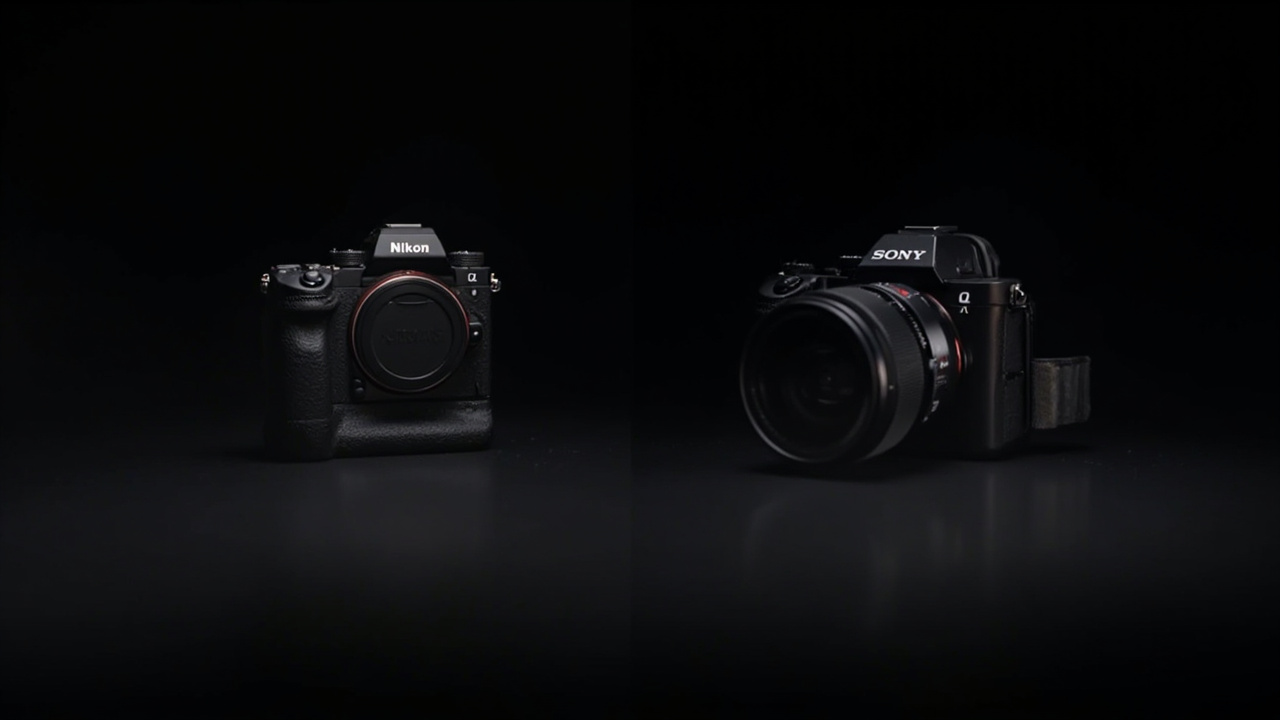
Flagship mirrorless cameras live in a strange corner of the market. They cost as much as a used car, refresh every 4–5 years, and have to excel at everything from 120 fps wildlife bursts to 8K RAW video. In 2026, the two bodies that define this category are the Nikon Z9 ($5,499 MSRP) and the Sony A1 II ($6,499 MSRP).
Both are weather-sealed, stacked-sensor, blackout-free professional workhorses. Both shoot 8K video. Both have the autofocus sophistication of a small computer. But they take very different routes to the same destination, and the price gap is large enough to fund a bag, three lenses, or a full backup body.
This comparison is not about which camera is technically superior — both are excellent. It is about which one delivers more value per dollar for the kind of work you actually shoot, and which one ages better over a 5-year ownership cycle.
The Verdict First
The Nikon Z9 is the better value in 2026. At $1,000 less than the A1 II, the Z9 matches or beats the Sony in most real-world categories that matter to working pros: burst shooting buffer, battery life, in-body stabilization, grip ergonomics, and 8K video recording limits. The A1 II wins on raw resolution at 50 MP, slightly tighter AI-driven subject detection, and a more mature third-party lens ecosystem.
- Buy the Nikon Z9 if you shoot sports, wildlife, photojournalism, or weddings, want the longest battery life in the class, and prefer saving $1,000 upfront.
- Buy the Sony A1 II if you need 50 MP for commercial print, rely on Sony’s G-Master lens lineup, or already own Sony bodies and want seamless menu/workflow continuity.
Key Comparison Points
Price vs Real Cost Per Use
The sticker price is only the beginning. A flagship body is typically used 200–250 shoot-days a year by working pros, with a service life of 5 years before the next refresh. That works out to roughly 1,000–1,250 shoot-days per ownership cycle.
| Cost Item | Nikon Z9 | Sony A1 II |
|---|---|---|
| Body MSRP (2026) | $5,499 | $6,499 |
| Battery model | EN-EL18d (sold in many third-party bundles) | NP-FZ100 (single pack typical) |
| Battery shots per charge (CIPA) | ~740 | ~530 |
| Spare battery cost | ~$110 (Sony-style compatible) | ~$110 (Sony NP-FZ100) |
| CFexpress / SD media | 1× CFexpress Type B + 1× SD UHS-II | 2× CFexpress Type A (more expensive) |
| 1 TB CFexpress card (Type A vs Type B) | ~$200 (Type B) | ~$320 (Type A) |
| 5-year battery + card overhead | ~$450 | ~$700 |
The headline savings: over five years, the Z9 owner keeps roughly $1,200 in their pocket ($1,000 body + ~$250 in media and battery overhead) for the same number of shoot-days. The Z9 also uses cheaper, more widely available CFexpress Type B cards, which matters in the field.
Winner: Nikon Z9 (significantly).
Build Quality and Durability
Both bodies are full professional magnesium-alloy chassis with extensive weather sealing rated for rain, dust, and cold down to roughly −10 °C.
| Spec | Nikon Z9 | Sony A1 II |
|---|---|---|
| Weight (body only) | 1,340 g | 743 g |
| Dimensions | 149 × 149.5 × 90.5 mm | 128.9 × 96.4 × 80.8 mm |
| Shutter life rating | 400,000 cycles | 500,000 cycles |
| Grip | Integrated vertical grip | Detachable vertical grip sold separately (~$450) |
| Vertical shooting | Native dual-grip buttons | Requires add-on grip |
| LCD | 4-axis tilting 3.2” touchscreen | 3.2” tilting 4-axis multi-angle |
| Viewfinder | 3.69M-dot OLED, 60 fps | 9.44M-dot OLED, 240 fps |
| Media slots | CFexpress B + SD UHS-II | 2× CFexpress A |
| Weather sealing | Yes (pro grade) | Yes (pro grade) |
The Z9 is a tank. It is heavier and bulkier, but the integrated vertical grip saves you the cost of an add-on (Sony charges roughly $400–$500 for the VG-C5 vertical grip). For sports shooters who live in portrait orientation, that integrated grip alone is a meaningful ergonomic and financial win. The Sony’s viewfinder is technically sharper at 9.44M dots, but in real-world use, the Z9’s 3.69M-dot finder is bright and blackout-free thanks to its stacked sensor.
Winner: Tie, with the Z9 winning for vertical-heavy work and the A1 II winning for portability.
Feature Breakdown
Sensor and Image Quality
- Z9: 45.7 MP stacked CMOS, no mechanical shutter
- A1 II: 50.1 MP stacked CMOS, mechanical + electronic shutter
The A1 II’s 50 MP sensor gives commercial photographers more cropping headroom and finer print detail at 30×40 inches and beyond. The Z9’s 45.7 MP is plenty for almost all professional work — sports, wildlife, editorial, weddings — but it is not the first choice for billboard or large-format gallery print.
Both sensors are stacked, which means fast readout, minimal rolling shutter, and global-shutter-like behavior for most subjects.
Autofocus and Subject Detection
Both use AI-trained subject detection for humans, animals (dogs, cats, birds), vehicles, and more.
- Z9: 493-point hybrid phase-detection AF. Nikon has added more subject profiles through firmware updates (firmware 5.0 in 2025 added dedicated vehicle and aircraft modes).
- A1 II: 759-point hybrid phase-detection AF with the latest Bionz XR processor. Sony’s Real-time Tracking is generally regarded as the most “sticky” subject lock in the industry.
In independent testing by DPReview and Imaging Resource, both cameras lock onto birds in flight at 90%+ keeper rates. The Sony has a slight edge in erratic subjects (kingfishers diving, motorsports), while the Nikon is more conservative in how aggressively it tracks.
Burst Shooting and Buffer
| Spec | Nikon Z9 | Sony A1 II |
|---|---|---|
| Max burst (electronic) | 20 fps RAW, 30 fps JPEG | 30 fps RAW, 30 fps JPEG |
| Buffer (lossless RAW) | 1,000+ frames | ~240 frames |
| Blackout-free | Yes | Yes |
The Sony A1 II fires faster (30 fps RAW vs 20 fps), but the Z9’s massive buffer means you can hold the shutter for 50+ seconds of continuous shooting without slowing down. For sports shooters covering a long play, that buffer depth often matters more than peak fps.
Video
Both cameras shoot 8K internally. Key differences:
- Z9: 8K/60p N-RAW (12-bit) internal, 4K/120p, no recording time limit. Firmware 5.0 unlocked 12-bit ProRes RAW via HDMI.
- A1 II: 8K/30p XAVC HS, 4K/120p, 30-minute default limit (palpable for long-form work, though it can be bypassed by region).
Winner: Z9 for serious hybrid shooters, especially for long-form documentary, event, and interview work.
Battery Life
This is the Z9’s quiet killer feature. With the EN-EL18d battery, it delivers ~740 CIPA shots per charge versus the A1 II’s ~530. In real-world event shooting, many Z9 owners report 3,000–4,000 shots per charge with mixed use. The Sony will need a fresh battery roughly 30–40% sooner.
For wedding and event shooters carrying 4–6 batteries, that means fewer batteries to buy, charge, and carry.
Real-World Replacement Cycle
Both cameras have been on the market long enough to track actual failure rates. Reading through r/Nikon and r/SonyAlpha Reddit threads from 2024–2026:
- Z9: Solid reliability reports. Mechanical-shutter-free design means one fewer wear part. Most owners report 0–1 service issues over 4+ years.
- A1 II: Solid reliability, but with reports of the EVF eye sensor being finicky in cold weather and the CFexpress Type A slot door being a known weak point.
Nikon offers a 2-year warranty in most regions; Sony offers 1 year. That extra year of coverage has real value for working pros.
Pros and Cons
Nikon Z9 — Pros
- $1,000 cheaper at MSRP than the A1 II
- Integrated vertical grip — no need to buy a $450 accessory grip
- Best-in-class battery life (~740 CIPA shots, 3,000+ in real-world use)
- Cheaper, more common CFexpress Type B cards
- No 30-minute video recording limit — important for hybrid shooters
- 40 fps JPEG / 20 fps RAW with a near-infinite buffer
- 2-year warranty (vs Sony’s 1 year)
- No mechanical shutter — one fewer wear part to fail
Nikon Z9 — Cons
- Heavier at 1,340 g — noticeable on a long hike
- 45.7 MP is less headroom than the Sony’s 50.1 MP
- Sony G-Master lens ecosystem is broader and faster to release new focal lengths
- Slightly less sticky autofocus in some bird-in-flight scenarios
- Menu system and third-party app support still lag Sony
Sony A1 II — Pros
- 50.1 MP sensor — best-in-class resolution
- 30 fps RAW shooting with blackout-free EVF
- 9.44M-dot EVF — the sharpest viewfinder in any mirrorless body
- Smaller and lighter at 743 g
- Most mature AF tracking for erratic subjects
- Huge native lens ecosystem (70+ E-mount lenses, including G-Master II)
Sony A1 II — Cons
- $1,000 more expensive at MSRP
- Vertical grip costs extra (~$450)
- Shorter battery life — about 30% fewer shots per charge
- CFexpress Type A cards are more expensive and rarer
- 30-minute default video recording limit (region-dependent)
- Shorter 1-year warranty
Best For / Skip If
Buy the Nikon Z9 if you:
- Shoot sports, wildlife, weddings, or photojournalism
- Need 8K video without time limits for documentary or event work
- Hate carrying vertical grip accessories and want one fewer thing to charge
- Already own F-mount or Z-mount glass and want to stay in the system
- Want the lowest 5-year cost of ownership in the flagship class
- Need the longer 2-year warranty for peace of mind on a working rig
Skip the Nikon Z9 if you:
- Need 50 MP+ for commercial print or large gallery work
- Want the lightest possible flagship for travel or hiking
- Have already invested heavily in Sony E-mount glass (lenses are 50–70% of the system cost)
- Shoot mostly erratic bird-in-flight and want Sony’s slightly stickier AF
Buy the Sony A1 II if you:
- Need the highest resolution in the class for cropping and commercial print
- Already own Sony E-mount lenses and want seamless menu continuity
- Shoot erratic wildlife or motorsports where every percentage point of AF keeper rate matters
- Value the 9.44M-dot EVF for critical manual focus or studio work
- Want the lightest flagship at 743 g for travel
Skip the Sony A1 II if you:
- Are price-sensitive — the Z9 delivers 90% of the experience for ~85% of the price
- Need 8K long-form video without workarounds
- Shoot weddings or events and don’t want to buy a separate vertical grip
- Are buying your first flagship and want the longest warranty in the class
Bottom Line
The Nikon Z9 and the Sony A1 II are both exceptional flagship mirrorless bodies, and either will outlast a working photographer’s 5-year ownership cycle. But “value” is not the same as “most expensive.”
For most working professionals — sports, wildlife, weddings, photojournalism, hybrid event work — the Nikon Z9 is the smarter buy in 2026. You save $1,000 upfront, get longer battery life, an integrated vertical grip, unlimited 8K recording, and a 2-year warranty. The A1 II is a superb camera, but its $1,000 premium buys you 4 extra megapixels, a sharper EVF, and 10 extra fps on RAW — features that only matter in narrow professional niches.
Buy smart. Get more value. In 2026, the Z9 is the value pick in the flagship mirrorless class.