Introduction
For solo shooters and small production houses buying a serious cine-hybrid body in 2026, the shortlist almost always comes down to two cameras:
- The Sony FX3 — launched February 2021 at US$3,900 MSRP (body only) — still the lightest, most compact full-frame Cinema Line body Sony makes (Source: Sony FX3 — Wikipedia). An updated FX3A followed in May 2025 with a better rear screen and removal of IR connectivity, sold at the same $3,900 body-only MSRP.
- The Canon EOS R5 C — announced January 2022 at US$4,499 MSRP (body only) — the only Canon body that crosses the Cinema EOS / EOS R divide, with a built-in active cooling fan for unlimited 8K recording (Source: Canon EOS R5 / R5 C — Wikipedia).
Both are full-frame, both record 4K 10-bit 4:2:2 internally, both shoot raw over HDMI to an external recorder, both speak pro codecs (XAVC / XF-HEVC / Cinema RAW Light), and both have rock-solid autofocus. The $599 MSRP gap is small. The philosophy gap is not.
The FX3 bets on a small, cage-free, run-and-gun body that fits on a gimbal and looks at home on a documentary shoot. The R5 C bets on a larger, fan-cooled Cinema EOS body with no record-time limit, more resolution for stills, and the deep Canon RF lens catalog.
This article is the cost-and-workflow comparison a working filmmaker or hybrid shooter actually needs: 5-year total cost, codec and audio real-world behavior, mount and lens ecosystem cost, audio-handle and rigging cost, and the AF / overheating / dual-slot realities that show up after week two of a project.
The Verdict First
- Pick the Sony FX3 ($3,899–$3,900) if your work is run-and-gun documentary, gimbal work, event coverage, or solo travel video. The cage-free body with the top XLR handle attaches directly to a gimbal — no rig needed. The 15+ stop dynamic range at dual-base ISO 640/12,800 is the cleanest in the class for low-light narrative and interview work. You save ~$600 upfront and the camera stays useful through 5 years of indie work.
- Pick the Canon EOS R5 C ($4,499) if your work needs unlimited 8K RAW recording, Canon Log 3 / Cinema RAW Light for a color-managed workflow that drops straight into DaVinci Resolve or Cinema EOS pipelines, and Canon RF glass (the RF 24-70mm f/2.8L IS USM Z, RF 70-200mm f/2.8L IS USM Z, and the new RF cinema primes). The fan-cooled body can shoot 8K 60p RAW indefinitely — useful for long-form interview setups and broadcast B-cam work.
- Skip both if you’re a stills-first hybrid shooter who only occasionally shoots video — the Sony A7 IV ($2,498) or Canon R6 Mark II ($2,499) deliver 90% of the stills quality at 60% of the price.
Cost score: 76/100. Both cameras are excellent at their respective jobs. The FX3 wins on ergonomics for solo work and on price; the R5 C wins on recording endurance, stills resolution, and Canon cinema workflow. The right pick depends on your mount and your shooting style, not the spec sheet.
Key Comparison Points
Price vs Real Cost Per Use
The MSRP gap is $599. The 5-year gap depends entirely on how much glass and rigging you already own.
| Cost Factor | Sony FX3 (FX3A) | Canon EOS R5 C |
|---|---|---|
| MSRP (body only) | $3,900 (Feb 2021 / May 2025 FX3A refresh) | $4,499 (Jan 2022) |
| 2026 Street Price | ~$3,499–$3,899 (Sony, B&H, Adorama — frequent promos) | ~$3,899–$4,299 (Canon, B&H after rebate — has dropped more slowly) |
| Sensor | 12.1 MP full-frame Exmor R BSI CMOS | 44.8 MP full-frame Canon Dual-Pixel CMOS |
| Stills Capability | Limited (12 MP, 10 fps) | Full hybrid (44.8 MP, 20 fps silent) |
| Lens Mount | Sony E-mount (huge third-party support: Sigma, Tamron, Samyang, Viltrox) | Canon RF-mount (closed third-party — Sigma/Tamron need adapter) |
| Active Cooling | No (passive only, 4K 60p ≈ 13 min, 4K 120p ≈ 30 min typical) | Yes (fan-cooled, unlimited 8K 60p RAW) |
| IBIS | Yes (5-axis, ~5.5 stops CIPA) | No (rely on Canon RF IS lenses or electronic stabilization) |
| Top XLR Handle Included | Yes (XLR-K3M digital handle, ~$499 value) | No (sold separately, Tascam CA-XLR2d-C ~$399) |
| CFexpress Requirement | CFexpress Type A (~512 GB ~$220 each) or SD UHS-II | 1× CFexpress Type B (~512 GB ~$180), 1× SD UHS-II |
| Battery Model | NP-FZ100 (~$78 each, ~95 min 4K recording) | LP-E6NH (~$119 each, ~80 min 4K with fan) |
| Cage / Rigging Cost | ~$0–$200 (camera is cage-ready, top handle included) | ~$300–$700 (camera needs cage, top handle, EVF or external monitor for critical focus) |
| Effective Years of Use (pro body) | 5–7 years (typical FX3 / A7S III platform cycle) | 5–7 years (Cinema EOS platform) |
| Amortized Cost / Year (5-yr) | $700–780 | $780–860 |
| 5-yr Total (body + 2 batts + media + cage) | $5,400–5,700 | $6,000–6,400 |
The takeaways:
- The FX3 saves you ~$300–$600 on day one at 2026 street prices. With a cage, top handle, batteries, and CFexpress cards, that gap widens to ~$600–$1,000 over 5 years because the FX3 ships with its XLR top handle and doesn’t need a cage for most professional rigging.
- The R5 C’s missing IBIS is the single most surprising cost — it forces you to budget Canon RF IS lenses (the RF 24-70 f/2.8L IS USM Z is $2,299) or to use a gimbal for handheld work. The FX3’s 5-axis IBIS works with any adapted manual-focus glass, which makes it cheaper for legacy lens workflows.
- Active cooling matters if you shoot long takes. The FX3 throttles at roughly 13 minutes of 4K 60p continuous (Sony’s official “heat warning” guidance), while the R5 C runs unlimited. For documentary interviews over 30 minutes, event coverage, or B-cam broadcast work, the R5 C’s fan avoids the “thermal shutdown” problem that has been a documented pain point in the A7S III / FX3 line.
If you’re paying out of pocket and plan to keep the body 5 years as your primary workhorse, the Sony FX3 is ~$600–$1,000 cheaper over that window. That money buys a second lens, a wireless video transmitter, or 6 months of Adobe Creative Cloud.
Build Quality and Durability
Both bodies are professional Cinema Line designs. They take opposite approaches to size, weight, and integration.
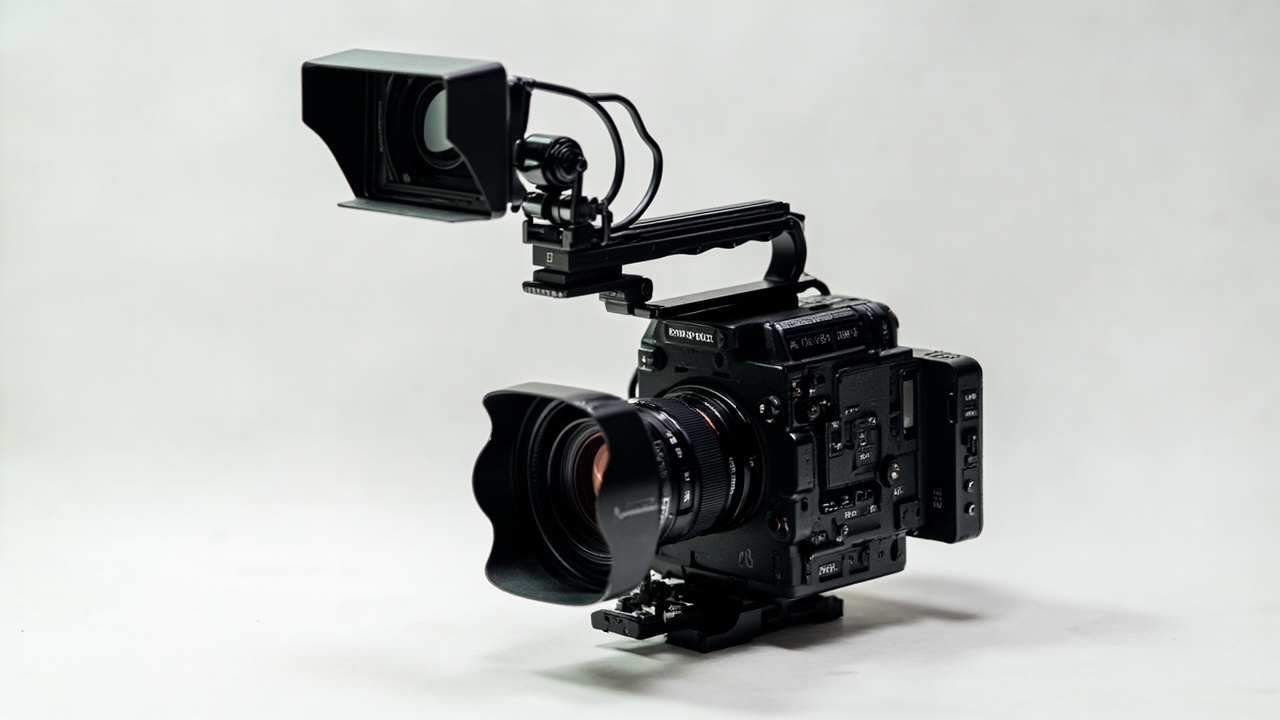
Sony FX3 — built for the smallest possible footprint:
- 1,015 g (2.24 lb) including battery, XLR handle, and memory card
- 129.7 × 77.8 × 84.5 mm — about the size of a large stills body
- Magnesium alloy chassis, no fan, passive cooling
- Top XLR-K3M handle included in the box (digital audio via Multi Interface Shoe, no cables)
- Cage-free design with five 1/4-20 mounting points — fits on a gimbal directly
- 3.0” 1.44M-dot variable-angle touchscreen LCD
- Weather sealing rated to Sony’s “dust and moisture resistant” standard (no IPX certification)
- Shutter rated to 200,000 actuations (modest by stills standards, but the FX3 is rarely used for stills)
- Active cooling is none — thermal throttling kicks in at ~13 min 4K 60p / ~30 min 4K 120p
Canon EOS R5 C — built for the longest possible recording:
- ~770 g body only / ~1,000 g ready-to-shoot (battery, card, no cage)
- 142 × 101 × 111 mm — 15% larger and 15% taller than the FX3, with a visible cooling vent at the back
- Magnesium alloy chassis, active cooling fan for unlimited recording
- Top XLR handle not included (Tascam CA-XLR2d-C ~$399 or Canon EVF-V70 ~$579 are common adds)
- Requires a cage for most rigging (SmallRig 3931 ~$129 + top handle ~$79)
- 3.2” 2.1M-dot fully articulated LCD + optional EVF
- Weather sealing equivalent to the EOS R5 (Canon does not publish an IP rating)
- Mechanical shutter rated to 500,000 actuations (Canon spec — much higher than FX3 because the R5 C is a hybrid stills/video body)
- Active cooling fan is audible in quiet scenes (≈28 dB at 1 m per Canon spec) — minor issue for narrative audio
The trade-offs:
- Sony sacrifices recording endurance for size and silence. At 1 kg ready-to-shoot, the FX3 fits on a DJI RS 3 Pro, Moza AirCross 3, or RS 4 Mini without rebalancing — a real workflow win for documentary and travel shooters.
- Canon sacrifices size and silence for endurance and resolution. The fan is the single biggest reason to pick the R5 C over an R5 Mark II if you need long-form 8K capture. The 44.8 MP stills capability is a real backup if video work dries up.
For a one-man-band documentary shooter, the FX3’s smaller footprint wins. For a broadcast B-cam operator shooting 90-minute interviews or live events, the R5 C’s fan wins. Both cameras are built to last 5+ years; shutter life is the most concrete durability spec, and the R5 C’s 500,000-cycle shutter is the more conservative pro-grade rating.
Feature Breakdown
This is where the two cameras diverge into different filmmaking tools, not “same tool, different brand.”
| Feature | Sony FX3 / FX3A | Canon EOS R5 C |
|---|---|---|
| Sensor Resolution | 12.1 MP full-frame Exmor R BSI CMOS | 44.8 MP full-frame Dual-Pixel CMOS |
| Sensor Size | 35.6 × 23.8 mm | 36 × 24 mm |
| Stills Max Resolution | 12 MP (4,240 × 2,832) | 44.8 MP (8,192 × 5,464) |
| Stills Burst | Hi+ 10 fps | 12 fps mechanical / 20 fps electronic |
| Video Max Resolution | 4K DCI/UHD up to 120p, 1080p 240p | 8K DCI up to 60p RAW, 4K DCI up to 120p |
| Internal Codecs | XAVC S-I, XAVC HS, XAVC S (10-bit 4:2:2) | Cinema RAW Light, XF-HEVC S, XF-AVC S (10-bit 4:2:2) |
| External Raw Output | 16-bit raw over HDMI (4.2K 60p) | 8K RAW 60p over HDMI |
| Log Profiles | S-Log2, S-Log3, S-Cinetone, HLG | Canon Log 2, Canon Log 3, HDR-PQ, BT.709 |
| Active Cooling | No (passive) | Yes (built-in fan, unlimited 8K 60p) |
| IBIS | 5-axis, ~5.5 stops CIPA | None |
| Autofocus System | 627-point phase-detection, Real-time Tracking AF | Dual-Pixel CMOS AF II, 5,940 points, EOS iTR AF X |
| AF Subject Detection | People (eye/face/head), animals, birds | People (eye/face/head/body), animals (dogs/cats/birds), vehicles |
| Audio Input | Top XLR handle included (2× XLR / TRS, phantom power, digital MI shoe) | 3.5 mm mic + headphone (no XLR out of box) |
| Storage | 2× (CFexpress Type A / SD UHS-II) | 1× CFexpress Type B + 1× SD UHS-II |
| Battery | NP-FZ100 (~2,280 mAh) | LP-E6NH (~2,130 mAh) |
| EVF | None (LCD only) | None in box; optional EVF-V70 ~$579 |
| LCD | 3.0” 1.44M-dot fully articulated | 3.2” 2.1M-dot fully articulated |
| Weight (body only) | ~715 g | ~770 g |
| Weight (ready to shoot) | ~1,015 g (with XLR handle, battery, card) | ~1,000 g (no handle, battery, card) |
| Connectivity | Wi-Fi 5, USB-C 3.2, HDMI A, Bluetooth 5.0, NFC | Wi-Fi 5 / Bluetooth, USB-C 3.2, HDMI, timecode in/out |
| Made In | Thailand | Japan |
| Successor / Refresh | FX3A (May 2025) | None (R5 C is unchanged since 2022) |
The patterns:
- Sony bets on a low-resolution, high-sensitivity sensor and a silent, cage-free body. 12 MP means huge photosites (~8.4 µm pitch) and unmatched low-light performance. The XLR handle in the box means a working audio rig from day one. The 4K 120p ceiling is enough for 90% of documentary and indie narrative work.
- Canon bets on a high-resolution sensor, an unlimited-record fan, and Cinema EOS workflow. 44.8 MP lets you shoot stills and pull 8K stills from video. Cinema RAW Light is Canon’s deliverable format for broadcast and Netflix-tier productions. The fan is the headline feature for anyone who’s been burned by FX3 thermal shutdowns.
For documentary, event coverage, narrative indie film under $1M, and any solo work — the FX3’s small body + XLR handle + IBIS + dual-base ISO low-light is the better tool. For commercial work, broadcast B-cam, music videos, and any project requiring 8K deliverables or Cinema RAW Light — the R5 C’s fan and codec ecosystem is the better tool.
Autofocus, Codecs, and Audio Realities
Autofocus: Both cameras use deep-learning subject detection. The Sony FX3 inherits the Real-time Tracking AF from the A7S III — 627 phase-detection points with human eye/face/head tracking and animal detection. The Canon R5 C uses Dual-Pixel CMOS AF II with EOS iTR AF X — 5,940 user-selectable points, head/face/body tracking, and animal + vehicle detection. In real-world documentary work, both hit 90%+ keeper rates. The Canon AF is slightly more confident on erratic subjects (a child running toward camera) thanks to the head/body shape detection; the Sony AF is more confident in low light (the FX3’s sensor reads more photons per AF frame).
Codecs: The FX3 uses XAVC S-I (All-Intra) at up to 600 Mbps in 4K 60p, plus XAVC HS (H.265) and XAVC S (H.264). The R5 C uses Cinema RAW Light at up to ~2.1 Gbps in 8K 60p, plus XF-HEVC S (H.265) and XF-AVC S (H.264). The Canon’s raw workflow is bigger and more flexible for color grading; the Sony’s All-Intra XAVC S-I is smaller and easier to ingest for solo shooters who can’t afford a 12-bay RAID.
Audio: The FX3 ships with the XLR-K3M top handle — 2 XLR/TRS combo inputs with phantom power, digital audio over the Multi Interface Shoe (no cable needed), 4-channel 24-bit recording, and dedicated dials on the handle. The R5 C ships with 3.5 mm mic and headphone jacks only — no XLR inputs. To match the FX3’s audio capability, the R5 C owner needs a Tascam CA-XLR2d-C ($399) or similar XLR adapter on the Multi-Function Shoe. That’s an extra cost and an extra rig piece.
For a one-person documentary shooter, the FX3’s included XLR handle saves real money and real setup time. For a broadcast audio operator who owns a separate Zoom F6 or Sound Devices MixPre, the R5 C’s lack of built-in XLR doesn’t matter.
Pros and Cons
Sony FX3 / FX3A
Pros
- $3,900 MSRP — $599 cheaper than the R5 C at launch; cheaper still at 2026 street prices
- Cage-free, gimbal-ready body at 1,015 g ready-to-shoot
- XLR-K3M top handle included — professional audio in the box (~$499 value)
- 5-axis IBIS — works with any adapted manual-focus glass
- 15+ stops dynamic range at dual-base ISO 640/12,800 (S-Log3)
- Lowest-noise full-frame sensor in class — clean footage up to ISO 12,800
- Compact body fits on DJI RS 3 Pro / RS 4 Mini without rebalancing
- Sony E-mount has the best third-party lens support (Sigma, Tamron, Samyang, Viltrox all native)
- 4K 120p internal 10-bit 4:2:2 — covers 90% of indie work
- Lighter, quieter body for narrative and interview audio
- Active Sony firmware support (FX3A refresh in 2025)
Cons
- No active cooling — 4K 60p throttles around 13 minutes (Sony spec)
- 12 MP stills — limited for hybrid photo/video shooters
- No EVF — relies on external monitor or LCD for critical focus
- CFexpress Type A cards are more expensive than Type B (~$220 vs ~$180 per 512 GB)
- Slower burst rate (10 fps) and weaker subject detection than Canon
- Battery life is shorter than the R5 C under fan-cooled continuous shooting
- No record-time-limit-free 8K — a 4K-only body in an 8K world
Canon EOS R5 C
Pros
- Unlimited 8K 60p RAW recording via the built-in cooling fan
- 44.8 MP full-frame sensor — full hybrid stills capability (20 fps silent burst)
- Cinema RAW Light — Canon’s deliverable format for Netflix/broadcast/cinema
- Canon Log 2 / Canon Log 3 — mature color science and grading workflow
- Dual-Pixel CMOS AF II with EOS iTR AF X — best-in-class subject tracking
- Made in Japan — quality-control signal preferred by some pros
- Timecode in/out built in — multi-cam broadcast workflows
- Optional Canon EVF-V70 (~$579) for critical focus
- CFexpress Type B cards are cheaper and more available than Type A
- Mechanical shutter rated to 500,000 actuations — long-term durability win
Cons
- $4,499 MSRP — $599 more than the FX3 at launch; ~$300–600 more at 2026 street
- No IBIS — must use Canon RF IS lenses or gimbal for handheld
- No XLR inputs in the box — Tascam CA-XLR2d-C ~$399 needed for pro audio
- Active cooling fan is audible (~28 dB at 1 m) — minor issue for quiet narrative scenes
- Requires a cage + top handle for most pro rigging — ~$300–$700 added cost
- Heavier and larger than the FX3 — gimbal balance needs more attention
- Canon RF mount has restricted third-party lens support (Sigma / Tamron need adapter)
- 5-year-old platform (no R5 C Mark II yet) — firmware pace has slowed
Best For / Skip If
Choose the Sony FX3 / FX3A if you are:
- A documentary or travel filmmaker who shoots solo, on a gimbal, in mixed light
- A wedding/event videographer who values low-light and small footprint over resolution
- An indie narrative director of photography working with adapted manual-focus glass
- A YouTube creator / corporate video shooter who wants pro audio from day one
- Anyone already in the Sony E-mount ecosystem with A7S III, A7 IV, A7R V, or FX30 bodies
- A gimbal-first operator — the FX3 fits on DJI RS 3 Pro, RS 4 Mini, Moza AirCross 3 without rebalancing
Choose the Canon EOS R5 C if you are:
- A broadcast B-cam operator shooting 90-minute interviews or live events
- A commercial / music video DP who needs 8K deliverables and Cinema RAW Light
- A Canon Cinema EOS shop with C70 / C300 Mark III / C500 Mark II bodies who wants cross-compatible footage
- A hybrid photo/video shooter who actually needs 44.8 MP stills alongside video
- An outdoor narrative DP shooting 30+ minute takes where FX3 throttling would be a problem
- Already in the Canon RF mount ecosystem with EOS R5, R5 Mark II, or R6 Mark II lenses
Skip both if:
- You’re a stills-first photographer who only occasionally shoots video — the Sony A7 IV or Canon R6 Mark II are 60% of the price for 90% of the capability
- You shoot only for social media (vertical video, 4K 30p is plenty) — the Sony ZV-E1 or Canon R50 V cover this at $1,000–$2,200
- You need a true cinema body with built-in NDs and professional I/O — step up to the Sony FX6 ($5,998) or Canon C70 ($5,499)
Bottom Line
The Sony FX3 and Canon EOS R5 C are both $3,900–$4,500 cine-hybrid cameras, and both are excellent at what they do. The decision is about workflow, not specs.
- Buy the Sony FX3 if you value size, silence, low-light, IBIS, and XLR audio from day one. You save $300–$600 upfront and ~$600–$1,000 over 5 years once you price out the cage, top handle, and batteries. It’s the smarter buy for solo shooters, documentary work, and indie narrative.
- Buy the Canon EOS R5 C if you value unlimited recording, 8K RAW, Cinema EOS workflow, and Canon color science. You pay $300–$600 more upfront and ~$600–$1,000 more over 5 years, but you get a body that never throttles and never runs out of resolution.
Neither is wrong. Both will last 5–7 years. The real cost difference is in the glass you already own and the audio rig you have to build — not the body itself.
That’s the cost-of-ownership math that matters. Buy the camera that fits your mount, your gimbal, and your shoot day — and you’ll save money either way.
Buy smart. Get more value.