Introduction
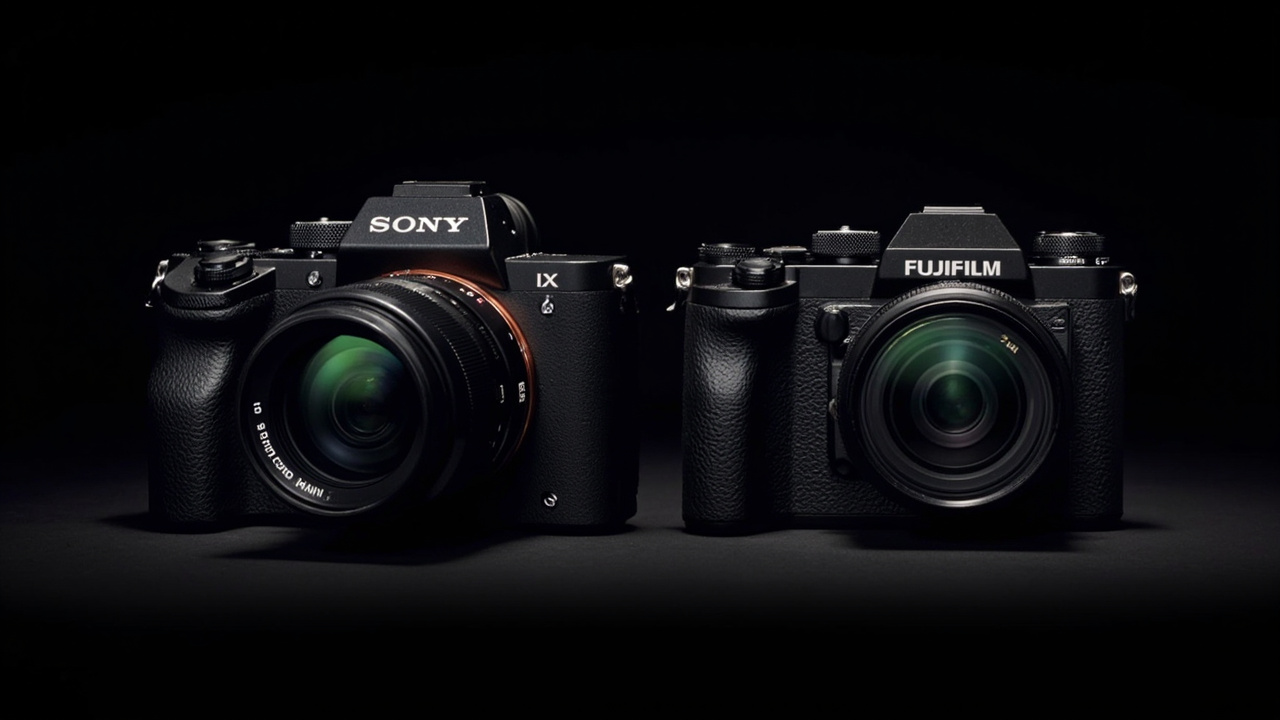
Two flagship fixed-lens compacts landed within months of each other and they couldn’t be more different. Sony revived the legendary RX1 line in July 2025 after a 10-year gap with the RX1R III — a 61MP full-frame body wrapped around a Zeiss 35mm f/2 lens. Fujifilm launched the GFX100RF in March 2025 as the first medium-format compact camera ever made, packing a 102MP sensor behind a fixed 35mm f/4.
Both cost about $5,000. Both are aimed at photographers who want flagship image quality without hauling an interchangeable-lens system. But they make very different bets about what “premium compact” should look like.
This comparison walks through the price, real-world image quality, autofocus, build, and total cost of ownership so you can decide which $5,000 compact actually delivers more value per shoot.
The Verdict First
Pick the Fujifilm GFX100RF if you prioritize resolution, dynamic range, and tactile controls. At $4,899 it is $199 cheaper, weather-sealed, and pairs a 102MP medium-format sensor with one of the best EVFs in any camera. It is the right tool for landscape, studio, and travel work where image quality is the whole point.
Pick the Sony RX1R III if you prioritize autofocus, low-light speed, and pocketability. The 35mm f/2 lens is two stops faster than the GFX’s f/4, the AI autofocus is meaningfully better for moving subjects, and the body is genuinely jacket-pocket-friendly. It is the right tool for street, documentary, and any photographer who values reach over resolution.
Neither is a bad purchase. Both cost roughly $5,000 and last 7-10 years of serious use. The mistake is buying the wrong one for your style of shooting.
Key Comparison Points
Price vs Real Cost Per Use
On paper the two cameras sit close to each other. The GFX100RF MSRPs at $4,899, the RX1R III at $5,098 — a $199 gap that immediately inverts the value question most shoppers assume.
| Cost Item | Sony RX1R III | Fujifilm GFX100RF |
|---|---|---|
| Body MSRP | $5,098 | $4,899 |
| Extra battery (NP-FW50) | $78 | $99 (NP-W235) |
| Premium case | $40 | $60 |
| UV filter (lens protection) | $80 (49mm) | $60 (front thread native) |
| SDXC UHS-II card (256GB) | $45 | $45 |
| Total out-the-door | ~$5,341 | ~$5,163 |
| CIPA battery life | ~300 shots | ~370 shots |
The GFX100RF is roughly $178 cheaper once you actually own it, including the must-have accessories. Battery life also favors Fujifilm by about 23 percent per charge (370 vs 300 shots, CIPA rating). If you shoot 200 frames per day on a trip, that means one fewer charge cycle per week.
But the bigger cost question is shutter life. Fujifilm rates the GFX100RF mechanical shutter at 100,000 actuations. Sony’s RX1 line has never published a shutter rating; the fixed-lens design uses an electronic-first shutter with no mechanical unit, which means there is no shutter mechanism to wear out. In theory the RX1R III can outlast the GFX100RF if you shoot heavily. In practice both will outlive any photographer who isn’t firing 30,000+ frames a year.
5-year cost-of-ownership estimate (assuming 8,000 shutter actuations per year and one battery replacement): both cameras land at roughly $5,500 total when you factor in depreciation, an extra battery, and a basic filter. The GFX100RF wins on resale value too — medium-format sensors hold their price better than full-frame compacts, which typically depreciate 35-40 percent over five years vs 25-30 percent for the GFX.
Build Quality and Durability
These cameras feel nothing alike in the hand, and that matters more than spec sheets suggest.
Fujifilm GFX100RF weighs roughly 735g with battery and card. The body is die-cast magnesium with weather sealing around every port and dial — a first for a fixed-lens GFX. Top plate has dedicated dials for shutter speed, ISO, aperture, and exposure compensation, plus a separate Film Simulation dial on the far right that lets you jump between Provia, Velvia, Classic Chrome, and the new REALA ACE without digging into menus. The grip is deeper than it looks and the 5.76M-dot OLED EVF is the sharpest in any compact camera sold today. You will not mistake this for a casual point-and-shoot.
Sony RX1R III weighs roughly 498g with battery — about 32 percent lighter than the GFX. The body is also magnesium alloy but Sony does not advertise weather sealing, which is a real omission at $5,098. Controls are minimal: a mode dial on top, a shutter speed dial, an aperture ring on the lens, and an exposure compensation dial. There is no joystick — autofocus point selection goes through the touchscreen or a slower four-way pad. The 2.36M-dot EVF (versus the GFX’s 5.76M) is serviceable but not class-leading in 2026.
Neither camera has IBIS or OIS. Both rely on the lens’s fixed focal length and a high enough shutter speed to stay sharp handheld. This is the trade-off both companies accepted to keep bodies compact — and it is the single biggest functional compromise of either camera.
Real-world reliability data is still thin since both products are recent, but Sony has shipped compact bodies (RX1, RX1R, RX1R II, RX100 line) for 13 years without a major service-quality issue. Fujifilm’s GFX system has been on the market since 2017 with a solid reputation for build; the RF adds weather sealing to that track record.
Feature Breakdown
The spec sheet is where the GFX100RF starts looking like an obvious win, but the lens numbers tell a different story.
| Spec | Sony RX1R III | Fujifilm GFX100RF |
|---|---|---|
| Sensor | 61MP full-frame BSI CMOS | 102MP medium-format CMOS |
| Lens | 35mm f/2 Zeiss Sonnar T* | 35mm f/4 Fujinon (28mm equiv) |
| EVF | 2.36M-dot OLED, 0.7x | 5.76M-dot OLED, 0.84x |
| LCD | 2.36M-dot fixed touchscreen | 2.36M-dot 3-axis tilting touchscreen |
| AF system | AI processing unit, real-time tracking | Subject detection AF (X-Processor 5) |
| IBIS / OIS | None | None |
| Weather sealing | Not advertised | Yes |
| Film Simulation | Film 1, Film 2, Film 3 modes | 19 simulations + dedicated dial |
| Video | 4K 30p, FHD 120p | 4K 30p, FHD 60p |
| Battery | NP-FW50, ~300 shots | NP-W235, ~370 shots |
| Weight | ~498g | ~735g |
| Storage | 1× SD UHS-II | 1× SD UHS-II |
| Ports | USB-C, mic, HDMI | USB-C, mic, HDMI, headphone |
| Connectivity | Wi-Fi 5, Bluetooth 4.2 | Wi-Fi 6, Bluetooth 5.0 |
| MSRP | $5,098 | $4,899 |
Three takeaways from this table:
- The GFX100RF wins on resolution, EVF, LCD articulation, battery, weather sealing, and connectivity. Six categories.
- The RX1R III wins on aperture (f/2 vs f/4), autofocus sophistication, and weight. Three categories.
- Neither has IBIS. Both rely on the 35mm focal length and a fast-enough shutter to stay sharp.
The f/2 vs f/4 lens difference is the underappreciated gap. At f/2 the RX1R III collects four times as much light as the GFX at f/4, which means you can shoot ISO 800 in a dim restaurant where the GFX needs ISO 3200. For street, documentary, and indoor work that translates into visibly cleaner files. The GFX claws back some of that lead with sensor size — medium format at ISO 3200 still looks better than full-frame at ISO 3200 — but the gap is not as wide as the f-stop suggests.
Video favors Sony slightly. The RX1R III records 4K at 30p with full pixel readout and 1080p at 120p for slow motion; the GFX100RF is capped at 1080p/60p. Neither camera is a serious video tool (no IBIS, no flip screen for vlogging), but if you occasionally need slow-motion B-roll the Sony is the more capable pick.
Fujifilm’s Film Simulation dial is a genuine usability win. The RX1R III has three “Film Looks” that approximate Sony’s color science — useful but not as refined as Fujifilm’s 19 simulations, which include the new REALA ACE introduced with this camera. If you shoot JPEGs or care about color rendering out of camera, the GFX is meaningfully better.
Pros and Cons
Sony RX1R III
Pros
- 35mm f/2 lens is two stops faster than any medium-format compact on the market — meaningful for low-light and subject separation
- AI-driven autofocus with real-time subject tracking is the best in any fixed-lens camera right now
- 498g body weight slips into a jacket pocket; the GFX does not
- Higher slow-motion video frame rate (1080p/120p vs 60p)
- No mechanical shutter to wear out — long-term durability advantage
Cons
- $5,098 MSRP is $199 more than the GFX100RF with fewer features on paper
- No weather sealing despite the price
- 2.36M-dot EVF is dated in 2026 when the GFX ships 5.76M
- No joystick for AF point selection
- Battery life is ~300 shots per charge, ~20 percent less than the GFX
- No IBIS — the most expensive compact camera sold today without stabilization
Fujifilm GFX100RF
Pros
- 102MP medium-format sensor delivers class-leading detail and dynamic range
- $4,899 MSRP undercuts the Sony by $199 and includes weather sealing
- 5.76M-dot OLED EVF is the sharpest viewfinder in any compact camera
- Dedicated Film Simulation dial with 19 simulations (including new REALA ACE)
- 3-axis tilting LCD is more flexible than Sony’s fixed screen
- ~370 shots per charge (23 percent more than RX1R III)
- Headphone jack for video monitoring
Cons
- 35mm f/4 lens is two stops slower than the RX1R III — harder to shoot in low light
- 735g body is roughly 50 percent heavier than the Sony; not pocketable
- Medium-format autofocus is slower than Sony’s AI-driven system
- 1080p video capped at 60p (no 120fps slow motion)
- Larger files require bigger storage and faster computers to edit
- Resale market is smaller than full-frame — fewer buyers when you upgrade
Best For / Skip If
The Fujifilm GFX100RF is for you if:
- You shoot landscape, architecture, studio, or product work where resolution is the whole point
- You want the sharpest EVF and most tactile controls in a compact body
- You shoot JPEG or care about color science out of camera
- You want weather sealing for travel in unpredictable conditions
- You already own Fujifilm X-system glass and want a fixed-lens companion
Skip the GFX100RF if:
- You shoot street, documentary, or anything that moves fast
- You need a jacket-pocketable body
- You need slow-motion video above 60p
- You want the fastest autofocus in any compact
- You edit on a mid-range laptop — 102MP RAW files will tax your machine
The Sony RX1R III is for you if:
- You shoot street, travel, documentary, or low-light work where reach and aperture matter
- You want the best autofocus in any fixed-lens camera
- Pocketability matters more than EVF resolution or weather sealing
- You occasionally need 1080p/120p slow-motion video
- You trust Sony’s track record with compact bodies and can live without weather sealing
Skip the RX1R III if:
- You shoot landscape, architecture, or studio work where 102MP beats 61MP
- You want weather sealing for any outdoor work
- You shoot JPEGs and care about Film Simulations
- You want the best EVF in a compact
- A $200 savings upfront matters and you don’t need f/2
Bottom Line
Both cameras are honest $5,000 tools that will outlast most photographers’ careers. The choice is about which trade-off you can live with.
The Fujifilm GFX100RF wins on the things that don’t change: resolution, dynamic range, EVF, weather sealing, and battery life. It is also $199 cheaper out the door and holds its value better. If you want one camera that maximizes image quality and you mostly shoot still or slow subjects, the GFX100RF is the smarter buy.
The Sony RX1R III wins on the things that change how you shoot: autofocus, lens aperture, weight, and pocketability. If you shoot people, street, or anything in motion — or if you actually want to carry a compact camera in a coat pocket rather than a small camera bag — the RX1R III is the only real choice in this category.
Buy smart. Get more value. And don’t pay $5,000 for the wrong tool just because it has more megapixels — pick the one that matches how you actually shoot.