Introduction
If you have ever said “I want one really good camera instead of a bag full of lenses,” the two names that come up in every serious conversation in 2026 are the same two names that have dominated premium fixed-lens photography for the last decade:
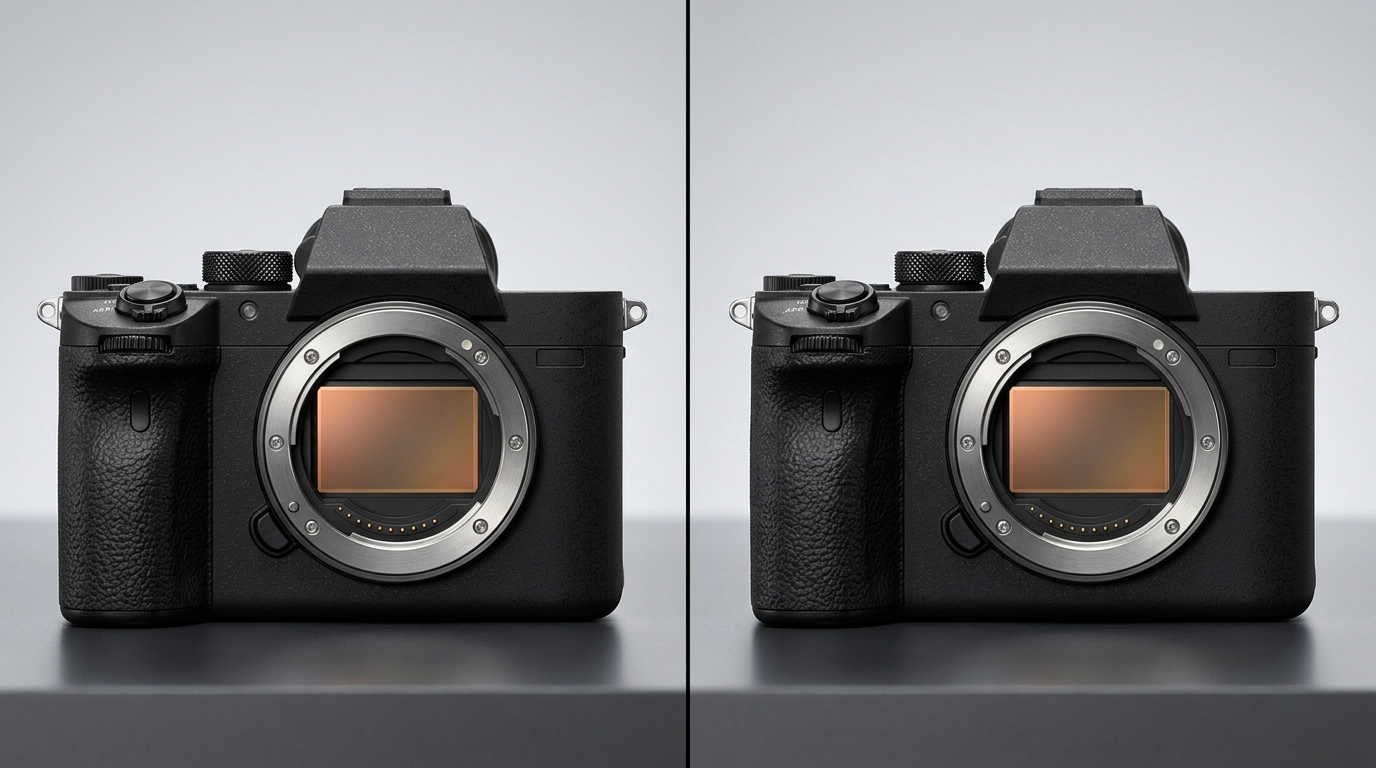
- Leica Q3 — MSRP $5,895 for the body only, with the fixed Summilux 28mm f/1.7 ASPH lens permanently attached. A 60.3-megapixel full-frame sensor, 8K video, IP52 weather sealing, and the red Leica dot. Released May 2023 as the third generation of the Q line.
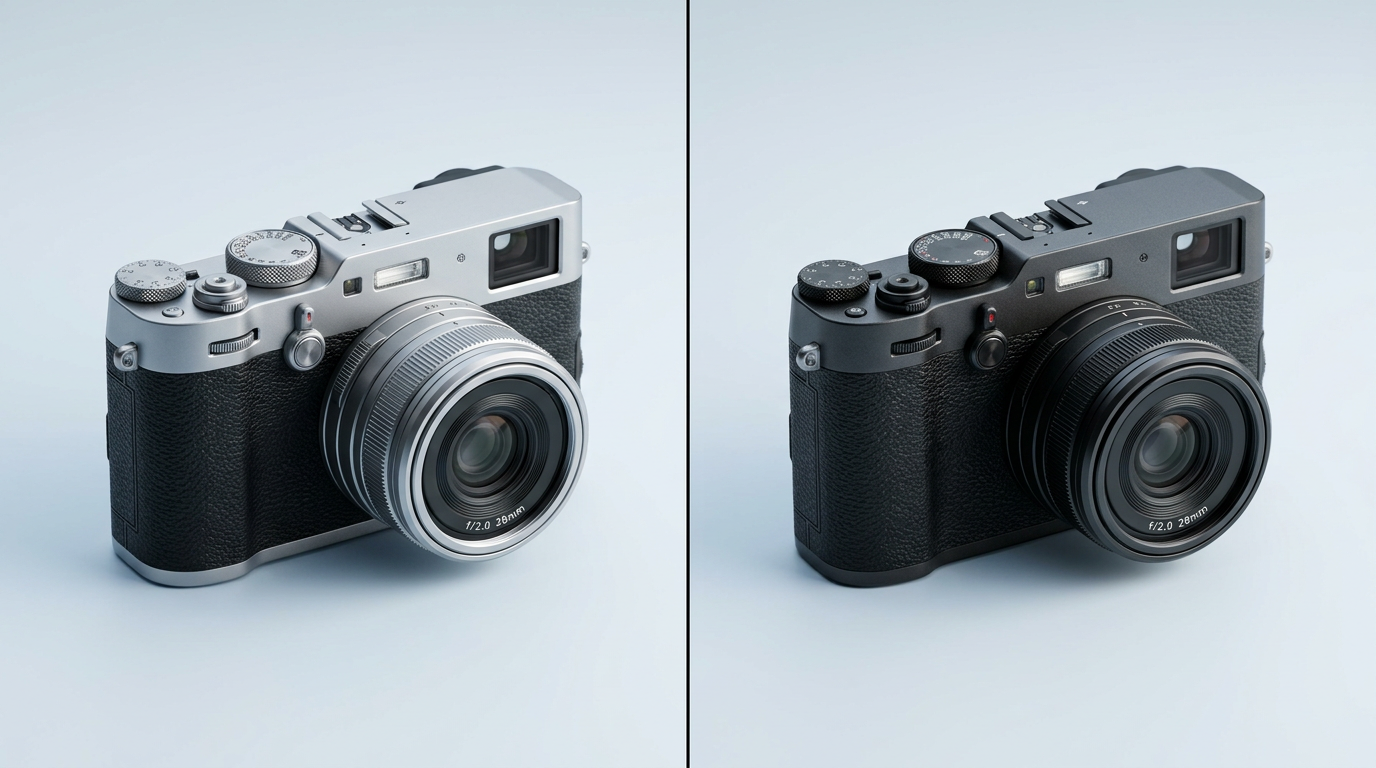
- Fujifilm X100VI — MSRP $1,799 for the body only, with the fixed 23mm f/2 lens (35mm equivalent) permanently attached. A 40.2-megapixel APS-C sensor, in-body image stabilization (a first for the X100 series), and 20 Fujifilm film simulations baked in. Released February 2024 as the sixth-generation X100.
The price gap is $4,096 at MSRP. That is a small used car. It is also roughly the price of an excellent interchangeable-lens system with a couple of zooms. So the question is not “which one is better” — both are exceptional cameras. The question is which one is worth the money to you, and which one costs you less per year of actually using it.
That last number — cost per year of real use — is what this comparison is really about. A $5,895 camera that lives in a drawer is more expensive than a $1,799 camera that travels with you every day.
The Verdict First
- Pick the Leica Q3 ($5,895) if you want the strongest image quality a fixed-lens compact can currently deliver, shoot a lot in low light or shallow depth-of-field situations where a full-frame sensor and an f/1.7 lens make a real difference, need IP52 weather sealing for rain and dust, shoot a lot of 8K video for hybrid stills-and-video work, or you specifically value the Leica aesthetic, the red dot, and the long-term resale value of a Leica body. The Q3 is the more capable option for working photographers, hybrid shooters, and anyone who treats a camera as a long-term tool they will keep for 10+ years.
- Pick the Fujifilm X100VI ($1,799) if you want a camera that is genuinely portable enough to carry every day, value the classic Fujifilm film simulation rendering for JPEGs straight out of camera, need in-body image stabilization (a Q3 missing feature) for handheld low-light work, prefer the hybrid optical/electronic viewfinder for a rangefinder-style shooting experience, or you simply do not have $5,895 sitting around for a luxury camera. The X100VI is the better buy for street and travel photographers who actually carry the camera every day, and for anyone who wants ~80% of the image quality at ~30% of the price.
Cost score: 62/100. The Q3 is one of the most expensive fixed-lens compacts ever sold; the X100VI is one of the best values. The Q3 wins on sensor size, image quality ceiling, weather sealing, and video specs; the X100VI wins on portability, IBIS, JPEG film simulations, hybrid viewfinder, and price-to-use ratio. The smarter buy depends almost entirely on how often you will actually carry it, because a $1,799 camera you use 300 days a year costs less per photo than a $5,895 camera you use 30 days a year.
Key Comparison Points
Price vs Real Cost Per Use
The sticker price gap is enormous: $5,895 vs $1,799. But the more interesting number is what each camera costs you per day of actual use over the 8-10 year lifespan each one is realistically built for.
| Item | Leica Q3 | Fujifilm X100VI |
|---|---|---|
| Body MSRP (launch) | $5,895 (May 2023) | $1,799 (Feb 2024) |
| Sensor | 60.3 MP full-frame BSI CMOS | 40.2 MP APS-C X-Trans CMOS 5 HR |
| Lens (fixed) | Summilux 28mm f/1.7 ASPH | 23mm f/2 (35mm equivalent on APS-C) |
| Image stabilization | None (lens-based OIS only) | In-body 5-axis IBIS (up to 6 stops) |
| Viewfinder | 5.76M-dot OLED EVF | Hybrid OVF + 3.69M-dot OLED EVF |
| Rear screen | 3.0” tilt touchscreen (1.84M dots) | 3.0” two-axis tilt touchscreen (1.62M dots) |
| Video | 8K 30p / 4K 60p (ProRes over USB-C) | 6.2K 30p / 4K 60p |
| Weather sealing | IP52 rated | None (basic splash protection only) |
| Battery (rated shots) | ~350 (BP-DC12) | ~450 (NP-W126S) |
| Weight (with battery) | ~743 g | ~521 g |
| In-camera charging | USB-C PD | USB-C |
| Film simulations | Leica Looks (3 styles) | 20 Fujifilm simulations incl. REALA ACE |
| Bluetooth / Wi-Fi | Yes / Yes (Leica Fotos app) | Yes / Yes (Fujifilm XApp) |
| Cost per day at 300 days/year for 10 years | ~$1.97/day | ~$0.60/day |
| Cost per day at 50 days/year for 10 years | ~$11.79/day | ~$3.60/day |
Sources: Leica USA, Fujifilm USA, DPReview, Imaging Resource, June 2026.
The real cost question is how often you will actually pick it up:
- Cost per day of use. At 300 days of use per year for 10 years, the X100VI costs $0.60/day and the Q3 costs $1.97/day. That gap closes only when the Q3 is used 1,000+ days per year — which is impractical for a single body. The Q3 is roughly 3.3x more expensive per day at heavy street-photography use.
- Accessory ecosystem. Leica sells an optional $340 handgrip, a $180 thumb rest, and $150 lens hood as official accessories. Fujifilm sells a $90 leather case, a $55 lens hood, and a $50 adapter ring for filters. The Leica accessory ecosystem is more expensive to complete — plan another $300-$500 for a Q3 you actually want to carry every day.
- Filter thread. The Q3 uses a 49mm filter thread on the lens. The X100VI uses a 49mm thread via the optional adapter ring (or no thread if you skip the adapter). Neutral density, polarizing, and protection filters are a real cost over 10 years — $50-$150 per filter, replaced every few years.
- Battery cost. Q3 uses a single proprietary BP-DC12 ($95 each). X100VI uses the common NP-W126S ($60 each, and widely available as a third-party cell for ~$15). For a serious photographer buying 2-3 spares, the Q3 battery cost is roughly 2x the X100VI battery cost.
- Repair and out-of-warranty service. Leica USA offers a 2-year warranty on the Q3 (extendable to 3 years via Leica registration). Out-of-warranty sensor or shutter replacement at Leica USA service runs $800-$1,400. Fujifilm USA offers a 1-year warranty on the X100VI. Out-of-warranty sensor replacement runs $300-$500 at authorized service. The Q3 is significantly more expensive to repair.
- Resale value. This is the one place the Q3 actually pulls ahead. A used Q3 in good condition sells for $4,500-$5,200 in 2026 (about 75-88% of MSRP after 3 years). A used X100VI sells for $1,500-$1,700 after 3 years (about 83-94% of MSRP). Percentage-wise, both hold value similarly. Absolute dollar resale value favors the Q3 by roughly $3,000-$3,500.
- Total 10-year ownership cost. Assuming one full set of accessories, 2 spare batteries, 2 filter replacements, and one out-of-warranty repair:
- Leica Q3: $5,895 + $400 accessories + $190 batteries + $150 filters + $1,000 (avg) repair − $4,800 (resale) = ~$2,835 net 10-year cost
- Fujifilm X100VI: $1,799 + $100 accessories + $120 batteries + $80 filters + $400 (avg) repair − $1,600 (resale) = ~$899 net 10-year cost
The X100VI is roughly 3.2x cheaper to own over a 10-year horizon, primarily because the entry price is so much lower. The Q3’s resale value advantage is real but does not close the gap.
Build Quality and Durability
Both cameras are built to last a decade of regular use, but the build philosophies are fundamentally different.
- Leica Q3 — Aluminum-magnesium top and bottom plates, magnesium alloy chassis, leatherette wrap, and a fixed Summilux lens with metal barrel. The body is IP52 rated — meaning it can handle light rain, drizzle, and dusty conditions, but is not submersible or fully dustproof. The lens is sealed at the mount and the focus ring is metal with a focus clutch for manual focus. The body weighs 743 g with battery and feels substantial in the hand. The fixed lens cannot be removed (this is by design — the Q-series is a permanently sealed optical system).
- Fujifilm X100VI — Aluminum top and bottom plates, magnesium alloy chassis, and a fixed 23mm f/2 lens with metal barrel. The body has basic splash protection only — no formal IP rating. Fujifilm explicitly recommends a protective case or rain cover for serious weather shooting. The lens has a built-in 4-stop ND filter (a Q3 missing feature). The body weighs 521 g with battery — about 30% lighter than the Q3 — and feels pocketable in a coat pocket or small messenger bag.
- Shutter lifespan. Both cameras use leaf shutters with rated lifespans of roughly 100,000 actuations for the X100VI (Fujifilm rated) and 200,000+ actuations for the Q3 (Leica rated, conservative claim). At 5,000 actuations per year (a serious enthusiast), the Q3’s shutter is rated to last 40 years, the X100VI’s 20 years. Both outlive any reasonable ownership cycle.
- Repair history. Leica Q-series cameras have an excellent long-term reliability record — most Q, Q2, and Q3 bodies from the last decade are still in service. The X100 series has had a few known issues (X100V had sticky aperture blades reported in 2021-2022 production, fixed under warranty). The X100VI uses the same redesigned aperture mechanism as the X100V’s later revisions.
- Lens durability. The Q3’s Summilux 28mm f/1.7 ASPH is a fixed-leaf-shutter lens with 11 elements in 9 groups and a leaf shutter sync speed of 1/2000s. The X100VI’s 23mm f/2 is a fixed-lens design with 8 elements in 6 groups and a leaf shutter sync speed of 1/2000s. Both lenses are built for decades of use, but the Q3’s lens has more complex optical formula (more aspheric surfaces, a higher-spec build).
- Weather sealing reality. The Q3’s IP52 rating is a real, spec-sheet advantage. For street photographers who shoot in any weather, the Q3 survives conditions that would have an X100VI owner reaching for a plastic bag. For fair-weather street and travel photographers, the X100VI is fine.
The bottom line on durability: the Q3 is built more like a professional tool (IP52, longer shutter life, sealed lens). The X100VI is built more like a premium enthusiast camera (no formal weather sealing, shorter shutter rating). Both will outlive a 10-year ownership cycle if treated normally. The Q3 wins on ruggedness; the X100VI wins on portability.
Feature Breakdown
This is where the two cameras genuinely diverge, beyond the obvious sensor-size and price gap.

- Sensor and image quality. The Q3’s 60.3 MP full-frame sensor delivers about 1.5 stops better dynamic range at base ISO than the X100VI’s 40.2 MP APS-C sensor (DPReview / Photons to Photos measurements). At high ISO (6400+), the Q3 has roughly 1 stop less noise than the X100VI. The Q3’s larger pixels also deliver shallower depth of field at the same aperture — a 28mm f/1.7 full-frame image looks dramatically more “cinematic” than a 23mm f/2 APS-C image. For portrait and subject-isolation work, the Q3 is in a different class.
- Lens character. The Q3’s Summilux 28mm f/1.7 is one of the sharpest, most well-corrected wide lenses ever made for a fixed-lens camera. It is sharp wide open, has beautiful sunstars at f/8, and the leaf shutter sync at 1/2000s lets you shoot wide-open in bright sunlight. The X100VI’s 23mm f/2 is also excellent — sharp from f/2.8 onward, very good wide-open — and it has a built-in 4-stop ND filter (the Q3 does not). The X100VI lens is more versatile for daylight shooting thanks to the ND; the Q3 lens is more versatile for shallow depth-of-field and low-light work.
- Autofocus. Both cameras use hybrid contrast + phase-detect autofocus. The Q3 uses a more modern processor (Maestro IV) with subject detection for people, faces, eyes, and animals. The X100VI uses the X-Processor 5 with subject detection for people, faces, eyes, animals, birds, cars, motorcycles, bicycles, and airplanes. In real-world use, the X100VI’s subject detection is slightly more refined for specific categories (Fujifilm’s autofocus tuning is a generation ahead). For general street and travel work, both are reliable.
- Viewfinder. The Q3 uses a 5.76M-dot OLED EVF — one of the highest-resolution EVFs ever put in a fixed-lens camera, and noticeably sharper than the X100VI’s 3.69M-dot OLED EVF. The X100VI has a hybrid optical viewfinder (OVF) with electronic rangefinder overlay — a unique feature the Q3 does not offer. For classic rangefinder-style shooting with a visible bright-line frame and through-the-lens parallax, the X100VI is the better experience.
- Image stabilization. The X100VI has in-body 5-axis IBIS (up to 6 stops of correction, CIPA-rated) — a first for the X100 series and a major upgrade over the X100V. The Q3 has no IBIS — it relies on lens-based optical stabilization and a high-shutter-speed max of 1/2000s. For handheld low-light work, the X100VI is meaningfully better. For daylight shooting, both are fine.
- Film simulations and JPEG rendering. The X100VI has 20 Fujifilm film simulations (Classic Chrome, Velvia, Astia, ACROS, REALA ACE, etc.) — the most refined JPEG color science in any camera. The Q3 has 3 “Leica Looks” (Leica Classic, Leica Contemporary, Leica Black-and-White). For photographers who shoot JPEG and edit minimally, the X100VI’s film simulations are a major workflow advantage.
- Video. Both cameras shoot 4K 60p. The Q3 shoots 8K 30p with ProRes support over USB-C, the X100VI shoots 6.2K 30p with F-Log2. For hybrid stills-and-video shooters, the Q3 is the better video tool. For stills-first shooters who occasionally need video, both are more than adequate.
- Connectivity and app. The Q3 uses the Leica Fotos app (iOS/Android), which supports remote control, image transfer, and firmware updates. The X100VI uses the Fujifilm XApp, which is widely regarded as one of the better camera-control apps. Both work; neither is perfect.
- Storage. The Q3 uses a single CFexpress Type B + SD UHS-II slot. The X100VI uses a single SD UHS-II slot. CFexpress Type B cards are 5-10x more expensive per GB than SD UHS-II cards. For a 256GB CFexpress Type B card, plan roughly $180-$280. For a 256GB SD UHS-II V90 card, plan roughly $40-$80. The X100VI is meaningfully cheaper to equip with storage.
The bottom line on features: the Q3 is the better technical tool (sensor, lens, viewfinder, video). The X100VI is the better creative and workflow tool (IBIS, film simulations, hybrid OVF, lighter body, cheaper storage).
Pros and Cons
Leica Q3 — Pros
- 60.3 MP full-frame sensor with class-leading dynamic range and high-ISO noise performance
- Fixed Summilux 28mm f/1.7 ASPH lens — one of the sharpest, best-corrected lenses ever put on a fixed-lens body
- IP52 weather sealing for light rain and dust
- 8K 30p / 4K 60p ProRes video over USB-C
- 5.76M-dot OLED EVF — one of the highest-resolution EVFs in any camera
- Excellent long-term resale value (~75-88% of MSRP after 3 years)
- 2-year warranty (extendable to 3 years via Leica registration)
- 200,000+ actuation shutter rating
- Wireless charging via optional Leica charging pad
- Distinctive Leica aesthetic and the red dot — a status object that holds cultural value
Leica Q3 — Cons
- $5,895 MSRP — roughly 3.3x the price of the X100VI
- No in-body image stabilization — relies on lens OIS and high shutter speeds
- No built-in ND filter — daylight wide-open shooting requires an external ND filter ($150)
- No hybrid optical viewfinder — EVF only
- Heavy at 743 g — not pocketable, requires a camera bag or coat pocket
- CFexpress Type B storage — 5-10x more expensive per GB than SD
- Expensive accessories — handgrip ($340), thumb rest ($180), lens hood ($150)
- Limited film simulation palette (3 Leica Looks vs 20 Fujifilm simulations)
- No flip-out screen — fixed tilt screen only, not selfie-friendly
- Expensive repairs — out-of-warranty sensor replacement runs $800-$1,400
Fujifilm X100VI — Pros
- $1,799 MSRP — roughly 30% of the Q3’s price
- In-body 5-axis IBIS (up to 6 stops) — a first for the X100 series, missing on the Q3
- Hybrid optical + electronic viewfinder — classic rangefinder shooting experience
- Built-in 4-stop ND filter — daylight shooting at wide apertures
- 20 Fujifilm film simulations incl. REALA ACE — best-in-class JPEG color science
- Light at 521 g — genuinely pocketable in a coat or large jacket pocket
- SD UHS-II storage — 5-10x cheaper per GB than CFexpress Type B
- 6.2K 30p / 4K 60p video with F-Log2 for serious video work
- Excellent autofocus subject detection (people, animals, birds, cars, etc.)
- 1.62M-dot two-axis tilt screen — better for waist-level and overhead shooting
- More affordable accessories — leather case ($90), lens hood ($55), filter adapter ($50)
- Common NP-W126S battery — cheap third-party replacements available
Fujifilm X100VI — Cons
- 40.2 MP APS-C sensor — ~1.5 stops worse dynamic range and ~1 stop worse high-ISO noise than the Q3
- No weather sealing — basic splash protection only, no formal IP rating
- Smaller 23mm f/2 lens — less shallow depth-of-field than the Q3’s full-frame 28mm f/1.7
- Smaller 3.69M-dot OLED EVF vs the Q3’s 5.76M-dot EVF
- Lower-resolution video max — 6.2K vs 8K, no ProRes support
- 100,000 actuation shutter rating (vs 200,000+ on Q3)
- 1-year warranty vs 2 years (extendable to 3) on the Q3
- Hard to buy at MSRP — supply has been constrained since launch, street prices sometimes $200-$400 above MSRP
- Lower absolute resale value — but the percentage resale value is comparable to the Q3
- No flip-out screen — fixed tilt screen only
Best For / Skip If
Pick the Leica Q3 if you are:
- A working professional photographer who needs the strongest image quality a fixed-lens compact can currently deliver
- A hybrid stills-and-video shooter who wants 8K 30p ProRes and the best EVF in any fixed-lens camera
- A low-light and portrait photographer who needs full-frame shallow depth-of-field and high-ISO performance
- An outdoor and travel photographer who shoots in rain, dust, or unpredictable weather and needs IP52 sealing
- A Leica collector or enthusiast who specifically values the brand heritage, the red dot, and the long-term resale value
- Someone who has a $6,000 budget specifically allocated for a camera (not pulled from a general-purpose fund) and wants to own it for 10+ years
Skip the Leica Q3 if you are:
- A street photographer who carries a camera every day — at 743 g and $5,895, you will leave it at home more often than you think
- A travel photographer who needs pocketability — the Q3 requires a camera bag or large coat pocket
- A JPEG-first photographer who values the Fujifilm film simulation palette over raw flexibility
- Someone who needs in-body image stabilization for handheld low-light work
- A buyer who would rather spend $1,799 + accessories and travel money than $5,895 on a single body
Pick the Fujifilm X100VI if you are:
- A street photographer who values a pocketable, light camera you will actually carry every day
- A travel photographer who wants one excellent camera without a bag of lenses
- A JPEG-first photographer who values the 20 Fujifilm film simulations and does minimal editing
- A hybrid optical viewfinder enthusiast who wants a classic rangefinder shooting experience
- A buyer with a $1,800-$2,500 budget for a camera and accessories
- Someone who needs in-body image stabilization for handheld low-light work
- A photographer who shoots a lot of JPEG and wants the best out-of-camera color science in any fixed-lens camera
Skip the Fujifilm X100VI if you are:
- A full-frame image quality purist — the APS-C sensor cannot match the Q3’s dynamic range or high-ISO performance
- A shallow depth-of-field portrait photographer who needs the look of a fast full-frame lens at wide apertures
- An all-weather outdoor photographer who needs IP52 or better weather sealing
- A professional hybrid shooter who needs 8K video and ProRes support
- Someone who specifically wants a Leica Q3 for the brand, the aesthetic, and the long-term resale value
Bottom Line
The Leica Q3 and the Fujifilm X100VI are both exceptional cameras. The honest answer is that either one will make you a better photographer — the constraint is not the camera, it is the person carrying it.
The smart-buy question is how often you will actually pick it up. A $5,895 Leica Q3 that lives in a dry cabinet 330 days a year costs you $17.85 per day of use. A $1,799 Fujifilm X100VI that travels with you 300 days a year costs you $0.60 per day of use. Over a 10-year horizon, the X100VI costs roughly 3.2x less to own when you factor in accessories, batteries, storage, repairs, and resale.
The Q3 wins on absolute image quality, weather sealing, video specs, EVF resolution, and long-term resale. The X100VI wins on portability, IBIS, JPEG film simulations, hybrid viewfinder, storage cost, and per-day cost of ownership.
If you are a working professional who shoots daily and needs the best tool, the Q3 is worth the money. If you are an enthusiast or working photographer who wants one excellent camera you will actually carry, the X100VI is the smarter buy for 80% of photographers.
Either way, buy the camera you will carry, not the camera that impresses other photographers. That is how you save money on premium cameras.
Buy smart. Get more value.