Introduction
Buying a $1,000+ smart trainer isn’t like buying a pair of cycling shorts. Once you drop it on a $3,000 carbon road bike, the trainer becomes the bottleneck for every indoor session for the next3–5 years.
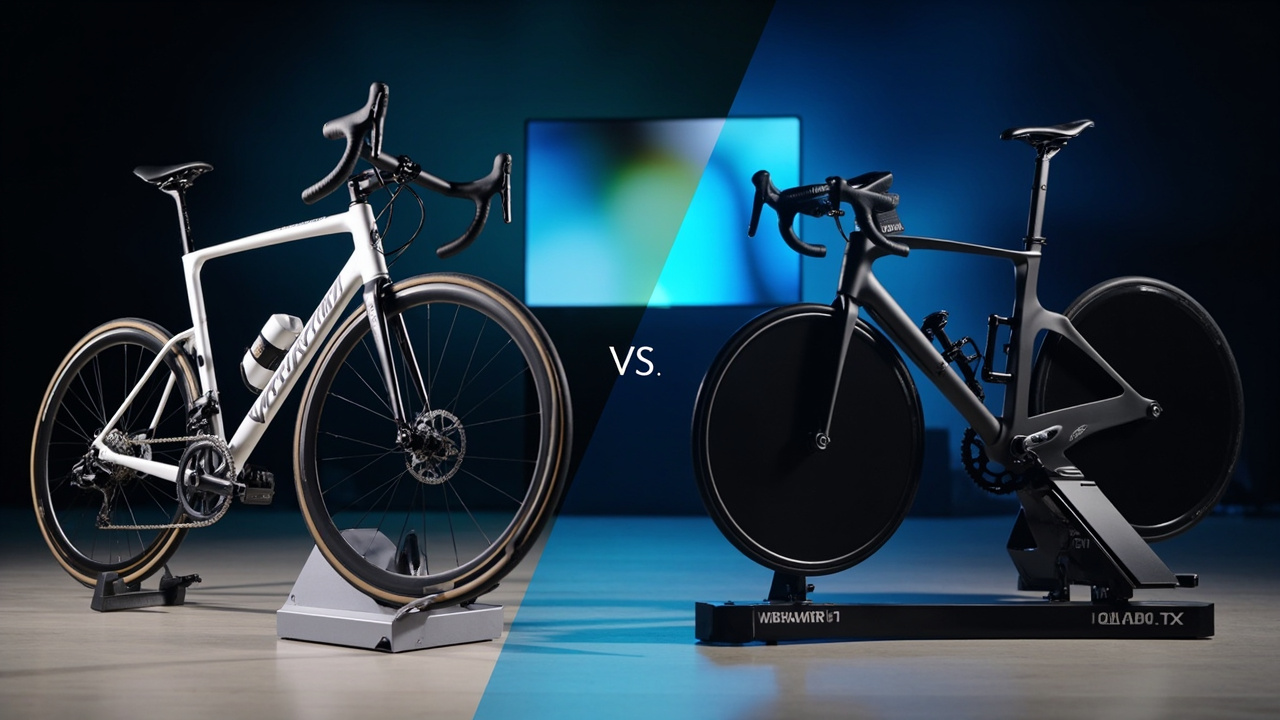
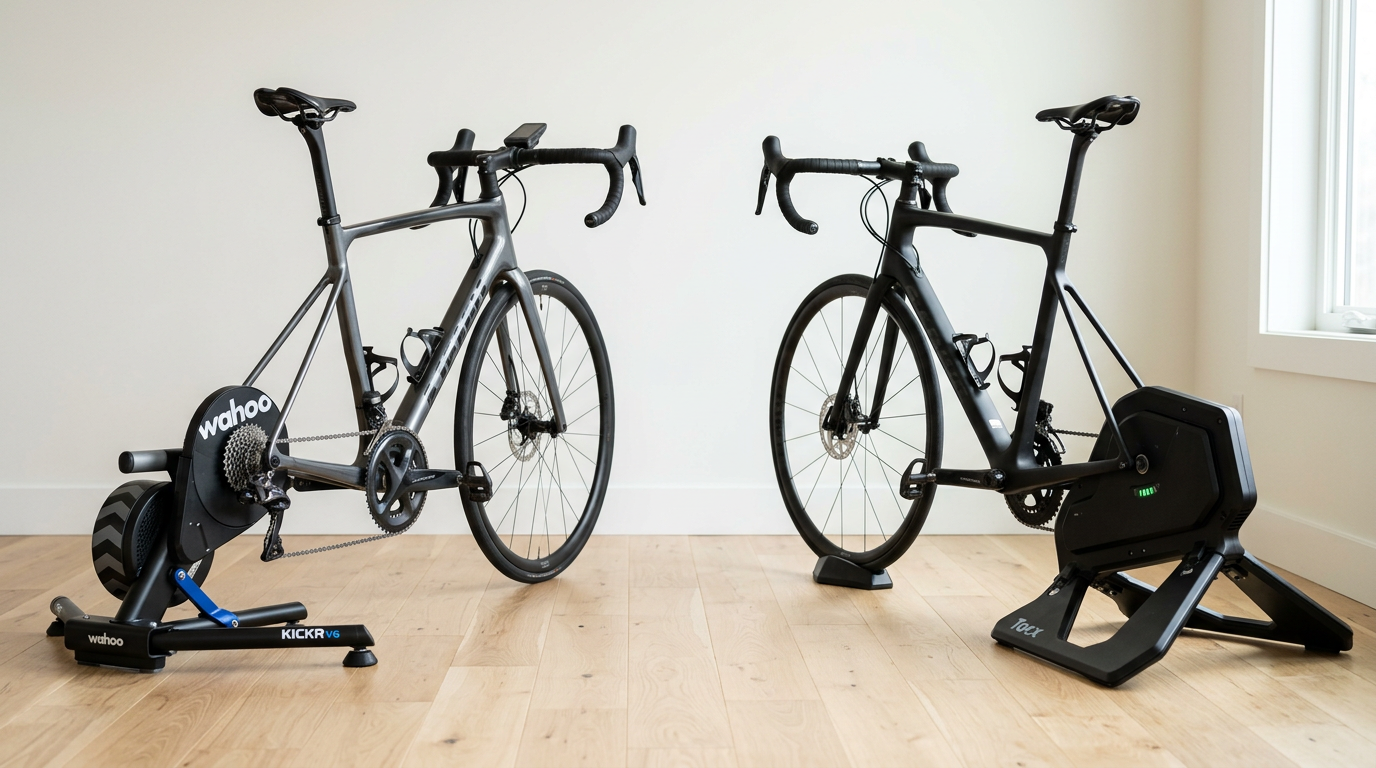
Two flagships dominate the high-end direct-drive category in2026: the Wahoo Kickr V6 at $1,049.99 (Wahoo Fitness) and the Garmin Tacx NEO2T at $1,399.99 MSRP (Zwift Insider verified pricing; still widely sold at $1,199–$1,399). Both are direct-drive. Both are ±1% power accurate. Both simulate gradients and pair with Zwift, TrainerRoad, Rouvy, and the rest.
So what does the extra $350 for the Tacx actually buy you? And what does the Wahoo ecosystem give back in return? The answer isn’t obvious — and it isn’t the same for every rider.
The Verdict First
-
Choose the Wahoo Kickr V6 ($1,049.99) if you want the best dollar-to-performance ratio in the category, you’re already in or planning to enter the Wahoo ecosystem (Kickr Climb, Kickr Headwind, Wahoo SYSTM training app), or you race on Zwift and want WiFi broadcasting for the lowest-latency power data possible. It is the more modular, more upgrade-friendly platform.
-
Choose the Garmin Tacx NEO2T ($1,399.99) if you already use Garmin Connect and Garmin head units (Edge540/840/1040), you want the most realistic road-feel and side-to-side pedal motion at low cadences, or you live in an apartment and need the absolute quietest direct-drive trainer on the market. The built-in virtual flywheel (no physical flywheel mass) is unique to Tacx.
-
Skip both if you ride indoors less than3 hours per week. A $500–$700 mid-range trainer (Wahoo Kickr Core, Tacx Vortex, Elite Suito) will deliver90% of the experience at half the price. The flagship premium only pays off at higher weekly training volumes.
Key Comparison Points
Price vs Real Cost Per Use
Both trainers sit in the four-figure price bracket, so the math needs to account for ownership lifespan (5+ years), not just sticker shock.
| Cost Factor | Wahoo Kickr V6 | Garmin Tacx NEO2T |
|---|---|---|
| MSRP (2026) | $1,049.99 (Wahoo Fitness) | $1,399.99 (Garmin; Zwift Insider verified) |
| Typical sale price | $949–$1,049 | $1,199–$1,299 |
| Cassette included | 11-speed11–28 (Shimano/SRAM compatible) | Not included (sold separately, ~$70–$120) |
| Ecosystem add-ons | Kickr Climb ($499), Kickr Headwind ($249), Kickr Bike ($2,499) | Tacx Rise (smart bike, $3,999) |
| Power accuracy | ±1% | ±1% |
| Warranty | 1 year (frame); extended via registration | 2 years |
| Cassette replacement | Standard, ~$60–$90 | Standard, ~$60–$90 |
| Drivetrain wear (your bike) | Moderate — direct drive, but cassette wears normally | Slightly higher — NEO2T’s stronger motor pulls harder at low cadence |
| App subscription | Wahoo SYSTM ($14.99/mo) optional; Zwift ($14.99/mo) optional | Garmin Connect free; Tacx Training app free; Zwift optional |
| Annual electricity cost | ~$2/yr (idle draw is <5W) | ~$2/yr |
| 5-year cost-per-use (3×/week,1hr) | ~$1.35/session | ~$1.80/session |
The Wahoo wins on pure price-per-use — roughly 45 cents per session cheaper over5 years at typical indoor training volume. But if you already use Garmin Connect and won’t pay for Zwift or Wahoo SYSTM, the total ownership cost gets closer to parity.
A hidden cost: the Tacx NEO2T does not include a cassette. You’ll need to budget an extra $60–$120 for an11-speed Shimano or XDR cassette before your first ride. The Kickr V6 includes a basic11-speed cassette in the box — small detail, but it’s a real difference on day one.
Source: Zwift Insider Smart Trainer Index zwiftinsider.com/tacx-neo-2t-review/; Wahoo Fitness official store wahoofitness.com/devices/indoor-cycling/bike-trainers/kickr-buy.

Build Quality and Durability
| Build Factor | Wahoo Kickr V6 | Garmin Tacx NEO2T |
|---|---|---|
| Weight | 47 lb (21.3 kg) | 47.4 lb (21.5 kg) |
| Dimensions | 760 ×635 ×533 mm | 787 ×642 ×559 mm |
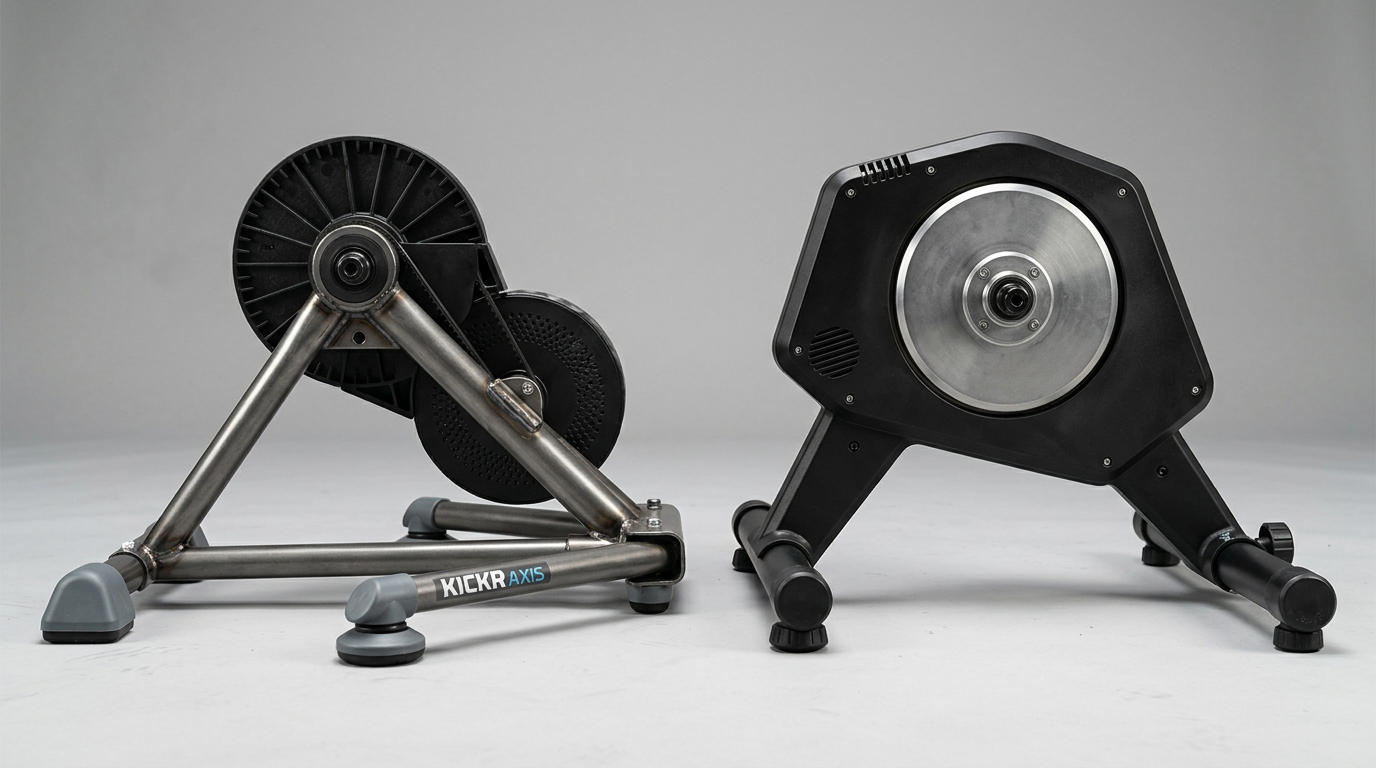
| Flywheel | 16 lb physical flywheel | Virtual flywheel (32 neodymium magnets) |
| Max resistance | 2,200 W | 2,200 W |
| Max simulated gradient | 20% | 25% |
| Side-to-side motion | Yes (AXIS feet, ~5° tilt) | Yes (motor-driven, more pronounced) |
| Cassette compatibility | Standard Shimano/SRAM8–12 speed | Standard Shimano/SRAM/XDR |
| Thru-axle compatibility | 12×142,12×148,12×135 | 12×142,12×148,12×135 |
| Power measurement | Strain gauge | Motor current calibration |
| Reported durability (long-term owner reviews) | 5–8 years typical; belt-driven flywheel | 6–10 years typical; no belt or flywheel to wear |
| Field failure rate (Reddit r/Zwift,2024–2026) | Lower (mature product,6th gen) | Low; rare motor calibration drift |
The Tacx’s virtual flywheel is the most distinctive feature. There’s no physical flywheel to balance, no belt to slip, no bearings to wear. The32 neodymium magnets create resistance through electromagnetic fields only. The trade-off: at very low cadences (under50 rpm), some riders report the resistance feels less natural — Tacx themselves updated the motor in2024 specifically to address this.
The Wahoo’s physical16 lb flywheel gives a more predictable inertia feel — closer to riding outdoors, especially during standing efforts and sprints. But the belt and bearings are consumable parts that may need service after5+ years of heavy use.
The Tacx’s steeper 25% gradient simulation is a real advantage if you live in a flat region and want to train for mountainous events (Alpe du Zwift, Ventoux, Maratona). The Kickr V6 caps at20%, which is still very steep but slightly less punishing on simulated climbs.
Both are built like tanks. There is no meaningful “this one breaks more” signal from either community — both are reliable over5+ years at3–5 sessions per week. The Tacx gets a slight edge on long-term durability because of fewer moving parts.
Feature Breakdown
Connectivity: Both trainers support ANT+, ANT+ FE-C, and Bluetooth FTMS — the standard protocols for Zwift, TrainerRoad, Rouvy, and the rest. The Wahoo adds WiFi as a unique feature (since Gen6 in2022). WiFi enables the “Race Mode” broadcasting at up to10 Hz refresh rate, which is meaningful for competitive Zwift racers: lower-latency power data at critical race moments can be the difference between winning and losing a sprint finish.
Power accuracy: Both claim ±1%. Independent testing (DC Rainmaker, Zwift Insider, GPLAMA) shows both deliver this in real-world conditions. There’s no practical accuracy difference.
Ride feel: This is where opinions diverge sharply.
- The Tacx NEO2T has the most realistic descent simulation in the category — when Zwift tells the trainer you’re going downhill, the NEO2T actually drives the motor to push the cranks forward, simulating a freewheel descent. The Kickr V6 can simulate downhills but doesn’t actively push the rider. If you ride virtual routes with real elevation changes, this is a subtle but real advantage.
- The Wahoo Kickr V6 has a heavier physical flywheel, which gives more stable inertia at standing efforts and during high-cadence sprints. Sprinters tend to prefer the Kickr. Endurance riders on long climbs tend to prefer the NEO2T.
Ecosystem lock-in: This is the biggest hidden cost.
- Wahoo ecosystem: Kickr V6 → Kickr Climb (gradient desk that physically tilts your bike up to20%) → Kickr Headwind (smart fan that adjusts to your heart rate or power) → Wahoo SYSTM training app. All work seamlessly together. If you ever want a smart bike, the Wahoo Kickr Bike ($2,499) is the upgrade path.
- Garmin/Tacx ecosystem: NEO2T → Tacx Rise smart bike ($3,999) → Garmin Connect data sync → Garmin Edge cycling computer integration. If you already own Garmin head units, the NEO2T feeds power data directly to your Edge device with zero friction.
App ecosystem:
- Wahoo SYSTM ($14.99/mo, optional): structured training plans, video coaching, integrates with the Kickr lineup.
- Tacx Training (free, with paid films):300+ streamable real-route videos, primarily for solo indoor riding rather than structured training.
- Both work with Zwift ($14.99/mo) and TrainerRoad ($19.95/mo) — these are the apps most serious indoor cyclists actually use.
| Feature | Wahoo Kickr V6 | Garmin Tacx NEO2T |
|---|---|---|
| Connectivity | ANT+ FE-C, Bluetooth FTMS, WiFi | ANT+ FE-C, Bluetooth FTMS |
| Data refresh rate (max) | 10 Hz (WiFi, Race Mode) | 1–4 Hz typical |
| Power accuracy | ±1% | ±1% |
| Downhill simulation | Passive resistance only | Active motor-driven push |
| Max gradient simulation | 20% | 25% |
| Side-to-side motion | 5° (AXIS feet) | Variable, motor-driven |
| Physical flywheel | 16 lb | None (virtual, magnetic) |
| Ecosystem expansion | Kickr Climb, Headwind, Bike | Tacx Rise smart bike |
| Third-party app support | Zwift, TrainerRoad, Rouvy, SYSTM | Zwift, TrainerRoad, Rouvy, Tacx Training |
| Cassette included | Yes (11-speed11–28) | No |

Pros and Cons
Wahoo Kickr V6 ($1,049.99)
Pros
- $350 cheaper at MSRP — meaningful upfront savings for the same ±1% accuracy
- WiFi Race Mode (10 Hz data broadcasting) — best-in-class for competitive Zwift racing
- Cassette included in the box — usable on day one without an extra purchase -6th-generation product — refined design with very low field-failure rate
- Broader ecosystem: Kickr Climb + Kickr Headwind + Wahoo SYSTM training app create a layered indoor experience
- AXIS feet give a stable, low-vibration platform — quieter at high cadence than older models
Cons
- Physical16 lb flywheel is a long-term consumable — belt and bearings may need service after5+ years
- Capped at20% gradient simulation (Tacx goes to25%)
- No active downhill simulation — when Zwift sends you downhill, the trainer just reduces resistance rather than pushing
- App ecosystem is younger than Tacx’s; SYSTM is good but not as polished as some competitors
- Heavier feeling at low cadences (under60 rpm) compared to Tacx’s virtual flywheel
Garmin Tacx NEO2T ($1,399.99)
Pros
- Virtual flywheel with32 neodymium magnets — no belt, no bearings, fewer moving parts to wear out
- Active downhill simulation — motor pushes the cranks, creating a more realistic descent feel -25% max gradient — useful for serious mountain training and Alpe du Zwift preparation
- Native Garmin Connect integration — zero-friction data sync if you own a Garmin Edge cycling computer
- Slightly quieter at idle and low cadences than the Kickr V6 (multiple Reddit r/Zwift owner reports) -2-year warranty (vs1 year on Wahoo unless registered for extension)
Cons
- $350 more expensive at MSRP — meaningful upfront cost gap
- Cassette NOT included — add $60–$120 to your first purchase
- No WiFi connectivity — caps at Bluetooth/ANT+ data rates, which matters for top-tier Zwift racers
- Heavier and bulkier footprint than the Kickr V6 (787 ×642 ×559 mm vs760 ×635 ×533 mm)
- Some riders report motor calibration drift after4+ years (rare but documented on Garmin forums)
- Ecosystem is narrower — the Tacx Rise smart bike is $3,999, well above the Wahoo Kickr Bike at $2,499
Best For / Skip If
Best For
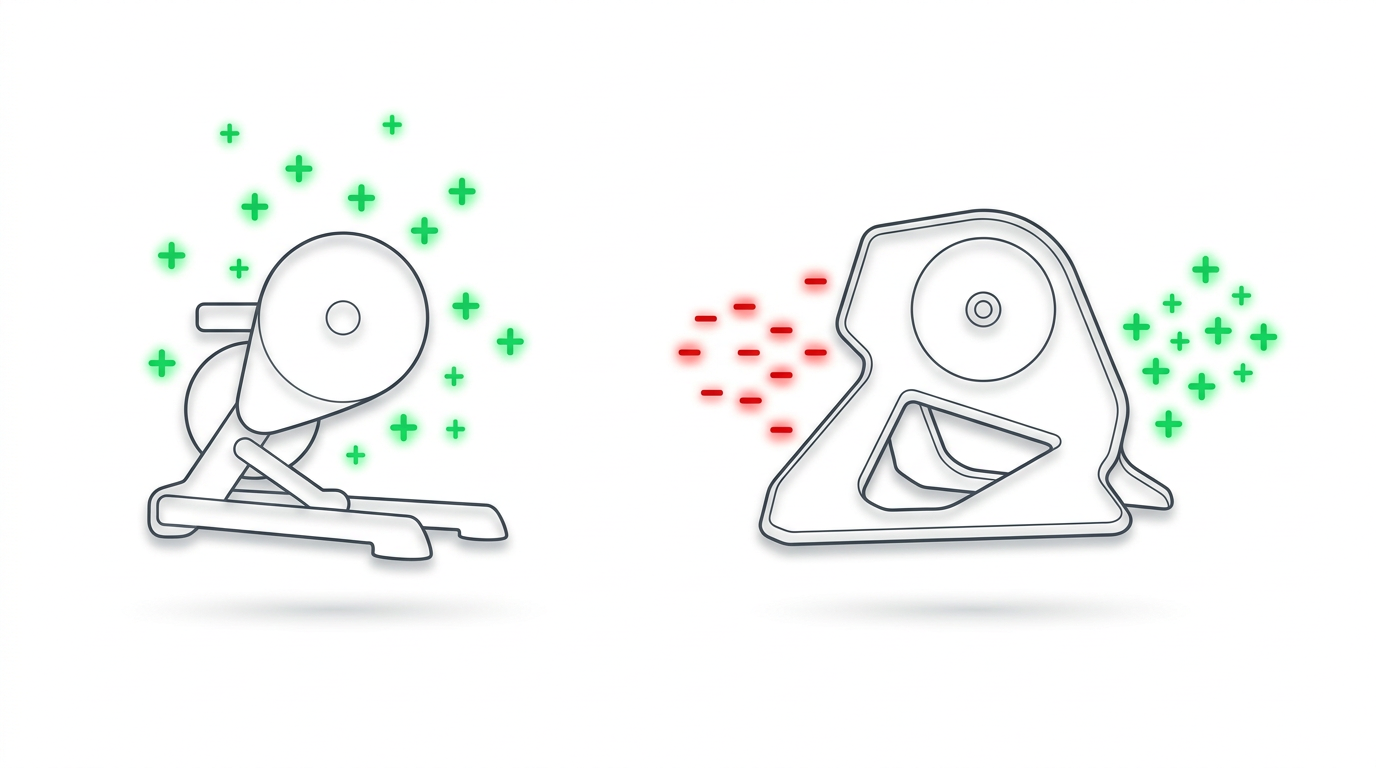
- Buy the Wahoo Kickr V6 if you want the best dollar-to-performance ratio, you plan to race on Zwift and need WiFi Race Mode, you’re building a layered Wahoo ecosystem (Climb + Headwind + SYSTM), or you’re new to indoor training and want the simpler out-of-box experience (cassette included, app pairing is well-documented).
- Buy the Garmin Tacx NEO2T if you already use Garmin Connect and Garmin Edge cycling computers (the data integration is genuinely seamless), you do long mountain-route rides on Zwift and want the25% gradient + active downhill simulation, or you live in an apartment and need the quietest direct-drive trainer money can buy.
Skip If
- You ride indoors less than3 hours per week. A $500–$700 mid-range trainer (Wahoo Kickr Core at $699, Elite Suito-T at $599) will deliver90% of the training experience. The flagship premium only pays off at4+ hours per week.
- You have a strict $700 budget. Look at the Kickr Core or the Tacx Flux S instead. Both are reliable but lack the high-end features of the flagships.
- You’re buying a smart trainer for the first time and don’t yet know your training pattern. Start with a mid-range trainer and upgrade after12–18 months once you know whether you ride indoors enough to justify the premium.
- You already own a Garmin smart trainer (NEO2, NEO2T). Upgrading from NEO2 to NEO2T is incremental; the better upgrade path is the Tacx Rise smart bike if you want a meaningful jump.
Bottom Line
The Wahoo Kickr V6 ($1,049.99) is the smarter buy for most riders. The $350 upfront savings, included cassette, WiFi Race Mode, and broader ecosystem give you more total value per dollar — especially if you race on Zwift or plan to expand your indoor setup with Kickr Climb and Headwind.
The Garmin Tacx NEO2T ($1,399.99) earns its premium only if you specifically need the active downhill simulation, the steeper25% gradient ceiling, or you already use Garmin Connect and want zero-friction data flow. The virtual flywheel is genuinely innovative, but for most indoor cyclists, the Wahoo’s physical flywheel gives a more predictable feel across the full cadence range.
The real math: at3 indoor sessions per week over5 years, the Wahoo costs you roughly $1.35 per session versus $1.80 for the Tacx. That’s a $280 difference over5 years — bigger than most cyclists realize. Buy based on your actual training volume and ecosystem commitments, not the brand prestige. Buy smart, get more value.