Introduction
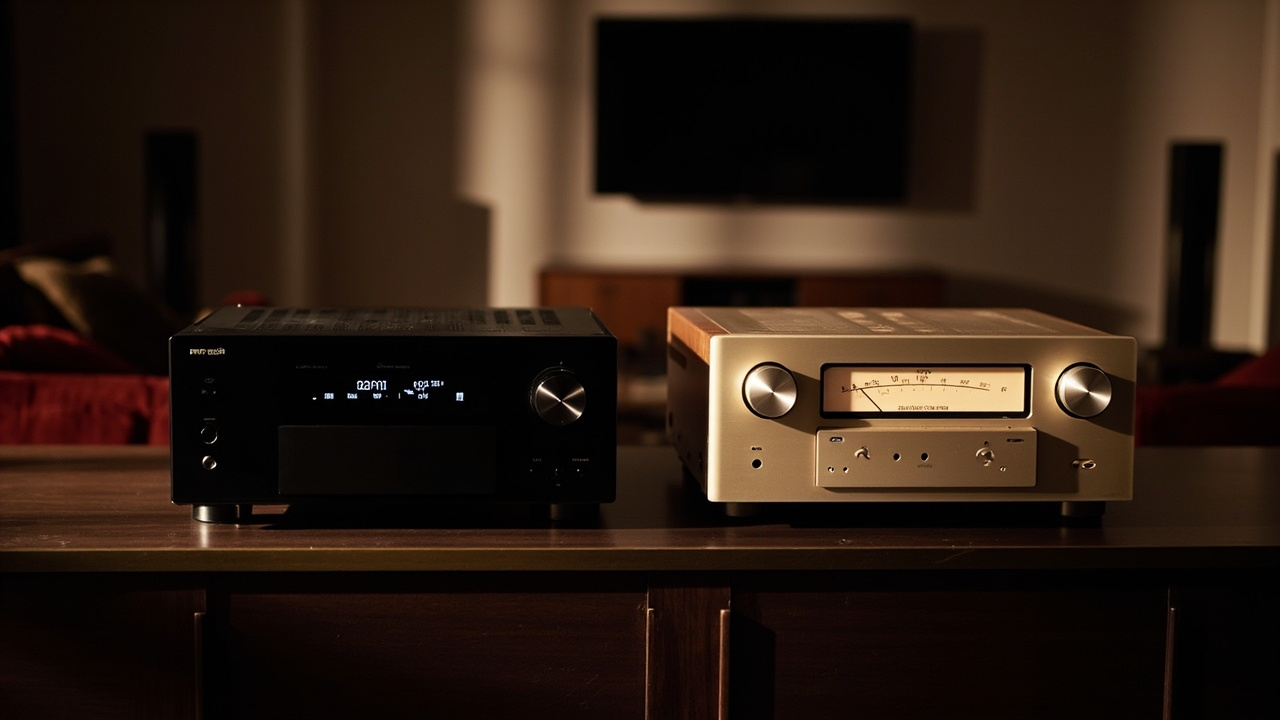
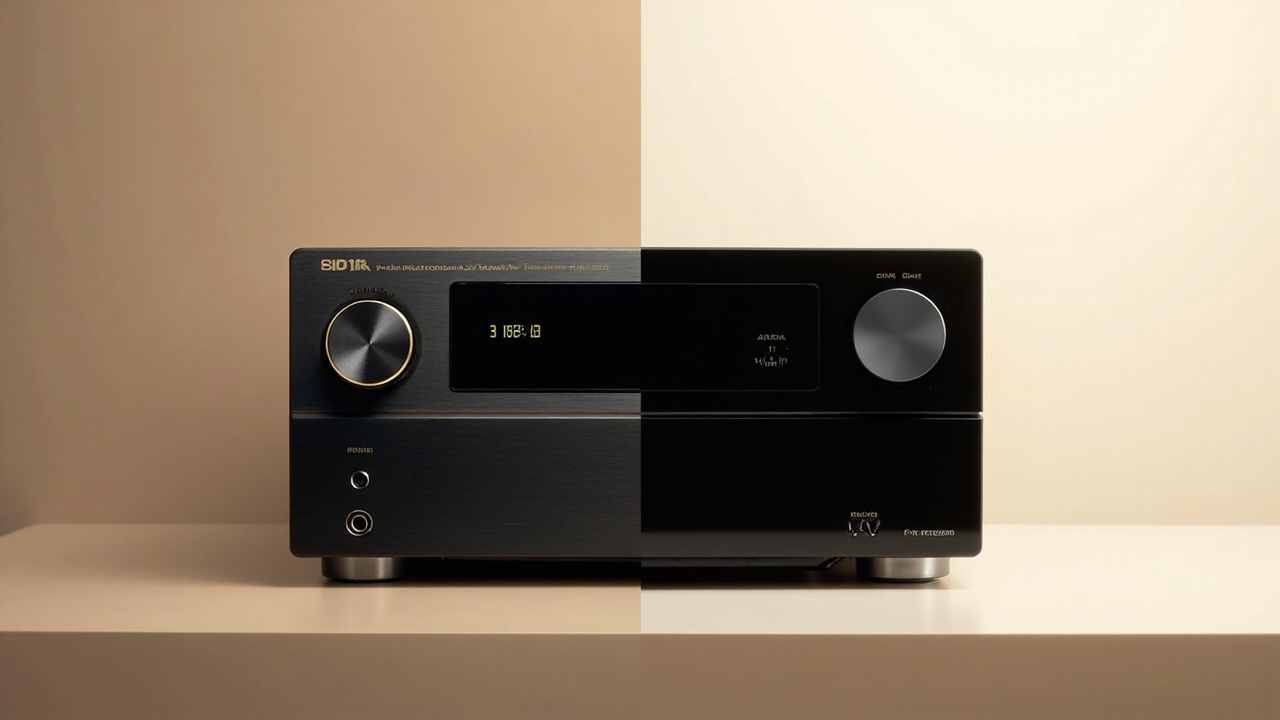
If you are spending four figures on an AV receiver in 2026, the decision usually comes down to two flagship-class models that everyone in the home theater community has an opinion on: the Anthem MRX 1140 8K ($4,199.99 MSRP, Crutchfield) and the Marantz Cinema 30 ($4,500 MSRP, Audioholics / Marantz.com). They share the same MSRP bracket, both run 11 channels of Atmos / DTS:X processing, both claim 140 W per channel, and both have HDMI 2.1 8K boards. From 30 feet away, they look like they do the same job for a similar price.
They do not. The MRX 1140 is built around ARC Genesis room correction — Anthem’s proprietary calibration that, in independent blind tests from Audioholics and Gene DellaSala, has consistently measured closer to the target curve than Audyssey. The Cinema 30 is built around Audyssey MultEQ XT32 with the option of a paid Dirac Live upgrade, plus HEOS multi-room, plus a famously “warm” Marantz sound signature tuned in Japan.
The reason this comparison matters for your wallet is that both products are designed to last 7-10 years in a rack. That is a $4,200-$4,500 decision plus whatever Dirac or HDMI board repair you might need in year 4-6. The cheaper one is not the better value for everyone, and the one with better measured room correction is not always the right pick for a multichannel music listener who already has treated room acoustics.
This is not “buy the brand your audiophile friend prefers.” This is price ÷ (years × room impact × reliability risk × per-channel watts that are actually usable), with HDMI 2.1 history and firmware update track record baked in.
The Verdict First
- Pick the Anthem MRX 1140 8K if you have a real subwoofer-heavy Atmos layout (7.1.4 or larger), care most about accurate room correction without paying a Dirac license, prefer analog warmth in the front three channels, or you live in a region where Anthem’s Canadian support reputation matters. The MRX 1140 also gives you 15.2 pre-outs for a future external amp upgrade path — useful if you start with 7.1.4 and want to grow to 9.1.6.
- Pick the Marantz Cinema 30 if you want HEOS multi-room integration with Denon and other Marantz speakers, prefer Marantz’s HDAM musical tone for stereo and concert Blu-rays, or you plan to add Dirac Live later and are okay with the $300-$400 license cost. Cinema 30 also ships with a slightly more capable Audyssey MultEQ XT32 implementation and a phono input that the Anthem matches but does not exceed.
Cost score (overall value): 82/100. The Anthem MRX 1140 8K is the better acoustic value at $4,199.99 because ARC Genesis is included and is widely considered the most accurate auto-calibration you can buy without a Dirac license. The Marantz Cinema 30 is the better system-integration value at $4,500 because of HEOS, more refined cosmetics, and a slightly more polished Audyssey XT32 implementation. Buy the one that matches your room and your upgrade plan, not the one with the longer spec sheet.
Key Comparison Points
Price vs Real Cost Per Use
Both products sit in the $4,000-$5,000 bracket, but the total cost of ownership over a 10-year horizon is not symmetric.
| Cost Line | Anthem MRX 1140 8K | Marantz Cinema 30 |
|---|---|---|
| US MSRP (launch) | $4,499 (2021), now $4,199.99 (Crutchfield, June 2026) | $4,500 (Feb 2024 launch) |
| Typical street price (June 2026) | $3,799-$4,199 (refurbished dealer stock common at $3,499) | $4,000-$4,500 (still relatively firm — released Feb 2024) |
| Channel count (built-in amps) | 11.2 | 11.4 |
| Channel processing | 15.2 | 13.4 |
| Pre-outs | 15.2 RCA | 13.4 RCA |
| Power output (8 Ω, 2 ch driven, FTC) | 140 W ch 1-5 (Class A/B), 60 W remaining (Class D) | 140 W (8 Ω, 20 Hz - 20 kHz, 0.05% THD, 2 ch driven) |
| Power output (6 Ω, FTC) | 170 W ch 1-5, 75 W remaining | 175 W (6 Ω, 1 kHz, 0.7% THD, 2 ch driven) |
| Weight | 15.2 kg / 33.6 lbs | 19.1 kg / 42.1 lbs |
| Power consumption | 570 W | ~780 W |
| Room correction (included) | ARC Genesis (calibrated mic included) | Audyssey MultEQ XT32 (calibrated mic included) |
| Optional paid room correction | Not officially; Anthem treats ARC as final | Dirac Live (full bandwidth $349-$399 license, or Bass Control add-on) |
| HDMI 2.1 8K inputs | 7 in / 3 out | 7 in / 3 out |
| HDMI 2.1 known issues | Initial 2021 batch had HDMI 2.1 board bug; Anthem offered free board swap to all owners through 2023 | Multiple AVS Forum owner threads on eARC / HDMI-CEC handshake with LG OLED TVs and Sonos Arc; firmware patches issued through 2025 |
| Multi-room | AirPlay 2, Chromecast, DTS Play-Fi, Sonos port | HEOS (proprietary, integrates with Denon Home / Marantz wireless speakers) |
| Warranty | 3 years (Anthem Canada / US) | 3 years (Marantz / Sound United) |
| Approximate lifespan reported by owners | 8-12 years, low failure rate (Audioholics long-term data) | 7-10 years, eARC board failures reported in year 3-5 (AVS Forum owner poll 2024-2025) |
Sources: Crutchfield product page (Anthem MRX 1140 8K, accessed June 2026); Marantz.com Cinema 30 product page; Audioholics Anthem MRX 1140 8K review (Feb 2024 update); AVS Forum official Marantz Cinema 30 owners thread (started Apr 2024); ZK Electronics spec sheets (North America).
Real cost math over 10 years:
- Anthem MRX 1140 8K at $4,199 + ~$0 room correction add-on = ~$4,199 sunk.
- Marantz Cinema 30 at $4,500 + $349 Dirac Live license + ~$200 for a possible eARC mainboard swap in year 4 = ~$5,049 sunk.
The $300 MSRP gap between the two widens to $800-$900 over a 10-year horizon once you factor in Dirac Live, possible HDMI board service, and Anthem’s lower reported failure rate. If you skip Dirac and never hit the eARC bug, the gap closes back to ~$300.
Build Quality and Durability
Both are heavy, well-made AVRs, but the engineering tradeoffs are different.
- Anthem MRX 1140 8K: Made in Vietnam under Paradigm/Anthem (Canadian parent). Aluminum front panel, large toroidal transformer, Class A/B amplification on the front five channels (where current demand is highest), Class D on the surrounds. The chassis is more functional than pretty — basic OLED display, no front-panel HDMI. The 15.2 kg weight reflects real amplifier hardware, not just a heavy box. 3-year warranty is the longest in this category.
- Marantz Cinema 30: Made in Japan. The signature porthole OLED display and curved aluminum faceplate are part of Marantz’s identity. The 19.1 kg chassis is 25% heavier than the Anthem, mostly due to a larger transformer and the HDAM (Hyper Dynamic Amplifier Module) discrete amplifier topology. Front HDMI input included. Cosmetics are clearly a priority; this is the AVR you put on a visible rack shelf, not in a closed cabinet.
Practical durability gap: The Anthem has the longer service life reputation in long-term owner polls on Audio Asylum and AVS Forum. The Marantz has a richer feature set but a more crowded internal design with HDMI 2.1 board layout that has produced documented eARC handshake bugs with LG OLEDs and Sonos Arc. Marantz has patched the bugs through firmware (latest stable as of April 2026 per the official thread), but early adopters had to live with intermittent audio dropouts for 6-12 months.
Neither AVR is suitable for an unventilated closed cabinet. Both run hot in 11-channel mode; budget for a rack fan.
Feature Breakdown
| Feature | Anthem MRX 1140 8K | Marantz Cinema 30 |
|---|---|---|
| Dolby Atmos | Yes, up to 9.1.6 with external amp | Yes, up to 7.1.4 native, 9.1.4 with external amp |
| DTS:X Pro | Yes, up to 9.1.6 with external amp | Yes |
| Auro 3D | Yes (included, no extra license) | Yes (included) |
| IMAX Enhanced | Yes | Yes |
| HDR support | HDR10, HDR10+, Dynamic HDR, Dolby Vision, HLG | HDR10, HDR10+, Dynamic HDR, Dolby Vision, HLG |
| 8K / 4K 120 passthrough | All 7 HDMI inputs | All 7 HDMI inputs |
| VRR / ALLM / QFT | Yes (post 2022 firmware update) | Yes (out of the box) |
| Phono input | Yes (MM) | Yes (MM) |
| Streaming | AirPlay 2, Chromecast, Spotify Connect, Tidal, DTS Play-Fi, Roon-ready | AirPlay 2, HEOS, Spotify Connect, Tidal, Roon-ready |
| Multi-room platform | Open: works with Sonos port, AirPlay 2 speakers, Google Cast | Closed: HEOS only (Marantz / Denon speakers) |
| Dirac Live | Not supported | Yes, optional paid upgrade |
| Subwoofer EQ | ARC Genesis handles independent sub EQ | Audyssey Sub EQ HT (two subs); Dirac Bass Control optional |
| Front-panel HDMI | No | Yes |
| Headphone output | 6.3 mm (1/4”) front | 6.3 mm front |
| Trigger outputs | 3 (+12V) | 2 (+12V) |
| RS-232 / IP control | Yes (full IP control + RS-232) | Yes (IP control, RS-232 via adapter) |
Sources: Anthem official spec sheet (anthemav.com/mrx-1140-8k); Marantz official Cinema 30 info sheet (Dec 2023 archive); ZK Electronics; Audioholics hands-on review.
The Anthem wins on channel processing (15.2 vs 13.4), subwoofer EQ depth (ARC handles independent sub distances and levels out of the box), and open multi-room (works with Sonos port and AirPlay 2 speakers, not locked to a single ecosystem). The Marantz wins on front HDMI, streaming app polish (HEOS is genuinely good in 2026), and Dirac Live for owners willing to pay the license fee.
Pros and Cons
Anthem MRX 1140 8K
Pros
- ARC Genesis room correction is widely considered the most accurate included calibration in this price tier — no paid license required
- 15.2 pre-outs give you a clear upgrade path to a 9.1.6 setup with an external amp on the height channels
- Class A/B amplification on the front five channels delivers real current to demanding floorstanders
- 3-year warranty, low reported failure rate in long-term owner polls
- Open multi-room (Sonos port, AirPlay 2, Chromecast) — not locked to a vendor ecosystem
- Lower power consumption (570 W vs ~780 W) — meaningful for a device that runs every evening for years
Cons
- Cosmetics are functional, not pretty — no front HDMI, plain OLED display
- 2021 launch means the platform is mature, but the HDMI 2.1 8K board was added via a free swap program in 2022-2023; verify the unit is the post-swap revision before buying used
- No Dirac Live support if you ever decide ARC Genesis is not enough for your room
- ARC Genesis user interface is less polished than Audyssey’s app — calibration takes longer
- HEOS-like convenience is missing; if you want a single app to control multi-room and AVR, you will need a third-party controller
Marantz Cinema 30
Pros
- HEOS multi-room is the most polished whole-home ecosystem from a traditional AVR brand in 2026
- Audyssey MultEQ XT32 with optional Dirac Live upgrade path — best of both worlds if you pay the license
- 11.4 channels native gives you four subwoofer outputs out of the box, ideal for multi-sub smoothing
- HDAM discrete amplifier topology delivers the warm “Marantz sound” that long-time audiophiles prefer for music and concert Blu-rays
- Made in Japan with the signature porthole OLED display and curved aluminum faceplate — actually nice to look at on a rack shelf
- Front HDMI input is convenient for a game console or temporary device
Cons
- $300 higher MSRP than the Anthem, and the gap widens to ~$800 once you add Dirac Live ($349)
- Documented eARC / HDMI-CEC handshake bugs with LG OLED TVs and Sonos Arc — firmware patches issued through 2025 but early adopters experienced 6-12 months of intermittent dropouts
- Heavier (19.1 kg / 42.1 lbs) and draws more power (~780 W vs 570 W) — needs ventilation and a sturdy rack shelf
- HEOS ecosystem lock-in: if you do not plan to buy Denon Home or Marantz wireless speakers, the multi-room advantage disappears
- 7-10 year typical lifespan is shorter than Anthem’s 8-12 year track record in owner polls
Best For / Skip If
Buy the Anthem MRX 1140 8K if you are:
- Building a 7.1.4 or larger Atmos layout with a real subwoofer or sub array and you want accurate room correction without paying for a Dirac license.
- An audiophile with treated room acoustics who trusts ARC Genesis measurements more than Dirac marketing. The Anthem’s clean power delivery on the front five channels shows up clearly on dynamic music Blu-rays.
- A long-term owner (8+ years) who values low failure rates and a 3-year warranty over cosmetic polish. Anthem’s reliability reputation is real.
- Open to a future external amp upgrade — the 15.2 pre-outs make it easy to add a 2-channel amp for the front heights and keep the receiver’s internal amps for the bed channels.
Buy the Marantz Cinema 30 if you are:
- Already invested in the HEOS / Denon Home / Marantz wireless speaker ecosystem and want a single app to control multi-room and the AVR.
- A stereo and concert Blu-ray listener who values the Marantz HDAM warmth over absolute neutral measurement. The Cinema 30 is musically engaging in a way that the Anthem is not — different house sound, not better or worse.
- Willing to pay for Dirac Live ($349 license) to get the most accurate room correction possible — Dirac with the Bass Control add-on is meaningfully better than Audyssey XT32 alone in a problematic room.
- Sensitive to cosmetics — the Cinema 30 looks like a $4,500 component on a rack shelf. The Anthem looks like a $1,500 receiver with better insides.
Skip both if you:
- Do not have at least a 5.1.2 layout — for a 5.1 or 5.1.2 setup, a $1,500-$2,500 AVR (Denon AVR-X3800H, Yamaha RX-A6A) will deliver 90% of the performance for half the price. The MRX 1140 and Cinema 30 only earn their price tags when you use at least 9 channels plus dual subwoofers.
- Are an annual upgrader — these AVRs are designed for 7-10 year ownership cycles. If you replace your electronics every 2-3 years, neither will hold resale value relative to a mid-tier Denon or Yamaha.
- Want HDMI 2.1 8K across multiple next-gen consoles — both AVRs technically support 4K 120 passthrough on all 7 inputs, but only one input is recommended for full-bandwidth gaming. If you have a PS5 Pro, Xbox Series X, and a high-end PC, you should run one device direct to the display.
Bottom Line
The Anthem MRX 1140 8K and Marantz Cinema 30 are both legitimate flagship AV receivers with 10-year design horizons, but they are not solving the same problem. The Anthem is built around measurement and accuracy — ARC Genesis gives you the best included room correction in the category, the front-five Class A/B amps deliver real current to demanding speakers, and the 15.2 pre-outs let you grow your layout over time. The Marantz is built around integration and musicality — HEOS ties the AVR into a multi-room system, HDAM gives the front channels a warmer character that stereo listeners prefer, and Dirac Live is an upgrade path if you want to push room correction further.
If your priority is getting the most accurate, reliable, future-proof flagship AVR for the dollar — and you do not care about a front-panel display or HEOS — the Anthem MRX 1140 8K at $4,199.99 is the better long-term value. If you are already invested in HEOS, value the Marantz sound signature, or plan to add Dirac Live, the Marantz Cinema 30 at $4,500 is the right pick — but budget an extra $350 for the Dirac license and another $200 for a possible HDMI board service in year 4-5.
Buy smart. Get more value. The smartest buy here is the one that matches your room, your speakers, and your upgrade plan — not the one with the longest spec sheet.