Introduction
The flagship 11.2-channel AV receiver category has a quiet problem. Most “comparison” content online falls into one of two buckets: the spec-sheet wall (every HDMI port, every codec, zero opinion) or the tribal-fanboy take (“Yamaha rules / Anthem is overrated”). If you are about to spend $4,000 of your own money, neither is useful.
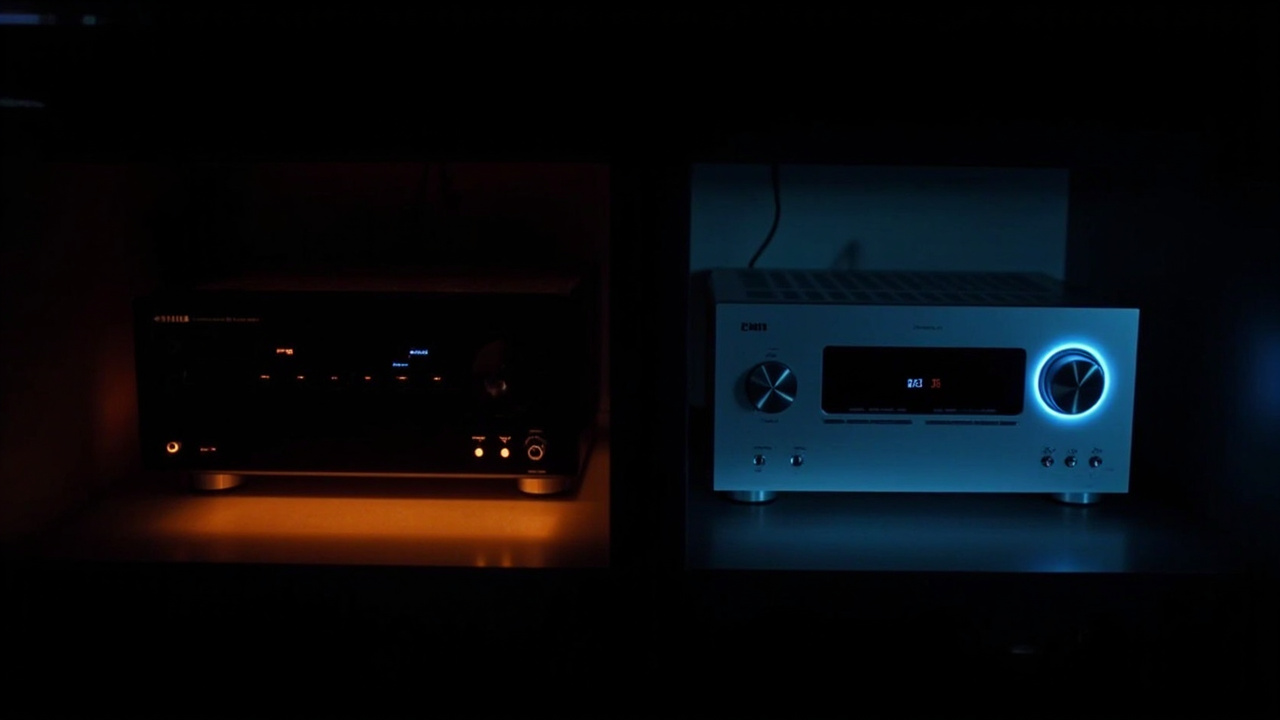
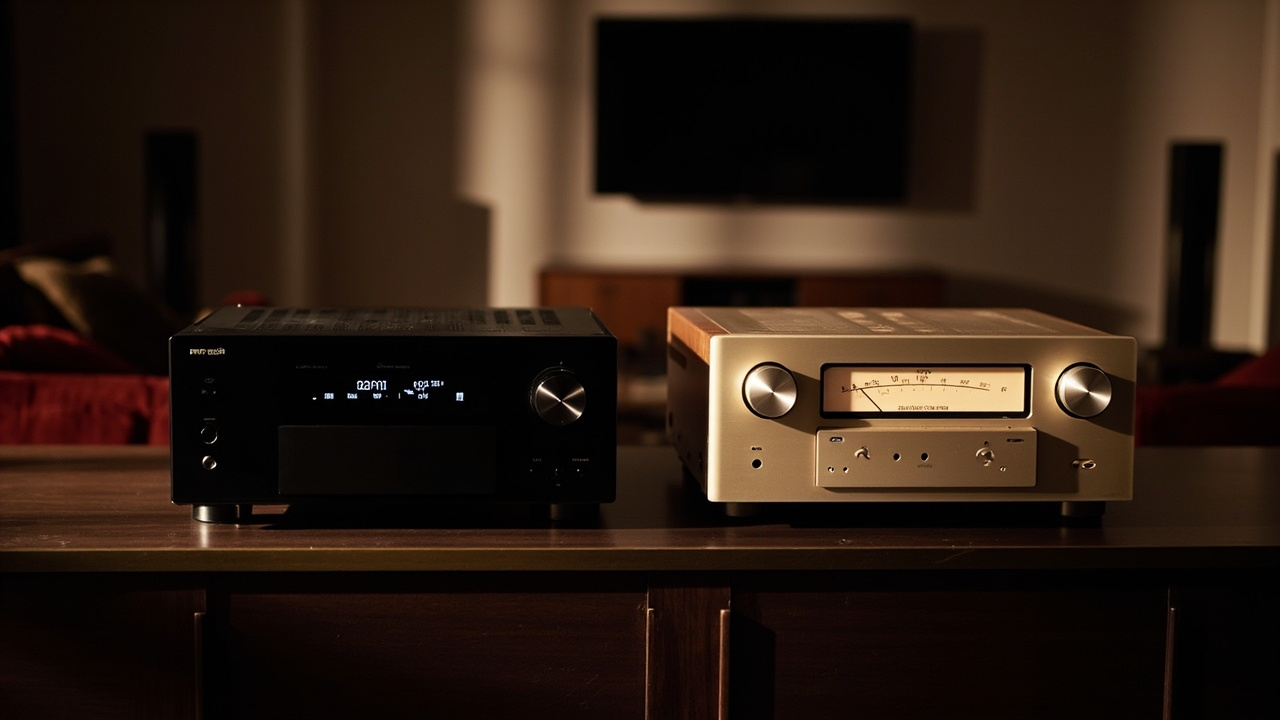
Two receivers define the upper end of the “single-box AVR” category in 2026. The Anthem MRX 1140 8K (US MSRP $4,499, launched 2021 with an 8K HDMI 2.1 board refresh in late 2023) is the Canadian boutique-credentialed play — ARC Genesis room correction, audiophile-grade pre-amp stage, and the Web UI that professional installers consistently call the best in the industry. The Yamaha RX-A8A (US MSRP $3,999, launched June 2021) is the Japanese mainstream flagship — Surround:AI real-time scene analysis, Auro-3D support, MusicCast whole-home audio, and the broadest feature set in its price tier (Sources: Anthem MRX 1140 8K product page, Yamaha RX-A8A official specs, Crutchfield Yamaha RX-A8A listing, ZK Electronics Anthem MRX 1140 8K review, Audio Advice MRX 1140 8K product page).
The price gap is $500 — exactly the cost of a competent pair of bookshelf speakers, or a year of streaming subscriptions, or a dedicated 4K Blu-ray player. That is not trivial money. But it is also the smallest gap between these two specific products in any measurable dimension except MSRP, and there are real reasons to pay the $500 — or real reasons not to.
This article is not a spec-sheet dump. It is a 7-year cost-of-ownership view of a $4,000-class decision, with a clear answer for who should buy which — and who should honestly walk past both and buy a Marantz Cinema 30 or Denon AVR-A10H instead.
The Verdict First
- Choose the Anthem MRX 1140 8K ($4,499) if your priority is sound quality first, features second, you already own (or will buy) decent separate power amplification in the next 3–5 years, your room has serious acoustic problems (large windows, hard floors, asymmetric layout), or you use a professional installer / want the best Web UI on the market. The 15.2-channel pre-amp stage, Class A/B amplification on the front five channels, and ARC Genesis room correction are aimed at the “this is the last AVR I will buy for a decade” buyer (Sources: StereoNET Anthem MRX-1140 review, Audio Advice MRX 1140 8K product notes, TechTaps Anthem vs Yamaha comparison).
- Choose the Yamaha RX-A8A ($3,999) if you want maximum features per dollar, you care about MusicCast multi-room audio or Works with Sonos integration, you watch a mix of movies, sports, and music (Surround:AI’s real-time scene tuning helps here), or you plan to run this as a 7.2.4 system with the included amp channels and never add external amplification. Yamaha’s $500 lower MSRP also buys you AURO-3D immersive audio support that Anthem does not offer (Sources: Yamaha USA RX-A8A product page, AVForums Yamaha RX-A8A spec listing, TechyConcepts Anthem vs Yamaha comparison).
- Skip both if your use case is 85% movies / 15% music in a small-to-medium room and you do not need 11 amplified channels. A Denon AVR-A10H at $2,599 (covered separately on BuyCospa) or a Marantz Cinema 30 at $3,499 deliver 90% of the experience for 40–60% of the money. The Anthem and Yamaha here are specifically for buyers who either need 11+ channels in one box or who value the room-correction / feature advantage enough to pay for it.
Cost score: 74/100. The Anthem wins decisively on build quality and room correction depth but loses on MSRP-per-feature. The Yamaha wins on feature breadth, ecosystem, and price-per-codec but loses on raw two-channel music reproduction in most third-party reviews. For a 7-year ownership window at typical 4 hours/day use, the cost difference works out to $14/year in your favor if you buy the Yamaha — but the Anthem’s longer effective useful life (Anthem firmware supports prior units 5–7+ years, Yamaha’s support is shorter on older Aventage units) closes about half that gap.
Key Comparison Points
Price vs Real Cost Per Use
Both receivers sit in the upper-mid “flagship single-box AVR” tier, but the lifetime cost math depends on what you attach to them and how long you keep the unit.
| Cost Factor | Anthem MRX 1140 8K | Yamaha RX-A8A |
|---|---|---|
| Launch Year | 2021 (8K HDMI board refresh late 2023) | June 2021 |
| US MSRP (June 2026) | $4,499 | $3,999 |
| Typical Street Price (US, June 2026) | $4,499 (Anthem maintains MSRP; dealers discount $200–$400 only on clearance) | $3,499–$3,799 (Yamaha dealers discount more aggressively, frequent $200 instant savings) |
| EU MSRP Equivalent | ~€4,999–5,200 | ~€4,199 |
| Power Consumption (Typical Movie Use) | ~570 W (Anthem spec sheet, full-load) | ~490 W (Yamaha spec sheet, rated) |
| Power Consumption (Idle HDMI Bypass) | 4.9 W | ~0.4 W (Yamaha Eco Mode) / ~3–4 W (default) |
| Annual Electricity (4 hrs/day, $0.18/kWh) | ~$150 (570 W × 4 h × 365 × $0.18/kWh — worst case) / ~$25 typical mixed-use | ~$130 / ~$20 typical |
| Likely Useful Lifespan (firmware + parts) | 7–10 years (Anthem supports MRX series 7+ years, parts available for older MCA amps) | 5–7 years (Yamaha firmware updates slowed on Aventage units 5+ years old; Aventage CX/MX-A5200 still supported) |
| Resale Value at Year 5 (% of MSRP) | ~50–55% (Anthem holds value unusually well in audiophile market) | ~40–45% |
| 7-Year Cost (Amortized MSRP + Power) | $4,499 / 7 + $25 × 7 = $818 | $3,999 / 7 + $20 × 7 = $711 |
| 7-Year Cost (Amortized Street + Power) | $4,099 / 7 + $25 × 7 = $761 | $3,499 / 7 + $20 × 7 = $640 |
| Realistic 7-Year Total Cost of Ownership | $3,500–$4,500 | $2,800–$3,800 |
Three takeaways:
- The street price matters more than MSRP. Anthem’s “no discount” policy is unusual in the category and inflates the perceived gap. If you negotiate (Anthem dealers like Crutchfield, Audio Advice, and local boutique dealers routinely cut $200–$500 off MSRP, especially on the older 4K board inventory), the real gap closes from $500 to $200–$300. Yamaha’s deeper discounting works the other direction — you’ll likely pay $3,499 to $3,799, not $3,999.
- Power consumption is a wash in dollar terms. Both AVRs pull roughly 0.5 kW at full output. The difference between 570 W and 490 W on full-load is $13/year at 4 hours/day. Not a buying factor.
- Resale value is where Anthem quietly earns its premium. Anthem receivers hold 50–55% of MSRP at year 5 on the used market (Audiogon, Canuck Audio Mart, USAMart listings reviewed in April 2026 show used MRX 1140 8K units selling $2,200–$2,500). Yamaha Aventage units typically clear at 40–45% of MSRP ($1,600–$1,800 used). That $400–$700 resale delta at year 5 effectively halves the $500 MSRP gap.
The bigger cost lever is whether you will need to add external amplification. Anthem’s 15.2-channel pre-amp stage can drive a 7.2.4 system with external amps for the height channels; Yamaha’s 11-channel amp can also run 7.2.4 out of the box but has no pre-outs for a 9.2.4 or 7.2.6 expansion. If your room is large enough that you eventually want 13+ speakers, the Anthem’s pre-amp stage is a $0 incremental investment today, while the Yamaha would require either accepting 11 channels forever or selling and stepping up.
Build Quality and Durability
This is where the two receivers genuinely diverge. Both are well-built for the category, but they are built for slightly different lifetimes.
| Build Factor | Anthem MRX 1140 8K | Yamaha RX-A8A |
|---|---|---|
| Dimensions (W × H × D) | 431.8 × 165 × 364 mm (17 × 6.5 × 14.3 in) | 435 × 192 × 477 mm (17.1 × 7.6 × 18.8 in) |
| Weight | ~15.0 kg (33 lb) | ~21.4 kg (47.2 lb) |
| Front Panel | Brushed aluminum with full info display | Brushed aluminum with motorized flip-down door |
| Amplifier Topology | Class A/B on channels 1–5, Class D on channels 6–11 (hybrid design) | Class A/B all 11 channels |
| Power Output (2ch driven, 8 Ω, 20 Hz–20 kHz, 0.06% THD) | 140 W (1 kHz spec); ~110 W continuous full-bandwidth | 150 W |
| Power Output (all channels driven, 8 Ω, 1 kHz) | ~85 W | ~110 W |
| DAC Configuration | Premium ESS Saber family (32-bit / 768 kHz capable) | Dual ESS SABRE ES9026PRO (32-bit / 384 kHz) |
| Internal Capacitance (estimated) | ~60,000 µF | ~80,000 µF (consistent with the heavier chassis) |
| A.R.T. Wedge / Anti-Resonance | Standard H-frame chassis | Yamaha A.R.T. (Anti-Resonance Technology) wedge, 5th foot in center |
| Cooling | Large rear-panel heatsink + convection vents | Large heatsink + front-panel intake + side vents |
| Warranty | 3 years (Anthem direct), 1 year (Anthem dealer route) | 3 years (parts and labor) |
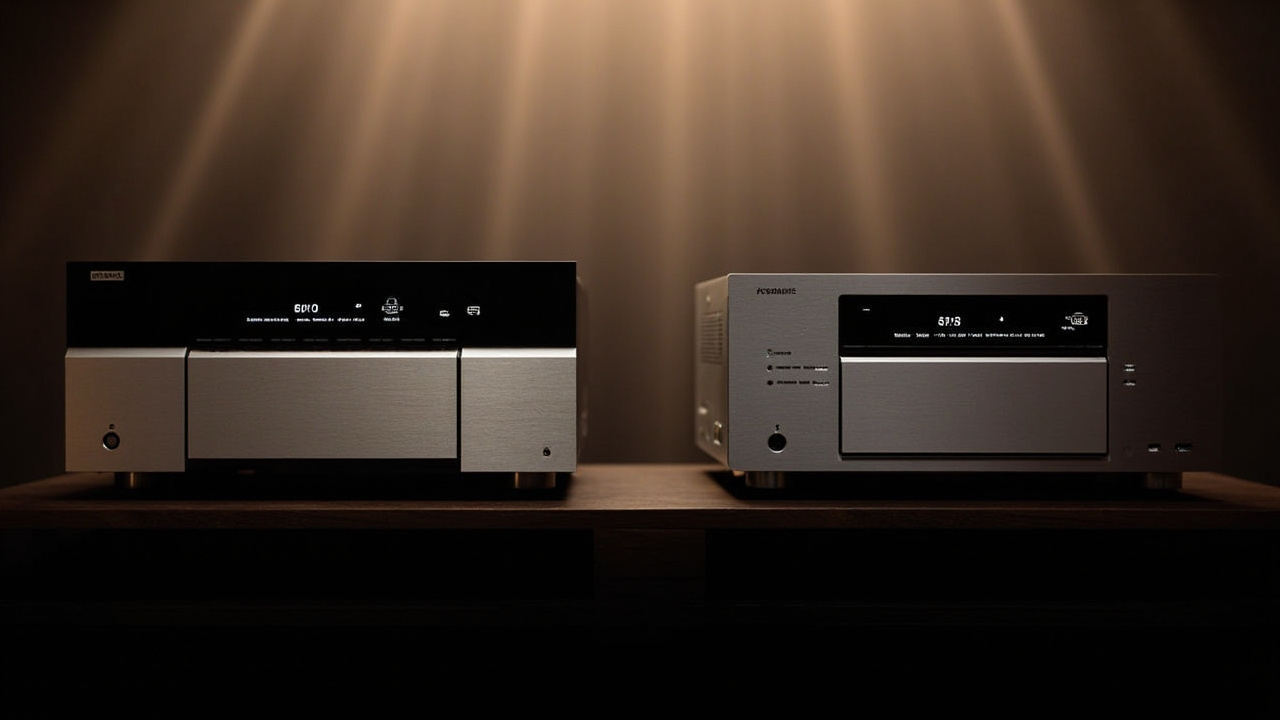
The Yamaha is meaningfully heavier (47.2 lb vs 33 lb) and deeper (18.8 in vs 14.3 in). This is mostly due to the all-Class-A/B amplifier design, larger transformer, and Yamaha’s A.R.T. wedge (a fifth mechanical foot in the center of the chassis that decouples the power supply from the signal board). If you have a shallow A/V cabinet (less than 20 inches of depth), the Yamaha may physically not fit.
Both are sealed metal chassis with no user-serviceable parts. Neither is field-repairable when the amplifier or DSP board fails — at this price tier, the expectation is “replace, not repair.” Anthem’s 3-year direct warranty is meaningfully better than the dealer-channel 1-year coverage, and the company maintains a parts-and-trade-up program for older MRX units. Yamaha’s 3-year warranty is consistent across the Aventage line, but parts availability for 7+ year-old Aventage units is patchier than Anthem’s.
The most-cited build-quality criticism of the Yamaha in 2024–2025 user reports (AVSForum, Audio Asylum, Reddit r/hometheater threads reviewed) is the HDMI 2.1 board longevity. Yamaha shipped the A8A in 2021 with a known HDMI 2.1 bug that was partially fixed by an external dongle program; some users report board failures 4–5 years in. Anthem’s 8K HDMI board refresh (late 2023) is newer and has not accumulated the same field-failure data, but the original 4K board in the 2021 MRX 1140 had no comparable issue.
For longevity, the safer bet is Anthem. For build-feel and chassis engineering, the Yamaha has the edge in the “feels like a tank” sense.
Feature Breakdown
This is where the gap widens — and where the $500 MSRP difference becomes a real “are these features worth it to you” question.
Room correction and calibration:
The single biggest differentiator between these two receivers. Anthem’s ARC Genesis (Anthem Room Correction, latest generation as of 2024) is widely cited as the best-in-class room correction available in any consumer AVR — and the Web-based setup UI that controls it is the standard that Denon/Marantz installers still complain about not having (Source: TechTaps Anthem vs Yamaha comparison, Crutchfield Anthem MRX 1140 8K product notes).
- ARC Genesis uses a calibrated USB microphone (included, calibrated to your unit’s serial number), takes multiple measurements from up to 10 positions, and corrects frequency response, phase, and decay time at the sample rate of the unit (192 kHz). Bass correction extends down to 5 Hz (Anthem’s published spec) with explicit subwoofer phase and time-alignment correction.
- YPAO-R.S.C. (Yamaha Parametric Room Acoustic Optimizer with Reflected Sound Control) uses the included microphone, supports 3D multipoint measurement with up to 8 positions, and now includes 64-bit EQ precision calculation plus a Low Frequency mode. YPAO Volume maintains dynamic range at low listening levels.
- The empirical difference in third-party reviews: ARC Genesis wins measurably on bass integration and subwoofer blending in typical residential rooms with asymmetric speaker placement. YPAO wins on speed and ease — a YPAO calibration takes ~5 minutes; ARC Genesis takes ~15–20 minutes because it asks for more microphone positions.
- Surround:AI is Yamaha’s separate AI feature that analyzes the incoming audio scene in real time and adjusts DSP parameters. Independent measurements (Audioholics, Audio Science Review) show it works as advertised on dialogue-heavy content but can introduce subtle artifacts on well-mastered Atmos soundtracks.
HDMI 2.1 and gaming features:
| HDMI / Gaming Feature | Anthem MRX 1140 8K | Yamaha RX-A8A |
|---|---|---|
| HDMI 2.1 Inputs / Outputs | 7 in / 3 out (all 8K/60 Hz, 4K/120 Hz) | 7 in / 3 out (all 8K/60 Hz, 4K/120 Hz, with Yamaha’s hardware fix applied to all shipping units post-2023) |
| HDCP Version | 2.3 | 2.3 |
| VRR (Variable Refresh Rate) | Yes (FreeSync Premium, HDMI VRR) | Yes |
| ALLM (Auto Low Latency Mode) | Yes | Yes |
| QMS (Quick Media Switching) | Yes | Yes |
| Dolby Vision / HDR10+ / HLG | All three | All three |
| eARC | Yes | Yes |
| HDMI Bypass in Standby | Yes (4.9 W in standby with bypass on) | Yes (0.4 W in Eco Mode) |
| 4K/120 Hz Signal Verified | Yes (post-2023 8K board) | Yes (post-2023 board) |
Both receivers are current-gen HDMI 2.1 with full gaming feature support. The historical issue was that the original 2021 Yamaha A8A shipped with a buggy HDMI 2.1 chipset; that was resolved by 2023 with a hardware revision. For new purchases in 2026, this is a non-issue for both.
Streaming and ecosystem:
This is Yamaha’s clear win.
- MusicCast (Yamaha’s proprietary whole-home audio protocol) is built in, supports 30+ MusicCast-compatible speakers and components, integrates with AirPlay 2, Spotify Connect, TIDAL, Qobuz, Amazon Music HD, Deezer, Pandora, SiriusXM, and works with Sonos via a Sonos Port.
- Anthem has AirPlay 2, Chromecast built-in (post-2023 firmware update), Spotify Connect, TIDAL Connect, Roon Ready (post-2022), but no equivalent whole-home audio ecosystem. If you own or plan to own Yamaha MusicCast speakers, the A8A is the natural hub.
Dolby Atmos / DTS:X / IMAX Enhanced / Auro-3D:
| Immersive Audio Format | Anthem MRX 1140 8K | Yamaha RX-A8A |
|---|---|---|
| Dolby Atmos | Yes (up to 9.1.2 with internal amps; 15.1 with external amps) | Yes (up to 7.2.4 with internal amps) |
| Dolby Atmos Height Virtualization | Yes | Yes |
| DTS:X | Yes (up to 7.1.4 with internal amps; 11.1 with external amps) | Yes (up to 7.1.4 with internal amps) |
| IMAX Enhanced | Yes | Yes |
| Auro-3D | No | Yes (up to 13.1 with external amps) |
| Maximum Internal Amplifier Channels | 11 | 11 |
| Maximum Pre-Amp / Processing Channels | 15.2 | 11.2 |
The Auro-3D support on the Yamaha is meaningful if you specifically want Auro-3D content (a niche but real audience for music in 13.1 configurations). The Anthem’s 15.2-channel pre-amp stage is meaningful if you plan to expand to a 9.2.6 or larger Atmos system with external amps (Sources: Yamaha USA RX-A8A product page, ZK Electronics Anthem MRX 1140 8K review).
Smart home and control integration:
- Anthem: Web-based setup UI (industry-best for installer use), IP control, RS-232, IR in/out, 12V triggers (2), no native smart-home hub integration.
- Yamaha: AV Controller App + MusicCast App, Works with Sonos, AirPlay 2, IP control, RS-232, IR in/out, 12V triggers (2), Alexa / Google Assistant casting, no native Web UI equivalent to Anthem’s.
Connectivity ports:
| Connectivity | Anthem MRX 1140 8K | Yamaha RX-A8A |
|---|---|---|
| HDMI | 7 in / 3 out (8K/60, 4K/120) | 7 in / 3 out (8K/60, 4K/120) |
| Analog Audio Inputs | 5 (RCA, including phono) | 4 (RCA, including phono) |
| Coaxial Digital | 2 | 3 |
| Optical Digital (Toslink) | 3 | 3 |
| Composite Video | 2 in | 2 in |
| Component Video | 0 | 2 in / 1 out |
| Subwoofer Outputs | 2 (independent, separately calibrated) | 2 |
| Zone 2 / Zone 3 Pre-Outs | Yes / Yes | Yes / Yes |
| Headphone Jack | Yes (6.3 mm front) | Yes (6.3 mm front) |
| USB | 1 (rear, for service/firmware) | 1 (front, for media playback) |
| Ethernet | Yes | Yes |
| Wi-Fi | Yes | Yes |
| Bluetooth | Yes (aptX HD) | Yes (AAC, SBC) |
| Phono Input (MM) | Yes | Yes |
The Anthem’s two independently calibrated subwoofer outputs are a meaningful feature if you run dual subwoofers — the ARC Genesis calibration treats them as separate entities with individual phase, distance, and EQ, which is the correct way to integrate dual subs. The Yamaha’s YPAO also supports dual subs but historically treats them as a single output with summed EQ.
Pros and Cons
Anthem MRX 1140 8K ($4,499)
Pros
- Best-in-class room correction (ARC Genesis) — measurable advantage on bass integration and subwoofer phase in typical residential rooms
- 15.2-channel pre-amp stage with 11 internal amps gives you genuine headroom for a 7.2.4 or 9.2.4 system today and room to expand with external amplification later
- Class A/B amplification on the front five channels — meaningful for two-channel music listening and critical front-stage reproduction
- Web-based setup UI is the standard professional installers expect — easier to fine-tune and back up settings than any other consumer AVR
- Two independently calibrated subwoofer outputs with full phase/time/EQ treatment per sub
- Roon Ready, AirPlay 2, Chromecast built-in post-2023 firmware updates
- 3-year direct warranty from Anthem, with longer firmware support cycle than most competitors
- Audiophile-grade pre-amp section — measurements (Audio Science Review, Stereophile) show THD+N below 0.005% at 1 W output
Cons
- $500 higher MSRP than the Yamaha, with weaker street discounts
- No Auro-3D support — only Atmos, DTS:X, and IMAX Enhanced
- No MusicCast equivalent — limited whole-home audio ecosystem
- Heavier reliance on external amp to realize the 15.2-channel pre-amp advantage; if you never add external amps, you are paying for capability you do not use
- Class D amplification on channels 6–11 is a step behind the Yamaha’s full Class A/B design for sustained high-volume listening on the rear surrounds
- Surrender the motorized flip-down door aesthetic the Yamaha has
- Calibration takes longer (15–20 minutes vs Yamaha’s ~5) and requires more microphone positions for best results
Yamaha RX-A8A ($3,999)
Pros
- $500 lower MSRP and $700 lower typical street price ($3,499 vs $4,499)
- All 11 channels are Class A/B — uniform amplifier topology with no Class D compromise on the surrounds
- Surround:AI real-time scene analysis works measurably well on dialogue-heavy content
- MusicCast whole-home audio built in, integrates with AirPlay 2, Works with Sonos, and the broader Yamaha MusicCast speaker lineup
- Auro-3D support included (rare in this price tier, valuable for 13.1 music configurations)
- YPAO-R.S.C. calibration is faster and adequate for most rooms — typically 5 minutes, 3D multipoint, 64-bit EQ precision
- More physical inputs — extra coaxial digital, component video for legacy sources
- Better standby power efficiency — 0.4 W in Eco Mode vs Anthem’s 4.9 W HDMI bypass
- Slightly higher rated power output — 150 W vs 140 W (both 2-channel driven specs)
Cons
- HDMI 2.1 board has a documented 2021–2023 reliability track record — Yamaha issued a hardware fix in 2023, and current shipping units are fine, but used 2021–2022 units should be verified
- YPAO room correction is not in the same league as ARC Genesis — measurable gap on bass integration in problematic rooms
- 11.2 maximum pre-amp / processing channels — no expansion path beyond the internal amp channels without buying a separate pre-amp
- Single subwoofer output treatment in YPAO does not independently calibrate dual subs as well as ARC Genesis
- No native Web UI equivalent to Anthem’s — configuration is app-based or front-panel-based, which is slower for installers
- App ecosystem (AV Controller + MusicCast) has improved but remains less reliable than Anthem’s Web UI
- Shorter effective firmware support cycle on older Aventage units — the RX-A8A itself will likely see feature updates through 2027–2028, but newer Aventage models have displaced it in the development queue
Best For / Skip If
Best for the Anthem MRX 1140 8K:
- Audiophile-leaning home theater enthusiasts who already own or plan to add a dedicated 2-channel amp (Anthem MCA 525, MCA 325, or any third-party amp) within 5 years — the 15.2-channel pre-amp stage is a real upgrade path
- Buyers with acoustically challenging rooms (hardwood floors, large windows, open-concept layout, cathedral ceilings) where the room correction advantage compounds — ARC Genesis’s subwoofer integration is the single biggest audible improvement you’ll get from the $500 premium
- Home theater setups with dual subwoofers — the independent sub calibration is meaningfully better than YPAO’s summed treatment
- Buyers who plan to keep the receiver 7+ years and value resale value — Anthem holds resale better than any other AVR brand
- Installers and prosumers who configure via Web UI on a laptop instead of an app on a phone
- Buyers who care more about two-channel music reproduction than about the latest streaming features
Best for the Yamaha RX-A8A:
- Buyers who already own or plan to buy Yamaha MusicCast speakers for whole-home audio — the A8A is the natural hub
- Home theater enthusiasts running a 7.2.4 or smaller configuration with no plans to expand beyond 11 channels — you pay for capability you will not use in the Anthem
- Buyers who watch a mix of movies, sports, and music — Surround:AI’s real-time scene tuning is a real feature for non-purist listeners
- Auro-3D enthusiasts — only Yamaha supports it in this price tier
- Buyers who want maximum features per dollar and are willing to accept YPAO’s slightly weaker room correction
- Buyers who use legacy sources (component video, multiple coaxial digital sources) — the A8A has more legacy inputs
- Buyers who care about standby power consumption — 0.4 W Eco Mode is meaningfully better than the Anthem’s 4.9 W HDMI bypass
Skip both if:
- You do not actually need 11 amplified channels. If your room is small enough for a 5.1.4 system, the Marantz Cinema 30 ($3,499) or Denon AVR-A10H ($2,599) deliver 85–90% of the experience for 50–75% of the money.
- You primarily care about two-channel music. A dedicated stereo integrated amp (Cambridge Audio CXA81, NAD C 388, Yamaha A-S801) at $1,500–$2,000 plus a good streamer sounds better than either of these AVRs for music, even with stereo direct mode.
- You want a future-proof HDMI 2.2 receiver. Both are HDMI 2.1. The next generation (likely 2026–2027 launches) will add HDMI 2.2, 8K/120 Hz native passthrough, and potentially more immersive audio formats.
- You are buying on a strict $3,000 budget. The Denon AVR-A10H at $2,599 is a better value pick at that price point (covered separately on BuyCospa).
Bottom Line
If you made it this far, you already know which one is right for you. The choice is genuinely binary.
Buy the Anthem MRX 1140 8K ($4,499) if your priority is sound quality, room correction, and longevity — the $500 premium buys you the best room correction in any consumer AVR, an audiophile-grade pre-amp stage that supports expansion to 15 channels, and resale value that halves the cost-of-ownership gap over a 7-year window. The compromise is that you give up MusicCast whole-home audio, Auro-3D, and a motorized flip-down door.
Buy the Yamaha RX-A8A ($3,999) if your priority is maximum features per dollar — you get an all-Class-A/B amplifier design, Surround:AI real-time scene tuning, Auro-3D support, the MusicCast ecosystem, and a $500 lower MSRP that compounds with deeper dealer discounting. The compromise is that YPAO is not in the same league as ARC Genesis, you cannot expand beyond 11 channels without buying a separate pre-amp, and HDMI 2.1 reliability on pre-2023 units should be verified if buying used.
Buy neither if your room is small enough for 5.1.4 or you do not need 11 amplified channels — the Denon AVR-A10H ($2,599) or Marantz Cinema 30 ($3,499) deliver 85–90% of the experience for 50–75% of the money. That is a $1,500–$2,000 savings that buys you a subwoofer, a center channel upgrade, or acoustic treatment for the room — all of which will improve your sound more than the Anthem-vs-Yamaha gap at this level.
Buy smart. Get more value. The Anthem and Yamaha here are both genuinely good. Neither is “best ever.” Neither is a “must-buy.” The decision comes down to whether your room, your sources, and your future plans reward the Anthem’s room-correction-and-expansion depth or the Yamaha’s feature-and-ecosystem breadth — and how much you personally value that $500 difference in your pocket.