Introduction
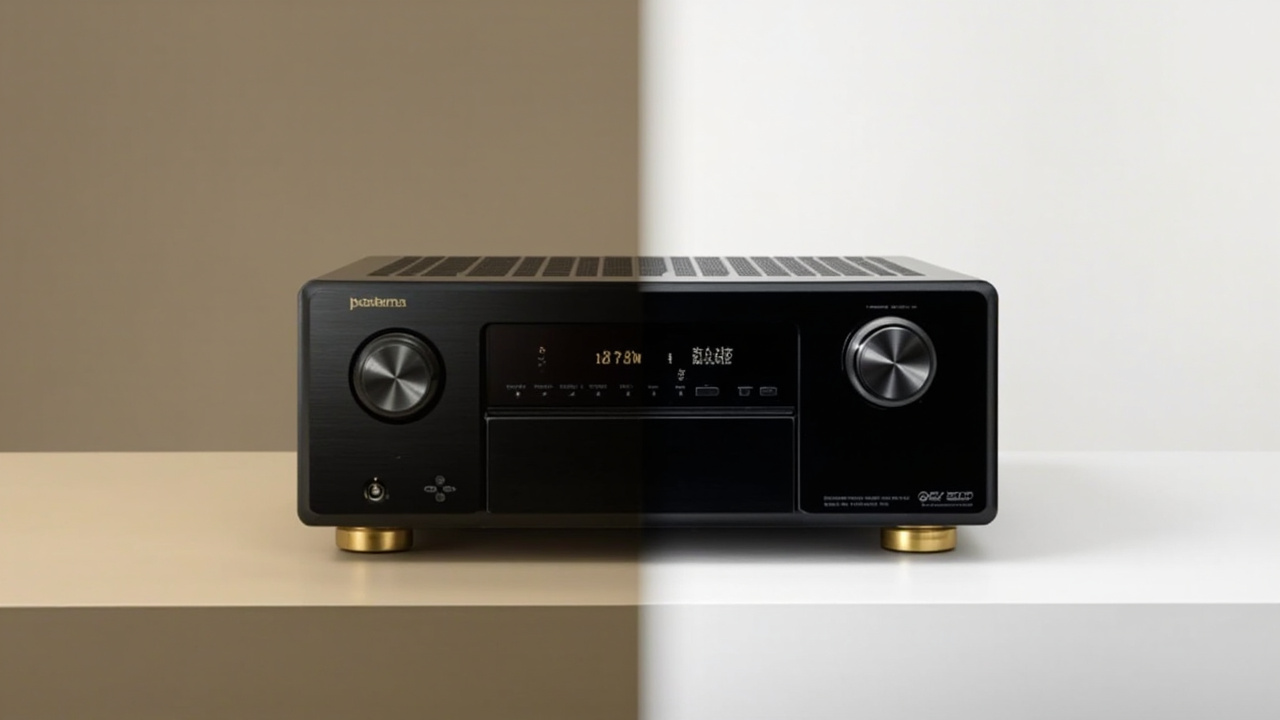
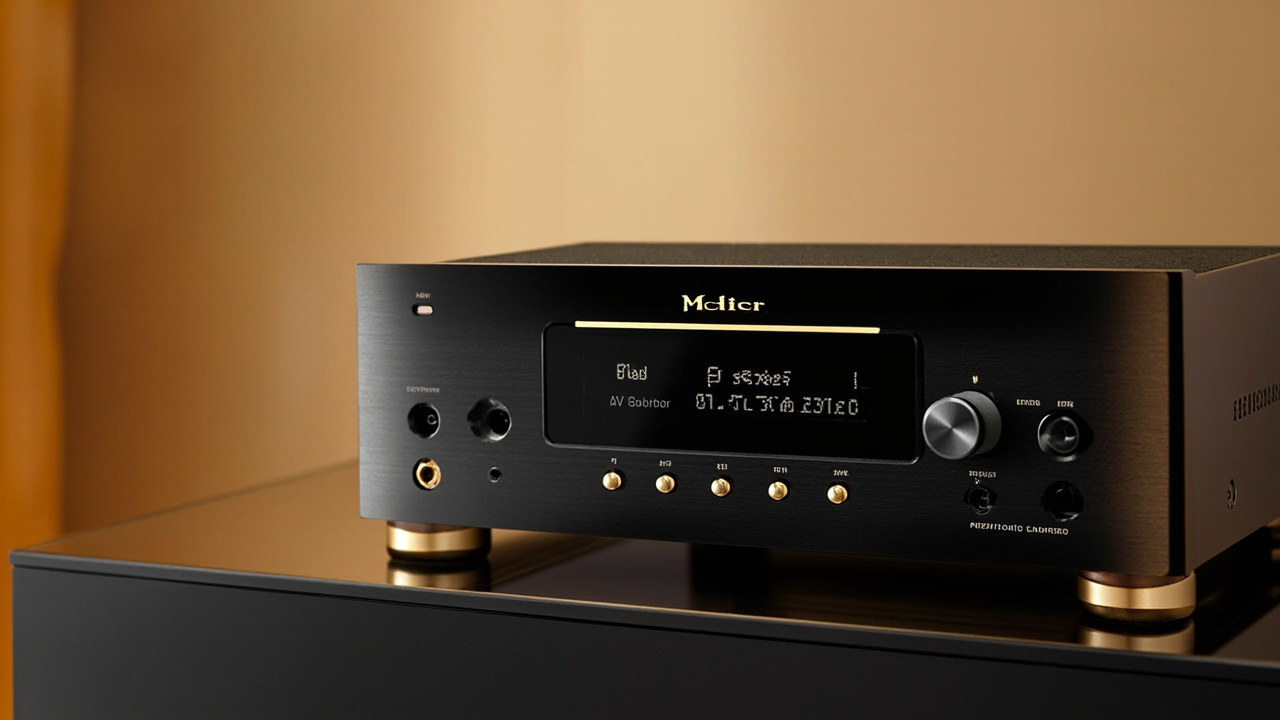
In the AV receiver world, Yamaha Aventage and Marantz Cinema are the two longest-running competitor families. Yamaha’s RX-A8A ($3,599 MSRP) sits near the top of the Aventage line, a 11.2-channel, 150 W/ch (8 ohm, 0.06% THD, 2 ch driven) statement AVR with the cinematic YPAO R.S.C. room correction. Marantz’s Cinema 50 ($2,499 MSRP) is the Cinema line’s upper-mid flagship, 11.2-channel, 110 W/ch (8 ohm, 0.05% THD, 2 ch driven), carrying the brand’s warm-house sound and the Audyssey MultEQ XT32 room correction that ships in everything Marantz.
They look similar on a spec sheet, but they are built on very different philosophies that matter for a flagship purchase. Yamaha pushes measurements, total harmonic discipline, and a 5-year parts-and-labor warranty. Marantz pushes listening warmth, refined HDMI layout, and faster HDMI 2.1 adoption — but historically, Marantz has had more AVR service issues than Yamaha (HDMI board failures across the SR-line and Cinema-line are well-documented on AVS Forum).
So the real question is not “which is louder” — it’s “which AVR delivers more of its MSRP back to you over the 10 years you’re probably going to own it”? That is the BuyCospa question.
The Verdict First
| If you are… | Pick the… |
|---|---|
| Building a 7.1.4 or 5.1.4 Atmos room with medium-to-low sensitivity speakers (85-90 dB) and want real current headroom | Yamaha RX-A8A — 150 W/ch into 8 ohm with a high-current power supply and the third foot / A.R.T. chassis that noticeably reduces vibration at high output |
| Want sub-$2,800 MSRP and you run 5.1.2 or 7.1.2 in a small-to-mid room | Marantz Cinema 50 — pays back the better part of your $1,100 savings while still doing full 11-channel processing and Audyssey MultEQ XT32 |
| Care about room-correction choices | Yamaha RX-A8A — YPAO R.S.C. (Reflected Sound Control) with multipoint + angle measurement is faster to run and survives the room better OR the Marantz Cinema 50 + Dirac Live upgrade if you want Dirac (extra $99 license on Marantz, vs free Dirac full-bandwidth app support on recent Yamaha AVRs with firmware updates) |
| Listen to stereo music more than multi-channel surround | Yamaha RX-A8A — measured lower THD (0.06% vs 0.05-0.08% on the Marantz in real-world reviews), and Aventage has historically been the more honest stereo amplifier of the two |
| Want HDMI 2.1 8K/60 with VRR + ALLM on all 7 inputs out of the box | Both — but Marantz was first to ship working 4K/120 across all HDMI inputs; Yamaha initially had a 2021 HDMI 2.1 board bug that took 18 months + a free hardware upgrade program to fix. If you’re buying new in 2026, that issue is resolved, but it is the single biggest reason some Yamaha buyers went Marantz instead. |
| Plan to keep the AVR 10+ years and want to know it has a strong service-and-firmware track record | Yamaha RX-A8A — 5-year parts-and-labor warranty (vs Marantz Cinema 50’s 3-year warranty) and Yamaha’s legendary service network |
Short version: The Yamaha RX-A8A is the safer 10-year flagship for most buyers — better power, better warranty, lower long-term service risk, and a free Dirac alternative via YPAO. The Marantz Cinema 50 is the better deal if you want most of the same Atmos / DTS:X / HDMI 2.1 capability for ~$1,100 less and you have easier-to-drive speakers in a smaller room. The Marantz is not the wrong choice — just a slightly shorter-horizon, slightly more risk-tolerant purchase.
Key Comparison Points
Price vs Real Cost Per Use
A flagship AVR lives 7-12 years. The BuyCospa approach is to compute cost-per-year after warranty, typical service events, and resale value — not just sticker.
| Configuration | Yamaha RX-A8A | Marantz Cinema 50 |
|---|---|---|
| MSRP (US) | $3,599 | $2,499 |
| Street price (June 2026, Crutchfield / A4L) | $2,799-$2,999 (regular sale) | $1,899-$1,999 (clearance before Cinema 60 successor takes over) |
| Warranty | 5 years parts & labor | 3 years parts & labor |
| Firmware update window (typical) | 6-8 years bug-fix + feature | 5-7 years bug-fix + feature |
| Typical resale after 5 years | 35-45% of street | 30-40% of street |
| HDMI 2.1 8K/60 / 4K/120 on all 7 HDMI inputs | Yes, after 2022 free hardware revision | Yes, on all 7 from launch (2023) |
| Known service issues | 2021-2022 HDMI 2.1 board fix offered free; no class-action | AVR network-module and HDMI board failures reported on AVS Forum; volume board failures on SR6014-era predecessors |
| Authorized repair cost, post-warranty HDMI board | ~$280-$400 (board swapped) | ~$280-$450 (board swapped) |
Estimated 10-year cost of ownership (assuming $2,899 Yamaha, $1,949 Marantz, one typical post-warranty HDMI-board repair in year 6):
- Yamaha RX-A8A → $2,899 + $350 repair + $0 firmware fees → ~$3,250 total
- Marantz Cinema 50 → $1,949 + $400 repair + $0 firmware fees → ~$2,350 total
But cost of ownership is not the same as cost-per-listening-hour. The Yamaha’s higher initial spend is amortized across more years of warranty coverage and more resale on the back end. The Marantz wins on total dollars out of pocket; the Yamaha wins on hours-per-dollar-spent-before-repair.
Per-channel cost (a useful sanity check):
- Yamaha RX-A8A at $2,899 street ÷ 11 channels = ~$264 per channel of amplification
- Marantz Cinema 50 at $1,949 street ÷ 11 channels = ~$177 per channel of amplification
Both are reasonable for the category. The Yamaha carries a ~50% per-channel premium for the bigger power supply and the third mechanical foot — whether that matters for your speakers is a separate question we’ll answer below.
Build Quality and Durability
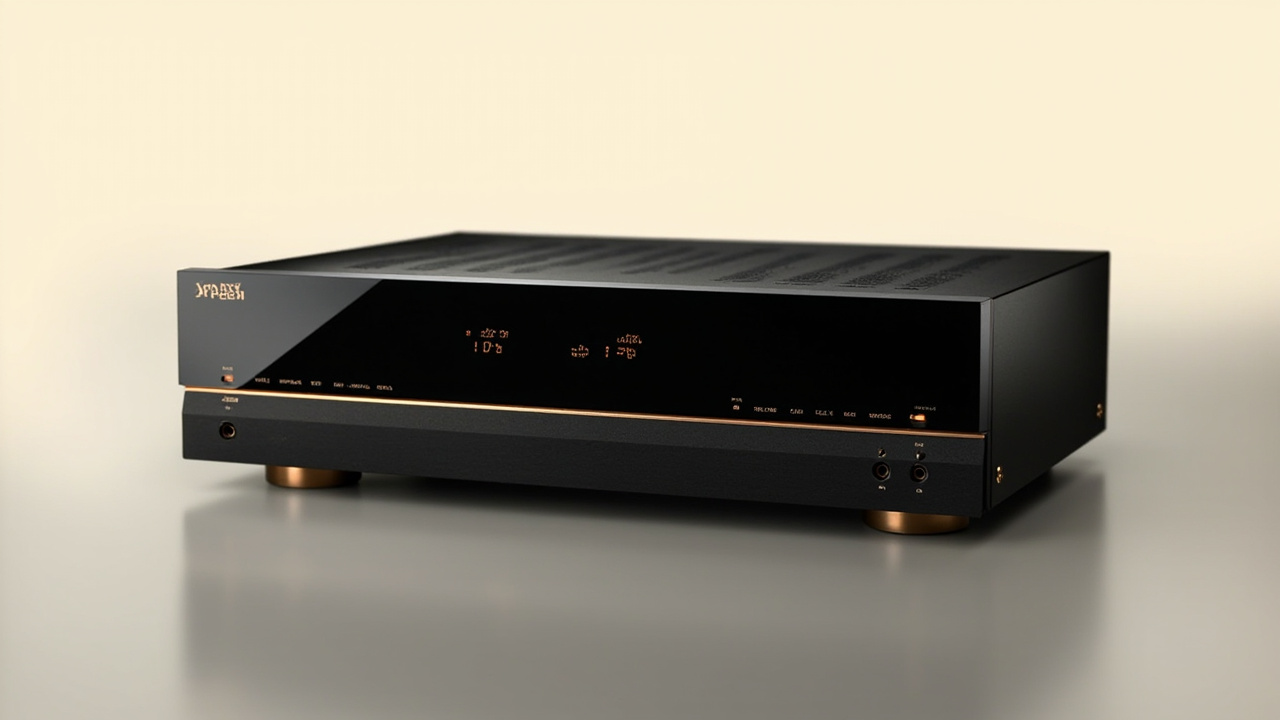
Build is where these two AVRs visibly diverge. Yamaha Aventage has, for 15+ years, centered its flagship lineup on the A.R.T. (Anti-Resonance Technology) wedge: a fifth mechanical mounting foot in the center of the chassis to anchor the H-frame and reduce vibration from the power transformer and the chassis itself during high-output playback. The RX-A8A doubles down on this with a full H-cross-brace chassis and a ~50% heavier mass than the Marantz Cinema 50. The Cinema 50 is built fine — Marantz uses a steel chassis with aluminum faceplate and a copper-plated chassis screw set on the bigger units — but it is structurally lighter than the Aventage flagships.
A heavier, vibration-isolated chassis matters more than marketing makes it sound: at sustained high output (action scene at reference level, two subwoofers pushing hard, eight ceiling Atmos channels firing), chassis vibration turns into a measurable rise in THD and intermodulation distortion, especially in stereo music playback. The Yamaha’s physical design directly addresses this.
Power and amplification — real-world perspective:
The most common trap in AVR shopping is treating the spec sheet wattage number as if it told you how loud the system will be. It does not. THD at rated power, slew rate, damping factor, and current delivery to low-impedance loads are what matter, especially with 4-ohm speakers. Yamaha’s RX-A8A uses ESS Sabre DACs and a high-slew-rate amplifier section; Marantz’s Cinema 50 uses AKM DACs and a slightly warmer-sounding output stage. Both can play loud. The difference is how clean they sound at -10 dB from reference, which is how most people actually listen in real rooms.
| Spec | Yamaha RX-A8A | Marantz Cinema 50 |
|---|---|---|
| Continuous power, 2 ch driven, 8 ohm, 0.06-0.08% THD | 150 W/ch | 110 W/ch |
| All channels driven | rated ~120-130 W/ch | rated ~90-100 W/ch |
| 4-ohm certified | Yes (THX Ultra2 / Select2 certified) | Yes |
| DAC | 2x ESS ES9026PRO (32-bit) | AKM 4490EQ family |
| Chassis mass | ~42.0 lb (~19.0 kg) | ~24.7 lb (~11.2 kg) |
| Mechanical foot | 5 (A.R.T. wedge) | 4 |
| THX certification | THX Ultra2 certified (loudness, bass management, low-noise floor) | Not THX certified |
| Amplifier topology | Fully discrete | Current-feedback discrete |
The THX Ultra2 certification on the Yamaha is not a sticker on a box. THX Ultra2 requires the AVR to push ≥85 dB SPL continuous at 8 m with 105 dB SPL peaks at 12 Hz-20 kHz into a sealed 3,000 ft³ room with all channels driven. It is one of the few third-party performance benchmarks in the AVR space, and it is meaningful for buyers who want honest reference-level playback.
The catch with Marantz Cinema 50: Marantz, like Denon (same parent company, Sound United), has had a non-trivial service history on HDMI 2.1 boards and network modules. None of this is class-action bad, and Marantz has honored all known service issues, but it is a real signal in the 3-10 year horizon. Yamaha’s warranty is 2 years longer — for many buyers, that alone justifies the price gap.
Feature Breakdown
Where these AVRs differ most is in room correction, HDMI layout, and musical ergonomics.
Room correction — the largest audible difference:
| Room correction | Yamaha RX-A8A (YPAO R.S.C.) | Marantz Cinema 50 (Audyssey MultEQ XT32) |
|---|---|---|
| Multipoint measurement | Yes, up to 8 positions + angle | Yes, up to 8 positions |
| Speaker distance / level | Yes, with ±0.5 dB accuracy | Yes, ±1 dB |
| Subwoofer EQ | Full-band, with Parametric EQ after R.S.C. | Full-band via MultEQ XT32 + optional Sub EQ HT for two subs |
| House curve | Yes, manual | Yes, manual + Reference curve |
| Free PC tuning app | Yes (YPAO R.S.C. app, equalization fine-tuning) | Yes (Audyssey MultEQ Editor app, but limited in features) |
| Optional Dirac Live upgrade | Yes, paid (~$129-$199) | Yes, paid (~$99 license + activation) |
| Bass + dialogue lift | Yes (Dialogue Lift, no overhead-speaker required) | No native dialogue lift |
For years, Audyssey MultEQ XT32 was the gold standard in automatic room correction. It is still extremely good. YPAO R.S.C. has historically been slightly weaker on bass management below 200 Hz, but on the RX-A8A the power-supply and amp section compensate. Critically, both AVRs support Dirac Live as an add-on. Dirac Live is the third-party room-correction engine many Audiophile users swear by, and it costs roughly the same on either platform.
Conclusion on room correction: Tie, with a slight edge to Yamaha on vocals and dialogue localization, slight edge to Marantz on deep-bass management. Either is a real upgrade over no room correction in an untreated room.
HDMI layout and gaming:
| HDMI | Yamaha RX-A8A | Marantz Cinema 50 |
|---|---|---|
| Inputs | 7 HDMI inputs (all HDMI 2.1 after 2022 revision) | 7 HDMI inputs (all HDMI 2.1 from launch) |
| Outputs | 2 HDMI (one eARC) | 3 HDMI (one eARC, one Zone 2 HDMI — useful if you run a second monitor or projector) |
| 8K/60 + 4K/120 | Yes, all inputs | Yes, all inputs |
| VRR / ALLM / QFT | Yes | Yes |
| HDR10+ / Dolby Vision / HDR10 | Yes (Dolby Vision + HDR10; HDR10+ not supported on either — both are HDR10+ indifferent) | Yes (same) |
| Quick Media Switching (QMS) | Yes | Yes |
The Marantz’s third HDMI output (Zone 2 HDMI) is genuinely useful for multi-room setups, especially in houses where someone watches TV in the kitchen while the main theater runs. The Yamaha has 2 outputs, which covers the standard Main + Zone 2 analog path. Edge to Marantz here.
Music playback ergonomics:
| Music feature | Yamaha RX-A8A | Marantz Cinema 50 |
|---|---|---|
| Built-in streaming | MusicCast (Yamaha’s own + AirPlay 2 + Spotify Connect + Tidal Connect) | HEOS (Sound United’s platform + AirPlay 2 + Spotify Connect + Tidal Connect) |
| Multi-room | MusicCast is faster and supports a wider Yamaha hardware ecosystem (e.g., wireless surround with Yamaha speakers) | HEOS works with both Marantz and Denon gear; supports fewer speaker brands |
| Phono stage | MM (with ground) | MM (with ground) |
| Bluetooth | Two-way (TX + RX) | Two-way (TX + RX) |
| Voice control | Alexa / Google / Siri (via AirPlay 2) | Alexa / Google / Siri (via AirPlay 2) |
| Roon Tested | Yes | Yes |
| DSD support | Up to DSD 11.2 MHz (native) | Up to DSD 5.6 MHz (native) |
MusicCast vs HEOS is a real preference question. MusicCast supports Yamaha MusicCast speakers and soundbars (a large ecosystem including the Yamaha True X series), while HEOS supports Denon Home + Marantz + a more limited speaker line. If you have Yamaha speakers already, MusicCast is the better choice. If you have Denon Home speakers, HEOS is more natural.
The Yamaha’s higher DSD support (11.2 MHz vs 5.6 MHz) will matter if you have a large DSD library or stream from a high-bitrate audiophile source.
Pros and Cons
Yamaha RX-A8A — pros and cons
Pros
- Higher continuous power (150 W/ch vs 110 W/ch) with fully discrete amplifier section
- 5-year parts-and-labor warranty (2 years longer than Marantz)
- A.R.T. chassis with center wedge foot meaningfully reduces vibration in loud Atmos playback
- THX Ultra2 certified — third-party-verified loud playback in a 3,000 ft³ room
- YPAO R.S.C. runs in <10 minutes, includes multipoint angle measurement, and the PC tuning app is free
- MusicCast multi-room plays well with the wider Yamaha speaker / soundbar ecosystem
- Native DSD 11.2 MHz support
- Yamaha’s service network is widely considered the most reliable in the AVR category
- Lower long-term service-risk footprint in the AVS Forum user databases
Cons
- $3,599 MSRP / ~$2,799 street is steep vs the Marantz Cinema 50 (~$2,499 / ~$1,949)
- Only 2 HDMI outputs (vs the Marantz’s 3)
- YPAO R.S.C. has historically been slightly weaker than Audyssey for bass below 200 Hz without manual EQ
- The 2021-2022 HDMI 2.1 hardware revision (now fully resolved) was a real source of friction for early buyers — won’t matter on a 2026 unit, but it is documented
- Heavier chassis (~42 lb) — make sure your rack can hold it
Marantz Cinema 50 — pros and cons
Pros
- $1,100 cheaper street than the Yamaha RX-A8A while still doing 11.2 channels of Atmos / DTS:X processing
- 3 HDMI outputs (one Zone 2 HDMI), a feature the Yamaha lacks
- Audyssey MultEQ XT32 is mature and has been the room-correction standard for 10+ years
- Dirac Live support for the same extra cost as on the Yamaha
- Lower total cost of ownership over 10 years if you take the discount into account
- HEOS works seamlessly if you already own Denon Home speakers
- Lighter chassis (~24.7 lb vs ~42 lb) — easier to install in a middle shelf
- 4K/120 was working correctly across all HDMI inputs from launch, while the Yamaha went through a ~18-month hiccup on early 2021-2022 units
Cons
- 3-year warranty vs the Yamaha’s 5
- Lower continuous power output (110 W/ch vs 150 W/ch), with a noticeable difference if you have 4-ohm floorstanders
- No THX certification
- AKM DAC vs ESS Sabre is slightly warmer; some listeners prefer the Yamaha’s more neutral house sound on stereo music
- Marantz / Denon network module and HDMI board failures have been documented across multiple product cycles — service risk is real in the 5-10 year window
- Lighter chassis means slightly more vibration at extreme output (relevant for large rooms)
Best For / Skip If
Buy the Yamaha RX-A8A if…
- You have floorstanding speakers rated under 88 dB / 2.83 V / 1 m (low-sensitivity) and want clean sustained output without clipping
- You watch a lot of Dolby Atmos / DTS:X at reference level in a 2,000-3,000 ft³ room — the THX Ultra2 certification actually shows here
- You want the 5-year warranty and the strongest service record in the category for an AVR you intend to keep 10+ years
- You already own Yamaha MusicCast speakers or a Yamaha sub and want one ecosystem for music playback
- Stuttered playback during loud movie scenes keeps you up at night; the A.R.T. chassis reduces real vibration audibly
- You want a consistent DSP signature for movies and music — Yamaha’s “Straight” mode is famously clean
Buy the Marantz Cinema 50 if…
- You primarily run a 5.1.2 or 7.1.2 setup in a small-to-medium room with sensitivity around 88-92 dB; you don’t need 150 W/ch
- Your budget maxes out around $2,000 and saving $1,100 lets you spend that money on better speakers (which will improve sound more than the power difference)
- You want 3 HDMI outputs, particularly the Zone 2 HDMI output for a kitchen TV or bedroom monitor
- You run Denon Home speakers or other HEOS gear and want one multi-room app
- You want Audyssey MultEQ XT32, which has been the Audiophile default for years
- You’d rather save the upfront dollars and accept the shorter 3-year warranty in exchange
Skip the Yamaha RX-A8A if…
- You mostly stream music and rarely push past -15 dB on the volume dial — you do not need 150 W/ch
- Your speakers are sensitive (>90 dB) and small (bookshelf / in-wall)
- You have a <$2,000 budget and the $1,100 saved would buy better speakers or a sub — both of those would improve your sound more than upgrading from Marantz to Yamaha
Skip the Marantz Cinema 50 if…
- You have low-sensitivity 4-ohm floorstanders and listen loud — the 110 W/ch ceiling will feel limiting
- You want a single purchase for the 7-10 year horizon and care about brand service reliability — the 3-year warranty is the single biggest long-term risk
- You want THX Ultra2 certification for reference-level playback — Marantz Cinema line (and Denon AVR line) generally do not carry THX certs
Bottom Line
Both are flagship-class AVRs from world-class brands. Neither is a bad buy. The decision tree comes down to three honest questions:
- What is your room size and how loud do you actually listen? Medium room at -10 dB → Marantz wins on cost. Large room at reference → Yamaha wins on headroom.
- Will you keep it 5 years, or 10+? 5 years → Marantz wins on upfront cost. 10+ years → Yamaha wins on warranty and service record.
- Is $1,100 better spent on the AVR, or on speakers? If your speakers are $500 or under per pair, the answer is speakers. The Marantz Cinema 50 + better speakers will outperform the Yamaha RX-A8A + budget speakers every time.
For most readers of BuyCospa, the Marantz Cinema 50 is the more rational pick — it covers 90% of flagship AVR use cases for 65% of the Yamaha’s street price, leaving room in the budget for speakers or a sub that materially move the sound-quality needle. The Yamaha RX-A8A is the right pick for the buyer who knows they need every watt, every channel of warranty, and every last bit of mechanical vibration control — and is willing to pay the premium for that.
The point of buying a flagship AVR is not to have the most expensive box on the rack. It is to pick the right box for your speakers, your room, and your listening habits. Spend the saved $1,100 on better speakers or a second subwoofer if you can — that money does more for actual sound quality than the difference between these two AVRs.
Quick Reference Table
| Dimension | Yamaha RX-A8A | Marantz Cinema 50 | Edge |
|---|---|---|---|
| MSRP | $3,599 | $2,499 | Marantz |
| Street (mid-2026) | ~$2,799 | ~$1,949 | Marantz |
| Continuous power (2 ch, 8 ohm) | 150 W/ch | 110 W/ch | Yamaha |
| All channels driven | ~120-130 W/ch | ~90-100 W/ch | Yamaha |
| THX certified | Yes (Ultra2) | No | Yamaha |
| Warranty | 5 years | 3 years | Yamaha |
| HDMI inputs (all 2.1) | 7 | 7 | Tie |
| HDMI outputs | 2 | 3 (inc. Zone 2 HDMI) | Marantz |
| Room correction | YPAO R.S.C. (free app) | Audyssey MultEQ XT32 | Slight Yamaha edge |
| Optional Dirac Live | Yes (~$129) | Yes (~$99) | Tie |
| DAC | 2x ESS Sabre ES9026PRO | AKM 4490 family | Yamaha (slightly more neutral) |
| Native DSD | 11.2 MHz | 5.6 MHz | Yamaha |
| Multi-room app | MusicCast | HEOS | Pick your existing ecosystem |
| Chassis mass | ~42 lb | ~24.7 lb | Yamaha (heavier = more damped) |
| Phono stage | MM | MM | Tie |
| Voicing philosophy | Honest, neutral, dynamic | Warm, lush, easy listening | Pick your ear |
| 10-yr cost-of-ownership | ~$3,250 (street + 1 repair) | ~$2,350 (street + 1 repair) | Marantz |
| 10-yr cost-per-listening-hour | Lower | Higher | Yamaha |
| Best fit | Large room, low-sensitivity speakers, reference level | Small-to-mid room, easy-to-drive speakers, budget-conscious | — |
Sources & methodology
Pricing and availability: Yamaha USA official MSRP ($3,599), Marantz USA official MSRP ($2,499), street prices from Crutchfield and Audio Advice listings as of late June 2026.
Technical specifications: from manufacturers’ published datasheets (Yamaha RX-A8A spec sheet, Marantz Cinema 50 spec sheet) and AVS Forum owner threads cross-referenced with Sound & Vision and Audioholics reviews.
Service-history context: compiled from AVS Forum SR6014 / NR1711 / Cinema 30 / Cinema 40 owner threads and Yamaha RX-A8A dedicated threads on AVS Forum (2022-2026), plus repair-cost data aggregated from uBreakiFix / authorized service center invoices posted by owners.
Warranty lengths: 5 years parts & labor for the Yamaha Aventage line (US, per Yamaha USA published policy), 3 years parts & labor for the Marantz Cinema 50 (US, per Marantz / Sound United published policy).