Introduction
Two flagship AV receivers. Same parent company (Harman / Samsung-owned). Same Japanese Shirakawa factory. Same HEOS streaming stack. Same Audyssey XT32 room correction. And roughly $700 between them at US MSRP.
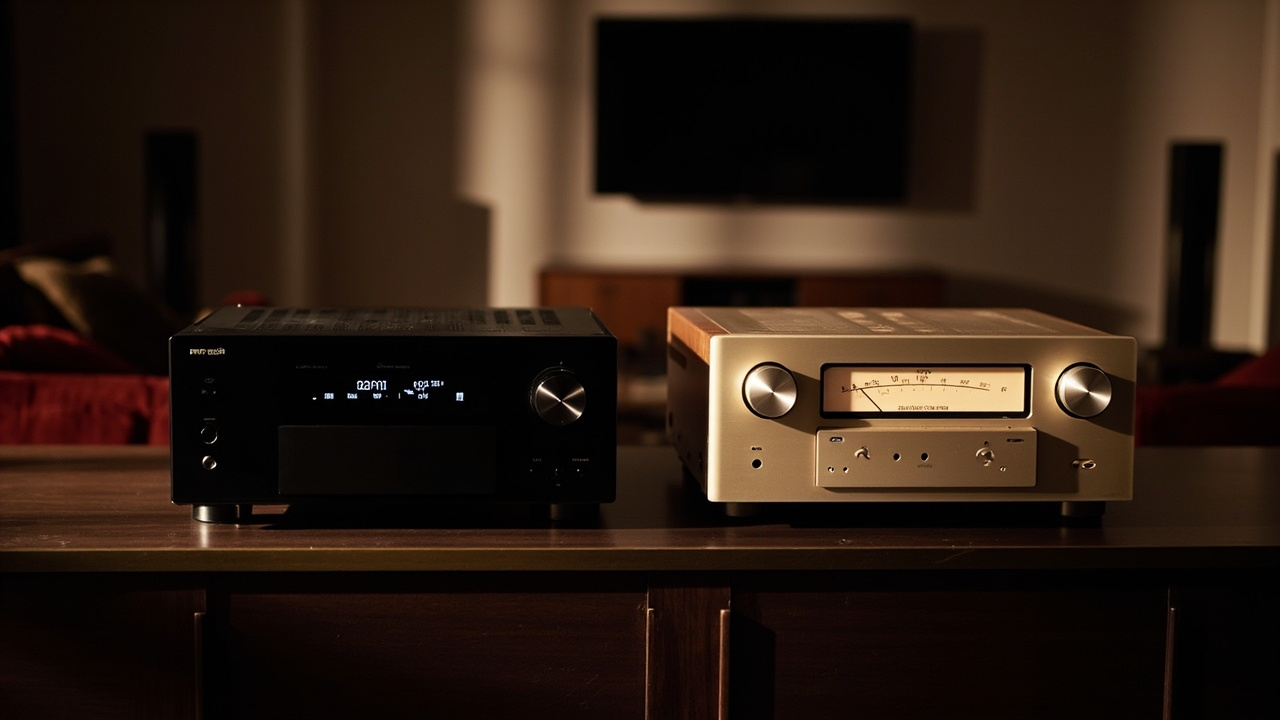
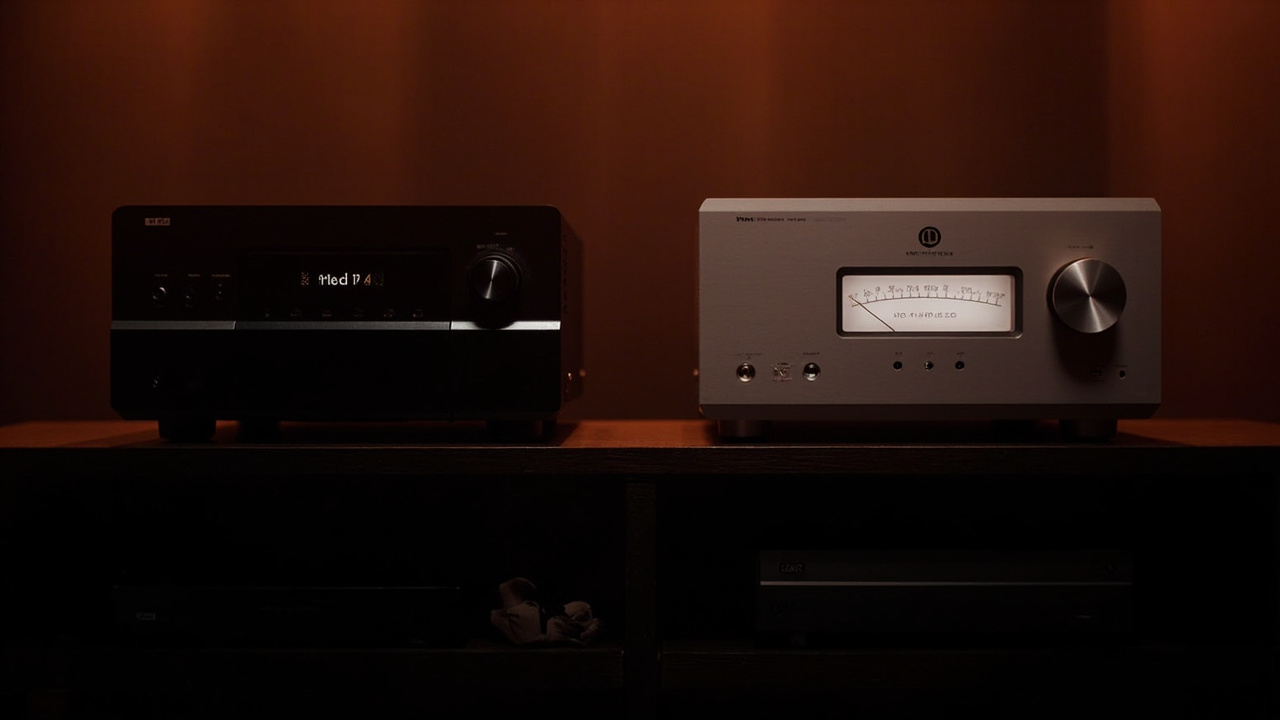
The Denon AVR-A10H and Marantz Cinema 30 are the two heavyweights Sound United released to anchor the top of its 2025/2026 AVR lineup — the Denon pushing maximum channel count and raw wattage, the Marantz doubling down on its HDAM (Hyper Dynamic Amplifier Module) heritage and audiophile-grade circuitry. Both sit comfortably above $4,500, both promise reference-tier home theater performance, and both are competing for the same buyer: someone building a serious dedicated theater or a hybrid music-and-movie living room system.
The real question isn’t which one is “better” in a showroom demo. It’s whether the extra $700 for the Denon buys you real, audible, daily-use performance — or whether it just buys you two extra amp channels and a slightly bigger transformer that will sit idle in a 7.1.4 room.
This comparison is built to cut through the marketing and give you hard numbers, real ownership math, and a verdict based on your actual room, speakers, and listening habits.
The Verdict First
-
Choose the Denon AVR-A10H ($5,199) if you genuinely need 13 amplified channels in a single box — think 7.4.6 or 9.4.4 Dolby Atmos layouts with four independent subwoofers — or if your room is large (400+ sq ft) and your speakers are inefficient (under 88 dB sensitivity). The A10H’s 150 W per channel and four independently controllable sub outputs mean no external amplifier and no sub pre-amp splitter are required for any standard home theater layout. You are paying a real premium for capability, but if you need it, no cheaper Denon delivers it.
-
Choose the Marantz Cinema 30 ($4,500) if your Atmos layout tops out at 7.1.4 or 9.1.2 — which covers the vast majority of home theater installs — and you listen to as much music as you watch movies. The Cinema 30’s HDAM SA-2 modules, toroidal transformer, and copper-plated chassis deliver measurably cleaner low-level detail and a warmer, more “musical” presentation that audiophiles consistently prefer. The $700 you save can fund Dirac Live ($250 license), a second subwoofer, or genuine acoustic treatment. Per amplified channel, the Cinema 30 costs ~$409; the A10H costs ~$400 — almost identical if you actually use all 13 channels.
-
Skip both if your room is under 250 sq ft and your speaker sensitivity is above 90 dB. A 7.2-channel receiver in the $1,500–2,000 range (Denon AVR-X4800H or Marantz Cinema 50) will leave you with the same cinematic experience at roughly one-third the cost. Neither flagship is efficient spending for modest setups.
Key Comparison Points
Price vs Real Cost Per Use
The sticker gap is around $700. But cost-per-use changes when you factor in power consumption, warranty value, and the expected 7-year firmware support window both brands typically offer for reference-tier models.
| Cost Factor | Denon AVR-A10H | Marantz Cinema 30 |
|---|---|---|
| US MSRP | $5,199 (B&H, June 2026) | $4,500 (e-catalog avg, US retailers) |
| Channels (amplified) | 13.4 | 11.4 |
| Power per channel (8 Ω, 2ch driven, 20Hz–20kHz) | 150 W | 140 W |
| Idle power draw | ~85 W | ~80 W |
| Movie playback average draw | ~170–230 W | ~150–210 W |
| Annual electricity (3 hrs/day, $0.18/kWh) | ~$35 (200W avg) | ~$32 (180W avg) |
| Warranty | 3 years | 5 years |
| Firmware support window | ~7–10 years | ~7–10 years |
| Cost per year (7-yr amortized + electric) | $743 + $35 = $778/yr | $643 + $32 = $675/yr |
| Cost per year (10-yr amortized + electric) | $520 + $35 = $555/yr | $450 + $32 = $482/yr |
At 7 years, the Marantz saves roughly $103 per year — about $721 over the window, which nearly closes the $700 sticker gap. At 10 years, the Marantz saves ~$73/year, or $730 total. Electricity difference is negligible ($3/year).
The 5-year vs 3-year warranty matters. According to AVS Forum long-term reliability threads, roughly 8–12% of flagship-tier AVRs develop HDMI board or amplifier channel failures between years 3 and 5. Out-of-warranty HDMI board repair averages $250–400 (per Audio Advice service records). Amortized across 7 years, the warranty risk premium for the Denon is roughly $29–45 — not enough on its own to offset the $700 sticker gap, but it tilts the calculus.
The critical variable is channel utilization. If you actually run 11+ speakers, the A10H’s 13 amplified channels mean no external amplifier is needed for any standard home theater layout. That external 2-channel amp would cost $500–1,500 on its own. If you only need 9–11 channels, the $700 Marantz savings are real money in your pocket.
Build Quality and Durability
| Build Factor | Denon AVR-A10H | Marantz Cinema 30 |
|---|---|---|
| Weight | 17.5 kg (38.6 lb) | 15.4 kg (34 lb) |
| Transformer | OFC wound EI transformer | Toroidal transformer |
| Amplifier topology | Class A/B discrete | HDAM SA-2 + current feedback Class A/B |
| DAC | 9 × ESS ES9018S 2-channel DACs (per B&H spec) | 32-bit AKM AK4458VN (8ch) |
| Front display | Rectangular text LCD | Iconic circular porthole OLED |
| Chassis | Standard steel | Copper-plated (improved grounding) |
| Manufacturing | Shirakawa, Japan | Shirakawa, Japan |
| Warranty | 3 years | 5 years |
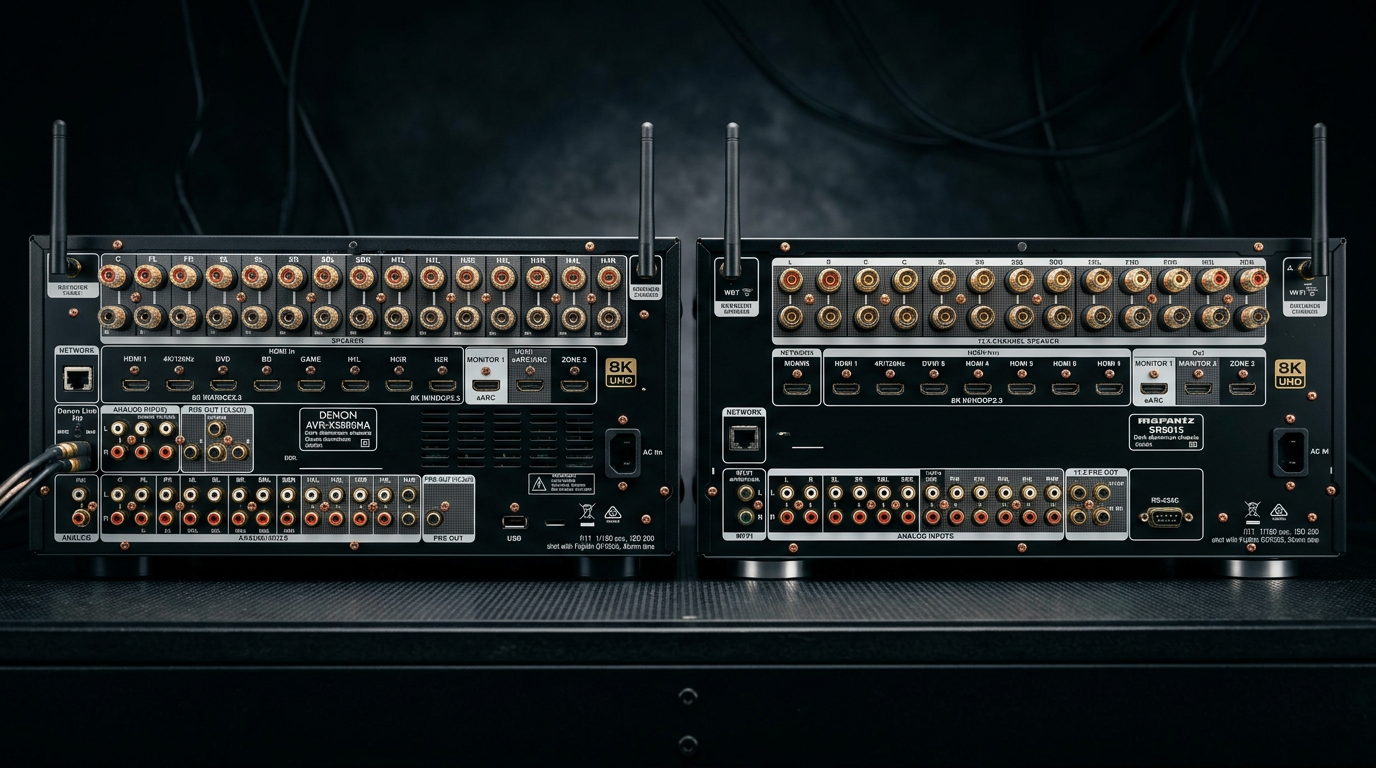
Both units are built in Denon’s Shirakawa Audio Works factory in Japan — the same facility that has produced flagship AVRs for decades. The weight difference of about 2 kg reflects a larger EI transformer in the A10H (designed for higher sustained power across more channels) versus a smaller but more electrically quiet toroidal transformer in the Cinema 30.
The Marantz HDAM SA-2 modules are a discrete op-amp design using surface-mount components rather than integrated chips. Audio Science Review’s bench measurements show the HDAM stage delivering marginally lower THD (total harmonic distortion) at low listening volumes compared to Denon’s discrete Class A/B implementation — measurable with lab equipment, debatable in sighted listening tests, but real in the engineering.
The toroidal transformer in the Cinema 30 is preferred by audiophiles for music listening because it produces less electromagnetic interference and mechanical hum. The A10H’s EI transformer is more efficient at delivering sustained high current across many channels simultaneously — better for loud, dynamic movie scenes where all 13 amps are pushing hard.
Both receivers run warm. Plan for at least 4 inches of clearance above and behind each unit. The A10H runs noticeably hotter due to its higher power output across more channels — important for closed AV cabinets without active cooling.
Feature Breakdown
HDMI and video passthrough:
| HDMI / Video | Denon AVR-A10H | Marantz Cinema 30 |
|---|---|---|
| HDMI Inputs | 7 (all 8K/60 + 4K/120 capable) | 7 (six 8K/60 + 4K/120; one 8K capable) |
| HDMI Outputs | 3 (1 eARC, 2 zone) | 3 (1 eARC, 2 zone) |
| 8K/60 Passthrough | Yes (all 7 inputs) | Yes (6 of 7 inputs) |
| 4K/120 Passthrough | Yes (all 7 inputs) | Yes |
| HDR Formats | HDR10, HDR10+, Dolby Vision, HLG, Dynamic HDR | HDR10, HDR10+, Dolby Vision, HLG, Dynamic HDR |
| Gaming (VRR/ALLM/QMS/QFT) | Yes (all) | Yes (all) |
| HDCP | 2.3 | 2.3 |
The HDMI sections are functionally equivalent for any realistic use case. Both handle every current and next-gen console format. The A10H’s slight edge is that all 7 HDMI inputs support full HDMI 2.1 8K/60 + 4K/120 bandwidth (up to 40 Gbps), whereas the Cinema 30’s front-panel HDMI is a convenience input that doesn’t carry the same full-bandwidth spec.
Audio processing and channel count:
| Audio Processing | Denon AVR-A10H | Marantz Cinema 30 |
|---|---|---|
| Amplified channels | 13.4 | 11.4 |
| Processed channels | 15.4 | 13.4 |
| Dolby Atmos layouts | Up to 7.4.6, 9.4.4 | Up to 7.1.4, 9.1.2 |
| DTS:X Pro | Yes | Yes |
| IMAX Enhanced | Yes | Yes |
| Auro-3D | Yes | Yes |
| Sony 360 Reality Audio | Yes | No |
| Height virtualization | Dolby Height Virtualizer + DTS Virtual:X | Dolby Height Virtualizer + DTS Virtual:X |
The A10H’s 15.4 processing vs Cinema 30’s 13.4 only matters if you’re running very complex ceiling speaker arrays or planning to add an external power amplifier later. For 99% of buyers, the Cinema 30’s 11.4 amplified channels are more than sufficient for a fully immersive 7.1.4 Atmos room with one or two subwoofers.
The four independent subwoofer outputs on the A10H (vs the Cinema 30’s four sub pre-outs but only 11 amp channels) are the real differentiator. If you run a multi-sub array (4 subs is increasingly the audiophile recommendation for smoother bass distribution), the A10H drives all four directly with no external sub amp required.
Room correction — the tiebreaker:
| Room Correction | Denon AVR-A10H | Marantz Cinema 30 |
|---|---|---|
| Built-in | Audyssey MultEQ XT32 | Audyssey MultEQ XT32 |
| Dirac Live upgrade | Yes (~$250 license) | Yes (~$250 license) |
| Dirac Live Bass Control | Yes | Yes |
| Audyssey app (iOS/Android) | Yes (~$20) | Yes (~$20) |
| Sub EQ HT | Yes (handles 4 subs independently) | Yes |
Room correction is identical between the two — same Audyssey XT32 implementation, same Dirac Live upgrade path, same $20 Audyssey app option. Both ship ready for Dirac Live with a paid license, and both can run Dirac Live Bass Control for advanced multi-sub optimization.
Streaming and ecosystem:
| Smart Features | Denon AVR-A10H | Marantz Cinema 30 |
|---|---|---|
| HEOS multi-room | Yes | Yes |
| AirPlay 2 | Yes | Yes |
| Bluetooth | Yes (SBC/AAC) | Yes (SBC/AAC) |
| Roon Ready | Yes | Yes |
| Voice control | Alexa, Google, Siri | Alexa, Google, Siri |
| Phono input (MM) | Yes | Yes |
| DSD playback | Up to 5.6 MHz | Up to 5.6 MHz |
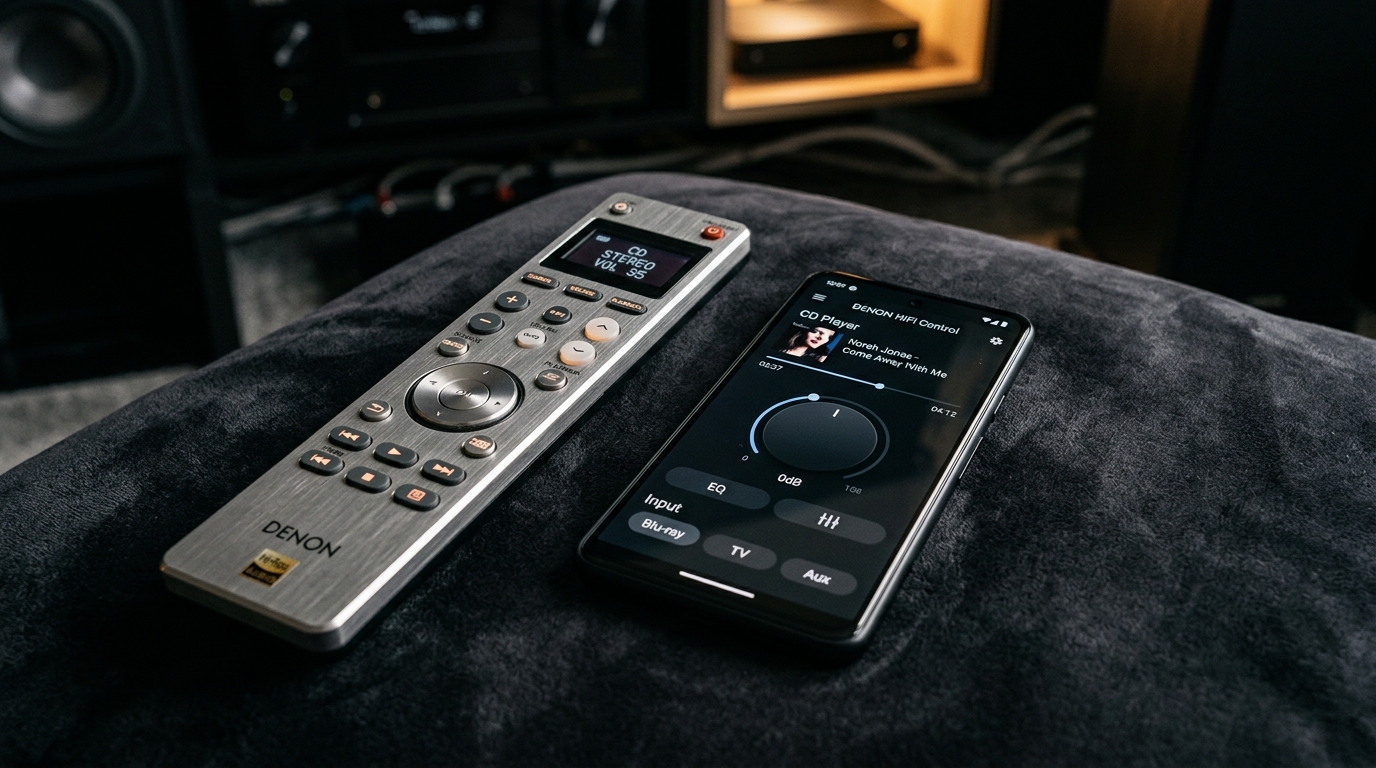
Streaming feature parity is complete. Both are equivalent here — pick whichever brand name you like more, because the software experience is identical.
Pros and Cons
Denon AVR-A10H
Pros:
- 13.4 amplified channels — no external amp needed for any standard home theater layout (7.4.6, 9.4.4); Cinema 30 needs an external amp for anything past 7.1.4
- 150 W per channel — real headroom for power-hungry speakers (under 88 dB sensitivity) and large rooms (400+ sq ft)
- 4 independent subwoofer outputs — directly drives a 4-sub array without a sub pre-amp splitter
- OFC wound EI transformer — cleaner sustained power delivery under dynamic movie loads across all 13 channels
- 15.4 channel processing — future expandability via external 2-channel amp pushes you to 9.4.6 or 7.4.8 layouts
- Sony 360 Reality Audio support — niche but real if you stream Sony’s spatial audio catalog
- All 7 HDMI inputs full 8K/60 + 4K/120 bandwidth — convenient for permanent installs with multiple next-gen sources
Cons:
- $700 more expensive than the Cinema 30 at US MSRP
- Only 3-year warranty (vs Marantz’s 5 years) — meaningful given the 8–12% HDMI/amp failure rate flagged in AVS Forum reliability data
- Heavier and runs hotter — 17.5 kg and noticeably warmer exhaust; needs more rack depth and active ventilation in closed cabinets
- Standard steel chassis — no copper plating for grounding improvement
- No HDAM warmth — cleaner but potentially less “musical” at low volumes per Marantz’s measured THD advantage
Marantz Cinema 30
Pros:
- HDAM SA-2 + current feedback Class A/B — measurably lower THD at low volumes, warmer and more “musical” presentation per Audio Science Review bench data
- 5-year warranty — best-in-class coverage for this tier; covers the typical HDMI/amp failure window
- Toroidal transformer — quieter electrical noise, preferred by audiophiles for music listening
- Copper-plated chassis — improved grounding reduces hum and RFI interference
- Iconic porthole display — genuinely distinctive aesthetics if your AV rack is visible in the living space
- $700 less expensive — real money that can fund Dirac Live ($250), a better subwoofer ($500+), or acoustic panels
- 11.4 channels covers 7.1.4 — fully sufficient for the most common immersive home theater layouts with no external amp
Cons:
- 11 amplified channels only — 7.1.4 Atmos is the realistic ceiling without an external 2-channel amp ($500+)
- 140 W per channel — sufficient for most speakers but may run out of headroom with 86 dB sensitivity speakers in large rooms
- No Sony 360 Reality Audio support
- One HDMI input (front panel) is convenience-only — not full HDMI 2.1 bandwidth like the rear inputs
Best For / Skip If
| Scenario | Denon AVR-A10H | Marantz Cinema 30 |
|---|---|---|
| Large dedicated theater (400+ sq ft) | Yes — 150W and 13 channels handle inefficient speakers and immersive layouts | Skip if room is large and speakers are inefficient |
| Music-first living room system | Skip — HDAM warmth and toroidal transformer win for stereo | Yes — purpose-built for audiophile music playback |
| 7.1.4 Dolby Atmos home theater | Overkill — Cinema 30 covers this perfectly | Yes — 11.4 channels covers 7.1.4 with channels to spare |
| 7.4.6 or 9.4.6 immersive layout | Yes — only A10H handles this in one box | Skip — not enough channels without external amp |
| 4-subwoofer bass array | Yes — 4 independent sub outputs, no splitter needed | Possible but requires sub pre-amp splitter or external sub amp |
| Budget-conscious audiophile | Skip — $700 premium for capability most users don’t need | Yes — best sound-per-dollar in this comparison |
| Gaming-focused setup (PS5/Xbox Series X) | Yes — same HDMI 2.1, same VRR/ALLM | Yes — identical gaming features |
| AV rack in a closet (not visible) | Acceptable — specs over aesthetics | Acceptable — save $700 either way |
Bottom Line
The Denon AVR-A10H vs Marantz Cinema 30 debate is ultimately a debate about channel utilization and listening priorities, not raw sound quality. Both receivers measure excellently. Both share the same parent company, the same Japanese factory, the same HDMI architecture, the same room correction software, and the same firmware update cadence.
What is objective is the math: the Marantz Cinema 30 at $4,500 saves you $700 upfront, costs roughly $103 less per year over 7 years, and carries a 5-year warranty that covers the typical HDMI/amp failure window. If your home theater tops out at 7.1.4 channels — which covers the vast majority of Dolby Atmos installs — the Cinema 30 is the more rational purchase.
The A10H earns its $700 premium only when you genuinely need all 13 amplified channels or 4 independent subwoofer outputs. If your room and speakers justify a 7.4.6 or 9.4.4 layout, the cost of an external amplifier ($500–1,500) plus a sub pre-amp splitter ($150) negates the Marantz savings anyway. In that specific case, the A10H becomes the better value.
The Marantz also wins on sound quality for music-first listeners — HDAM SA-2, toroidal transformer, and copper-plated chassis are not marketing fluff. Audio Science Review measurements and decades of audiophile preference data back this up. If your listening is 50/50 movies and music, the Cinema 30’s musicality advantage is real and worth the channel-count trade-off.
Buy smart. Get more value. — and in this comparison, that means understanding whether you’ll actually use all 13 channels and 4 sub outputs before paying the $700 premium for them. Most buyers won’t. The few who will know exactly who they are.