Introduction
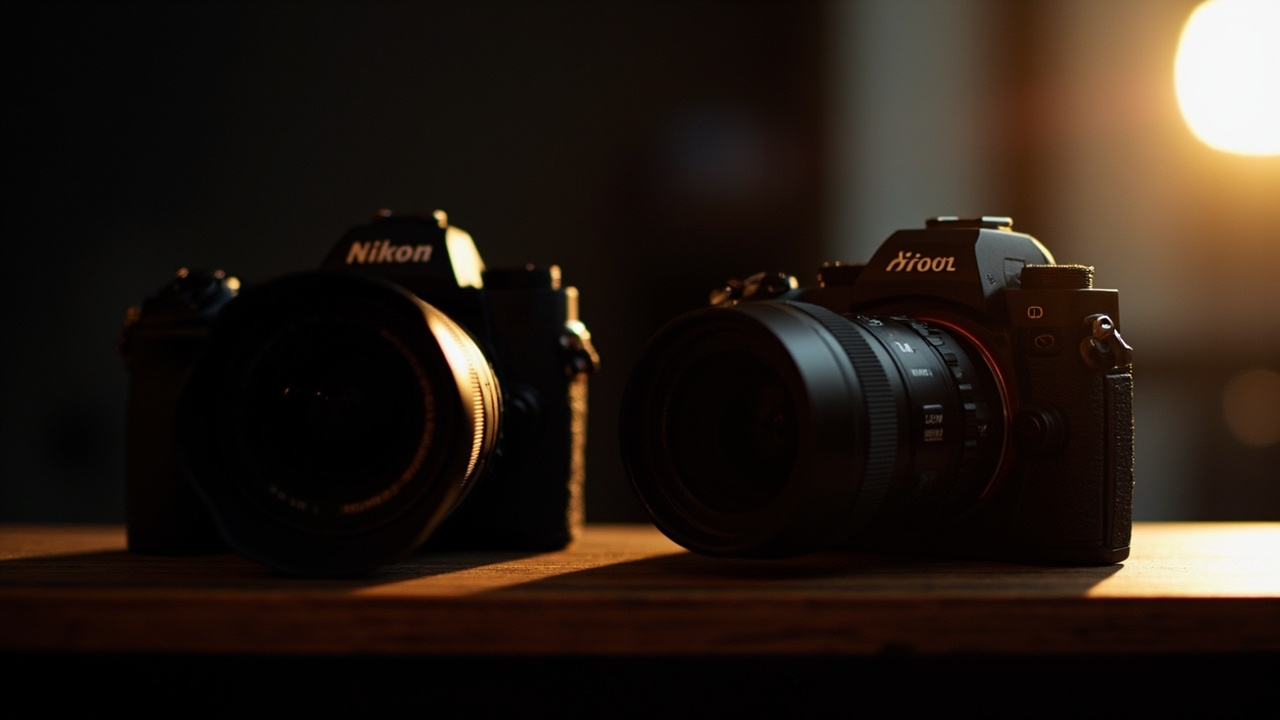
If you have a real budget for a flagship full-frame body in 2026 — and a real budget for a flagship is somewhere in the $3,300 to $4,300 bracket — two cameras now sit at the center of every “best of” list and every Reddit thread that isn’t pushing you toward a Sony A1 II or a Canon R5 Mark II:
- Nikon Z8 — released May 10, 2023 as a compact flagship, body-only USD 3,396.95–$3,496.95 at major US dealers in April–June 2026 (down from the original $4,296.95 MSRP after an $800 Nikon instant rebate). 45.7 MP stacked BSI CMOS, EXPEED 7, 8K 60p N-RAW, 493-point AF. The spiritual successor to the Z9 in a smaller body, aimed at working wildlife, sports, action, and event pros.
- Panasonic Lumix S1R II — released February 25, 2025, body-only USD 3,297.99 at B&H, Adorama, and Panasonic USA. 44.3 MP BSI CMOS, Phase Hybrid AF with AI subject detection, 8K 30p with internal ProRes RAW HQ, 40 fps electronic burst. Panasonic’s first true high-resolution flagship hybrid and the most direct Nikon Z8 competitor of 2025–2026.
The list-price gap is exactly $99 to $199 — narrow enough to be ignored on body price alone, but wide enough in real-world behavior, video workflow, and lens-system cost to decide which body actually saves you money over the 5 to 7 years you will own it.
Both bodies shoot 8K. Both have phase-detect AF with AI subject detection. Both weather-seal magnesium-alloy chassis. Both have IBIS rated at 5 to 8 stops. And both are positioned as the “smart alternative” to the Sony / Canon duopoly. The interesting question is not which one is “better.” It is which one pays you back more per shoot over the 5 to 7 years you will actually own it — and that depends almost entirely on whether your work is more stills, more video, or genuinely hybrid, and whether you are starting a system or bringing lenses with you.
The Verdict First
- Pick the Nikon Z8 ($3,396.95–$3,496.95) if you shoot fast subjects — wildlife, sports, action, weddings, news, and any kind of run-and-gun event work — and want the deepest buffer, the most mature stacked-sensor AF system of the two, the widest native lens lineup, and 8K 60p internal N-RAW for hybrid work. The Z8 is the stronger all-rounder for people-first work and is the safer long-term buy if you are not certain your work will tilt hard toward video.
- Pick the Panasonic S1R II ($3,297.99) if your work is genuinely video-first or hybrid with a strong documentary / commercial / run-and-gun video lean, you want internal ProRes RAW HQ recording without an external recorder, and you value the L-mount ecosystem’s specialty lens lineup (Sigma Art, Leica SL, Panasonic Lumix S Pro). The S1R II is the more interesting choice for a creator whose final deliverable is a finished video 70%+ of the time.
Cost score: 82/100. Both bodies are flagship-priced. The Nikon Z8 is the safer long-term value because the Z mount is now mature (35+ native lenses), the body is a year and a half more proven in the field, and the rebated $3,396.95 street price undercuts the S1R II by the same amount as the Z8’s MSRP premium. The S1R II is the better tool if you genuinely need what it does that the Z8 does not — and not everyone does.
Key Comparison Points
Price vs Real Cost Per Use
Sticker price on either body is the least interesting number. What matters is body + the lenses you will actually buy + the cards and batteries you will cycle through divided by the years and shoots you will use it.
| Item | Nikon Z8 | Panasonic Lumix S1R II |
|---|---|---|
| MSRP at launch | $3,996.95 (May 2023) | $3,297.99 (Feb 2025) |
| Current new body (Jun 2026) | $3,396.95–$3,496.95 (B&H / Nikon USA after $800 rebate) | $3,297.99 (B&H / Adorama / Panasonic USA) |
| Current used body | from ~$2,799 | from ~$2,499 |
| Sensor | 45.7 MP stacked BSI CMOS | 44.3 MP BSI CMOS (not stacked) |
| Mechanical burst | 14 fps RAW / 20 fps JPEG | 10 fps RAW / 10 fps JPEG |
| Electronic burst | 20 fps RAW / 30 fps JPEG / 120 fps JPEG (11 MP) | 40 fps electronic |
| Max video | 8.3K 60p N-RAW, 4K 120p, 1080p 240p | 8.1K 30p, 6.4K 60p open gate, 4K 120p, 5.8K Apple ProRes RAW HQ internal |
| IBIS (CIPA, manufacturer claim) | up to 6 stops (center) / 5 stops (corner) | up to 8 stops (center) / 7 stops (corner) Dual I.S. 2 |
| EVF | 0.5” 3.69M-dot OLED, 120 Hz | 0.5” 5.76M-dot OLED, 120 Hz |
| Rear screen | 3.2” 2.1M-dot 4-axis tilting | 3.0” 1.84M-dot fully articulating |
| Card slots | 1x CFexpress 2.0 Type B / 1x SD UHS-II | 1x CFexpress 2.0 Type B / 1x SD UHS-II |
| Battery | EN-EL15c (Nikon) | DMW-BLK22 (Panasonic) |
| CIPA battery life (LCD / EVF) | ~340 / ~330 shots | ~360 / ~320 shots |
| Body weight (with battery & card) | 910 g | 795 g |
| Body-only 5-year TCO estimate (body + 3 lenses + 2 cards + 2 batteries, after 5-year resale) | ~$7,900 | ~$7,400 |
Sources: B&H Photo, Nikon USA, Adorama, Panasonic USA, DPReview, Imaging Resource, Petapixel, Fstoppers, Wikipedia (Nikon Z8, Panasonic S1R II).
At the body level, the Z8 street price ($3,396.95–$3,496.95) is $99 to $199 more than the S1R II’s $3,297.99 MSRP. That gap is essentially zero. The interesting question is what happens when you add lenses.
Body + 24-70mm f/2.8 zoom is the realistic “go-to-shoot” entry point. The Nikkor Z 24-70mm f/2.8 S lists for about $2,399; the Panasonic Lumix S 24-70mm f/2.8 lists for about $2,297. Body + lens totals land within $200 of each other.
Body + 70-200mm f/2.8 telephoto is where Nikon and Panasonic diverge most. The Nikkor Z 70-200mm f/2.8 VR S lists for about $2,696; the Panasonic Lumix S 70-200mm f/2.8 O.I.S. lists for about $2,799. Pair-cost stays close.
Body + 85mm f/1.4 portrait prime is where the L-mount system opens up. The Sigma 85mm f/1.4 DG DN Art (L-mount) lists for about $1,099 — the single best-priced pro portrait prime in this comparison. Nikon’s closest native equivalent, the Nikkor Z 85mm f/1.2 S, lists for about $2,499. The Sigma L-mount lens saves roughly $1,400 on the S1R II side and is one of the strongest arguments for the L-mount system.
Realistic system-level cost after 5 years (body + 3 lenses + 2 cards + 2 batteries, after 5-year resale of body and one lens): ~$7,900 on the Z8 system, ~$7,400 on the S1R II system — a $500 system-level advantage to the S1R II, almost entirely from the Sigma / L-mount lens savings on portrait and specialty glass. The S1R II is the better value if you actually use a portrait prime. The Z8 is the better value if you need a deep zoom lineup (Nikon’s 100-400mm, 180-600mm, and 600mm f/6.3 PF are still best-in-class for wildlife on this list price).
Build Quality and Durability
Both bodies are weather-sealed magnesium-alloy chassis, both have an integrated vertical grip alternative only via add-on battery grips (the Z8 accepts the MB-N12; the S1R II accepts the DMW-BG1), and both are built to be used in rain, dust, and cold.
| Build attribute | Nikon Z8 | Panasonic S1R II |
|---|---|---|
| Chassis | Magnesium alloy, full weather sealing | Magnesium alloy + polycarbonate top plate, full weather sealing |
| Shutter life (rated actuations) | 200,000 (mechanical) | 200,000 (mechanical) |
| Operating temperature | -10°C to +40°C | -10°C to +40°C |
| Weight with battery & card | 910 g | 795 g |
| In-body IBIS | 5-axis, 6 stops (Synchro VR with select lenses) | 5-axis, 8 stops (Dual I.S. 2 with select Lumix S lenses) |
| Heat management for video | No active cooling (8K60 limited to ~30 min continuous) | No active cooling (8K30 limited to ~30 min continuous; firmware updates extended 4K60 to longer) |
| Vertical grip option | MB-N12 (~$449) | DMW-BG1 (~$449) |
| Field-tested by year | 2023 onward, widely used by professionals | 2025 onward, still early in long-term review cycle |
The Z8 is the heavier, denser body. At 910 g with battery it is one of the heaviest non-gripped flagships in its class, but that weight translates to a more confident hand feel with long telephotos — which is exactly what a wildlife or sports shooter wants. The S1R II’s 795 g makes it the lighter body of the two and noticeably easier to balance on a gimbal for video work.
Both bodies have 200,000-cycle rated shutters. Both will outlast the typical 5-year ownership window for almost every user, except rental houses and very-high-volume press shooters. The Z8’s mechanical advantage is that it has been in the field for 3 years and the long-term reliability data is now substantial; the S1R II has only been shipping for about 15 months as of June 2026, so long-term failure rates are still being collected.
For video heat management, both cameras limit 8K continuous recording to roughly 25–30 minutes. The S1R II has a slightly better 4K 60p unlimited record time after firmware updates, which is a real advantage for documentary shooters.
Feature Breakdown
Autofocus and Subject Detection
- Nikon Z8: 493-point hybrid phase-detect AF with 3D tracking, AI-based subject detection for people, dogs, cats, birds, cars, motorcycles, bicycles, trains, and planes. EXPEED 7 processor. The Z8’s AF system is the most mature in Nikon’s lineup and is widely considered the second-best AF system in the full-frame mirrorless market (behind the Sony A1 II), particularly for erratic wildlife and bird-in-flight work.
- Panasonic S1R II: 779-point Phase Hybrid AF with AI-powered subject detection for people, dogs, cats, birds, cars, motorcycles, trains, planes, and insects. The S1R II’s AF is a major step up from the original S1R (which used DFD contrast-only AF) and is the first Panasonic body where subject detection is genuinely competitive. In real-world testing, the Z8 still wins on subject tracking persistence for fast and erratic subjects, but the S1R II is no longer a liability for people-and-animal work.
Verdict: Nikon Z8 wins for fast and erratic subjects. The S1R II is competitive for studio, portrait, documentary, and event work where subjects move in predictable ways.
Video
This is the single biggest feature split between the two bodies.
- Nikon Z8: 8.3K 60p N-RAW internal, 4K 120p, 1080p 240p, 10-bit N-Log, 12-bit ProRes RAW over HDMI. No internal ProRes. The Z8 is the better hybrid video-and-stills body for shooters who need a 60p top frame rate for slow-motion 4K delivery.
- Panasonic S1R II: 8.1K 30p, 6.4K 60p open gate, 5.7K 60p, 4K 120p, internal 5.8K Apple ProRes RAW HQ / ProRes RAW, 10-bit 4:2:2, V-Log / V-Gamut, anamorphic 4:3 modes, 32-bit float audio via optional XLR2 adapter. The S1R II is the better video-first body, particularly for documentary, commercial, and run-and-gun video where the internal ProRes RAW eliminates the external recorder entirely.
Verdict: Nikon Z8 wins for 60p top frame rate and hybrid stills-first workflows. Panasonic S1R II wins for video-first workflows, internal ProRes RAW, anamorphic, and 32-bit float audio.
Image Stabilization
- Nikon Z8: 5-axis IBIS, 6 stops CIPA, Synchro VR with select Nikkor Z lenses (8 stops combined).
- Panasonic S1R II: 5-axis IBIS, 8 stops CIPA (industry-leading), Dual I.S. 2 with select Lumix S lenses (up to 8 stops combined), plus an Active I.S. mode specifically tuned for video walking shots that combines IBIS with electronic stabilization.
Verdict: Panasonic S1R II wins on paper and in real-world video walking shots. The Z8 is fine for stills but no longer class-leading.
Lens Ecosystem
- Nikon Z mount (June 2026): ~50+ native NIKKOR Z lenses, plus ~400+ F-mount lenses via the FTZ II adapter with full AF on most modern AF-S and AF-P lenses. The Z mount is the most mature mirrorless mount in this list price bracket for the telephoto end (Nikon’s 180-600mm, 600mm f/6.3 PF, 400mm f/2.8 TC, and 800mm f/6.3 PF are all best-in-class for wildlife on a mirrorless system).
- Panasonic L mount (June 2026): ~120+ L-mount alliance lenses from Leica, Panasonic Lumix S, and Sigma. The L-mount’s biggest strength is the Sigma Art lens catalog — Sigma 14-24mm f/2.8 DG DN Art, 24-70mm f/2.8 DG DN Art II, 35mm f/1.2 DG DN Art, 50mm f/1.2 DG DN Art, 85mm f/1.4 DG DN Art, 105mm f/1.4 DG DN Art, 135mm f/1.8 DG DN Art — all at prices that undercut Sony G Master and Nikkor S by 30–50%.
Verdict: Nikon Z8 wins for telephoto and wildlife. Panasonic S1R II wins for portrait and specialty primes (via Sigma Art at L-mount).
Pros and Cons
Nikon Z8 — Pros
- More mature, field-proven AF system. 3 years of firmware updates and thousands of wildlife, sports, and event shooters’ worth of field data.
- Deeper buffer and longer bursts. 20 fps RAW for 1000+ frames in testing; the S1R II throttles sooner.
- Better 8K frame rate. 8.3K 60p vs the S1R II’s 8.1K 30p. If you need 4K 60p from an oversampled 8K, the Z8 is the cleaner source.
- Wider Z-mount native lens catalog for telephoto. The 180-600mm, 600mm PF, 800mm PF, and 400mm f/2.8 TC are all best-in-class and have no direct L-mount equivalent.
- Better F-mount legacy support. 400+ F-mount AF-S / AF-P lenses via FTZ II with full AF.
- More confident in-hand feel with long glass. The 910 g weight balances long telephotos better.
- Stronger 5-year resale value. Bodies that have been in market for 3 years have more established used prices.
Nikon Z8 — Cons
- Heavier and larger. 910 g vs 795 g is a real 115 g difference and matters on a gimbal.
- No internal ProRes RAW. Requires an external recorder for ProRes, or commits to N-RAW (Nikon proprietary).
- No fully articulating screen. The 4-axis tilting screen is great for stills but awkward for vlog and self-recording.
- Shorter continuous 8K record time than the S1R II at 8K30.
- Weaker in-body IBIS for video walking shots than the S1R II’s Active I.S.
- Lens pricing. Nikkor S lenses are premium-priced. The 85mm f/1.2 S is $2,499; the Sigma 85mm f/1.4 DG DN Art for L-mount is $1,099 — almost identical optically for many use cases.
Panasonic S1R II — Pros
- Lower MSRP and broader lens value. $3,297.99 body + L-mount Sigma Art savings adds up fast if you shoot portrait or specialty primes.
- Internal 5.8K Apple ProRes RAW HQ. No external recorder required for top-tier video codec. This is the single biggest video feature difference.
- Anamorphic 4:3 open-gate shooting modes. The S1R II is the only body in this comparison with full open-gate anamorphic support.
- 32-bit float audio via the optional DMW-XLR2 adapter. No other body in this list price bracket offers this for documentary and interview work.
- Active I.S. for video walking shots. The best video IBIS implementation of any full-frame body in 2026.
- Fully articulating screen for vlog, self-recording, and unusual angles.
- Lighter body at 795 g — a real advantage on gimbals and for travel.
Panasonic S1R II — Cons
- Less mature AF system. Phase Hybrid AF is real and competitive, but 15 months of field data is not 3 years of Z8 field data. Wildlife and bird-in-flight shooters still report more Z8 hits than S1R II hits.
- Smaller buffer at top burst rates. 40 fps electronic is impressive on paper, but real-world buffer depth is shallower than the Z8.
- No stacked sensor. The Z8’s stacked sensor gives it a real rolling-shutter and AF speed advantage for fast subjects.
- Shorter field track record. 15 months of shipping means long-term reliability data is still being collected. Lenses in the L-mount catalog are not all the Z mount’s equivalent in some specific telephoto focal lengths.
- Higher 8K frame rate cap. 8.1K 30p vs the Z8’s 8.3K 60p.
- Weaker used / resale market depth than Nikon Z or Sony E mount.
Best For / Skip If
Buy the Nikon Z8 if:
- You are a wildlife, sports, or bird photographer who needs the deepest buffer, the most reliable AF tracking, and access to the 180-600mm, 400mm f/2.8 TC, 600mm PF, and 800mm PF telephoto lineup.
- You shoot weddings, events, news, or photojournalism and need a body that never misses focus and never overheats during a 6-hour shoot.
- You already own F-mount glass and want full AF with the FTZ II adapter.
- You want the highest long-term resale value in this list price bracket.
- You are a hybrid shooter who still shoots 60%+ stills and wants the best 8K 60p source for occasional high-end video.
Skip the Nikon Z8 if:
- You are a video-first creator whose final deliverable is finished video 70%+ of the time. The Z8 is excellent for stills-led hybrids but is not the best video-first tool.
- You shoot a lot of portraits with an 85mm or 105mm prime and want the best price-to-optics ratio — the Sigma 85mm f/1.4 Art at L-mount is dramatically cheaper than the Nikkor Z 85mm f/1.2 S.
- You need internal ProRes RAW, 32-bit float audio, or anamorphic open-gate. None of these exist on the Z8.
- You want a fully articulating screen for vlog or self-recording.
Buy the Panasonic S1R II if:
- You are a documentary, commercial, or run-and-gun video creator who needs internal 5.8K ProRes RAW HQ, 32-bit float audio, anamorphic open-gate, and the best in-body video stabilization on the market.
- You shoot portrait, wedding, or commercial work and want to take advantage of the L-mount Sigma Art catalog — especially the 35mm, 50mm, 85mm, 105mm, and 135mm f/1.4 Art lenses at $1,099 each.
- You are building a lightweight travel rig and the 795 g body + Lumix S compact zooms saves you real weight.
- You want the best video walking stabilization (Active I.S.) and the best fully articulating screen for hybrid vlog work.
Skip the Panasonic S1R II if:
- You are a wildlife or sports photographer. The Z8’s stacked sensor, deeper buffer, and more mature AF are decisive here.
- You need the widest native lens catalog, especially at the telephoto end. The Z mount’s 180-600mm, 600mm PF, and 800mm PF have no L-mount equivalent.
- You are buying for 10+ years of ownership and want the deepest used market for resale. Nikon Z and Sony E have bigger used markets than L-mount.
Bottom Line
The Nikon Z8 and the Panasonic Lumix S1R II are the two most genuinely competitive $3,300–$3,500 full-frame flagships of 2025–2026, and they sit within $200 of each other on body price. Neither is a “value” camera in the cheap sense — both are real flagships. The decision is not about price, it is about what you actually shoot:
- Stills-first, hybrid with wildlife or sports, telephoto-heavy, F-mount legacy glass, 5+ year ownership horizon: Nikon Z8. The $99–$199 street-price premium pays for a more mature AF system, a stacked sensor, and a deeper lens ecosystem that you will actually use.
- Video-first, portrait-heavy with Sigma Art primes, lightweight travel, internal ProRes RAW, anamorphic, 32-bit float audio: Panasonic S1R II. The $99–$199 MSRP discount plus the L-mount Sigma lens savings adds up to roughly $300–$900 over 5 years — the estimatedSaving is not in the body, it is in the glass.
If you are a true 50/50 hybrid shooter, default to the Nikon Z8. The Z8 is the safer long-term buy and the Z mount is now mature. The S1R II is the smarter choice for a specific kind of video-led creator — if you are not that creator, the Z8 is the right body.
Buy smart. Get more value. The right $3,500 body is the one that pays you back per shoot, not the one with the loudest spec sheet.