Introduction
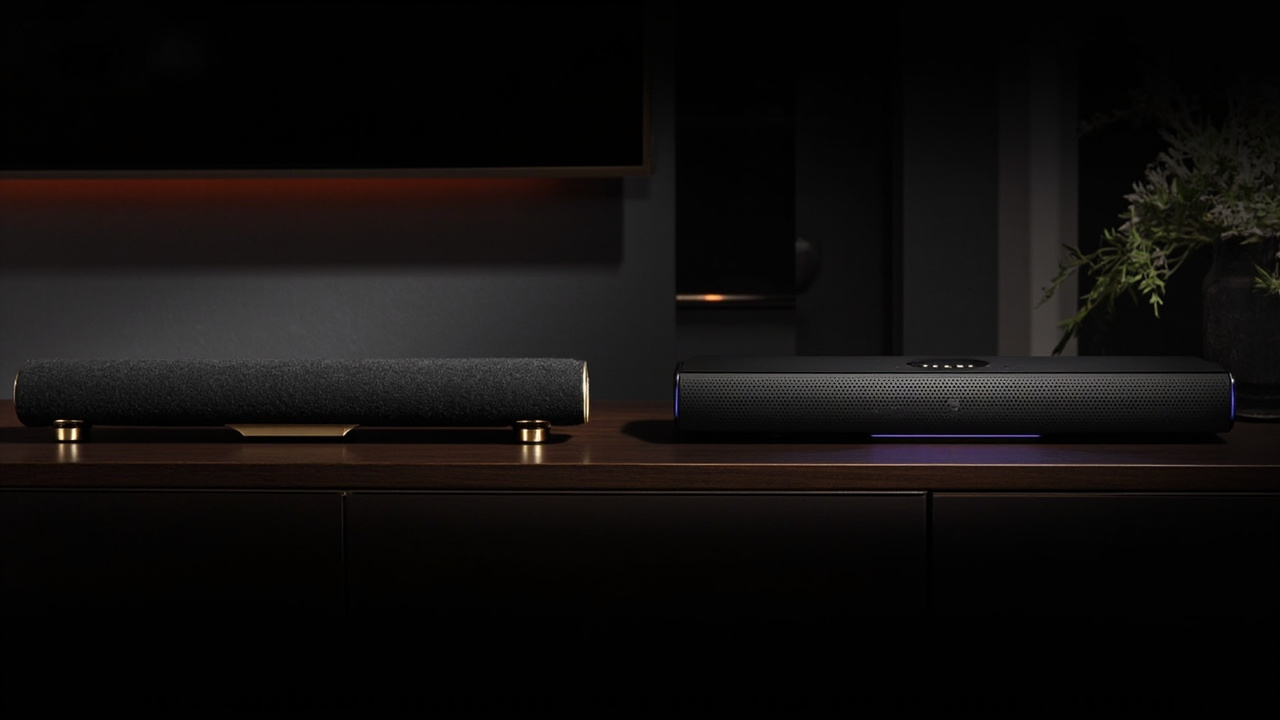
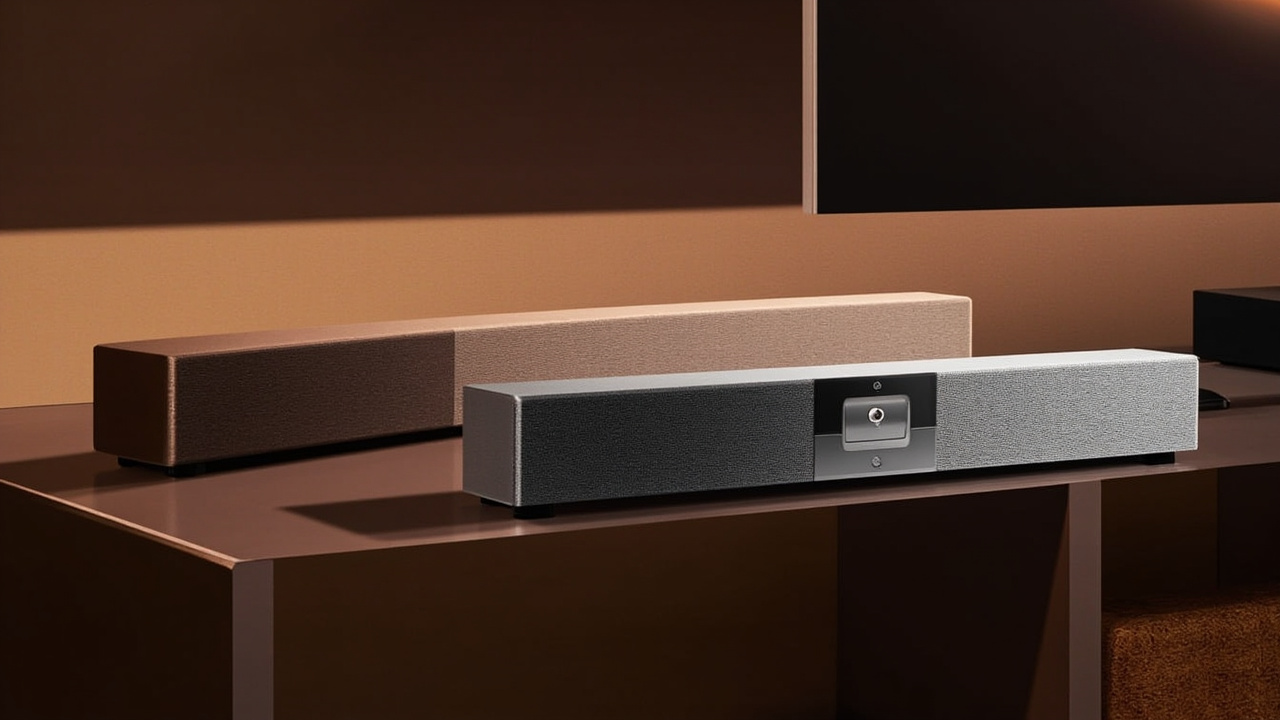
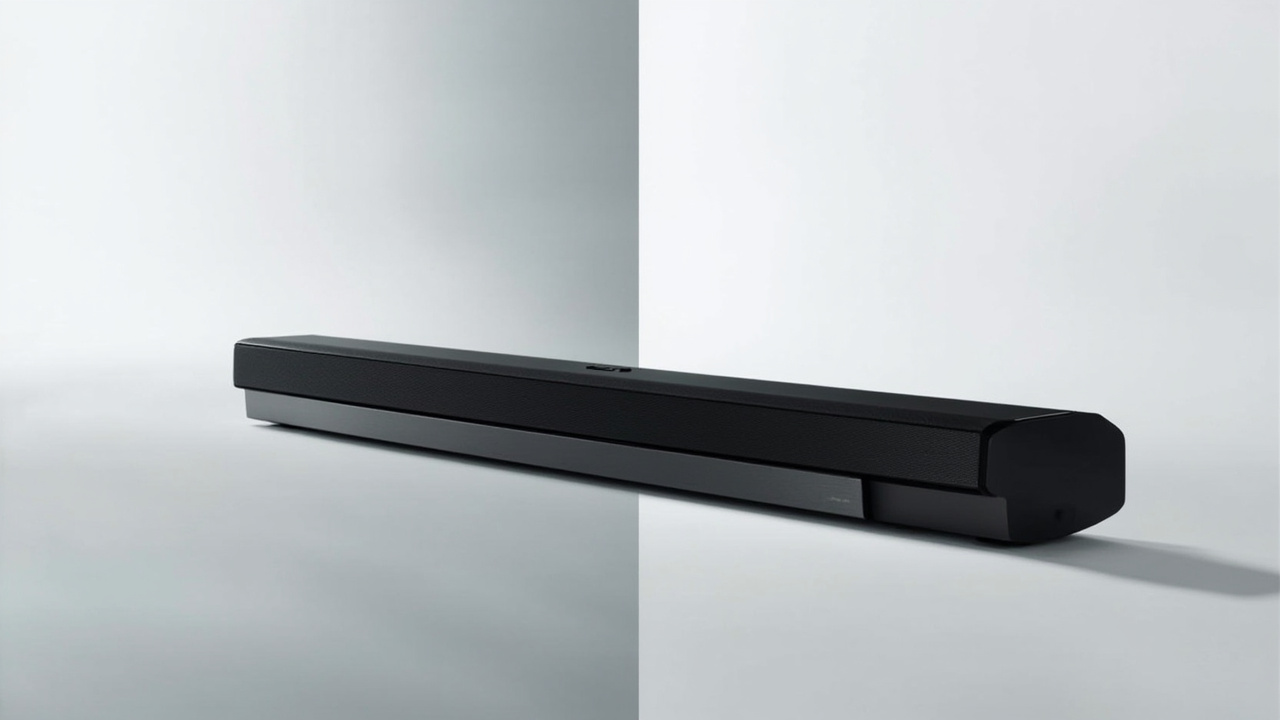
The premium Dolby Atmos soundbar tier has two very different philosophies in 2026, and they don’t always compare like-for-like. On one side sits the Sonos Arc Ultra ($999 MSRP), a single-cabinet soundbar Sonos calls a 9.1.4 system even though it ships as one bar and no rear speakers. On the other sits the JBL Bar 1300X (launched at $1,699 in 2023, regularly $1,099–$1,399 on the street in 2026) — a true 11.1.4 system with a wireless 12-inch sub and two battery-powered detachable rear speakers that you can also use as standalone Bluetooth speakers when you’re not watching TV (Sources: BassHeadSpeakers JBL Bar 1300X review, HomeToolHQ Sonos Arc Ultra review 2026, Amazon JBL Bar 1300X product page).
Both are Dolby Atmos. Both are clearly above the $500 “value bar” line. One wants to be the only box in your living room; the other wants to be three boxes plus a sub. They look like different products on a shelf, so most comparison articles either dodge the comparison or default to “the modular one is better.” That is the lazy answer.
The interesting question is which one actually delivers more cost-per-use over the 5 to 7 years you keep it, once you account for the Sonos tax of probably needing a Sub 4 down the line, and the JBL perk of being able to repurpose the surrounds as portable speakers. That’s the lens we’ll use here.
The Verdict First
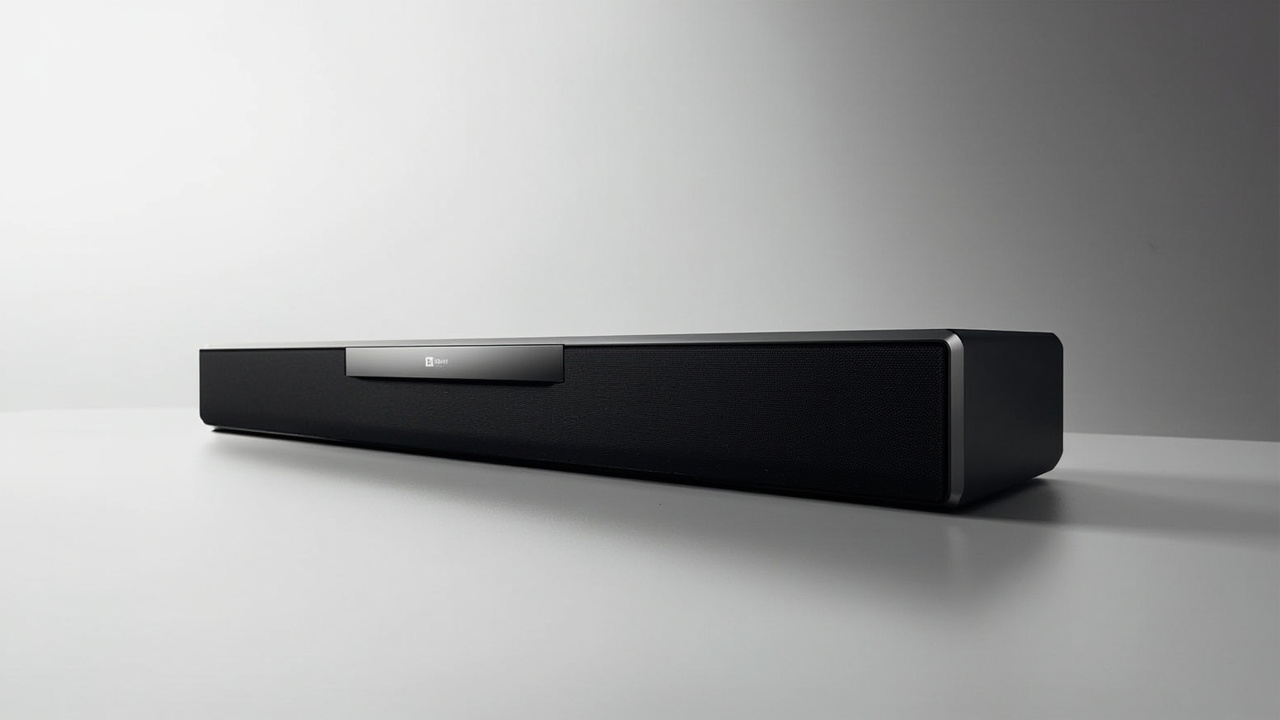
- Choose the Sonos Arc Ultra ($999) if you want the best single-cabinet Atmos experience available under $1,000, you don’t want to deal with a subwoofer on the floor, and you want the option to expand into a multi-room Sonos ecosystem later. The Sound Motion woofer architecture reaches into the mid-30 Hz range without an external sub — extraordinary for a sealed cabinet (Source: HomeToolHQ).
- Choose the JBL Bar 1300X ($1,099–$1,399 street) if you watch a lot of Atmos movies with discrete rear effects, want the loudest, deepest system in the category (1,170 W total), and value the fact that the detachable surrounds double as portable Bluetooth speakers you can carry around the house.
- Skip both if your viewing is mostly dialog-driven streaming on a sub-65-inch TV — the Sonos Beam (Gen 3) at around $499 is overkill for that job, and the Sonus faber or KEF LSX II are better music-first picks for the $1,000+ tier.
Key Comparison Points
Price vs Real Cost Per Use
The sticker prices are in the same general neighborhood once the JBL is on sale, but the total cost of ownership diverges fast.
| Cost Factor | Sonos Arc Ultra | JBL Bar 1300X |
|---|---|---|
| MSRP at Launch | $999 (October 2024) | $1,699 (late 2023) |
| Street Price, July 2026 | $999 (Sonos shop, no official discount yet) | ~$1,099–$1,399 (Amazon, Best Buy) |
| Channel Layout | 9.1.4 (manufacturer-stated, single cabinet) | 11.1.4 (bar + 2 detachable surrounds + 12” sub) |
| Total System Output (RMS) | ~110 W RMS (Sonos rated) | 1,170 W total (BassHeadSpeakers spec sheet) |
| Subwoofer Included | No — Sound Motion woofers only | Yes — 12” wireless, 300 W dedicated |
| Detachable Surrounds | No | Yes — battery-powered, 10 hrs playback each |
| System Cost to Reach Comparable Atmos Performance | $999 bar + ~$799 Sonos Sub 4 + 2 × $599 Era 300 rears = $2,996 | $1,099–$1,399, all-in-one |
| Annual Electricity (~4 hrs/day) | ~$5.50 idle/active (10–15 W avg) | ~$9–$12 active (1,170 W peak, sub idle draw ~0.5 W standby) |
| 5-Year Amortized Cost (entry price) | $200/yr + $5.50 = $205.50 | $220–$280/yr + $10.50 = $230.50–$290.50 |
Two takeaways:
- The Sonos Arc Ultra holds $999 firm. Sonos does not put the current flagship on sale, and the older 2020 Arc remains at $899 (often $799 on sale) as a price-floor alternative. Entry price for the Ultra is a single number.
- The JBL Bar 1300X’s street price has dropped meaningfully. BassHeadSpeakers launched the review at $1,699 MSRP; as of mid-2026 the system regularly sells at $1,099 on Amazon Lightning sales and $1,399 at Best Buy. For buyers who don’t need to add anything else, the JBL system is effectively a 11.1.4 surround rig with detachable Bluetooth speakers for the same price Sonos charges for a bar with no sub at all.
The hidden $500–$2,000 swing is what happens if you compare realistically. The Sonos system is only “single cabinet” out of the box. If you match the JBL’s discrete-rear Atmos experience by adding a Sonos Sub 4 and a pair of Era 300s, the Sonos end of the comparison reaches roughly $2,996 — more than 2× the JBL all-in price. On the other hand, a lot of Sonos owners buy the Arc Ultra without any rears and feel satisfied; the Atmos experience from a single bar is genuinely good (Source: HomeToolHQ Atmos testing).
For pure cost-per-use, the JBL delivers more system for the dollar if you would have spent the $799 + $1,198 to round out the Sonos. The Sonos wins cost-per-use only if the bar alone satisfies your needs.
Build Quality and Durability
The two bars take philosophically opposite approaches to physical design, and both are defensible.
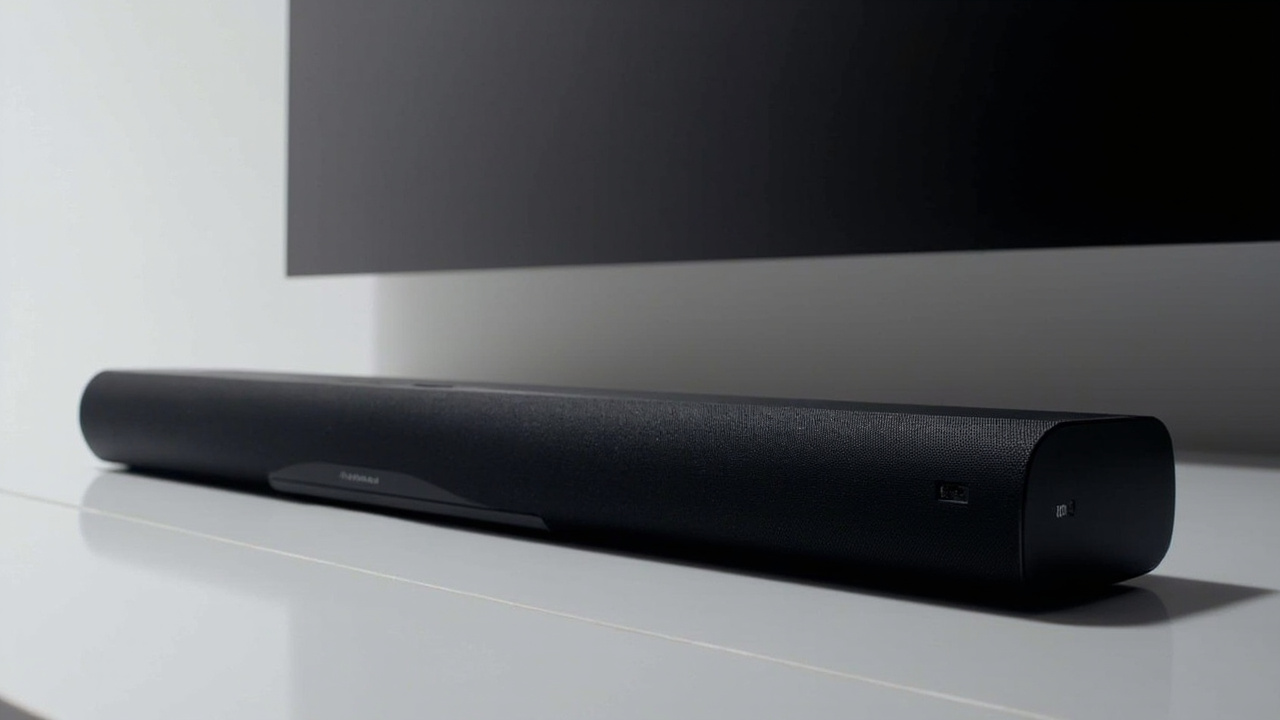
Sonos Arc Ultra — premium single cabinet, optimized for invisibility:
- 5.9 kg (13 lb) — manageable to wall-mount
- 1,178 mm (46.4 in) wide, 75 mm (2.95 in) tall, 110.6 mm deep
- Matte plastic finish in Black or White
- 15 drivers: 7 tweeters, 6 midwoofers, 2 Sound Motion woofers (Mayht dual-diaphragm technology, acquired by Sonos in 2022)
- Touch controls on top, Sonos app for setup
- No IP rating, no grille tools
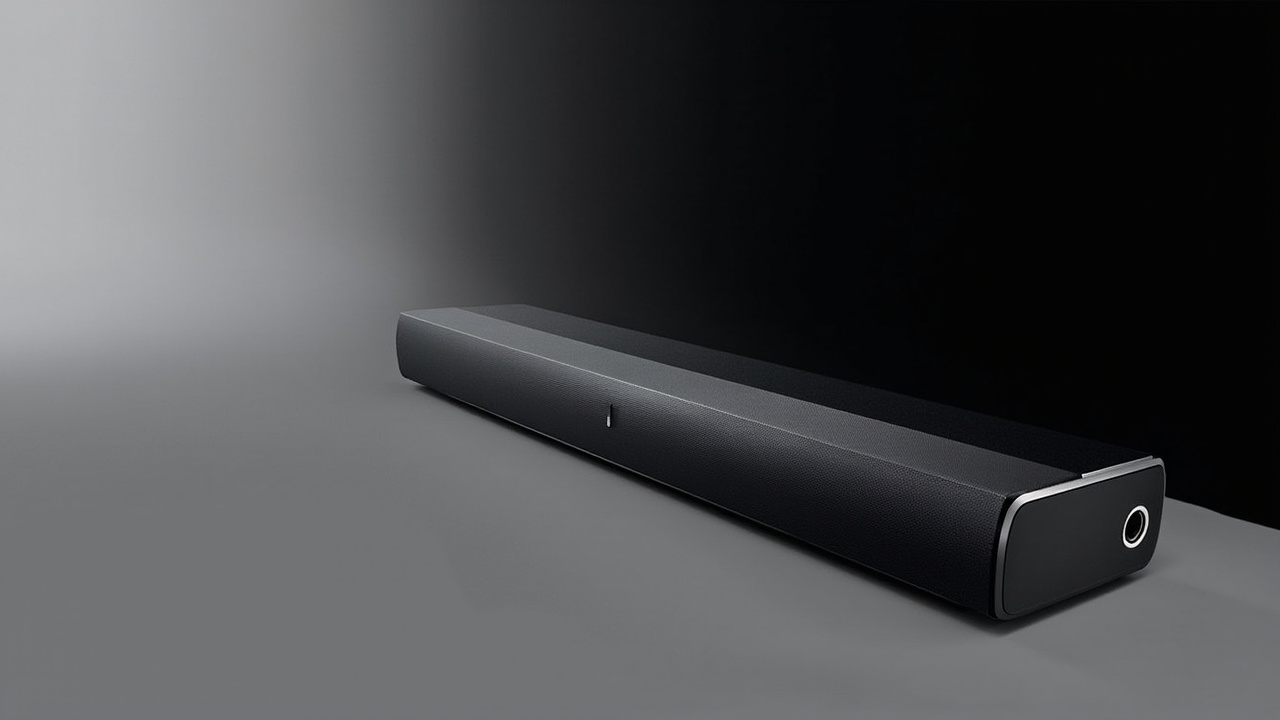
JBL Bar 1300X — modular, built to be rearranged:
- Main bar: 1,375 mm (54.1 in) wide, ~6.5 kg
- Detachable surrounds: 1.17 kg each, USB-C charged, integrated upward-firing drivers
- 12” wireless subwoofer: 15.65 kg, 366 × 481 × 366 mm
- Matte black plastic with brushed metal trim on the bar
- 1170W total power — capable of theater-volume playback without strain
- No IP rating (the detachable surrounds are NOT waterproof — JBL labels them “splash resistant,” which is not the same as IP67)
For a family that watches action movies and wants the couch-shaking experience, the JBL system is the more dedicated home-theater package. For a clean living room that prizes minimal hardware, the Sonos single cabinet is the more invisible package.
There are three physical risk vectors on the JBL side worth knowing:
- The detachable surrounds run on battery. They pair automatically and last up to 10 hours per charge, but if you forget to dock them they will go silent mid-movie. BassHeadSpeakers noted the surrounds can be “a little louder” with proper placement and calibration (Source: BassHeadSpeakers JBL Bar 1300X review).
- The 12” sub is a real subwoofer. At 15.65 kg and ~14” per side, it needs floor space and can shake items off shelves in apartments.
- Two remotes, two apps if you also have a Sonos system. Multi-ecosystem households get buffer.
Feature Breakdown
This is where the two soundbars split into “different products” rather than “the same product, different brand.”
| Feature | Sonos Arc Ultra | JBL Bar 1300X |
|---|---|---|
| Channels | 9.1.4 (virtualized side + real upward-firing) | 11.1.4 (bar + 2 detachable surrounds + sub) |
| Drivers | 15 | Bar: 4 × 46×90 mm racetrack + 0.75” tweeter + 2 × 2.75” up-firing + center channel; surrounds each have 0.75” tweeter + 2.75” up-firing; sub: 12” |
| Dolby Atmos | Yes (lossless TrueHD via HDMI eARC, 24-bit/192 kHz pass-through) | Yes (Dolby Atmos + DTS:X) |
| DTS:X | No (still a real gap for 4K Blu-ray collectors) | Yes |
| HDMI Ports | 1 × HDMI eARC (no passthrough) | 1 × HDMI eARC + 3 × HDMI 2.1 inputs with 4K Dolby Vision passthrough |
| Wireless Audio | Wi-Fi 6, AirPlay 2, Bluetooth 5.3 with LE Audio | Wi-Fi, AirPlay, Chromecast built-in, Bluetooth 5.0; surrounds pairable as standalone stereo |
| Voice Assistants | Sonos Voice Control, works with Alexa | Works with Alexa, Google Assistant, Siri |
| Room Calibration | TruePlay (iOS advanced walkaround + Android quick-tune) | Easy sound calibration via JBL One app |
| Dialogue Enhancement | 3 speech modes (Low/Med/High) | PureVoice Dialogue Enhancement Technology |
| EQ Customization | Loudness, treble, bass in Sonos app | Multi-band EQ in JBL One app |
| Streaming Services Native | 100+ via Sonos app + AirPlay 2 | AirPlay, Chromecast, Alexa Multi-Room Music |
| Expandability | Add Sonos Sub 4, Sonos Sub Mini, Era 300 rears, all wireless | Add JBL Bar 1000 surrounds — already included |
| Multi-Room Ecosystem | Sonos (the standard) | JBL/Google/Alexa ecosystems; not as deep a music library |
The pattern is clear:
- Sonos bets on sound engineering and ecosystem: the Sound Motion woofer is genuinely new hardware, the 9.1.4 virtualization handles real Atmos effects without surrounds, and the Sonos app remains the deepest multi-room music ecosystem. The tradeoffs are real: no DTS:X, single HDMI port with no passthrough, and the app still carries scar tissue from the May 2024 rewrite even though the worst bugs are fixed by mid-2026 (Source: HomeToolHQ).
- JBL bets on component count and modularity: 1170 W output, a real 12” sub, four upward-firing drivers in the main bar plus two more in each detachable surround, plus three HDMI 2.1 inputs that will matter to PS5/Xbox owners with 4K/120 Hz support. The tradeoffs are real: the JBL One app is functional but less polished than Sonos, and the surrounds’ battery-dependent design creates a “did I dock them?” anxiety for some buyers.
For a PS5/Xbox gamer who runs 4K/120 Hz, the JBL’s three HDMI inputs are a real advantage — you can plug the console directly into the bar and let it pass through to the TV. The Sonos’s single HDMI eARC port forces you to plug the console into the TV and rely on the TV’s eARC return.
Sound Quality and Atmos Performance
Both bars measure and sound excellent. The character of the experience is meaningfully different.
Sonos Arc Ultra delivers what HomeToolHQ called the best soundbar-only Atmos experience they had tested as of April 2026. Highlights:
- The Sound Motion dual-diaphragm woofers produce usable output into the mid-30 Hz range — extraordinary for a sealed cabinet of this size. The original 2020 Arc rolls off meaningfully below 50 Hz.
- The Dune Part Two sandstorm sequence separated simultaneous sub-bass rumbles, overhead debris cues, and dialogue cleanly. The original Arc collapsed them into a single loud layer.
- TruePlay now runs on Android (a quick-tune), so non-Apple households no longer feel like second-class Sonos citizens.
- Height effects are genuinely overhead without rear speakers, but a Sonos Sub 4 + Era 300 pair elevates the experience to a real 9.1.4 immersive rig.
JBL Bar 1300X delivers what BassHeadSpeakers called “almost theater-quality 3D sound performance” with caveats:
- 1,170 W total system output is more than any mainstream competitor at this price tier — louder than the Samsung HW-Q990C and meaningfully louder than the Bose Smart Ultra Soundbar in side-by-side testing.
- The 12” wireless sub “moves much more air than the Bose or Sonos 10” subwoofer,” which matters on action film scores and bass-heavy Atmos tracks.
- The detachable surrounds give you physical rear Atmos effects, not virtualized ones — overhead debris and side-flying sound effects feel like they come from behind and above you, not just forward-faked.
- Detachable surround level can be slightly under-loud in the bass regions without manual EQ; BassHeadSpeakers notes calibration fixes this in under two minutes.
For music listening, the Sonos Arc Ultra is the clearer winner for most households. HomeToolHQ called it “the first Sonos soundbar we’d happily use as a primary music speaker in a living room” — vocals have more body and dense arrangements don’t smear. The JBL Bar 1300X is good for music but the surround-focused tuning makes it slightly less natural on stereo content without manual EQ.
For movie Atmos with discrete rear cues, the JBL Bar 1300X has the architectural advantage — you cannot virtualize a physical speaker behind you. The Sonos Arc Ultra is the better single-cabinet choice, but a Sonos system with the bar + Sub 4 + Era 300 pair (~$2,996) is the actual answer at Sonos tier.
Pros and Cons
Sonos Arc Ultra
Pros
- Best soundbar-only Atmos under $1,000 — genuinely competes with small separates systems for the Atmos bubble (Source: HomeToolHQ)
- Sound Motion dual-diaphragm woofers reach usable output into the mid-30 Hz range without a sub
- 9.1.4 channel layout in a single cabinet — no rear cables, no sub to position
- 24-bit/192 kHz lossless Atmos TrueHD pass-through via HDMI eARC
- TruePlay room calibration now works on Android (quick-tune) as well as iOS (advanced)
- Bluetooth 5.3 with LE Audio — direct streaming without the Sonos app in the signal chain
- The deepest multi-room music ecosystem in the category
- Black or White finish to match most TV setups
Cons
- $999 with no official discount while the older 2020 Arc sits at $899 (often $799 sale) — the gap is real and worth questioning
- No DTS:X support — physical-media 4K Blu-ray collectors with DTS:X discs fall back to the core DTS 5.1 mix
- Single HDMI port, no passthrough — PS5/Xbox 4K/120 Hz users have to plug consoles into the TV directly
- The Sonos app carries scar tissue from the May 2024 rewrite; core features are fixed as of 2026 but edge cases on older S1-era devices still surface on Reddit
- To match JBL-tier surround, you need to add a $799 Sub 4 + 2 × $599 Era 300 = +$1,997 — pushing the full system past $3,000
- Bass extension, while excellent for a sealed bar, still loses to a real 12” sub at high volumes
JBL Bar 1300X
Pros
- 1,170 W total output — the loudest mainstream Atmos system at this price tier (Source: BassHeadSpeakers)
- Full 11.1.4 channel layout out of the box — bar + 2 detachable surrounds + 12” wireless sub
- Three HDMI 2.1 inputs with 4K Dolby Vision passthrough — PS5/Xbox/Apple TV friendly, no need to plug into the TV
- DTS:X + Dolby Atmos — both immersive codecs supported
- Detachable surrounds double as standalone Bluetooth speakers — portable use around the house
- Battery-powered surrounds up to 10 hours per charge, USB-C charging
- AirPlay, Chromecast, Alexa Multi-Room Music, Bluetooth 5.0
- 12” wireless sub produces noticeably deeper bass than 8”/10” competitors
- PureVoice dialogue enhancement handles low-volume late-night viewing well
Cons
- Street price $1,099–$1,399 is still meaningfully more than the Sonos Arc Ultra’s $999 even at the lowest sale prices
- Detachable surrounds can be slightly quiet in the bass region without manual EQ — calibration is mandatory (Source: BassHeadSpeakers)
- 12” sub is 15.65 kg and ~14” per side — not an apartment-friendly object; can rattle loose shelf items
- Surrounds are “splash resistant,” not IP-rated — JBL’s portable reputation does not extend to these
- Forgetting to dock the surrounds means they die mid-movie (~10 hr battery life)
- JBL One app is functional but less mature than Sonos’s app for multi-room music and routine automation
- Stereo music playback is good but slightly less natural than the Sonos Arc Ultra without manual EQ
Best For / Skip If
Choose the Sonos Arc Ultra if you are:
- A single-room TV/movie watcher who values a clean, invisible setup — no sub on the floor, no rear cables
- An Atmos-curious buyer who doesn’t want to commit to a 3-box system today but might expand into a Sonos Sub 4 or Era 300 pair in a year or two
- An Apple household that wants AirPlay 2, Siri voice control, lossless Atmos TrueHD from Apple TV 4K, and the deepest multi-room music ecosystem
- Someone who watches a lot of streaming Atmos content (Netflix, Disney+, Apple TV+, Max, Prime Video) where Atmos is delivered losslessly and DTS:X is irrelevant
- A buyer who watches mostly dialog-driven content at moderate volumes and just wants clear speech + adequate bass without theater SPL
Choose the JBL Bar 1300X if you are:
- A dedicated movie watcher who wants real 1,170 W theater-class Atmos with a 12” sub rattling the couch
- An action-game or sports fan who wants physical rear speakers — virtualized Atmos from a single bar cannot match a real speaker behind you when a grenade explodes
- A PS5 / Xbox Series X owner who wants 4K/120 Hz passthrough through the bar rather than fighting the single-port Sonos limitation
- A physical-media collector with a 4K Blu-ray library that includes DTS:X discs
- Someone who values the two-in-one nature of the detachable surrounds as portable Bluetooth speakers for the kitchen or patio
- A buyer who wants the loudest, deepest Atmos rig for under $1,500 without add-ons
Skip both if you are:
- A casual viewer on a sub-65-inch TV who only watches news and sitcoms — the $499 Sonos Beam (Gen 3) is overkill for that job, and a $300 Vizio or Samsung bar will be honest
- An audiophile-grade listener — at $1,000+ a pair, a real 2-channel or 2.1 separates system (KEF LSX II, KEF LS50 Wireless II, Audioengine HD3) will outclass both for music
- A renter who cannot run speaker cable and values the JBL’s modularity but cannot place a 15 kg sub — the JBL Bar 1000 (no sub, 7.1.4 with smaller detachable rears) is the apartment-sized compromise
- Someone shopping for a single-room Bluetooth speaker — both these bars are overkill; a Sonos Era 300 ($449) or JBL Authentics 300 does the music job for a third of the price
Bottom Line
The “Sonos Arc Ultra vs JBL Bar 1300X” question is really two different questions:
- “Which soundbar is the better single-cabinet product?” — The answer is the Sonos Arc Ultra. Best-in-class Atmos virtualization from a single bar, Sound Motion woofer tech that genuinely replaces a Sub for many listeners, and the deepest ecosystem for music and multi-room expansion in the category. The HomeToolHQ review put it plainly: “the Ultra is the best single-cabinet Atmos soundbar we’ve tested.”
- “Which system gives you more home theater for $1,000–$1,400 today, fully built-out?” — The answer is the JBL Bar 1300X. 1,170 W, a real 12” wireless sub, detachable surrounds with overhead drivers that you can carry into the kitchen, Dolby Atmos and DTS:X, three HDMI 2.1 inputs, and street prices that often hit $1,099. The Sonos system at equivalent surround performance costs $2,996 — more than 2× as much.
The BuyCospa “value” formula — Price ÷ (Uses × Satisfaction × Durability) — tilts toward the JBL if you actually use all four boxes (bar + 2 surrounds + sub) for movie Atmos. It tilts toward the Sonos if the bar alone is what you’ll use 80% of the time, you want it invisible, and you value the option to grow into a multi-room system later.
Buy smart. Get more value. If your priority is the loudest, deepest Atmos rig without buying more boxes, the JBL Bar 1300X at current sale prices is the rare all-in-one that delivers on the “1,170 W home theater” promise. If your priority is the cleanest single-cabinet Atmos rig that can grow into a multi-room ecosystem, the Sonos Arc Ultra at $999 still has no peer at that footprint.