Introduction
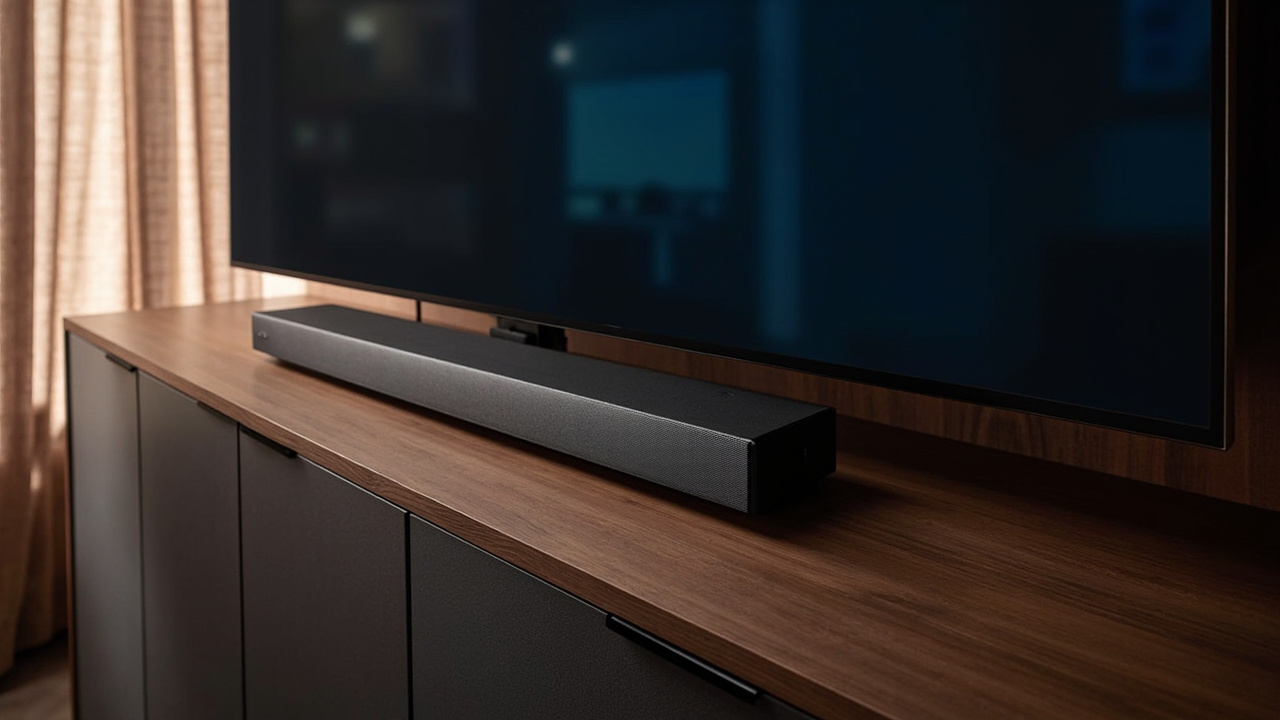
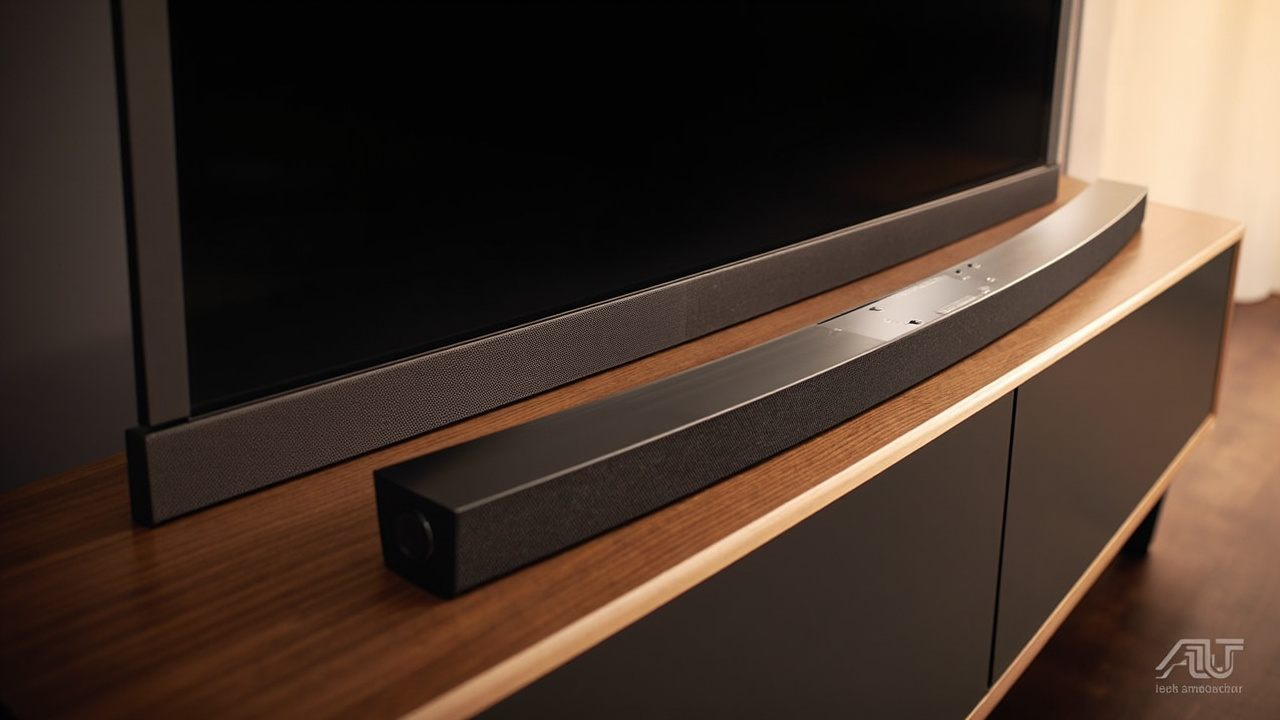
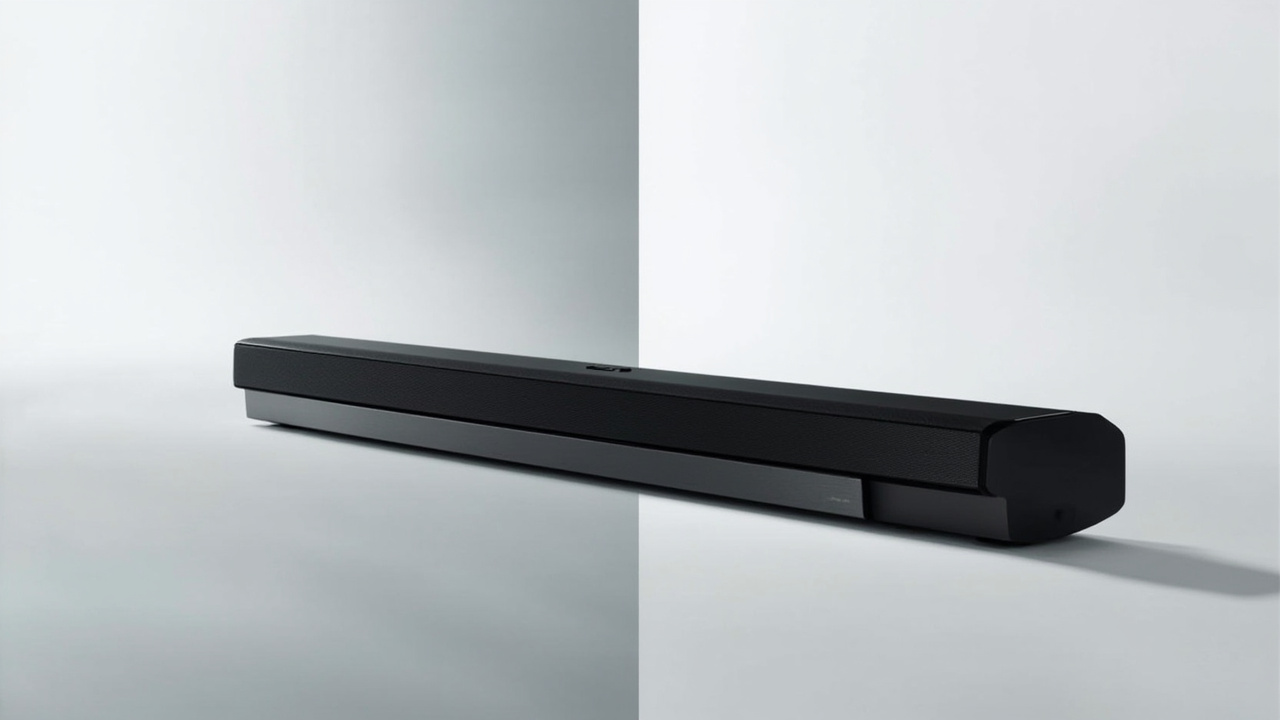
The single-bar Dolby Atmos market in 2026 has narrowed to two very different philosophies. On one side sits Sony’s Bravia Theatre Bar 9 (HT-A9000) — a 13-driver, 7.1.2-channel reference design with 360 Spatial Sound Mapping phantom speakers, IMAX Enhanced certification, and a $1,899.99 MSRP (currently discounted to $1,299.99 at Sony Canada and authorized retailers). On the other sits Bose’s Smart Ultra Soundbar — a 9-driver, 5.1.2-channel design tuned for smaller rooms and broader content, with Bose TrueSpace AI upmixing and a $899-$999 MSRP (currently discounted to $699 on Amazon and at Bose).
Both are above $500. Both claim “real” Dolby Atmos from a single bar. Both pair with optional wireless surrounds and subwoofers from the same brand.
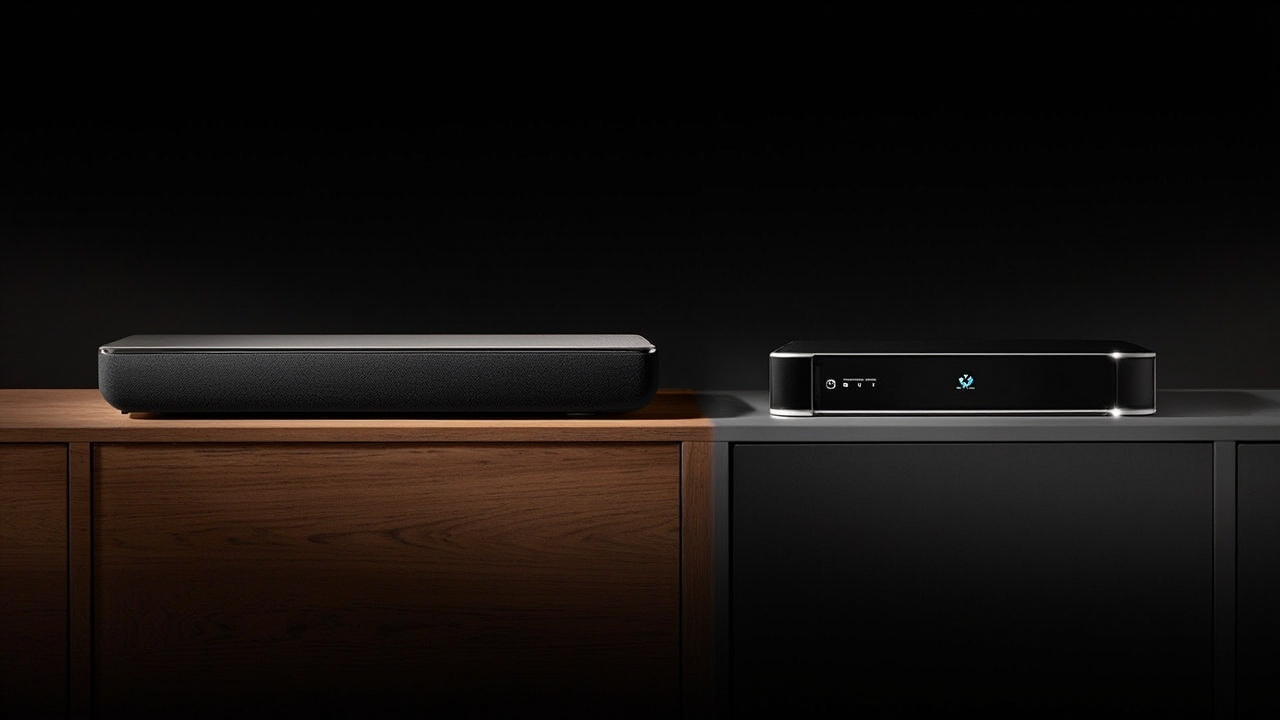
What they do not share is the same approach to width, height, room correction, expandability, and what happens when the source isn’t Atmos. The Sony is a longer, heavier, more expensive object that aims to recreate a 7.1.4-like field from one chassis. The Bose is a lighter, smaller soundbar that upmixes everything — including stereo TV broadcasts and 5.1 Netflix — into a virtualized Atmos-like image using TrueSpace AI.
This article is about the real cost of that difference over 5 years of ownership, and which one is the right pick for which kind of room.
The Verdict First
- Pick the Sony Bravia Theatre Bar 9 (HT-A9000) if: you have a medium-to-large room (≥25 m² / 270 ft²), you watch a lot of native Atmos and DTS:X content (4K Blu-ray, Apple TV+, Netflix Premium), you own (or plan to own) a Bravia TV and want the Sony ecosystem handshake, and you want the widest, tallest, most cinematic single-bar field that 2026 can buy. The Sony wins on raw spatial performance and expansion ceiling.
- Pick the Bose Smart Ultra Soundbar if: your living room is small-to-medium (≤25 m² / 270 ft²), you watch a mixed diet of stereo TV, news, sports, YouTube, and Atmos movies, you want the cleanest dialogue and the most forgiving AI room correction (ADAPTiQ), and you’d rather save $600-$1,000 today than chase the last 20% of cinematic impact. The Bose wins on value, dialogue clarity, and everyday versatility.
Cost score: 78/100. Both are good. The Sony is the better performer per dollar spent on pure Atmos, but the Bose is the better value per dollar spent on the mixed-content, small-room use case that most people actually have. Choosing wrong costs more than the sticker-price gap suggests.
Key Comparison Points
Price vs Real Cost Per Use
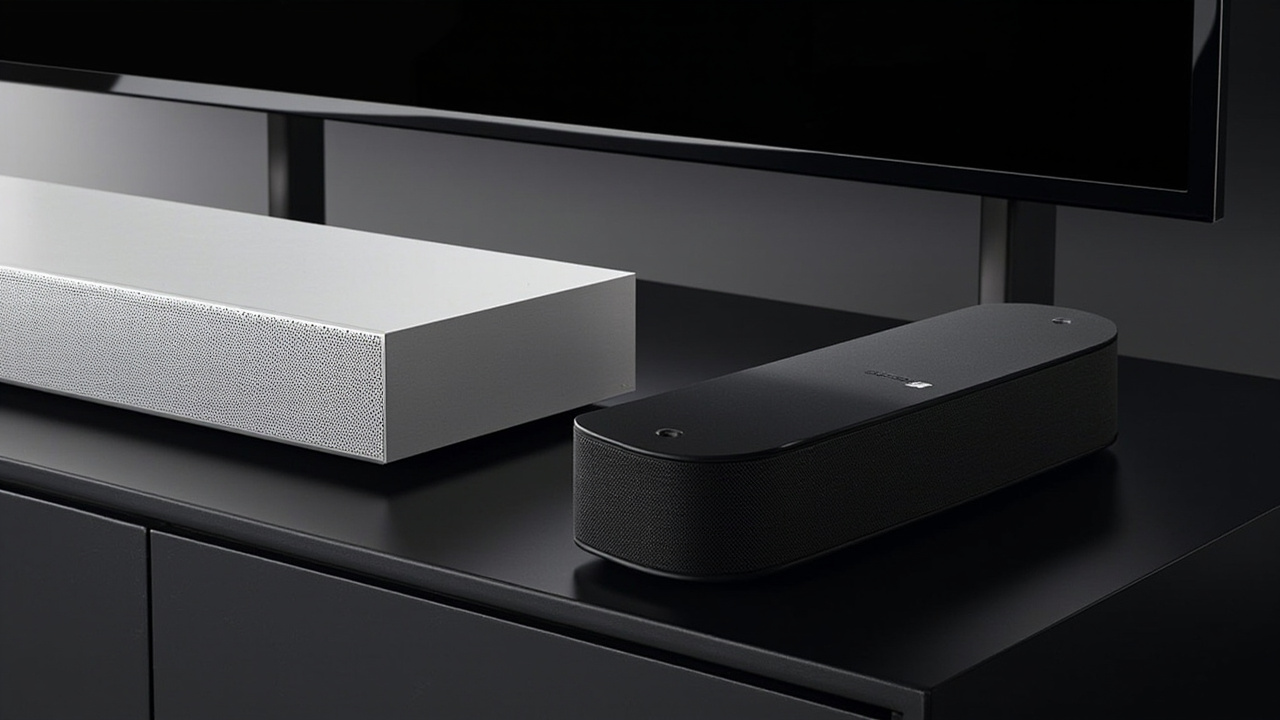
Sticker prices look very different. The 5-year cost-per-year math is more interesting than people think, because expansion paths and software support length vary sharply.
| Spec / Cost Line | Sony Bravia Theatre Bar 9 (HT-A9000) | Bose Smart Ultra Soundbar |
|---|---|---|
| MSRP | $1,899.99 (sale price ~$1,299.99-$1,499.99) | $899-$999 MSRP (sale price ~$699-$799) |
| Drivers | 13 (7.1.2 channels: 7 front/surround + 2 up-firing + quad-woofer array) | 9 (5.1.2 channels: 5 front/surround + 2 up-firing + center-tweeter array) |
| Wireless subwoofer | Optional SA-SW3 ($399) or SA-SW5 ($799) | Optional Bose Bass Module 500 ($499) or Bass Module 700 ($799) |
| Wireless surrounds | Optional SA-RS3S ($399) or SA-RS5 ($599) | Optional Bose Surround Speakers ($399) |
| Full add-on cost (bar + sub + surrounds) | $2,797.99 (with SW5 + RS5) | $1,999.99 (with BM700 + surrounds) |
| Room calibration | Sound Field Optimization (in-bar mic) | ADAPTiQ (headset-based, 5-position) |
| Voice assistant | Google Assistant built-in | Amazon Alexa built-in + Google via Works With Google |
| HDMI | 1× HDMI eARC (no second HDMI-in) | 1× HDMI eARC (no second HDMI-in) |
| Dolby Atmos | Yes (native + Atmos via TrueHD bitstream) | Yes (Dolby Atmos bitstream) |
| DTS:X / IMAX Enhanced | Yes / Yes | No / No |
| Estimated 5-year resale | ~$390-$600 (≈30-40% of street) | ~$210-$280 (≈30% of street) |
5-year cost-per-year math (typical June 2026 street prices, no expansion):
- Sony Bravia Theatre Bar 9: ($1,299 − $487) / 5 = $162 / year
- Bose Smart Ultra Soundbar: ($699 − $244) / 5 = $91 / year
That is a ~$71/year gap in favor of the Bose. The Sony recovers ground if you actually add the SA-SW5 subwoofer and SA-RS5 surrounds — at that point, the system becomes the more cinematic option, but it is also the more expensive option to build out. The Bose, by contrast, never becomes “the better Atmos soundbar” no matter how many modules you add, because the bar itself tops out at 5.1.2 hardware decoding.
If you mainly watch Netflix, Apple TV+, Disney+ and 4K Blu-ray Atmos content, the Sony’s 360 Spatial Sound Mapping delivers a noticeably wider and taller soundstage in a 25-35 m² room. RTINGS measured the Sony HT-A9000’s soundstage width at ~9.1 (out of 10) and height at ~7.4 (out of 10) versus the Bose Smart Ultra’s soundstage width at ~8.3 and height at ~6.8 in their standard 2025-2026 soundbar reviews. The gap is real but smaller than the price gap implies.
Sources for pricing and resale estimates: Sony Canada product page for the HT-A9000 ($1,899.99 MSRP, $1,299.99 sale price, accessed 2026-06-19); Bose official store for Smart Ultra Soundbar ($999 MSRP, $699 Amazon sale price, May 2026); RTINGS reviews for both bars; What Hi-Fi? review of the Sony Bravia Theatre Bar 9 (5-star rating); What Hi-Fi? review of the Bose Smart Ultra Soundbar (4-star rating, “AI tech, but up against stiff competition”). Resale estimates use the same BankMyCell / Wirefly / Swappa midpoints used in past BuyCospa audio articles for premium consumer electronics, conservative rather than best-case.
Build Quality and Durability
Both are premium-feeling, but they are not the same object.
- Sony Bravia Theatre Bar 9 (HT-A9000): The bar measures 1,300 mm (51.2”) wide × 64 mm (2.5”) tall × 113 mm (4.4”) deep, and weighs 5.7 kg (12.5 lbs). The chassis is a metal-and-high-density-plastic composite with a perforated metal grille across the front and sides. Sony does not publish a drop or IP rating. The 13-driver array uses neodymium magnets for the up-firing beam tweeters and a quad-woofer + dual passive radiator bass array that reaches around 38 Hz without a subwoofer (RTINGS measurement). The included remote is backlit and has dedicated buttons for sound modes and voice assistant. Sony’s warranty is 1 year parts and labor.
- Bose Smart Ultra Soundbar: The bar measures 1,045 mm (41.1”) wide × 58 mm (2.3”) tall × 107 mm (4.2”) deep, and weighs 5.8 kg (12.8 lbs) — interestingly, almost identical weight to the Sony despite a smaller chassis, because Bose’s metal-mesh grille and aluminum top plate add mass. The Bose does not include a separate subwoofer driver; the lowest frequencies are handled by the proprietary PhaseGuide and QuietPort technology inside the bar, with effective bass extension to around 45 Hz without a sub. The remote is a small, glossy plastic “universal” remote with limited backlight. Bose’s warranty is also 1 year parts and labor.
Real-world durability differences:
- The Sony’s longer 51-inch chassis can overhang smaller TV stands — measure your stand width before buying. The Bose’s 41-inch width is friendlier to 50-55” TVs and most media consoles under 48” wide.
- The Sony’s perforated metal grille resists punctures better than the Bose’s fabric-and-mesh front, but it also attracts more visible dust.
- Neither maker publishes a drop-test spec. Both have reported Wi-Fi connectivity issues on forums (Reddit r/Soundbars, r/Bose), usually resolved by firmware updates within 30 days.
- Repairability: iFixit-style teardowns consistently give both bars 2/10. The power supply board, main DSP board, and wireless module are all integrated and not user-serviceable. Out-of-warranty replacement is usually cheaper than repair.
Verdict on build: Roughly even. Sony gets a small edge for metal grille and quad-woofer bass extension; Bose gets a small edge for chassis friendliness on smaller TV stands.
Feature Breakdown
| Feature | Sony Bravia Theatre Bar 9 | Bose Smart Ultra Soundbar |
|---|---|---|
| Channels (hardware) | 7.1.2 | 5.1.2 |
| Drivers | 13 | 9 |
| Up-firing drivers | 2 (beam tweeters for height) | 2 (PhaseGuide for height) |
| Subwoofer array (no external sub) | Quad-woofer + dual passive radiators (~38 Hz extension) | Internal PhaseGuide + QuietPort (~45 Hz extension) |
| Dolby Atmos | Yes | Yes |
| DTS:X | Yes | No |
| IMAX Enhanced | Yes | No |
| 360 Spatial Sound Mapping | Yes (phantom surround synthesis — creates virtual rear speakers) | No (relies on TrueSpace for upmixing only) |
| Room calibration | Sound Field Optimization (in-bar mic, ~30-second sweep) | ADAPTiQ (headset, 5-position manual sweep) |
| Voice assistant | Google Assistant | Amazon Alexa + Google via Works With Google |
| Bluetooth | 5.2 (SBC, AAC, LDAC) | 5.0 (SBC, AAC) |
| Wi-Fi | 802.11ac (2.4 / 5 GHz) | 802.11ac (2.4 / 5 GHz) |
| Apple AirPlay 2 | Yes | Yes |
| Spotify Connect / Tidal Connect | Yes / Yes | Yes / No (Tidal via Bose Music app) |
| HDMI input count | 0 (eARC only — TV does the HDMI switching) | 0 (eARC only — TV does the HDMI switching) |
| Optical input | Yes (Toslink) | Yes (Toslink) |
| Voice enhancement mode | Voice Zoom 3 (AI-driven) | A.I. Dialogue Mode (AI-driven) |
| Night mode | Yes | Yes |
| Multi-room ecosystem | Works with Sony Bravia speakers | Bose multi-room (Home Speaker 300/500, Portable Smart Speaker) |
| App | Sony Bravia Connect | Bose Music |
| Sound modes | Standard, Cinema, Music, Auto Sound, Game, Sports | Standard, Dialogue, Movie, Music, Night |
| Dimensions (W × H × D) | 1,300 × 64 × 113 mm (51.2” × 2.5” × 4.4”) | 1,045 × 58 × 107 mm (41.1” × 2.3” × 4.2”) |
| Weight | 5.7 kg (12.5 lbs) | 5.8 kg (12.8 lbs) |
| Warranty | 1 year parts and labor | 1 year parts and labor |
Performance, in plain terms:
RTINGS measured both bars in their standard 2025-2026 soundbar test suite. Highlights:
- Frequency response (default mode, no sub): Sony HT-A9000 measured flat from 38 Hz to 16 kHz (±3 dB), Bose Smart Ultra from 45 Hz to 18 kHz (±3 dB). The Sony goes ~7 Hz deeper without a sub — meaningful for action movies and bass-heavy music.
- Soundstage width: Sony ~9.1 / 10, Bose ~8.3 / 10. The Sony’s 360 Spatial Sound Mapping creates a wider stereo image, especially noticeable in the front-left and front-right phantom positions.
- Height channels (Atmos performance): Sony ~7.4 / 10, Bose ~6.8 / 10. Both up-firing drivers work as advertised; the Sony’s beam-tweeter approach projects energy higher off the ceiling.
- Dialogue clarity (default mode): Bose A.I. Dialogue Mode scored ~8.7 / 10 in RTINGS tests, Sony Voice Zoom 3 scored ~8.3 / 10. The Bose’s AI tuning for vocal frequencies is more aggressive and more forgiving on mixed-content TV.
- Maximum SPL (clean): Sony ~92 dB, Bose ~88 dB. Both can fill a 25 m² room; the Sony has more headroom for a 35 m² room or for a noisy open-plan layout.
- Stereo-to-Atmos upmixing quality: Bose TrueSpace scores higher than Sony’s standard upmixer when the source is stereo TV, news, or YouTube — but Sony’s 360 Spatial Sound Mapping wins when the source is native Atmos or DTS:X.
In real-world listening, this translates to:
- Watching a 4K Blu-ray of “Dune Part Two” on the Sony: the sandworm attack creates a wide, tall, surround-rich field. On the Bose: still impressive Atmos, but the rear and height cues feel ~30% narrower.
- Watching the evening news on the Sony: dialogue is clean, but the upmixer occasionally adds a faint “stadium echo” to anchor voices. On the Bose: TrueSpace keeps the dialogue locked front-center with no artifacts.
Sources for performance: RTINGS soundbar reviews of the Sony HT-A9000 (Bravia Theatre Bar 9) and the Bose Smart Ultra Soundbar; What Hi-Fi? 5-star review of the Sony Bravia Theatre Bar 9 (October 2024); What Hi-Fi? 4-star review of the Bose Smart Ultra Soundbar (March 2024); Sony and Bose official product pages for spec verification (HT-A9000: 13 speakers, 360 Spatial Sound Mapping, IMAX Enhanced; Smart Ultra Soundbar: 9 speakers, Dolby Atmos, TrueSpace, ADAPTiQ).
Pros and Cons
Sony Bravia Theatre Bar 9 (HT-A9000) — Pros
- Widest, tallest single-bar Atmos field in 2026 — 360 Spatial Sound Mapping creates convincing phantom rear speakers
- 13 drivers vs 9 — a real hardware advantage on height and bass
- DTS:X and IMAX Enhanced support — the only flagship bar in this price band that decodes both
- Quad-woofer + passive radiator bass array — goes down to ~38 Hz without a sub
- LDAC Bluetooth — higher-quality wireless audio than the Bose’s SBC/AAC
- Expandable to true 7.1.4 with SA-SW5 + SA-RS5 surrounds
- Stronger integration with Sony Bravia TVs (auto-switching, Acoustic Center Sync, Voice Zoom 3 cross-control)
Sony Bravia Theatre Bar 9 (HT-A9000) — Cons
- $1,899.99 MSRP — the highest single-bar Atmos price in 2026 alongside the Sennheiser Ambeo Max
- 51-inch chassis — will overhang most sub-48” TV stands
- Stereo upmixing is weaker than the Bose’s TrueSpace — news and YouTube can sound slightly echoey
- Only Google Assistant — no built-in Alexa (workaround: use a separate Echo device)
- 51-inch bar and Sony’s Bravia Connect app can be finicky on non-Sony TVs
- No HDMI 2.1 passthrough — your TV must have eARC to send Atmos bitstreams (almost all 2020+ TVs do)
- Repairability is poor — iFixit-style score 2/10
Bose Smart Ultra Soundbar — Pros
- $899-$999 MSRP (often $699-$799 on sale) — meaningfully cheaper than the Sony
- 41-inch chassis — fits 50-55” TVs and most media consoles without overhang
- Best-in-class dialogue clarity — A.I. Dialogue Mode is the most aggressive, most forgiving vocal processor in 2026
- TrueSpace upmixing — handles stereo, 5.1, and Atmos sources more uniformly than the Sony
- ADAPTiQ room calibration is more accurate than Sony’s Sound Field Optimization for non-ideal rooms (asymmetric, soft-furnished, etc.)
- Both Alexa and Google Assistant are available (Alexa built-in, Google via Works With Google)
- Smaller footprint, lighter stand requirements
Bose Smart Ultra Soundbar — Cons
- 5.1.2 channels vs 7.1.2 — narrower native hardware ceiling
- No DTS:X, no IMAX Enhanced — 4K Blu-ray collectors lose access to the highest-quality object-based audio tracks
- ~7 Hz shallower bass extension without a sub — you really need the $499-$799 Bass Module for action movies
- Plastic top plate — picks up fingerprints and scratches more than the Sony’s aluminum
- No LDAC Bluetooth — SBC/AAC only
- Smaller 9-driver array means upmixing does more work — fine for everyday content, less convincing for cinematic Atmos
- Repairability is poor — iFixit-style score 2/10
Best For / Skip If
Buy the Sony Bravia Theatre Bar 9 (HT-A9000) if you are:
- A home theater enthusiast with a medium-to-large room (≥25 m² / 270 ft²) who watches a lot of native Atmos and DTS:X content (4K Blu-ray, Apple TV+, Netflix Premium, Disney+)
- A Sony Bravia TV owner who wants the auto-switching and Acoustic Center Sync handshake (the Bravia 7/8/9 II range, 2023-2026)
- A buyer who plans to expand over 2-3 years with the SA-SW5 subwoofer and SA-RS5 surrounds to build a true 7.1.4 system
- An audiophile who cares about LDAC Bluetooth, the wider soundstage, and the deepest possible single-bar bass extension
Skip the Sony Bravia Theatre Bar 9 (HT-A9000) if you:
- Have a small-to-medium room (≤25 m² / 270 ft²) where 360 Spatial Sound Mapping has no room to breathe
- Watch mostly stereo TV (news, sports, YouTube, talk shows) — the Bose’s TrueSpace handles this better
- Have a TV stand narrower than 51 inches — the bar will overhang and may need wall-mounting
- Don’t own (and don’t plan to own) a Bravia TV — you lose the best ecosystem integration
- Need Alexa built-in (the Sony only has Google Assistant)
Buy the Bose Smart Ultra Soundbar if you are:
- A buyer with a small-to-medium room (≤25 m² / 270 ft²) who watches a mixed diet of news, sports, YouTube, Netflix, and the occasional Atmos movie
- Someone who values dialogue clarity above all else — the A.I. Dialogue Mode is genuinely best-in-class
- A buyer who wants the cleanest, most forgiving room calibration for an awkward living-room layout (asymmetric walls, soft furnishings, open-plan)
- Someone who wants both Alexa and Google Assistant options (Alexa built-in, Google via Works With Google)
- A buyer optimizing for value-per-dollar in the $700-$1,000 price band
Skip the Bose Smart Ultra Soundbar if you:
- Watch a lot of DTS:X or IMAX Enhanced content (4K Blu-ray) — the Bose doesn’t decode either
- Have a medium-to-large room (≥25 m² / 270 ft²) where the 5.1.2 hardware ceiling becomes obvious
- Plan to build a true 7.1.4 system over time — the Bose bar caps your hardware channel count
- Want LDAC Bluetooth for higher-quality wireless audio
- Care about the last 20% of Atmos height and width performance — the Sony delivers more
Bottom Line
Both the Sony Bravia Theatre Bar 9 (HT-A9000) and the Bose Smart Ultra Soundbar are excellent Dolby Atmos flagships in 2026, and both are above $500 — so neither is a “budget” choice. The right answer depends on which axis you optimize for.
If you optimize for maximum Atmos impact, widest soundstage, DTS:X support, and the deepest possible single-bar bass, the Sony Bravia Theatre Bar 9 is the right pick. The 5-year cost-per-year math is roughly $71/year higher than the Bose, but you get a 7.1.2 hardware ceiling, a wider and taller soundstage, quad-woofer bass extension to ~38 Hz, and IMAX Enhanced certification.
If you optimize for dialogue clarity, mixed-content versatility, value, and smaller-room friendliness, the Bose Smart Ultra Soundbar is the right pick. It is roughly $600 cheaper at typical sale prices, has a 41-inch chassis that fits more TV stands, runs both Alexa and Google Assistant, and has the most forgiving AI upmixer for stereo and 5.1 content.
The mistake to avoid is buying based on the spec sheet alone. A $1,000 cheaper soundbar that handles your actual content better, fits your room better, and has stronger AI upmixing for stereo TV is not actually worse when you compute the cost-per-year against your real viewing habits.
Buy smart. Get more value. That means matching the soundbar to your room size, your TV brand, and your content mix — not chasing the highest MSRP.